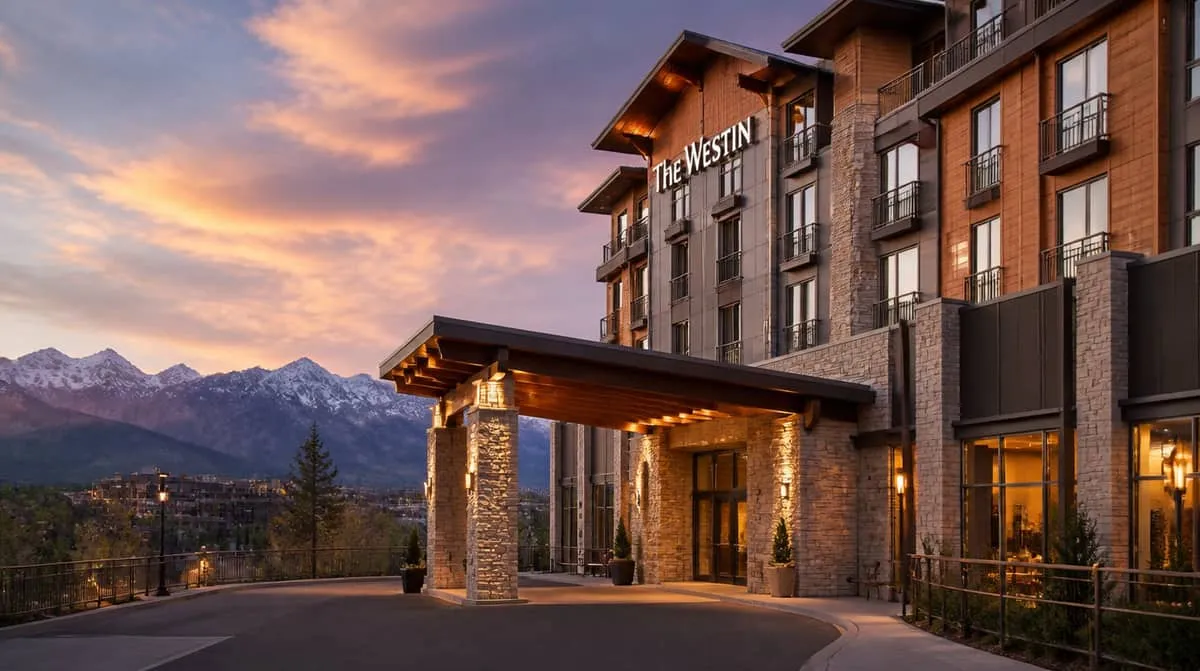
Denver's boutique hotel scene has a specific center of gravity, and it's Union Station. The renovation of Union Station into Denver's most architecturally celebrated public space created a gravitational pull for independent hotels that understood what the neighborhood was becoming. The properties that opened in LoDo around Union Station in the years following, the Crawford Hotel inside the station itself, the Maven, the Kimpton properties in the district, established an aesthetic baseline for what Denver boutique hospitality looks like at its best. That baseline has since spread into RiNo, where the industrial warehouse bones of the neighborhood have become the platform for a second wave of design-forward independents that draw a different guest demographic but share the same commitment to a designed experience.
The guest profile at Denver's best boutique properties is sophisticated about hospitality design in a way that creates real procurement consequences. These guests travel frequently, they compare properties directly, and they're specifically choosing a boutique experience over a branded flag because they expect the physical space to be more interesting, more considered, and more connected to the place they're visiting. Furniture that meets that expectation has to deliver on authenticity as well as quality. It has to look like it belongs to Denver, not just like it meets a contract furniture specification.
The LoDo and RiNo Aesthetic Difference
Understanding the aesthetic distinction between LoDo's boutique hotels and RiNo's is useful because they represent two different approaches to Denver's mountain-modern design vocabulary, and the furniture programs that serve them differ accordingly.
LoDo's Union Station corridor boutique hotels are polished. The raw material references, the warm wood and leather and stone, are present, but they're refined and elevated. Sofas and seating in LoDo lobby spaces tend toward clean contemporary forms in warm leathers or performance fabrics, with enough tailoring and detail to communicate genuine quality. The wood elements have considered joinery and finished surfaces. The metal is brushed or patinated rather than raw. It's mountain-modern in the way that a well-tailored flannel shirt is mountain: the reference is there but the execution is elevated.
RiNo's boutique hotel aesthetic leans harder into the industrial warehouse context. Exposed concrete, raw steel, reclaimed wood, and a rawness that isn't rough so much as honest characterize the design language of properties in this neighborhood. Lounge chairs in these lobbies tend toward more expressive forms, with visible construction detail and material combinations that create visual interest. The furniture program in a RiNo boutique property can be more eclectic than in a LoDo property, with more latitude for individual pieces that command attention rather than a cohesive program that creates a unified backdrop.
Both approaches require contract-grade construction. The aesthetic difference is real, but the commercial specification requirements are the same: joints that don't loosen under volume use, upholstery that doesn't show premature wear at high-contact points, frame construction that holds up through years of daily use by guests who are not treating the furniture with residential care.
Guestroom Furniture for Denver Boutique Properties
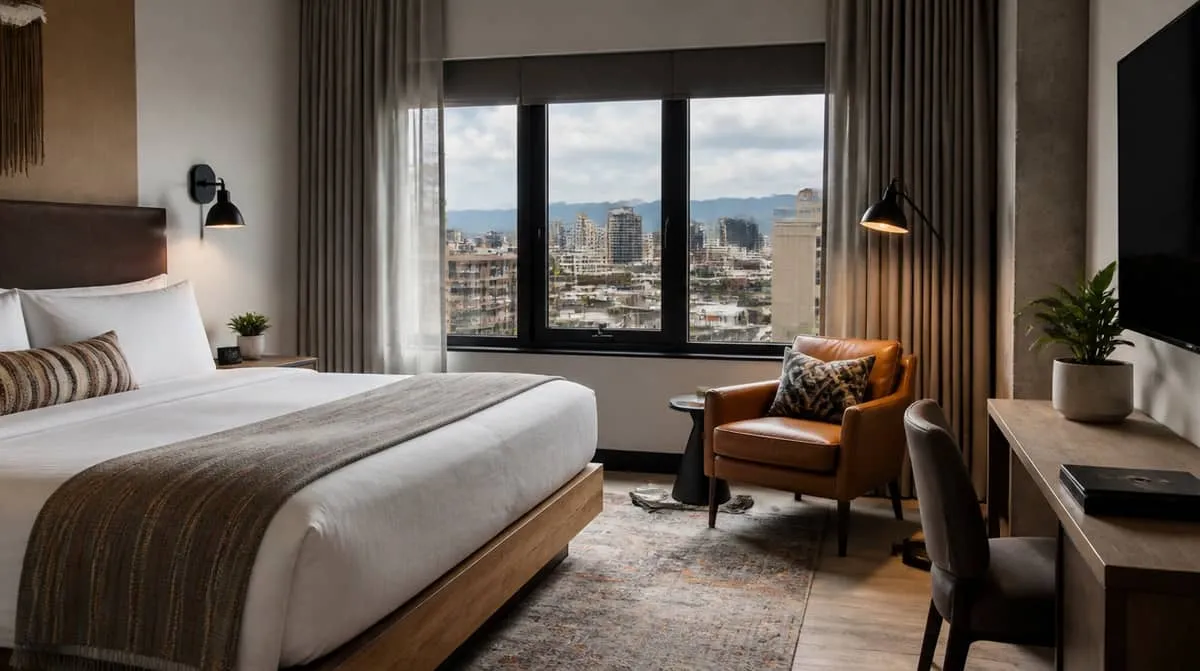
Boutique guestrooms in Denver's independent hotels tend to be more compact than their branded counterparts, with rooms in the 280 to 380 square foot range at many LoDo and RiNo properties. In a room this size, the furniture program is not decorating a space, it is the space. Every piece is visible from every other piece, which means proportion, color coordination, and material coherence matter more than they do in a larger room.
The bed is always the dominant element. Headboards at Denver boutique properties overwhelmingly favor upholstered construction, in performance leather or textured performance linen, in the warm neutral tones that read as mountain-modern without being literal about it. Cognac leather, camel linen, warm greige, and natural undyed wool tones are the palette that the market has converged on. The headboard construction needs to hold up through the physical demands of a high-occupancy Denver boutique property, including the ski gateway guests who treat the headboard as a backrest for hours of in-room screen time after a day on the mountain.
Case goods in boutique guestrooms benefit from warm wood tones with natural or lightly fumed finishes. The specificity of the finish matters: a stained veneer that looks artificial undermines the authenticity that the boutique guest is seeking, while a natural or lightly treated solid wood or veneer with honest grain expression contributes to the sense of place. Drawer hardware is the detail guests touch most often, and hardware that feels genuinely quality, with smooth drawer operation and an appropriate weight, communicates care in a way that guests notice even when they're not consciously evaluating it.
Public Spaces as Identity Anchors
Denver boutique hotel lobbies and common areas serve a dual purpose that branded properties rarely share. They're guest amenity spaces, but they're also often genuinely visited by local Denver residents who come for the bar, the coffee program, or simply because the space is worth spending time in. The furniture in a Denver boutique lobby needs to hold up to local visitor traffic alongside guest traffic, which means both higher volume and a more evaluative audience.
Commercial Furniture Depot has worked with boutique hotels across the LoDo and RiNo corridors and understands the furniture procurement challenges that Denver's independent hotel market creates. The combination of aesthetic specificity, commercial durability requirements, and the need for a supplier who can source across the mountain-modern palette without defaulting to generic hospitality product makes this a market where supplier relationships and product knowledge matter.
For properties in the planning or pre-renovation phase, working with a supplier early in the design process, before the FF&E specification is finalized, creates the opportunity to value-engineer toward genuine quality rather than retrofitting the budget to a spec that was developed without commercial furniture expertise. That early engagement is where the best boutique hotel procurement decisions get made.
We quote boutique hotel furniture for Denver operators against their own layouts and order sizes rather than a generic sheet. Request a quote and we will put together pricing for your property.