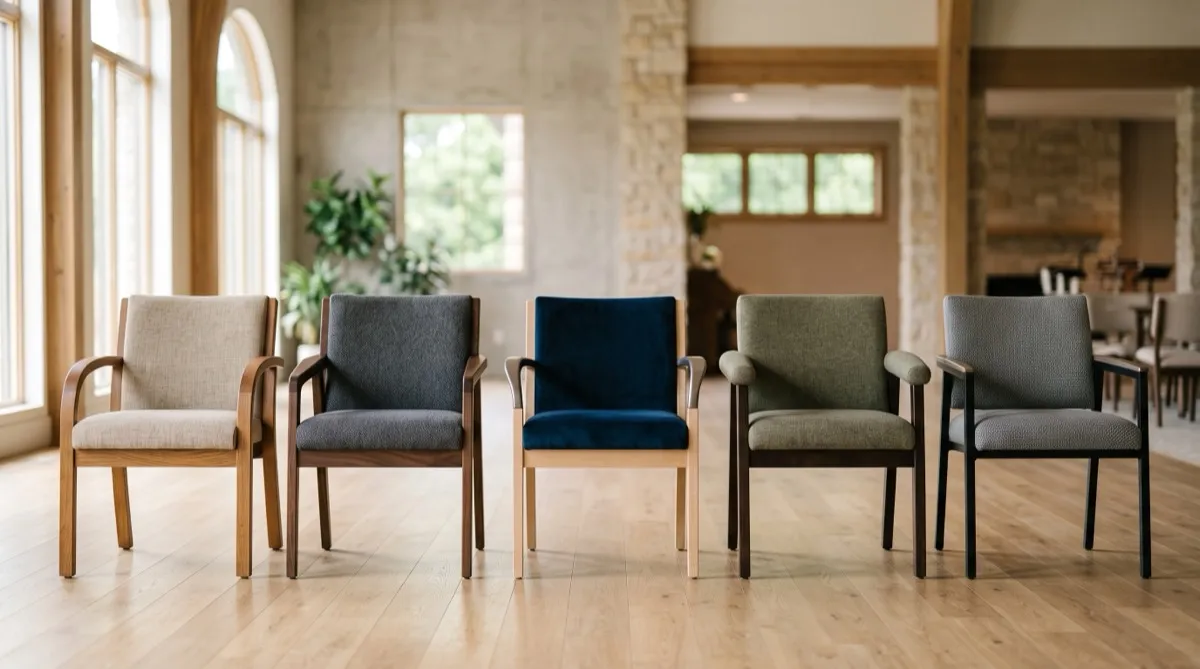
Every church that starts shopping for chairs eventually asks the same question: which one is the best. The honest answer is that "best" depends entirely on context, worship style, service length, room use, and budget, and a chair that's right for a contemporary worship center is often wrong for a traditional liturgical sanctuary. Instead of chasing a ranking, it's more useful to score candidates against a spec checklist built around your actual room.
Why there's no universal answer
A chair built for a two-hour Sunday service with standing worship needs different padding and back support than a chair built for a 45-minute traditional liturgy where the congregation is seated more of the time. A chair for a multi-use fellowship hall that hosts weddings, potlucks, and youth group on the same day needs to stack and move easily. A chair for a sanctuary that never reconfigures can prioritize comfort and finish over stacking convenience. Comparing these on a single "best chairs" list ignores the variable that actually determines fit: what is the chair being asked to do in your building.
Match the chair to worship style
Contemporary and longer services. Services that run 60 to 90 minutes or more with significant standing and singing time benefit from a chair with real seat depth, some lumbar support, and a back height that supports the torso without feeling like an office chair. Fabric with a comfortable hand-feel matters more here since congregants are in the seat longer per sitting.
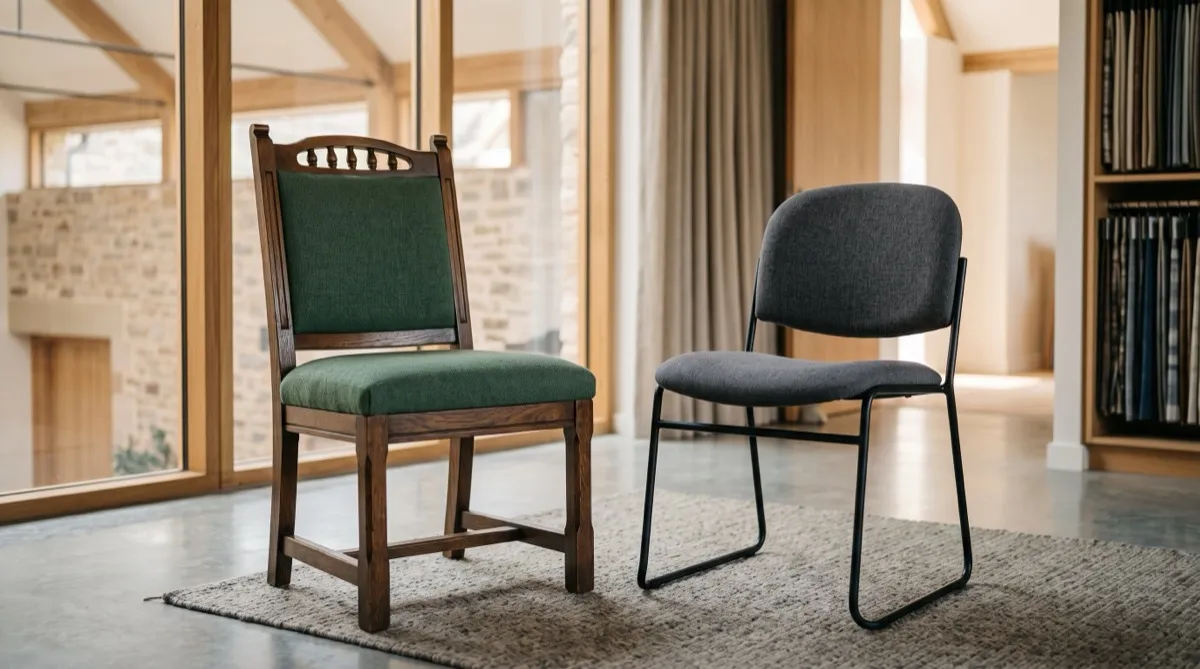
Traditional and liturgical services. Shorter, more structured services with more standing, kneeling, and movement in and out of the pew line put less continuous load on the chair itself, and many traditional congregations prioritize a chair that visually coordinates with existing millwork, altar rail, or remaining pews over one built for maximum lounging comfort.
Multi-use spaces. A fellowship hall or gymnasium-style worship space run services alongside potlucks, conferences, and youth events needs a chair built first for stacking, weight, and fast reconfiguration, with comfort as a secondary factor since no single sitting runs especially long.
The spec checklist
Score any candidate chair against these factors for your specific room:
Seat and back construction. Molded plywood, polypropylene, or upholstered foam over a frame. Upholstered options read warmer and more comfortable for longer services. Polypropylene shells are more durable against heavy multi-use cycling and easier to wipe clean.
Frame material and gauge. Steel tube frames in a commercial gauge, welded rather than bolted at stress points. This is non-negotiable for any chair getting real weekly use regardless of worship style.
Stacking height and weight. Higher stack counts and lighter chairs favor rooms that reconfigure often. Lower priority if your sanctuary is set once and rarely broken down.
Ganging or connector option. Needed for large assembly rows in many jurisdictions and worth having even where not strictly required, for row straightness alone. See our full breakdown of interlocking church chairs for how the hardware works.
Fabric or finish durability. A commercial-grade fabric rated for heavy cycling if the chair sees daily or multiple-weekly use. A lighter-duty finish is acceptable for a chapel or overflow room used occasionally.
Book rack or connector accessories. Useful in a traditional sanctuary where hymnals and bulletins need a home. Often skipped in contemporary rooms that run screens instead of printed material.
Budget tiers, described qualitatively
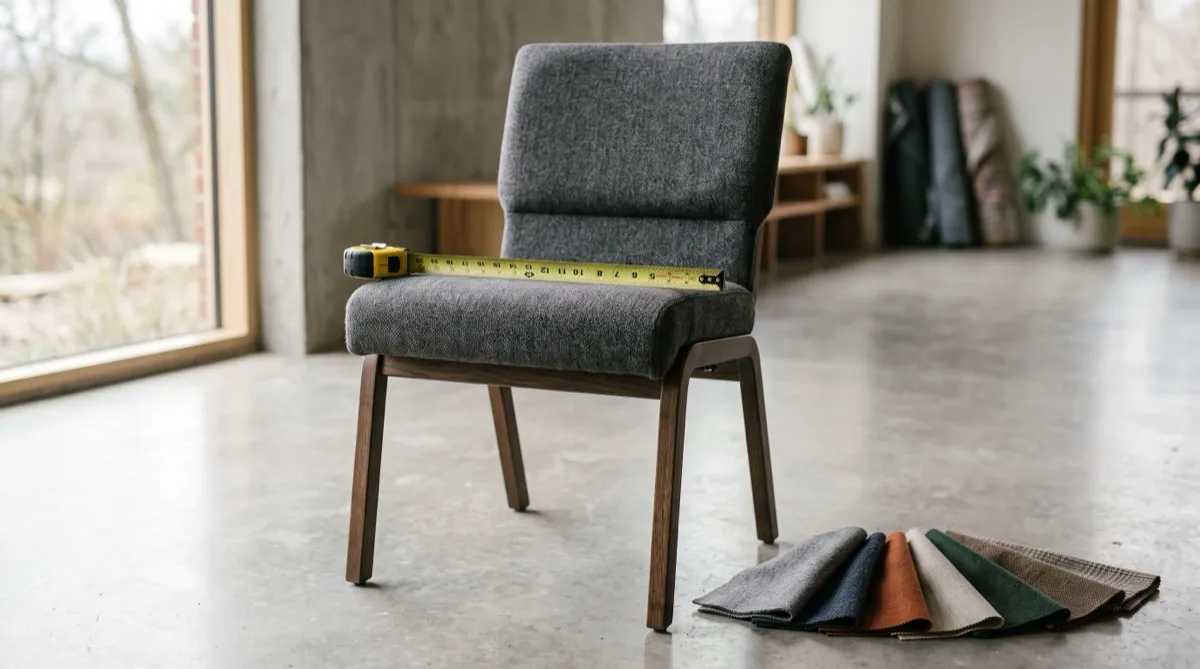
Entry-tier chairs get the frame, stacking, and basic fabric right without extras, a solid choice for overflow rooms, portable setups, or budget-constrained plants furnishing their first space. Mid-tier chairs add better fabric, moderate padding, and often a book rack or connector option, the most common choice for an established congregation's main sanctuary. Upper-tier chairs step up to thicker padding, premium fabric or vinyl, and finish options that coordinate more precisely with a sanctuary's existing design, typically chosen for chapels, main worship centers with a strong aesthetic standard, or renovations replacing aging pews where appearance carries real weight in the decision.
There's no dollar figure that applies universally here since volume, fabric choice, and finish all move the number. Requesting a quote against your specific spec is the only way to get a real comparison across tiers.
What "best" gets wrong when shopping online
Generic buying guides rank chairs by comfort or price alone, which misses the two factors that actually determine whether a chair works in your building: how often the room reconfigures, and how long people sit in a single service. A chair that scores well on a generic list can still be the wrong pick if it doesn't stack fast enough for your multi-use fellowship hall, or doesn't have the padding your two-hour contemporary service needs.
How committees actually make this decision well
Churches that end up satisfied with their chair purchase tend to run a short, structured process rather than letting one person shop alone or letting a committee debate indefinitely. Start by writing down the non-negotiables for your specific room: the worship style, the typical service length, whether the room reconfigures and how often, and any code requirement around connected seating. Get those on paper before anyone looks at a single chair option, since it's much harder to evaluate options objectively once a specific chair has caught someone's eye.
Then request physical samples of two or three finalists rather than deciding from photos or a showroom visit alone. A chair's comfort, fabric feel, and finish quality are hard to judge accurately from an image, and a sample sitting in your actual sanctuary under your actual lighting for a week gives the committee and a few regular congregants a real basis for comparison. Rotate the sample through an actual service if the timeline allows, since a chair that feels fine sitting in an empty room for five minutes can feel different after fifty minutes of an actual service.
Finally, separate the aesthetic decision from the spec decision. It's common for a committee to fall in love with a fabric or finish and then work backward to justify a frame or stacking spec that doesn't actually fit the room's use pattern. Lock the spec checklist first, based on your room's real requirements, then choose among the finish and fabric options that meet it.
Getting to the right spec
We help churches score chair options against their actual room use as part of our church furniture program, rather than pushing a single "best" product. Use our church seating capacity calculator to confirm your seat count first, then work through the checklist above against your worship style and room use before comparing specific chairs.
Related reading
Ready to compare options against your own spec? Request a quote with your worship style, service length, and room use and we'll recommend a fit, not a ranking.