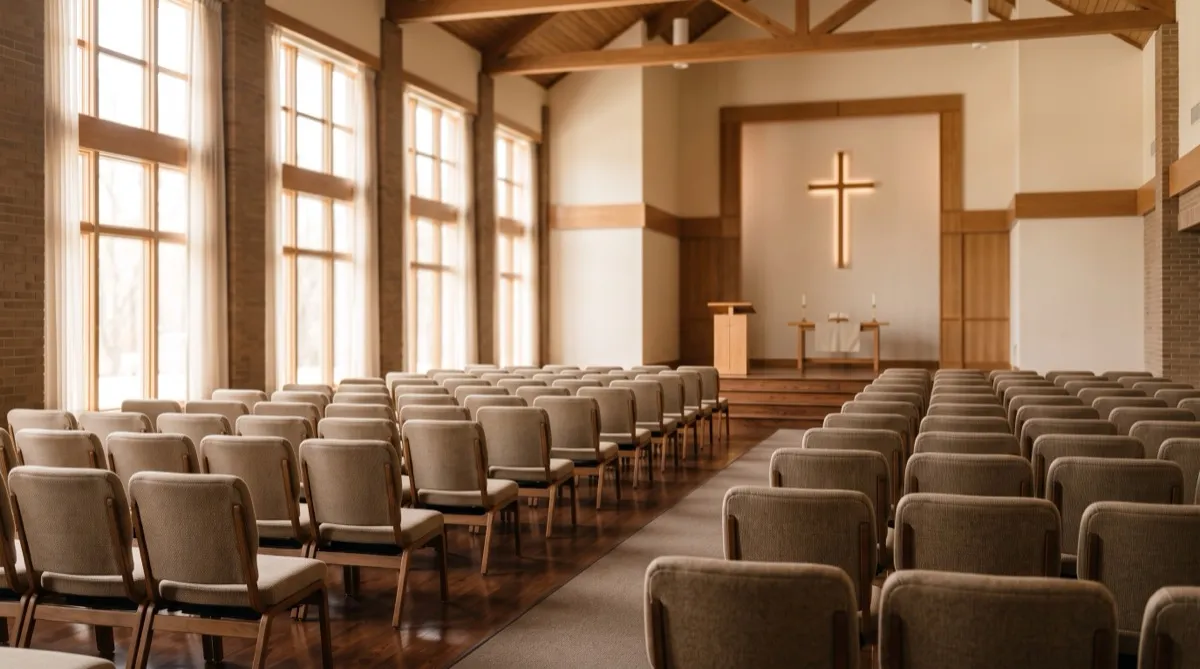
A padded church chair has to do something a lot of commercial seating doesn't: stay comfortable through a service that can run an hour or more, week after week, for years, while surviving a maintenance budget that usually isn't generous. Get the padding and fabric spec wrong and you end up with chairs that were comfortable in the showroom and flattened out or worn through within a couple of years of Sunday use.
Foam density is the comfort spec that actually matters
Most buyers judge comfort by pressing a hand into the seat in a showroom, which tells you almost nothing about how a chair feels after 45 minutes or how it holds up after two years of weekly use. Foam density is the number that actually predicts both.
Higher density foam compresses less over repeated use and holds its supportive shape through years of Sunday seating, while lower density foam feels soft initially but flattens and loses support within a season or two of consistent use. For seating meant for services of an hour or longer, prioritize a higher density seat foam over a softer initial feel, since the softer option is the one that goes flat first and stops being comfortable exactly when your congregation has gotten used to it being there.
Seat foam thickness matters alongside density. A thin layer of high-density foam can still feel firm rather than cushioned, so look for both adequate thickness and a density rating suited to extended seated use, not just one or the other.
Fabric versus vinyl for sanctuary seating
This is the tradeoff every church seating decision runs into eventually. Fabric feels warmer, more residential, and more in keeping with a traditional sanctuary aesthetic. It also absorbs spills, stains more easily, and shows wear patterns from years of the same seating position being used week after week.
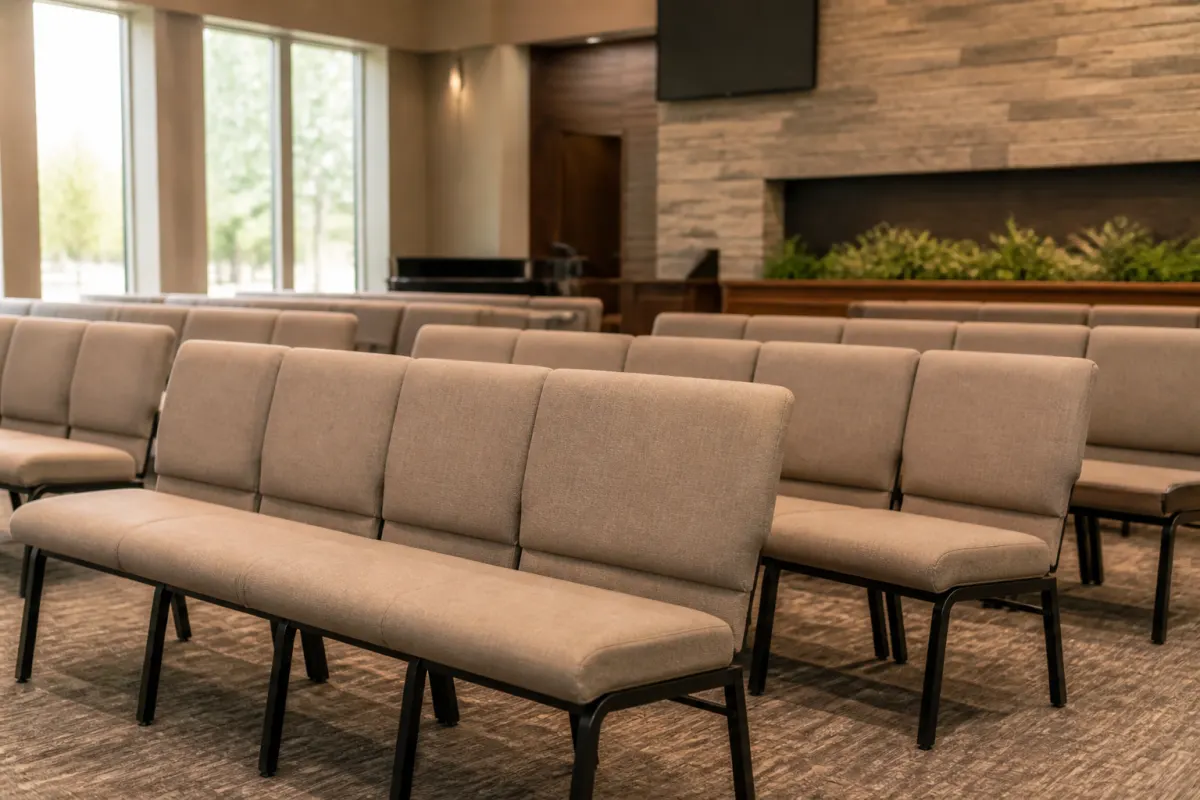
Vinyl or performance fabric rated for heavy commercial use wipes clean, resists staining, and holds up significantly longer under repeated use than a standard decorative fabric. The comfort difference between a good commercial vinyl and a fabric seat is smaller than most people assume once a quality foam layer is underneath either surface, since much of what reads as "comfort" in a chair is the support underneath, not just the surface texture.
A reasonable middle ground many churches land on is a durable performance fabric (rated for heavy commercial cleaning cycles, not a decorative home fabric) for the visible comfort and warmth, paired with the foam density spec above doing the actual comfort work. Reserve true vinyl for high-contact zones like children's ministry and nursery seating where spills and cleaning frequency are highest.
Cleanability across a real maintenance schedule
Most churches don't have daily janitorial staff dedicated to deep-cleaning sanctuary seating, so the fabric or vinyl needs to survive an infrequent, practical cleaning schedule rather than assuming weekly professional care. Ask about the cleaning method the fabric or vinyl is actually rated for (spot cleaning with mild solution, steam cleaning, or full commercial extraction) and match that to what your facilities team or volunteer crew can realistically do on a regular basis.
Stain resistance matters more in padded seating than in hard seating simply because fabric holds a stain where a wipeable hard surface doesn't. If your sanctuary hosts events beyond regular service (weddings, community meals, holiday programs with higher foot traffic and more food and drink nearby), weight your fabric choice toward the more stain-resistant option even if it costs a small amount of visual warmth.
Color programs and how they age
Padded chairs are usually ordered in a single color or a coordinated program across the sanctuary, and that color choice has a longer functional life than most buyers plan for, since reordering an exact fabric match years later isn't always possible if a run has been discontinued. Choose a color and fabric line you're confident will still be available if you need to add chairs for growth or replace damaged units down the line, and order a small reserve of extra units in the same run at the time of initial purchase rather than trying to match later.
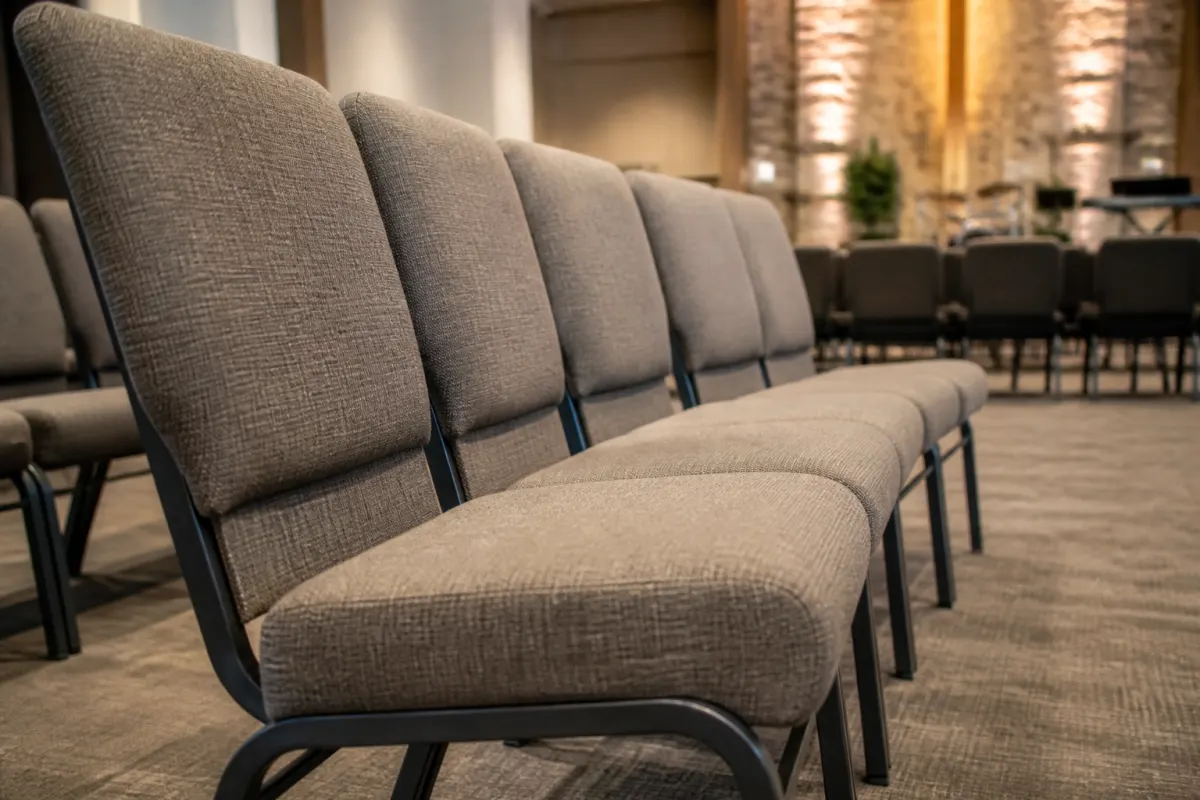
Darker, more saturated colors hide wear and minor staining better over years of use than very light colors, which is worth weighing against the aesthetic your sanctuary is going for. Our church furniture guide covers the fuller range of seating types and finish decisions if you're specing an entire sanctuary rather than just the padded seating portion.
Stacking and storage with padding
Padded chairs stack less densely than hard stacking chairs because the padding adds bulk, which affects your storage footprint if your sanctuary doubles as a multipurpose space and chairs get moved or stored regularly. Confirm stack height and cart compatibility for your specific padded chair model if storage and reconfiguration are part of your weekly routine, not just your occasional event setup.
Ordering and lead times
Padded church chairs ship factory-direct at commercial spec, standard across the industry. In-stock frame and fabric combinations move fastest. Custom fabric, color, or foam upgrade runs 10 to 14 weeks, so plan a sanctuary refresh or expansion with that lead time built into your project timeline well ahead of a target date.
Request a quote with your seat count, service length, and expected cleaning routine, and we'll help you land on a foam and fabric spec that stays comfortable for years, not just for the first season.