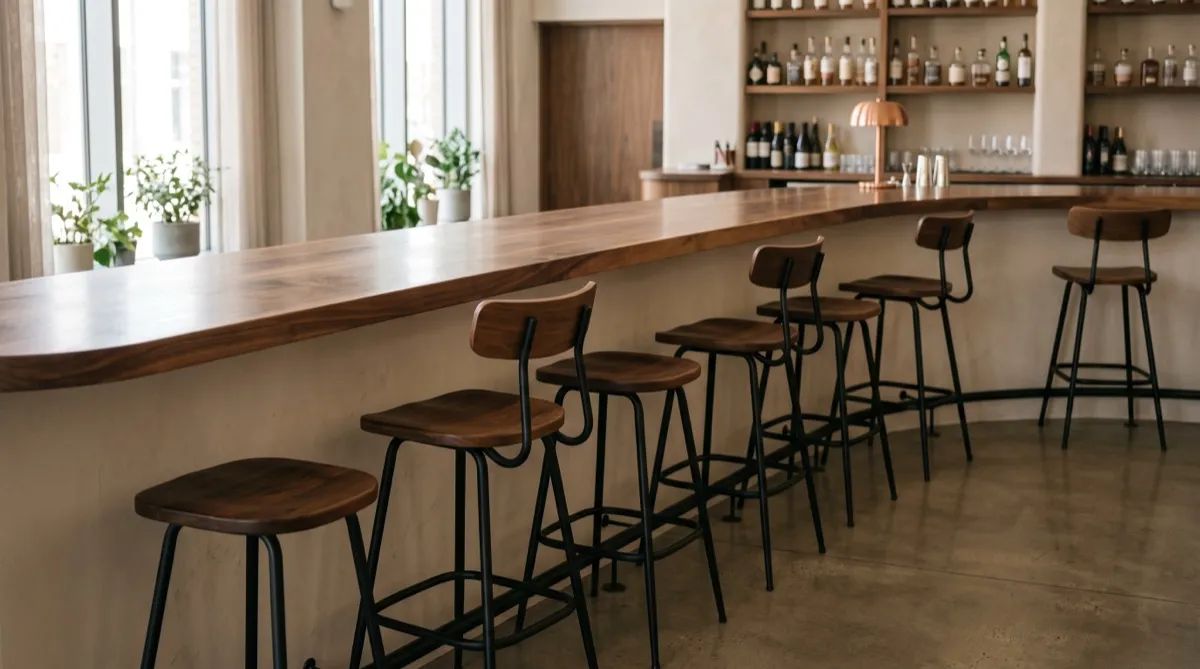
The backs vs backless decision on bar stools looks like a comfort question and gets treated that way in most sourcing conversations. It's actually a business decision about dwell time, seat turnover, and how many bodies you can fit at the rail. Both directions are legitimate depending on what the space is trying to do.
What a backrest actually changes
A backrest may support the intended longer seated use, but comfort depends on the exact seat, back, footrest and surface pairing. Test the sample with the intended users; a backrest alone does not establish another round ordered or a higher check.
A backless design may suit a compact rail or a room that clears frequently. Assess comfort, handling and the actual occupied envelope. It does not by itself establish shorter dwell, faster turnover or more covers at a sports bar or taproom.
Neither is the "better" stool. The choice should follow the business model of the specific bar area, not a general comfort preference.
Dwell time and check size
Treat dwell time, check size and seat throughput as operating questions to observe rather than proven effects of the backrest. Include those observations alongside the sample comfort and layout review when choosing the mix.
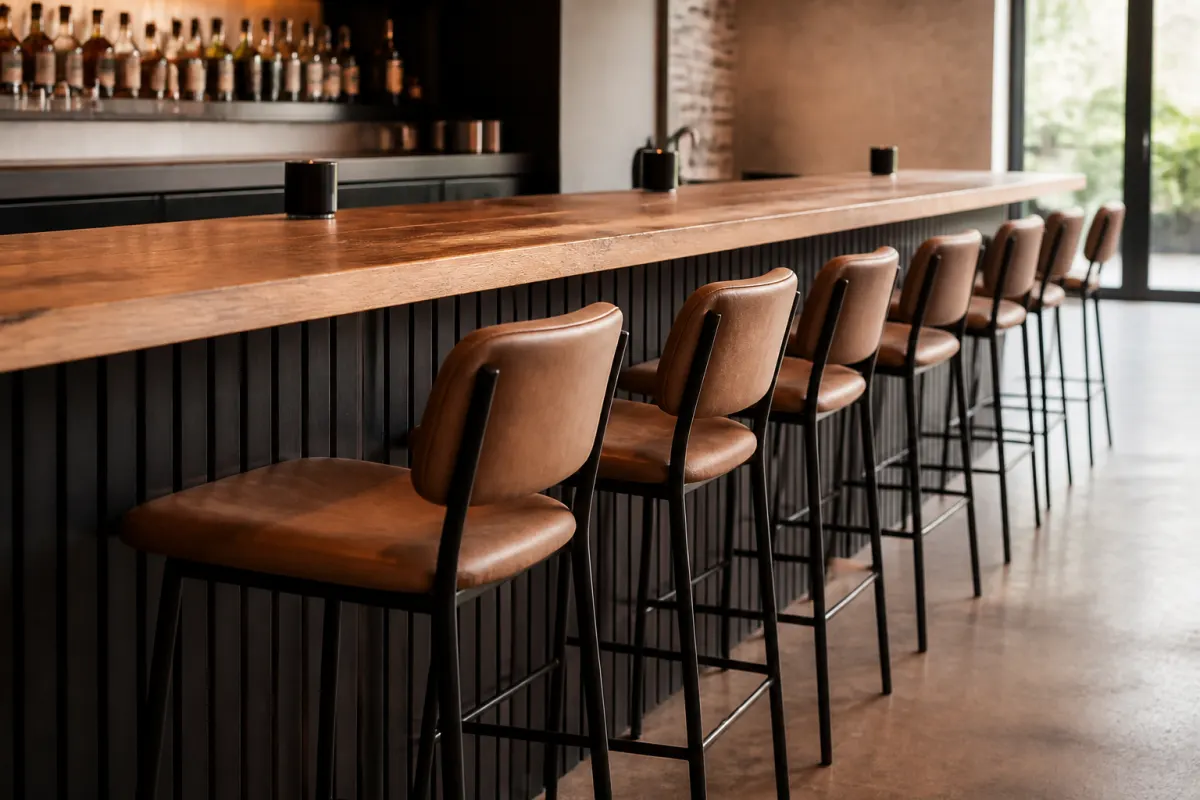
Compare actual guest dwell, average checks and covers in the proposed zone. Longer stays can change how many parties a seat serves, but this guide provides no measured relationship between backrests and rounds ordered. Use the venue's demand and service records for the revenue comparison.
Which model wins depends on your bar's demand pattern. A destination cocktail bar with a reservation-adjacent culture wants dwell time and comfort; a high-traffic sports bar or brewery wants throughput. Match the stool to the model you're actually running, not the one that photographs best.
Space math at the rail
A missing backrest may change the occupied envelope, but does not automatically let stools sit closer together or increase rail capacity. Compare actual backed and backless widths, rotation, pullout and guest/service clearances in the same usable rail length.
For a first layout comparison, use 24 to 28 inches of bar length per backless stool and 28 to 32 for a backed stool as chosen spacing scenarios. They do not prove that removing backs adds two or three seats along a 20-foot rail. Compare the actual stool widths and rotated/pullout envelopes, usable rail length, service wells and required routes in paired occupied layouts.
Stacking and storage
Obtain each backed and backless model's approved stack limit, cart, loaded footprint and handling instructions. Either style may be stackable or non-stacking; the missing back alone does not establish the storage saving. Compare the actual required quantity in the storage room.
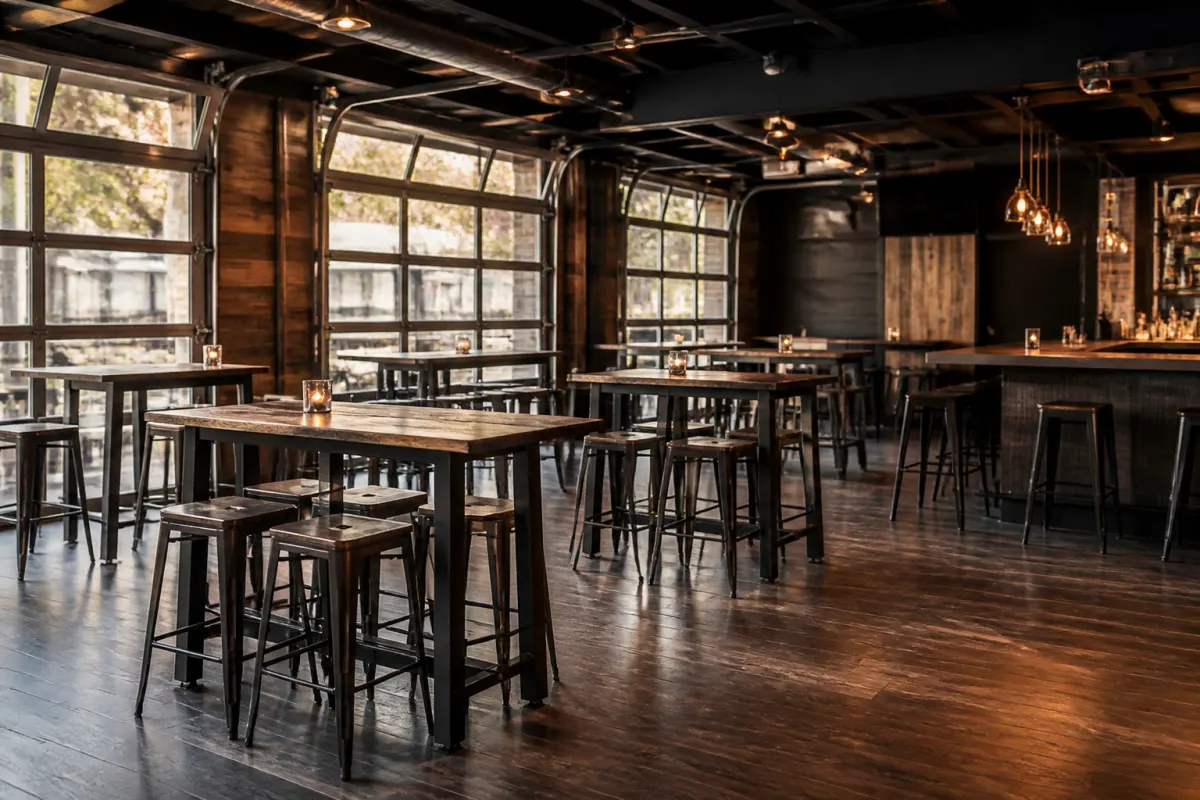
If your venue converts between bar service and event space regularly, that storage difference is worth weighing alongside the dwell-time decision.
Build quality regardless of style
Whichever style is chosen, obtain the exact frame, footrest, joint and commercial-use documents. Welded, bolted and other assemblies must be assessed as models rather than by a blanket fastener rule. Select upholstery from actual food/drink exposure and cleaning compatibility; fabric is not automatically unsuitable at every rail.
Inspect the backrest attachment and obtain its actual load, repeated-use and maintenance documentation. A weld or bolt label does not establish which connection fails first. Test the approved sample and retain replacement-part information before ordering the full quantity.
Running a hybrid program
A hybrid plan can be tested with backless stools at the main rail and backed stools in an adjacent seated zone. Approve it only after comparing actual comfort, envelopes, storage and observed use; that mix does not by itself guarantee a fast-turn rail or longer lounge stays.
If the venue changes service style across lunch and dinner, observe how the actual seats and zones are used at each time. Compare the proposed backed/backless mix with staff and guests instead of assuming one style absorbs lunch traffic and another automatically attracts the evening crowd.
Reading your own bar before you order
Before finalizing a stool program, spend a few shifts actually watching how guests use the current seating, if you're renovating an existing space, or study a comparable venue if you're building new. Note where guests linger longest, where servers struggle to move product through, and where seats sit empty during peak hours. That observation tells you more about the right backed-to-backless ratio for your specific venue than any general industry rule of thumb, since a sports bar near a stadium and a hotel lobby bar downtown will land on very different answers even with similar square footage.
Sourcing and lead times
Ask for each selected backed or backless model's exact commercial-use documentation; shared appearance does not establish identical specifications. Treat 10 to 14 weeks and a 20-unit minimum as provisional schedule and quantity examples. Obtain actual minimums, custom options, stock status and dated delivery terms from the supplier.
This decision fits into the broader bar and restaurant furniture program most operators are sourcing together with high-top tables and lounge seating, so it's worth pricing the full room at once for volume terms.
Submit a furniture request with usable rail length, paired occupied layouts, backed/backless quantities, intended use and finishes. Independent suppliers may confirm actual model envelopes and quotes; the chosen mix still needs your layout review.