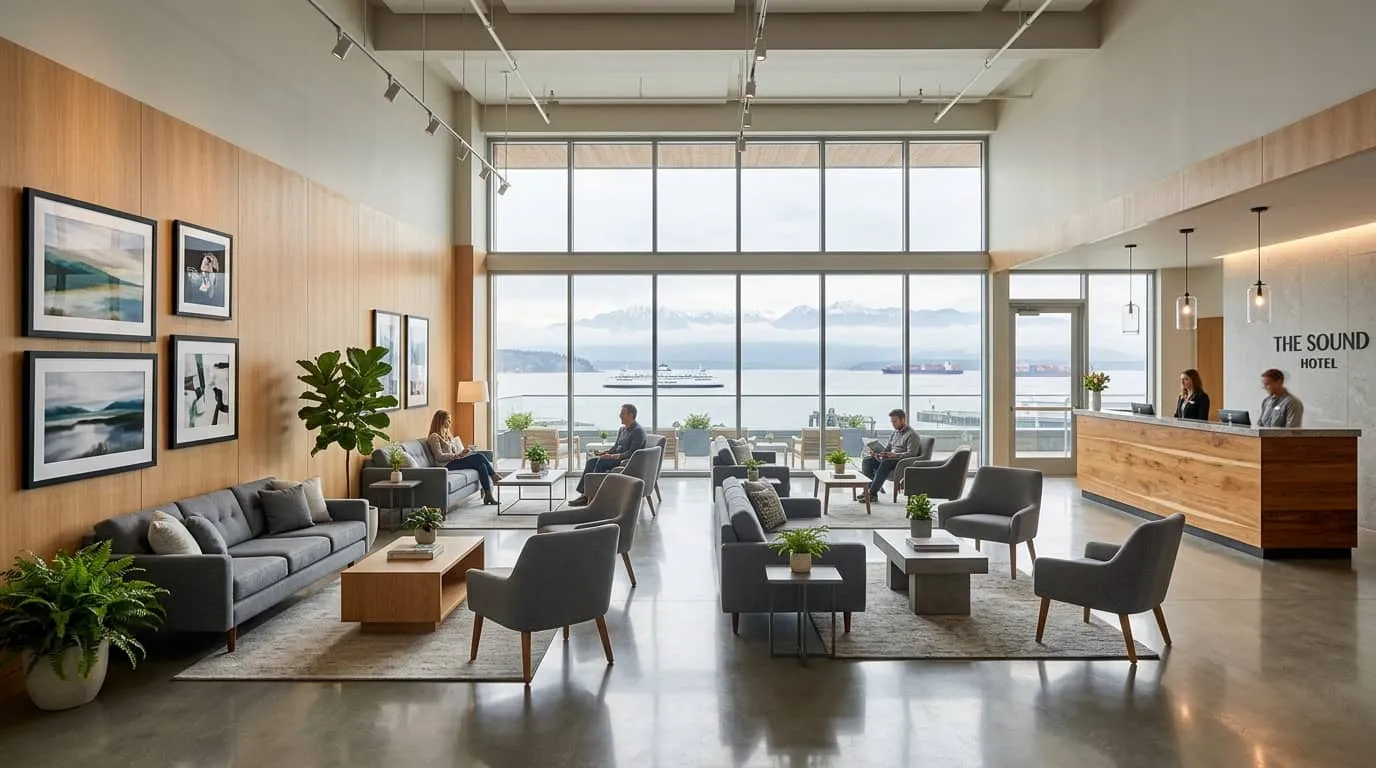
Restaurant Furniture Built for Seattle's Demanding Market
Seattle operators know the conditions. A Capitol Hill bar seats its first guests at 5 PM and its last at 2 AM, five nights a week. A Ballard Nordic-inspired bistro fills every cover during tourist season and relies on regulars through the grey stretch from November to March. A South Lake Union lunch spot serves Amazon and Microsoft employees who expect clean, modern interiors that match the polish of the tech campuses they just walked from. Whatever your neighborhood, your furniture is working as hard as you are and it has to hold up.
Contract-grade restaurant furniture is built to a different standard than anything you'll find at a home goods retailer. Frames are typically 18-gauge steel or solid hardwood with mortise-and-tenon joinery rather than pocket screws and particleboard. Seat foam is rated for 250,000 double-rubs or higher. Finishes are applied with commercial lacquers or powder coats that resist the repeated cleaning cycles, spilled IPA, and saturated Pacific Northwest humidity that will destroy residential pieces within a season. If you're opening in a renovated Pike Place Market building or a new construction ground-floor retail along the Puget Sound waterfront, the investment calculus is straightforward: contract furniture lasts five to ten years under heavy use, residential furniture rarely survives two.
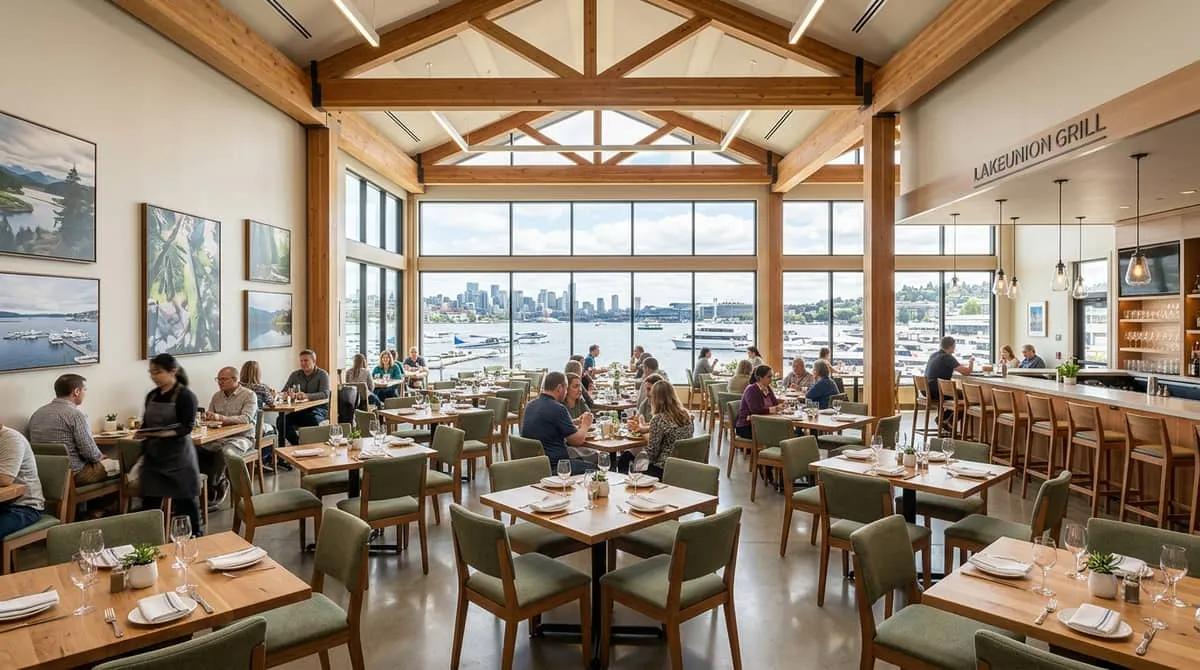
Dining Chairs and Tables That Handle the Volume
Your dining chairs are the piece your guests touch most and the piece that absorbs the most abuse. For Seattle's mid-range and upscale dining segment the kind of neighborhood restaurant doing $3M to $6M per year in revenue a fully upholstered side chair with a commercial COM fabric or contract vinyl is the standard choice. Look for chairs rated to 300 lbs static load with glides appropriate for your floor surface. If your space has polished concrete, which is common in South Lake Union builds, you want felt glides or nylon caps rather than bare metal, which will scar the floor and generate noise complaints from your downstairs neighbors.
Stacking chairs are the practical choice for high-turnover concepts, event venues near the Washington State Convention Center, and any operator running private dining rooms that need to be cleared and reset quickly. A well-made aluminum stacking chair can handle 10,000 stack cycles without deforming the seat rail. That matters when your event coordinator is stacking and unstacking 80 chairs every Saturday.
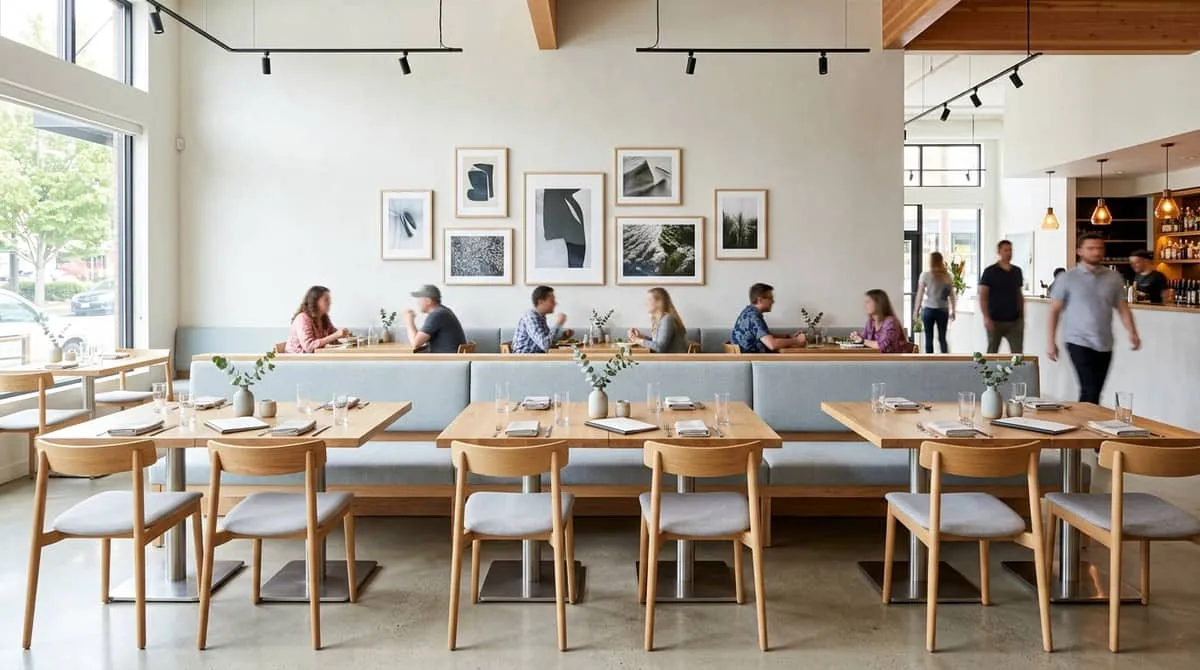
For tables, base selection matters as much as the top. A cast-iron spider base with a leveling glide is the industry standard for a reason it handles the uneven floors common in Capitol Hill's older brick buildings and adjusts for the seasonal movement you get in Pacific Northwest construction. Table tops in high-pressure laminate with a thermally fused edge hold up to daily cleaning with quaternary ammonium sanitizers without delaminating. Solid wood tops are an option where the aesthetic demands it, but plan for refinishing every two to three years in a high-use environment.
Banquette Seating for Pacific Northwest Interiors
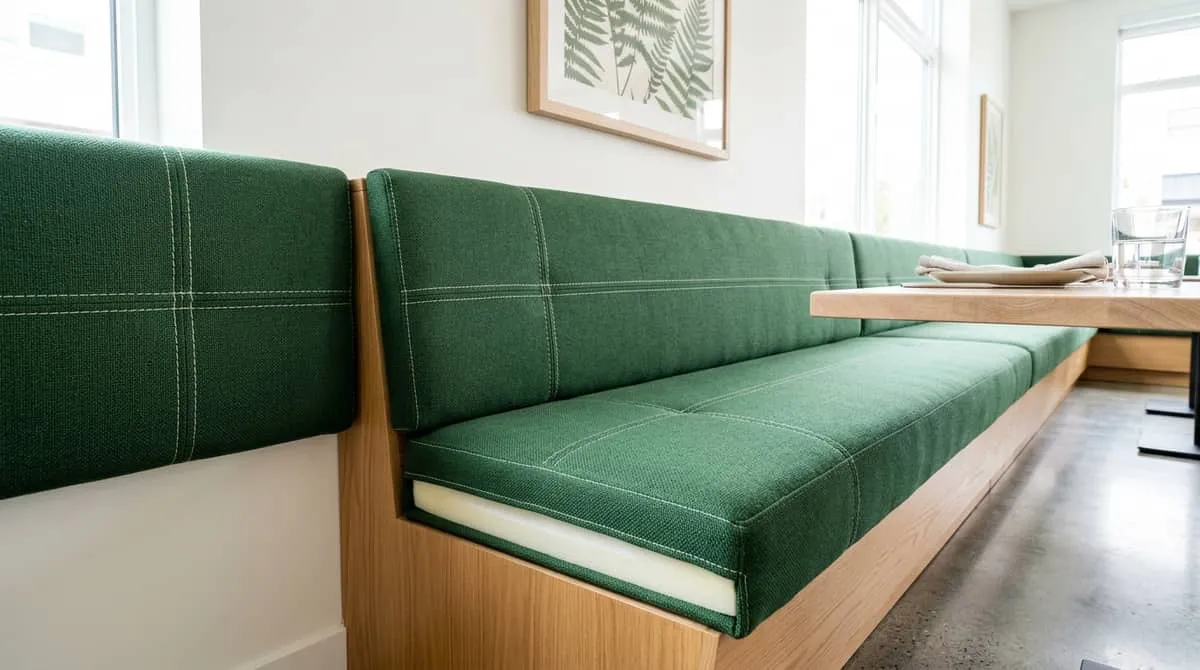
Banquettes are one of the highest-ROI investments a Seattle restaurant operator can make. A well-designed banquette run along a perimeter wall typically yields 15 to 20 percent more covers per square foot than a freestanding chair layout, and it creates the enclosed, intimate atmosphere that Seattle diners gravitate toward during the long rainy season. Your guests want to feel settled and warm when it's 40 degrees and sideways rain outside. A banquette delivers that.
The structural spec for a restaurant banquette differs significantly from residential built-in seating. Commercial banquette frames are typically welded steel or kiln-dried hardwood with a platform height of 17 to 18 inches finished not the 15 to 16 inches you see in residential. Seat depth runs 18 to 20 inches. Back height should be evaluated against your ceiling height and whether you're dividing sections; a 42-inch back creates visual privacy without blocking sightlines across a full room. In a Ballard restaurant with 11-foot ceilings and exposed fir beams, you can go taller and lean into the architecture. In a South Lake Union fast-casual with a dropped ceiling grid, keep the banquette low and clean.
Fabric selection for Seattle banquettes should account for moisture. Guests arrive wet. They sit down wet. Crypton and similar performance fabrics are worth the per-yard premium because they are hydrophobic at the fiber level rather than relying on a topical treatment that wears off. If you prefer leather or faux leather, specify a commercial-grade vinyl rated for seam strength and UV stability the south and west-facing windows common in Puget Sound-view spaces will degrade a residential vinyl in under a year.
Bar Seating for Seattle's Bar-Forward Culture
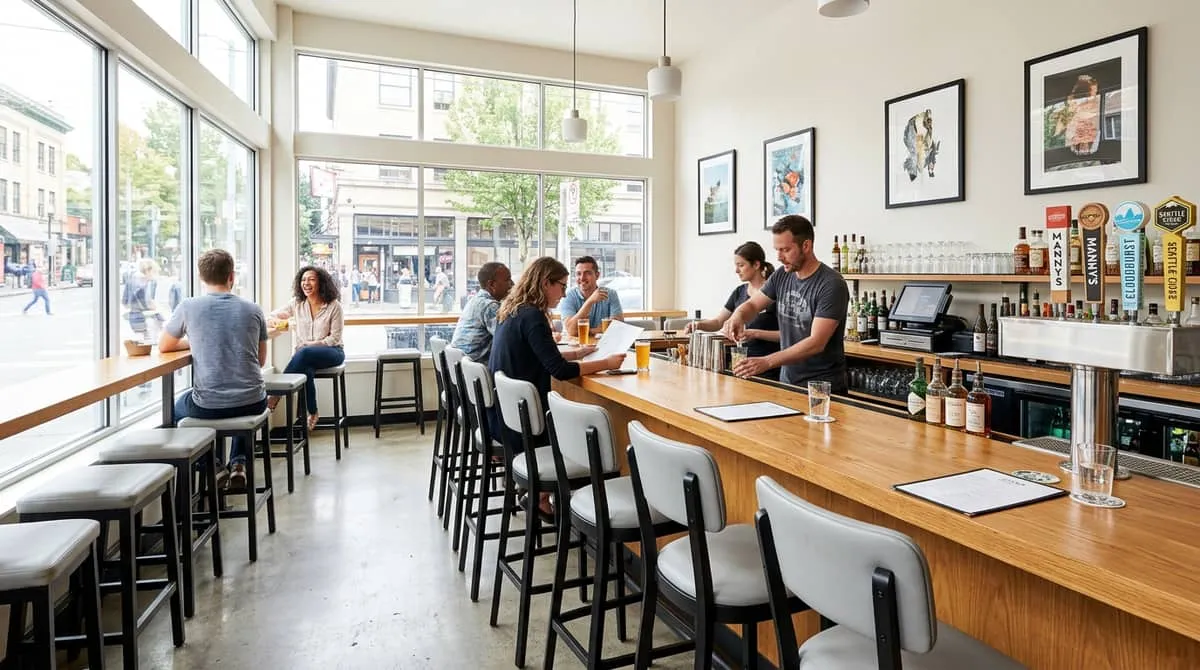
Seattle has a strong bar culture. From the craft cocktail programs on Capitol Hill to the brewery taprooms spreading through Ballard and Georgetown, the bar rail is often the highest-revenue section of the room. Your bar stools need to perform accordingly.
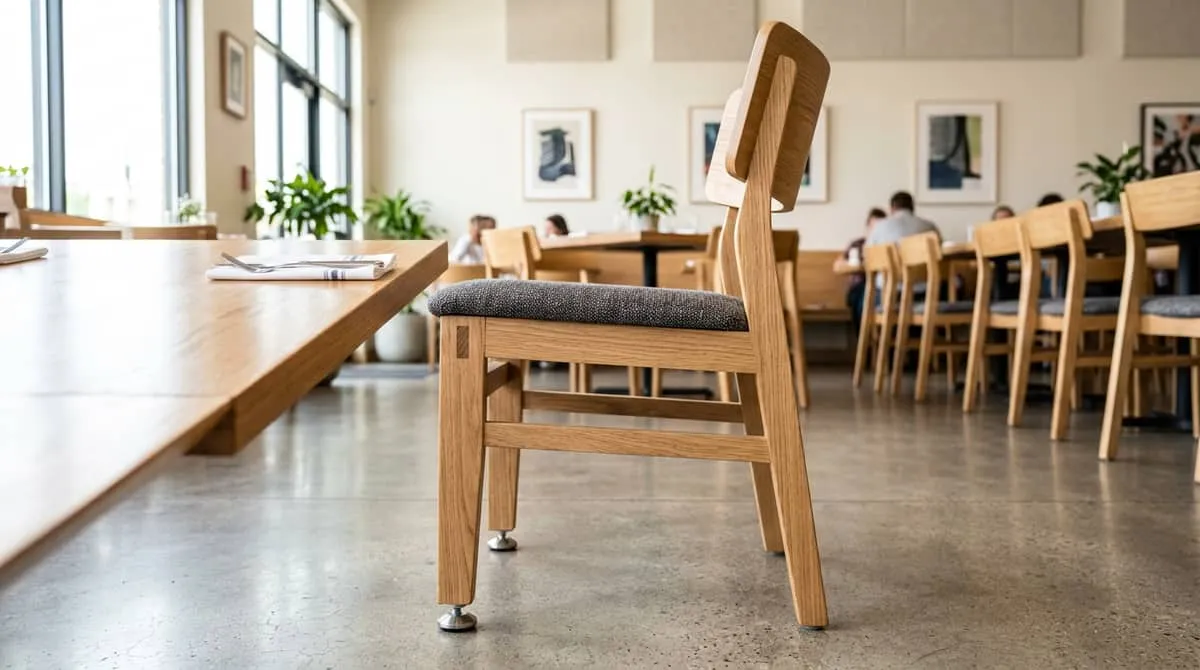
Specify swivel stools with a 360-degree swivel mechanism that includes a return-to-center feature. Guests who turn to talk to the person next to them should not end up with the stool locked at an angle that increases tipping incidents and puts lateral stress on the weld points that will crack the frame over time. Footrest height for a 42-inch bar rail should be 9 to 10 inches from the floor. For a 36-inch counter-height setup, a footrest at 7 to 8 inches works for most guests.
Outdoor bar seating along the Puget Sound waterfront or a South Lake Union patio requires marine-grade or commercial powder-coated aluminum. Salt air from the Sound combined with Seattle's rain volume will rust standard steel bar frames within one season even if they're nominally described as "outdoor rated." If you're investing in a rooftop or waterfront patio, specify frames that are either all-weather resin, marine-grade aluminum, or 316 stainless steel. Seat materials should be sling fabric, waterproof vinyl, or teak nothing that requires drying before seating a guest.
Get the spec right before you order. A 60-seat restaurant in Ballard might have $40,000 to $80,000 in furniture across the room. That investment deserves the same due diligence you applied to your hood system and your POS.
Every Seattle venue has its own volume, layout, and turnaround demands, and restaurant furniture pricing follows from those specifics. Request a quote and we will scope it to your project.