Raleigh has emerged as one of the most exciting restaurant cities in the American South, a development driven not just by culinary talent but by the purchasing power and design awareness of the Research Triangle's technology and pharmaceutical workforce. When IBM executives and SAS employees are your regulars, the furniture in your dining room needs to do more than hold up it needs to communicate the same level of considered design that your guests encounter at their own workplaces. For restaurant operators in Raleigh, commercial furniture is a front-of-house investment that directly shapes revenue.
Raleigh's Restaurant Landscape and Furniture Demands
The Glenwood South corridor is the most visible expression of Raleigh's dining ambitions a dense strip of restaurants, bars, and concept spaces that runs through one of the Southeast's most active evening entertainment districts. Properties here face a demanding operational cycle: lunch service driven by nearby offices, happy hour traffic from RTP commuters, dinner service running late on event nights. Dining chairs in this environment need to function across all three day-parts, look polished throughout, and survive the cleaning cycles that high-volume service demands.
Downtown Raleigh, anchored by the Raleigh Convention Center, adds a distinct layer of demand. Convention center overflow pushes hundreds of diners into nearby restaurants simultaneously a pattern that stresses both kitchen and floor operations. Restaurant operators within walking distance of the convention center frequently reconfigure their seating layouts between events, which means furniture that stacks cleanly, moves without floor damage, and can be reassembled quickly by floor staff.
The Warehouse District has seen a wave of independent restaurant openings in renovated industrial spaces. Exposed brick, poured concrete floors, and steel beam ceilings are the architectural backdrop here, and the furniture needs to complement rather than fight with that industrial character. Warm wood seat surfaces on metal frames dining chairs and barstools with solid wood seats and powder-coated steel legs have become a signature look for Warehouse District operators looking to soften an industrial shell while maintaining the neighborhood's authentic character.
NC State University's campus edge has generated its own cluster of restaurants serving a faster-paced, higher-turnover crowd, where durability and ease of cleaning take priority. Commercial-grade stacking chairs in neutral finishes that can handle daily heavy use without showing wear are the practical choice for operators in this zone.
Design Specifications for Raleigh's Dining Rooms
The Research Triangle contemporary aesthetic that defines Raleigh's best hospitality design translates directly into furniture specifications for restaurant spaces. The dining rooms generating the most social media traction and repeat business in this market share a common visual vocabulary: warm wood tones, matte black or brushed bronze metal accents, and upholstered seating in performance fabrics that read as sophisticated without being formally stiff.
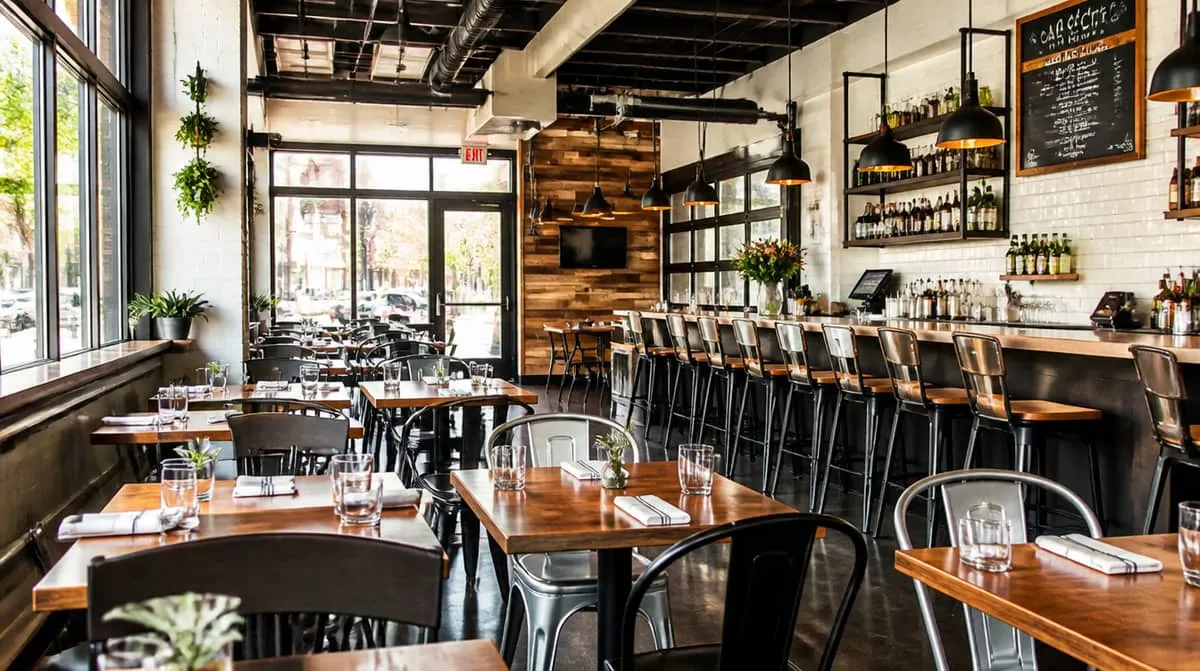
For upholstered dining chairs, the specification challenge is balancing visual warmth with commercial durability. Fabrics with a double rub count above 100,000 and a Crypton or similar performance treatment are essentially required for any Raleigh restaurant running multiple seatings per night. The food and beverage spill risk is too high for residential-grade materials regardless of how good they look in a showroom.
Barstools for bar-adjacent seating a common layout in Glenwood South restaurants where the bar serves as a social anchor for the dining room should specify seat heights that work with both bar-height and counter-height surfaces, since many Raleigh operators are installing flexible counter configurations. Swivel mechanisms on commercial barstools need to be fully welded and rated for continuous-use hospitality environments, not residential dining applications.
For operators considering banquette-adjacent dining chairs, seat depth and back height matter as much as finish. Raleigh's tech-sector diners tend to linger average check times are longer here than in comparable Southern markets so ergonomic comfort at the 45 to 90 minute range is a real specification consideration.
Procurement for Restaurant Furniture in Raleigh
Raleigh restaurant projects whether new openings or renovations typically have hard opening date commitments driven by lease terms, investor timelines, and in many cases convention or event calendar anchors. A restaurant opening near the convention center wants to be operational before a major pharmaceutical conference, not after it. That creates real pressure on furniture lead times.
Working with a supplier who maintains in-stock programs for core dining and bar seating means Raleigh operators can meet those hard deadlines even when custom upholstery programs take 10 to 12 weeks. Staggering the order standard stacking chairs from inventory, custom upholstered banquette seats on the longer lead is a common approach that protects opening dates without sacrificing design intent.
Every Raleigh venue has its own volume, layout, and turnaround demands, and restaurant furniture pricing follows from those specifics. Request a quote and we will scope it to your project.