Louisville has quietly become one of the most interesting restaurant cities in the American mid-South, and the furniture inside these spaces tells that story. Operators here navigate a market where a single week in May generates more covers than some cities see in a month, where bourbon tourism has created an educated, experience-focused dining public, and where the design bar is set by nationally recognized chef-driven concepts in NuLu and by the grandeur of Derby hospitality traditions downtown.
Louisville's Restaurant Landscape: From Derby Week Volume to Year-Round Design
The Kentucky Derby creates the most compressed, highest-stakes restaurant demand of any single American sporting event. Properties within a mile of Churchill Downs and every downtown restaurant operate at absolute capacity for Derby Week, often running extended hours, prix-fixe menus, and reservation systems that fill months in advance. Furniture in these environments must absorb that punishment without showing it. A dining chair that looks fresh in April and battered by June is a procurement failure.
The bourbon tourism economy has shaped a distinct dining culture on Whiskey Row and West Main Street. Distillery tasting rooms and bourbon bars have raised the experiential standard: guests arrive expecting environments that feel intentional, material-rich, and connected to Kentucky's craft heritage. Restaurants on and around Main Street compete with those experiences, which means cheap furniture signals exactly the wrong thing to exactly the most discerning segment of Louisville visitors.
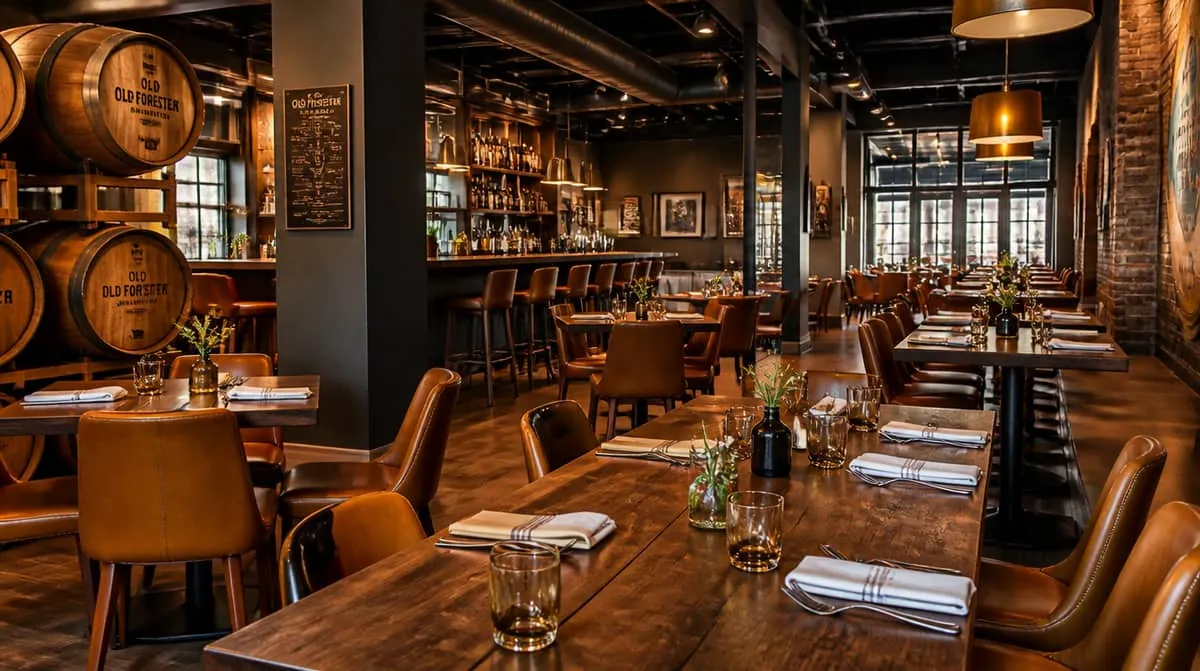
NuLu East Market Street and surrounding blocks is where Louisville's independent restaurant scene has concentrated. Concepts like Garage Bar, Mayan Café, and the neighborhood's roster of chef-owned spots have established a design expectation that blends industrial materials with warm finishing touches. Dining chairs in this neighborhood tend toward metal frames with upholstered seats in leather or performance wovens easy to clean, visually contemporary, durable enough for the brunch rushes that define NuLu weekends.
Upscale dining near the Omni Louisville and the Convention Center corridor serves a corporate and special-occasion clientele with different expectations: heavier upholstered seating, more formal table-setting, and materials that read as premium rather than casual-cool.
Design for Louisville's Restaurant Identity
The dominant Louisville restaurant aesthetic draws from the same material vocabulary as the city's hotels: dark wood tones (walnut, mahogany, or deep-stained oak), leather or leather-look upholstery in cognac and tobacco browns, and jewel-tone accent textiles in burgundy, deep green, and navy. This is the design language of Derby heritage formal, warm, and grounded in natural materials.
For traditional and upscale-casual operators, dining chairs with solid wood frames, tight-back upholstered seats, and contrast welt detailing hit every mark. Banquette seating in jewel-tone velvet or performance bouclé reads luxury without requiring the kind of fragile maintenance that's impractical in a high-volume service environment.
Bar seating deserves specific attention in Louisville. The city's whiskey bar culture from the sophisticated operations on Whiskey Row to the neighborhood-anchor bourbon bars throughout the Highlands and Germantown has created a category unto itself. Barstools in these environments need to withstand 12-plus hours of daily use, pair visually with dark wood back bars and exposed brick, and project the warmth and permanence that bourbon culture demands. Swivel mechanisms and footrest rails take the hardest wear; spec those components at commercial grade.
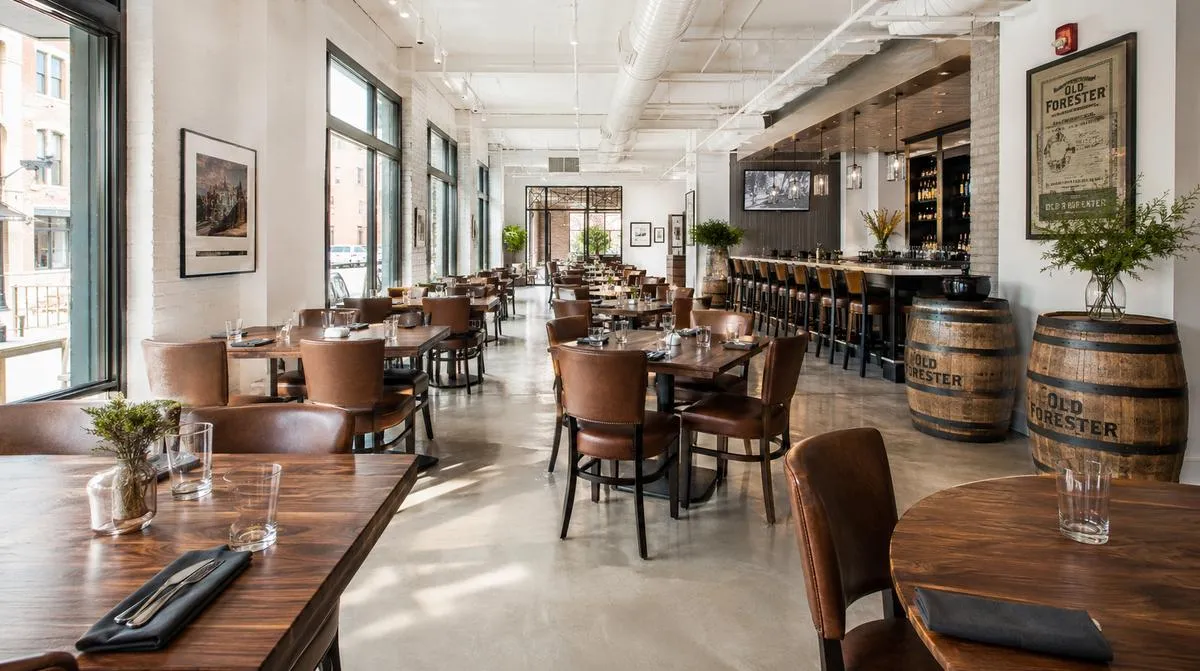
NuLu operators often go lighter in their material choices: blonde wood, black metal, concrete accents the furniture follows rather than leads the industrial-meets-artisan interiors. A good supplier should carry range across both aesthetics.
Procurement Timing and Lead Times
Louisville restaurant projects have a hard ceiling: Derby Week. Openings and renovations that don't complete before mid-April get pushed, often at significant cost, because contractors and delivery crews go fully committed in the run-up to the Derby. If you're targeting a spring opening, work backward from late March as your furniture installation deadline and build in at least a two-week buffer.
For stocked items metal-frame dining chairs, standard barstools, banquet chairs lead times run 2-4 weeks. Custom upholstered pieces in restaurant-specific COM (customer's own material) fabric programs run 10-14 weeks. For full restaurant buildouts, a phased delivery schedule coordinated with your GC's installation sequence keeps the project moving without storage bottlenecks.
Tell us about your Louisville restaurant furniture needs and we will turn your quantities, finishes, and timeline into a firm quote. Request a quote whenever you are ready to compare.