Indianapolis has quietly built one of the Midwest's most interesting restaurant landscapes. Mass Avenue's independent dining corridor and Fountain Square's converted industrial spaces attract chef-driven concepts that compete directly with Chicago and Nashville for culinary attention. Meanwhile, the restaurants ringing the Indiana Convention Center and Lucas Oil Stadium absorb punishing cover volumes during GenCon weekends, Final Four runs, and NFL Draft days sometimes serving two thousand-plus covers before 9 PM. Both contexts demand contract-grade restaurant furniture, but the specifications differ in meaningful ways.
The Indianapolis Restaurant Market: Two Distinct Contexts
The first context is neighborhood dining along Mass Ave, Virginia Avenue, and the Bottleworks District. These are design-conscious, experience-forward spaces where the furniture is part of the draw. Operators here think Bluebeard, Milktooth, Beholder invest in furniture that signals craft and intentionality. The aesthetic leans Midwest contemporary: visible wood grain, woven upholstery in warm tones, metal accents in matte black or brushed bronze. Diners in these neighborhoods are locals and design-savvy visitors who notice when furniture looks out of place or feels cheap.
The second context is convention-corridor volume dining. Restaurants operating in the shadow of the Indiana Convention Center or connected to the skywalk hotel cluster process enormous turnover during event weeks. A 120-seat restaurant can run twelve to fifteen cover turns on a GenCon Saturday. Dining chairs in these environments need commercial-grade structural ratings: A-frame or four-leg steel construction with weld joints tested to BIFMA standards, seat pads rated above 100,000 double rubs, and stackability for rapid floor reconfigurations when event groups need private dining setups on short notice.
The good news for Indianapolis operators is that commercial-grade construction and design-forward aesthetics are not mutually exclusive. American walnut veneer side chairs with steel stretchers hit both marks they read as thoughtfully designed in a Fountain Square bistro and survive the rotation volume of a convention-adjacent sports bar without racking loose within a year.
Dining chairs and four-top table bases should be specified together so leg clearance and tabletop height align. Commercial tables with cast-iron or steel pedestal bases and high-pressure laminate tops rated for restaurant use resist the heat and moisture that come with high-volume service.
Design: Warm Craft Without Coastal Pretension
Indianapolis's design sensibility is a distinct regional voice, and restaurant operators who lean into it rather than importing a direct New York or Los Angeles aesthetic tend to build stronger neighborhood loyalty. The Indiana Convention Center's recent walnut-and-steel interior language, the Bottleworks Hotel's adaptive reuse of the old Coca-Cola bottling plant, and the 21c Museum Hotel's art-forward rooms all point toward a common thread: warm materials, visible craft, clean lines, quality without flash.
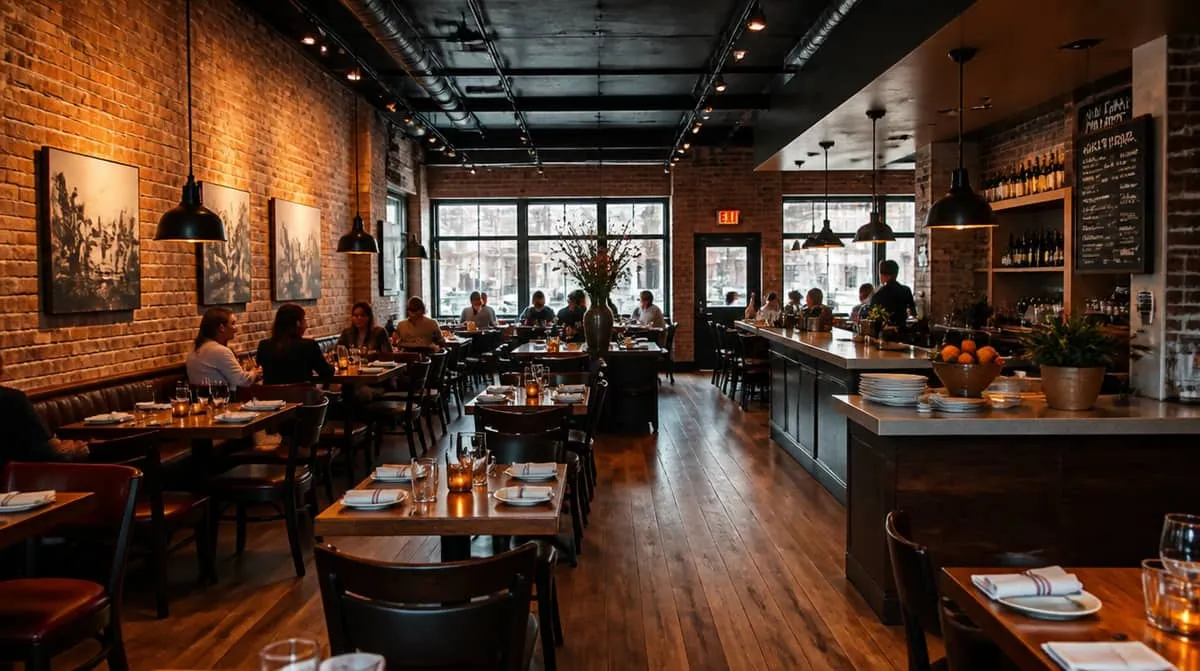
For restaurant seating, this translates to upholstered dining chairs in cognac, caramel, or deep teal leather-look fabrics over solid hardwood or steel frames. Banquette runs in tufted or channel-quilted upholstery anchor the room and add acoustic dampening in high-ceilinged industrial spaces a practical benefit in converted loft dining rooms on Mass Ave. Barstools with footrests and swivel mechanisms rated for commercial use suit the open kitchen bar counters popular in Indianapolis's independent dining concepts.
For patio extensions a growing part of Fountain Square and Mass Ave dining through spring and fall look for powder-coated aluminum frames in matte black or warm bronze with UV-stable sling or woven mesh seating. Indiana's temperature swings require materials that don't require seasonal storage.
Procurement: Timing Around Convention Windows
Indianapolis restaurant operators face a procurement timing challenge that mirrors their hotel neighbors: convention events compress the windows available for furniture delivery and installation. A renovation that requires closing a 90-seat dining room for a week needs to be scheduled around the Indiana Convention Center calendar closing during GenCon week or Final Four weekend is not an option for convention-corridor operators.
Plan major furniture refreshes for January through early March, or late September through October, when the convention calendar has natural gaps. Lead times for in-stock commercial dining chairs and barstools run three to four weeks. Custom upholstery programs and booth fabrication require eight to twelve weeks from order confirmation. We coordinate white-glove delivery and installation to minimize your closure window, typically completing 90-seat dining room installations in two to three days with a dedicated crew.
Pricing for restaurant furniture in Indianapolis depends on quantities, finishes, and your delivery window, so a project-specific quote beats any list figure. Request a quote to get yours.