Indianapolis is a sports and convention city, which means its bars and hotel lounges experience seating demand spikes unlike almost any other midsize American market. A single Lucas Oil Stadium event can put 65,000 people within a half-mile radius of downtown's bar district, all looking for somewhere to land at once. GenCon floods Mass Ave and the convention center hotel lobbies with 70,000 tabletop gaming enthusiasts for four consecutive days. When seating fails during these events a barstool leg snaps, a lounge chair rocks visibly, a bench seat delaminate under rotation load the result is a social media post before staff can respond.
The Indianapolis Bar and Lounge Market: Event Spikes and Everyday Volume
The bar and lounge environments most affected by Indianapolis's event calendar fall into three distinct zones. The first is the convention center hotel lobby bar properties like the Hyatt Regency, JW Marriott, and Marriott Place skywalk cluster maintain bars that double as informal conference networking space during convention hours, then transition to sports viewing and postgame celebration mode for Lucas Oil events. This dual-use pattern demands furniture that reads polished enough for a Lilly pharmaceutical company happy hour and durable enough to handle a standing-room NFL postgame crowd.
Barstools in these environments need swivel mechanisms rated for commercial use, footrests constructed from solid steel rather than welded tube (which eventually cracks under concentrated foot pressure), and seat heights that accommodate both standard 42-inch bar tops and 36-inch counter heights where the same stool may be deployed in multiple zones. Upholstery in commercial-grade vinyl or high-performance woven fabric rated above 150,000 double rubs handles the turnover volume without visible wear within the first replacement cycle.
The second zone is Mass Ave's independent bar and cocktail lounge scene. Neighborhoods Spirits, Repeal, Libertine Liquor Bar these concepts compete on atmosphere, and their furniture is part of what creates it. The aesthetic here runs warmer and more eclectic than the convention corridor, with more latitude for mixed seating types: upholstered banquettes against exposed brick walls, high communal tables with barstools in matte black powder-coated steel, lower lounge chairs and ottomans arranged for the linger-and-sip experience that drives ticket averages.
The third zone is hotel lobby lounges in boutique properties like the 21c and Bottleworks Hotel, where the lounge functions as both a bar and an art experience. Seating here rewards design risk: bold upholstery colors, unexpected silhouettes, pieces with gallery-worthy presence. Sofas in cognac leather or deep jewel-toned velvet against the Bottleworks' industrial steel window frames create the Instagram moment that boutique hotel marketing depends on while still needing to support hundreds of seatings per day.
Specifications for High-Rotation Bar Seating
Commercial bar seating specifications are non-negotiable for Indianapolis's volume environments. BIFMA-tested frames the industry standard for commercial seating structural integrity are the minimum. For barstool frames, specify welded steel or solid hardwood with mortise-and-tenon or fully welded joints at every stress point. Avoid screwed-and-glued joints at leg-to-seat junctions; these are the failure point on residential-grade stools deployed in commercial environments.
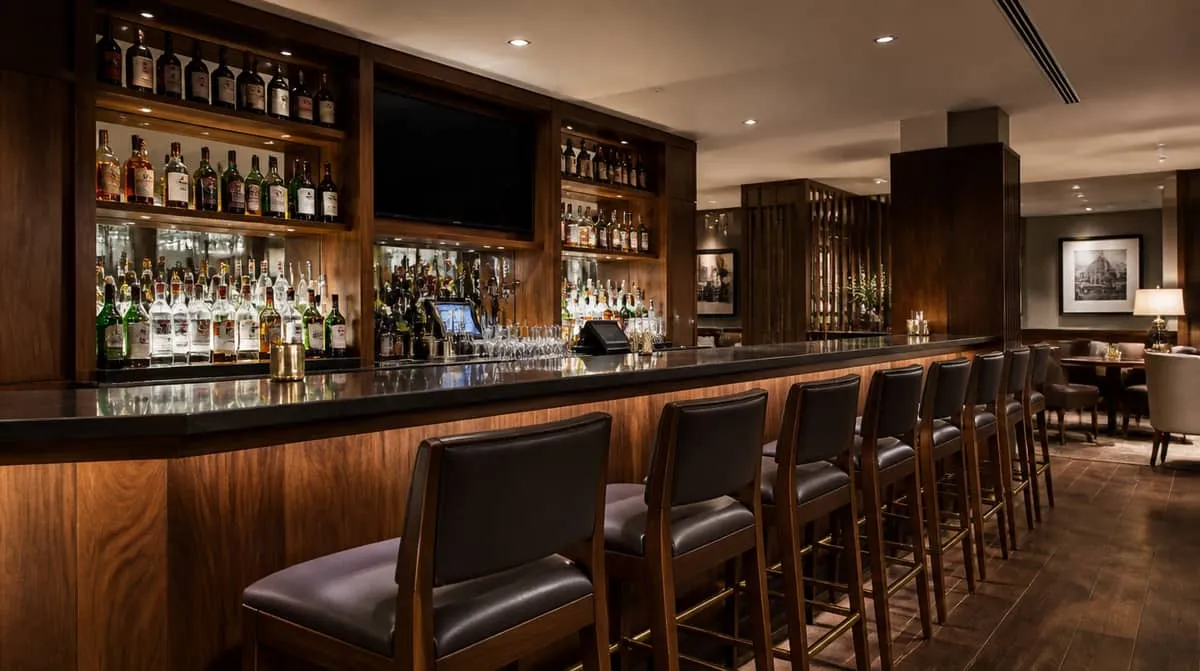
Footrests deserve more attention than most operators give them. A commercial footrest on a 24-inch or 30-inch barstool takes several thousand pounds of aggregate force per day in a busy Indianapolis bar. Specify 1-inch solid round steel bar or equivalent not welded square tube, which fatigues at the corner welds. Footrest mounting hardware should be threaded and locknut-secured, not riveted.
For lounge seating, ottomans in high-traffic bars serve double duty as flexible extra seating during peak events. Specify commercial foam rated at 1.8 lb/cubic foot density or higher, with a hardwood or steel internal frame. Lightweight ottomans with hollow frames are returnable by guests and fail within months in convention-traffic environments.
Procurement and Delivery in Indianapolis
Bar and lounge renovation projects in Indianapolis must be scheduled around the event calendar. The Indiana Convention Center publishes its major event schedule eighteen months in advance use that calendar to identify two- to three-week installation windows. Most Indianapolis operators find January through February and the gap between Labor Day and the fall convention season offer the most workable installation windows.
Lead times for in-stock commercial barstools and lounge seating run three to five weeks. Custom fabrication, COM upholstery, and large banquette runs require eight to twelve weeks. We deliver and install with white-glove crews who work within your operational hours to minimize closed nights.
We quote bar and lounge furniture for Indianapolis operators against their own layouts and order sizes rather than a generic sheet. Request a quote and we will put together pricing for your property.
Related reading
- Commercial bar furniture buying guide
- What is contract furniture
- Hotel furniture supplier guide
- Hospitality furniture supplier guide
- Commercial barstools
- Lounge chairs for bars and hotel lobbies
- Commercial ottomans
Our take
Of the three Indianapolis bar and lounge zones the post describes, the convention hotel lobby bar cluster is the one with the least scheduling room. It has to stay open across both the Indiana Convention Center's published event calendar and Lucas Oil Stadium's game schedule without going fully dark, since it functions as informal conference space by day and postgame overflow by night. Mass Ave's independent bars and the boutique hotel lounges the post names are not tied to a stadium or convention booking calendar in the same way, so they carry more real scheduling flexibility even though the post recommends the same January through February and Labor Day windows for all three.
The bottom line: Convention hotel lobby bar renovations should be locked to the published convention and stadium calendar first, since that zone has the least flexibility of the three the post identifies, with Mass Ave and boutique lounge projects scheduled around it rather than on the same timeline by default.