Indianapolis's boutique hotel market has grown quickly alongside the city's rising cultural profile. Travelers who once defaulted to the JW Marriott or Hyatt skywalk properties now actively seek out the 21c Museum Hotel's art-integrated rooms, the Bottleworks Hotel's adaptive reuse of the 1931 Coca-Cola plant, or smaller inn properties along Mass Ave and in Fountain Square. These guests are choosing the property in part because of how it looks and feels which means boutique hotel furniture carries narrative weight that a branded select-service property's furniture does not.
Indianapolis's Boutique Hotel Landscape and Its Design Demands
The Bottleworks District is the clearest case study. The Bottleworks Hotel preserved the original bottling plant's steel windows, exposed brick, and industrial bones while installing warmly contemporary guestroom furniture that complements rather than fights the architecture. That balance honoring the existing industrial character while delivering residential comfort is the design challenge that defines Indianapolis boutique hospitality.
Mass Ave boutique properties face a different version of the same challenge. The neighborhood's Victorian-era storefronts and early 20th-century commercial buildings create historic contexts that reward furniture with visible craft and warm materiality. Exposed joinery, hand-applied finishes, upholstered headboards with nail-head trim, and solid hardwood or bent-steel case goods all read as intentional in a Mass Ave boutique room. The same pieces would feel out of place in a corporate convention hotel.
Fountain Square's emerging boutique inventory smaller inn concepts and extended-stay properties targeting the creative-class traveler leans into the neighborhood's arts-district identity. Furniture here can afford to take more risk: bold upholstery colors, mixed material combinations, asymmetric silhouettes that photograph well for Instagram and drive organic marketing. Lounge chairs in deep emerald or warm rust upholstery against exposed brick walls are not a styling choice in Fountain Square they are a marketing strategy.
What all Indianapolis boutique properties share is a guest base that notices furniture quality. GenCon attendees booking boutique rooms are often design-literate hobbyists who will post detailed room reviews. Life sciences conference attendees from Eli Lilly or Cook Medical expect the quality level their expense accounts justify. Headboards with commercial-grade upholstery and solid mounting systems, sofas with hardwood frames and high-resilience foam, and case goods with furniture-grade veneer and smooth-operating hardware these are the specifications that generate five-star reviews rather than comments about creaking drawers and wobbly chairs.
Design Language: Indianapolis Motor Speedway Heritage and Midwest Craft
Indianapolis boutique hotels have a design vocabulary available to them that no other city can claim: the Indianapolis Motor Speedway's century-long heritage of American engineering precision. The best boutique properties in the market reference this without being literal no checkered-flag upholstery or racing memorabilia. Instead, the heritage translates into a commitment to quality craft: warm American walnut with visible grain, brushed steel hardware with machined edges, upholstery that feels substantial to the hand.
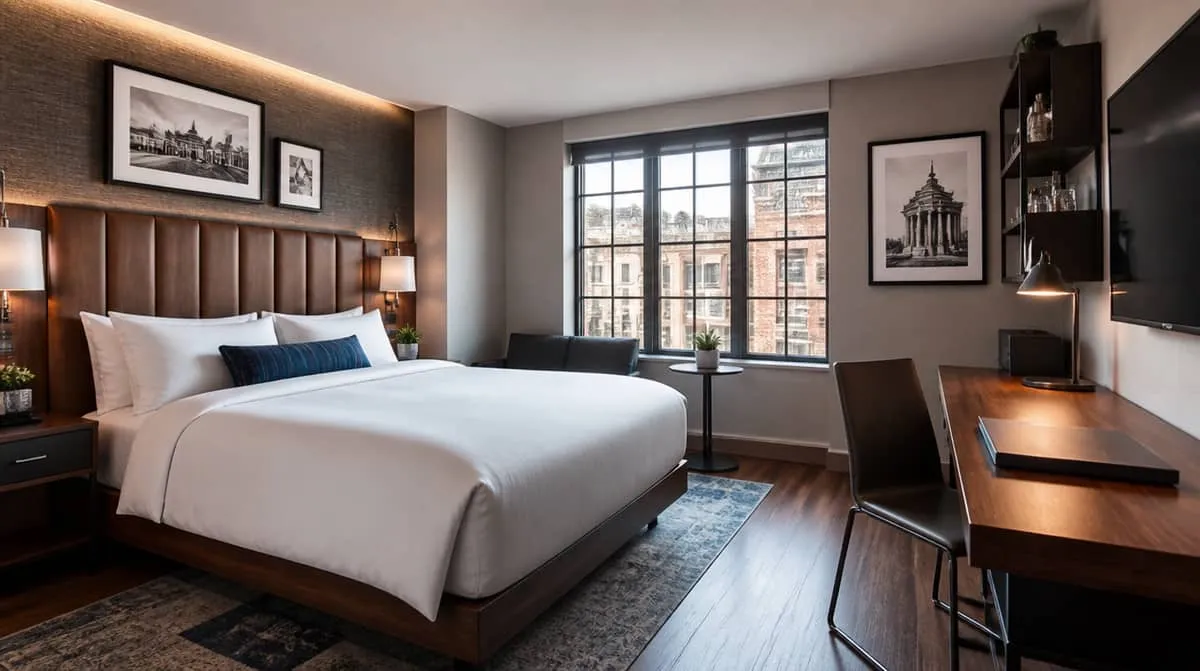
This is the Midwest contemporary register that works across Indianapolis boutique contexts. For guestroom case goods, specify four-drawer dressers and combination wardrobe-desk units in walnut veneer with dovetail corner joints and soft-close hardware. Surface hardness H5 or better. For upholstered pieces, choose fabrics in the warm neutral family camel, cognac, warm grey, moss green with abrasion ratings above 100,000 double rubs. Sofas in common areas and suites should use eight-way hand-tied spring systems for the kind of seating depth that travel-worn guests immediately register.
Lighting is outside our scope, but furniture placement relative to window light matters: in industrial-conversion properties with steel windows and high ceilings, furniture arrangements that create intimate zones within large rooms perform better in guest satisfaction scores than open-plan layouts that feel empty.
Procurement for Boutique Timelines
Boutique hotel projects typically involve more custom or semi-custom specification than branded properties. COM upholstery programs where the operator supplies fabric and we apply it to specified frames are common for boutique properties seeking a proprietary look. These programs require twelve to sixteen weeks from fabric approval to delivery.
We work with Indianapolis boutique operators to phase installations around occupancy: many boutique properties operate at 80-plus percent occupancy on convention weekends and cannot afford full closures. Floor-by-floor or wing-by-wing installation phasing, coordinated with your front desk calendar, keeps revenue rooms available throughout the renovation cycle. Contact us at least five months before your target completion date for custom programs.
Ready to spec boutique hotel furniture for your Indianapolis project? Send us the details and we will price it around your requirements. Request a quote to start.