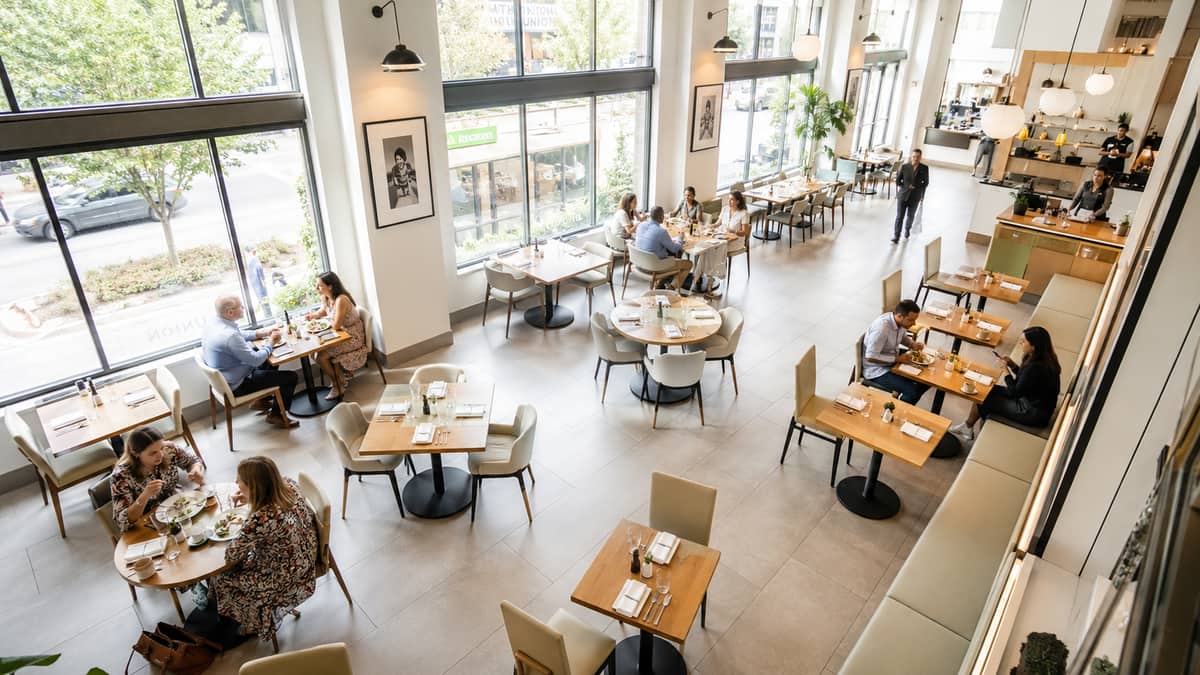
Bend has one of the highest concentrations of craft breweries per capita of any city its size, and that brewery culture drives much of the restaurant and taproom furniture demand in the market. Add the dining and retail corridor at the Old Mill District along the Deschutes River, a downtown core packed with patios competing for the short but intense summer season, and a steady flow of outdoor recreation tourists filling seats after a day on the mountain or the river, and you have a dining scene that is design-conscious but also brutally hard on furniture.
Why Contract-Grade Furniture Is the Minimum Specification
Contract-grade furniture is built to commercial performance standards, stress-tested frames, commercial-weight glides, and upholstery rated for tens of thousands of double rubs at minimum. A Bend taproom or restaurant chair sees more use in a busy summer weekend than a residential chair sees in years. Retail furniture fails fast under that load: joints go first, then glides, then the upholstery surface, and you end up replacing chairs on an 18-month cycle instead of a five-to-seven-year one.
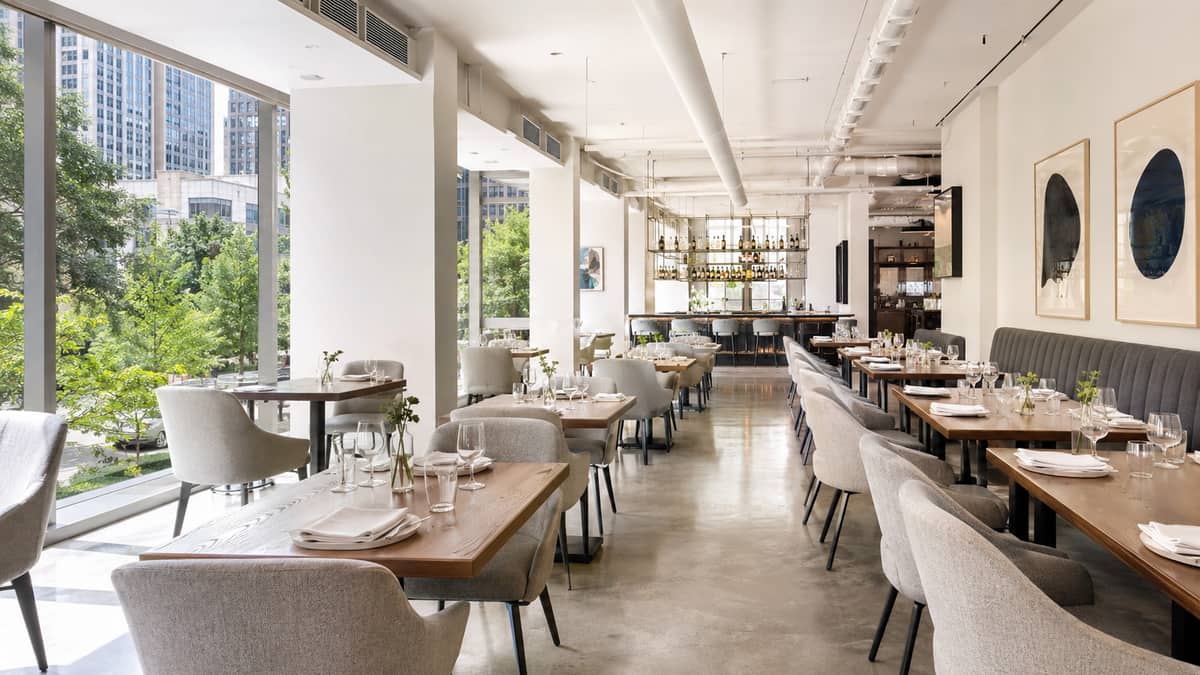
With active hospitality construction along the Old Mill District and downtown corridor, contract furniture suppliers are competing for Bend business. Use that leverage. Get warranty terms in writing and ask specifically about commercial-use coverage.
Materials and Upholstery for Bend's Range of Environments
Bend's dining scene runs across a wide range of settings, from covered breweries and taprooms doing volume pours to sit-down dinner service downtown. Performance vinyl and commercial polyurethane are the practical choice for high-traffic taproom seating: they clean fast and resist the beer and food spills a brewery floor sees constantly.
Outdoor and patio seating is where Bend's climate creates real design pressure. Summers bring intense sun and dry heat, while shoulder seasons swing cold fast. Solution-dyed acrylic fabric resists fading and moisture, and powder-coated aluminum frames handle the temperature swings without corroding. Any furniture left outdoors through a Central Oregon winter needs a finish rated for it, not a residential patio set repurposed for commercial use.
Tables and Bases: Getting the Specification Right for Bend Venues
Bend's dominant restaurant aesthetic leans toward warm wood, exposed steel, and an outdoor-industrial look that matches the surrounding Cascades scenery. Solid wood tabletops with a commercial lacquer or resin coat hold up and photograph well, while laminate tops with a wood-look surface are worth considering for high-volume taproom sections where cost and cleanability matter more than a natural wood finish.
Table bases are a common underspend. Cast-iron or heavy-gauge steel bases are correct for bar-height applications, and lightweight aluminum bases wobble under regular use. For patio and rooftop settings, a UV-stable powder-coated finish is not optional given how much direct sun Central Oregon gets through the summer months.
Finding the Right Supplier Relationship for Bend
One-off purchases from liquidation sources create headaches fast: when a chair fails eight months after opening, you need a supplier who still stocks the SKU. Look for suppliers who carry hospitality-specific lines, understand contract warranty terms, and can speak honestly about lead times into Central Oregon. Whether you're outfitting a downtown dining room or a patio program near the Old Mill District, ask directly about their quote process before you commit to a full furniture order.