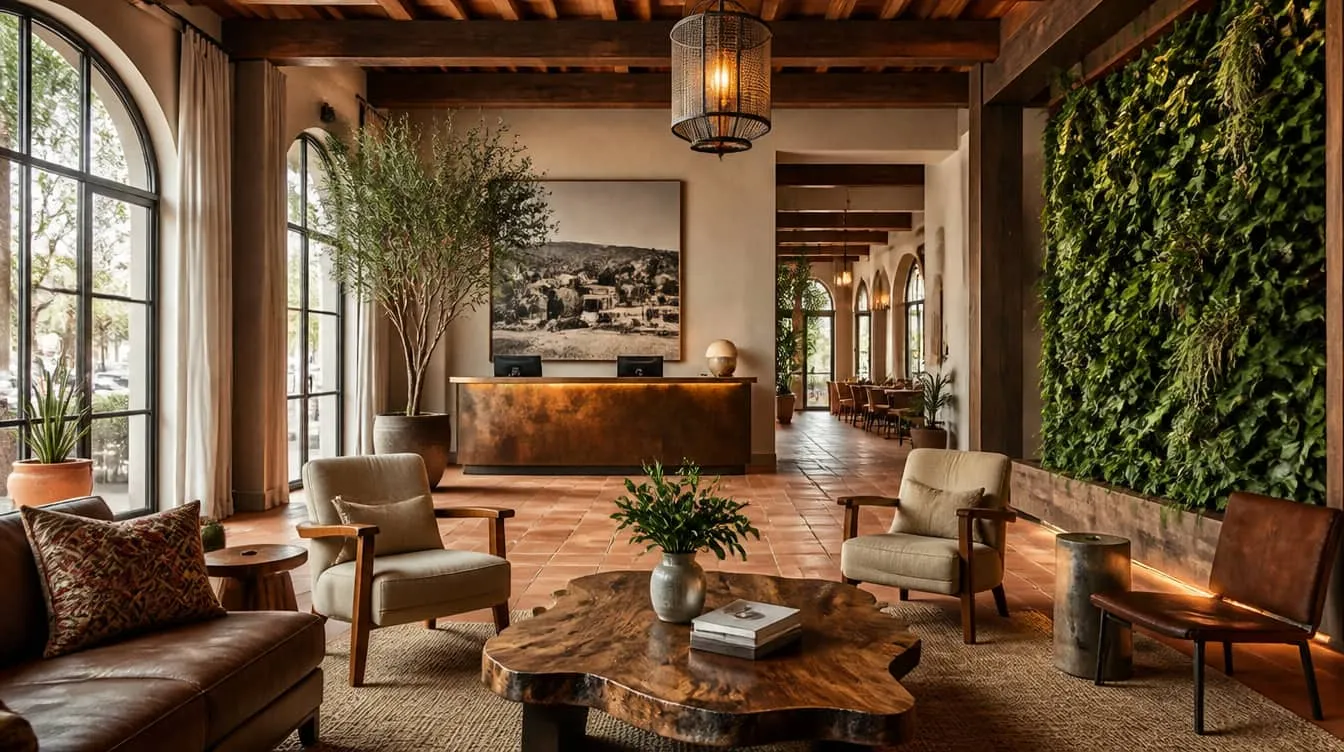
Austin's restaurant industry is one of the most interesting commercial furniture markets in Texas, and not just because the city has grown rapidly. The diversity of Austin's dining scene, from the established South Congress farm-to-table institutions to the new East Austin izakayas and tasting menu concepts to the barbecue culture that draws visitors from around the world to Taylor and Lockhart day-trippers passing through, creates a furniture procurement landscape where different aesthetic vocabularies need different commercial solutions. The furniture that's right for Uchi is completely different from what's right for Franklin Barbecue's expansion, which is completely different from what works for a new concept opening on Rainey Street. Each of these environments has its own design logic, and the commercial specification requirement is the same across all of them.
Austin's restaurant culture has developed a strong aesthetic identity that influences what guests expect when they walk into a new concept. The farm-to-table design vocabulary that has roots in South Congress and has spread across the city emphasizes natural materials, local craft references, and a warmth that distinguishes Austin from the colder industrial aesthetic of some coastal restaurant markets. Reclaimed wood, handmade ceramics, linen and cotton textiles, and woven natural materials are all part of this vocabulary, and the furniture programs in restaurants that execute it well are full of these material references at commercial specification.
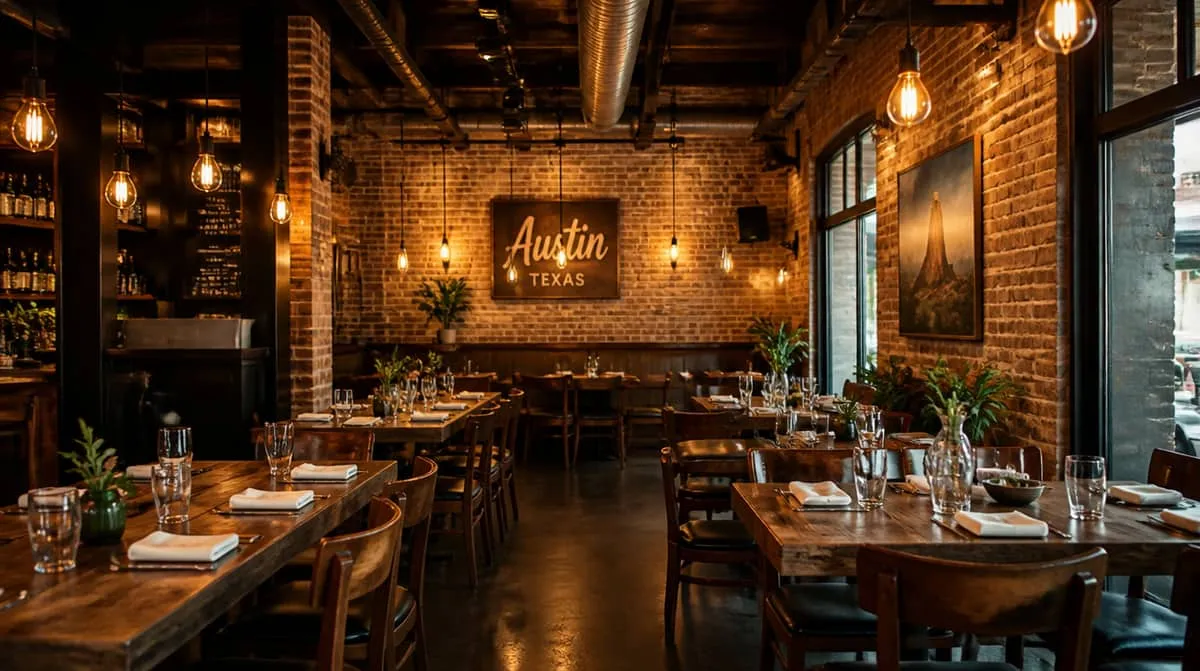
Seating for Austin's Farm-to-Table and Casual Fine Dining Market
The seating programs at Austin's most successful farm-to-table and casual fine dining restaurants share a few characteristics that are worth understanding before you begin a furniture specification. They prioritize comfort for the long, relaxed meal that Austin's dining culture encourages; guests at a South Congress restaurant are not rushed through their table in 45 minutes, and the seating needs to support a two-hour dining experience without physical discomfort. They use natural material references authentically, with wood frames in warm tones, leather or performance linen upholstery, and woven seat surfaces that feel appropriate to the aesthetic rather than like compromises made in the furniture catalog.
The commercial specification challenge with this aesthetic is that the materials and silhouettes it requires are also used in residential furniture, which is not built for restaurant use. A restaurant chair with a solid ash frame and a woven rush seat is the right aesthetic choice for an East Austin farm-to-table concept, but that chair needs to be built to commercial contract specification, with joints designed for daily restaurant stress, a seat weave rated for commercial use and moisture exposure, and a frame finish that holds up to the cleaning routines of a busy restaurant. Finding that chair in commercial specification, rather than sourcing it from a retail furniture supplier and discovering the quality failure 14 months into operations, is the job of a good commercial furniture supplier with knowledge of Austin's market.
Chair durability requirements in Austin restaurants also reflect the city's outdoor culture, which means many Austin restaurants have meaningful indoor-outdoor transitions, with seating programs that move between covered patios, partially enclosed areas, and fully interior dining rooms. Furniture that can handle this movement without degrading quickly, particularly in Austin's summer humidity and UV exposure, needs to be specified with that use in mind.
East Austin and the Contemporary Design Scene
East Austin's restaurant market has developed into one of the most design-forward dining environments in the city, with concepts that draw on a broader range of aesthetic references than the farm-to-table mainstream. Japanese-influenced minimalism, European bistro traditions, and bold contemporary design all have representation in East Austin's dining scene, and the furniture programs in these restaurants reflect those influences at a level of specificity that generic hospitality catalogs don't accommodate well.
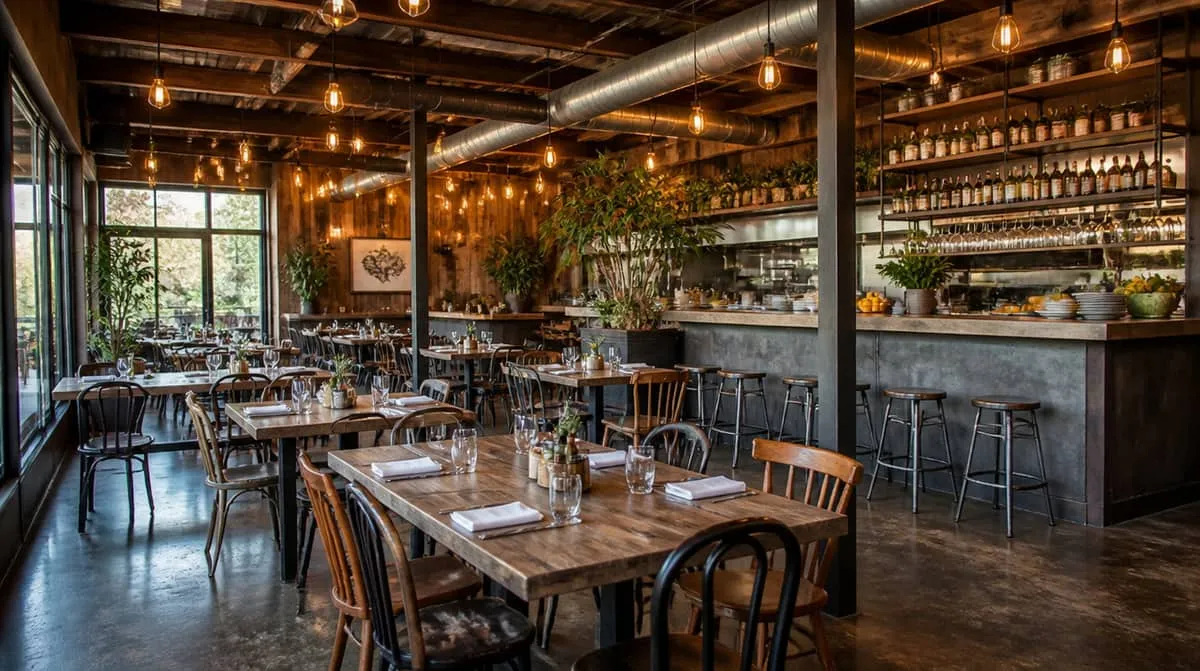
For East Austin restaurant operators, the commercial furniture procurement challenge is finding product that serves a specific design direction while meeting the commercial specification that any busy Austin restaurant demands. A minimalist Japanese-influenced dining room that uses bench seating with simple rectangular forms and a single wood species throughout is an achievable commercial specification if you're working with a supplier who has the manufacturer relationships to source it. The mistake is compromising the design direction by choosing catalog items that sort of fit rather than searching for product that actually serves the vision.
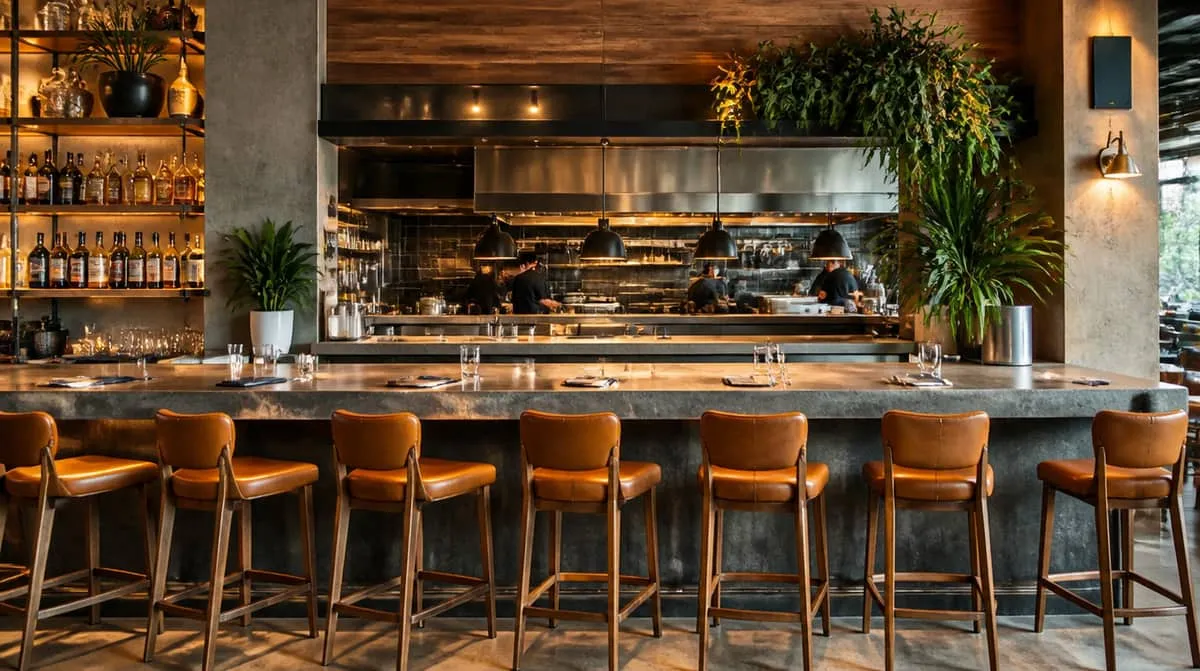
The bar seating programs in East Austin concepts have significant visual weight in the overall room design, because many of these restaurants place the bar prominently as a design element rather than separating it from the dining program. Commercial barstools that fit the specific aesthetic of each concept, whether that's a clean minimal stool in solid ash with no upholstery or an upholstered counter stool in performance leather, need to be found at commercial specification rather than sourced from a retail channel that doesn't hold up to the Austin bar environment.
Outdoor Dining and Austin's Climate
Austin's outdoor dining season is genuinely long, with spring and fall conditions that support patio dining for six to eight months of the year. South Congress, Rainey Street, and the East Austin corridors have developed strong patio cultures that drive significant cover volume for the restaurants that have invested in quality outdoor programs. Commercial patio furniture for Austin restaurants needs to handle the UV intensity of the Texas sun, the high summer humidity, and the occasional severe storm that comes through during the shoulder season.
Aluminum frame furniture with solution-dyed acrylic seating is the commercial standard for Austin's patio restaurant market. The material combination handles Austin's UV exposure without fading, resists the moisture that Austin summer produces, and is available in the natural, warm tones that fit Austin's farm-to-table and casual fine dining aesthetic. Teak and other premium natural materials are appropriate for the higher-end Austin patio programs where the investment is justified by the positioning and the guest demographic.
We quote restaurant furniture for Austin operators against their own layouts and order sizes rather than a generic sheet. Request a quote and we will put together pricing for your property.
Related reading
- What is contract furniture
- Commercial furniture vs retail
- Hospitality furniture supplier guide
- Commercial furniture in Texas
Our take
The indoor outdoor movement this post identifies as an Austin signature creates an aging problem it does not follow through on. When part of a seating program rotates between a covered patio and the interior dining room, the rotated pieces accumulate UV and moisture exposure their interior only twins never see. Two years in, chairs that shipped identical no longer match, and in a farm to table room built on natural finishes the divergence shows.
The management answer is to rotate deliberately rather than incidentally. Tag or discreetly mark the pieces that serve the transition zones, cycle them through interior positions on a schedule so exposure spreads evenly across the full set, and hold back a few unexposed units as the reference standard when reorders or refinishing come due. Operators running the long Austin patio season the post describes get several extra years of visual consistency from the same purchase simply by managing which chair sits where.
The bottom line: A good map of Austin's aesthetic segments and their commercial specs. Programs that move between patio and dining room should be rotated on a schedule, or the sun will unmatch them piece by piece.