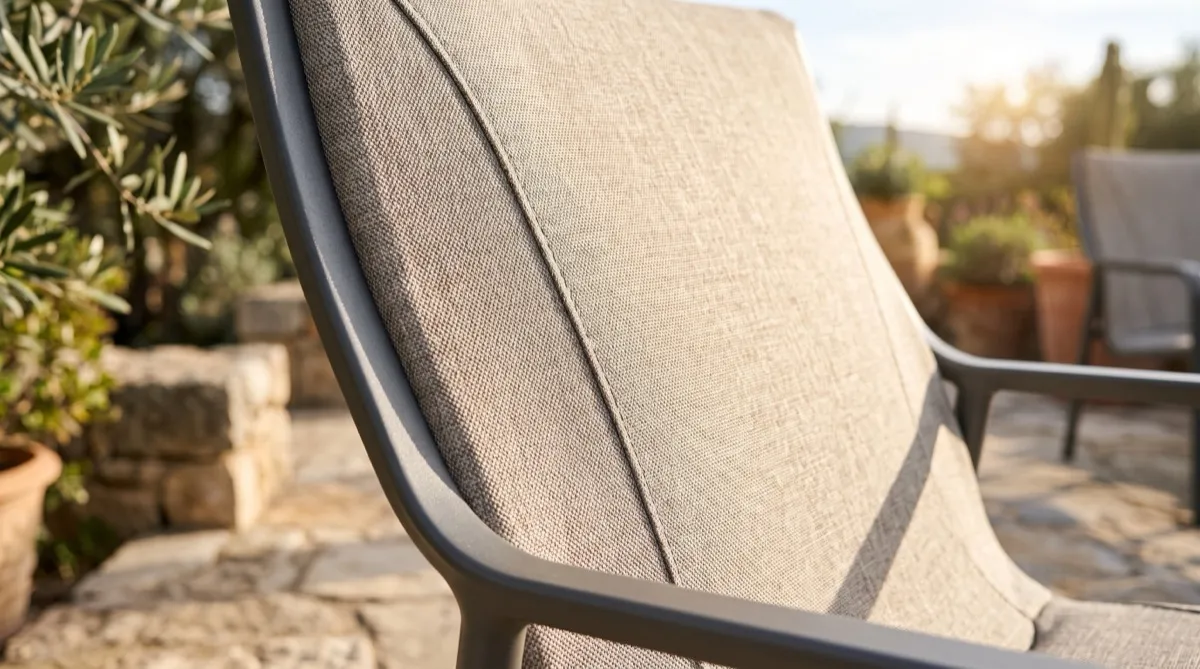
Frame and textile choices need to be specified together. On an outdoor patio, fabric, cushion drainage, cleaning products, and storage all affect how the seating performs. Compare the exact textile and cushion assembly for your climate rather than assuming an outdoor label supplies the whole specification.
Solution-dyed acrylic: the commercial standard
Solution-dyed acrylic puts color into the fiber before weaving. It is a useful outdoor option, but fiber type alone does not establish a particular fade resistance or service life. Ask for the selected fabric line's exposure test, color warranty, and cleaning instructions. Mildew resistance also needs a care routine: Sunbrella's upholstery instructions explain that mildew can grow on dirt left on its fabric.
Sling and mesh fabric for frames
Sling fabric is a woven or coated mesh stretched across a frame. An open mesh can drain differently from a cushion, but drying time depends on the weave, coatings, seams, and where water collects. Check the maker's outdoor-use rating, cleaning procedure, replacement-sling availability, and approved frame tension. Do not assume every sling is immune to mildew or that a material label proves a number of years without sagging.

Cushion construction and moisture
For a cushion assembly, review the core, cover, seams, and drainage together. Ask how the selected assembly releases water and how staff should dry it after exposure. A quick-dry label does not make every open-cell foam or upholstered cushion suitable for outdoor use. Removable covers can simplify cleaning or replacement, but check whether they are actually washable and how to remove them without damaging the assembly.
UV and mildew ratings to look for
Ask for the exact UV/weathering and mildew test method, reported result, and warranty conditions for each candidate fabric. A laboratory exposure result or limited color warranty is not automatically an expected number of years on your patio. Note the climate, shade, pool chemicals, and cleaning products in the supplier brief so those conditions can be checked against the specified textile.
Cushion storage between uses
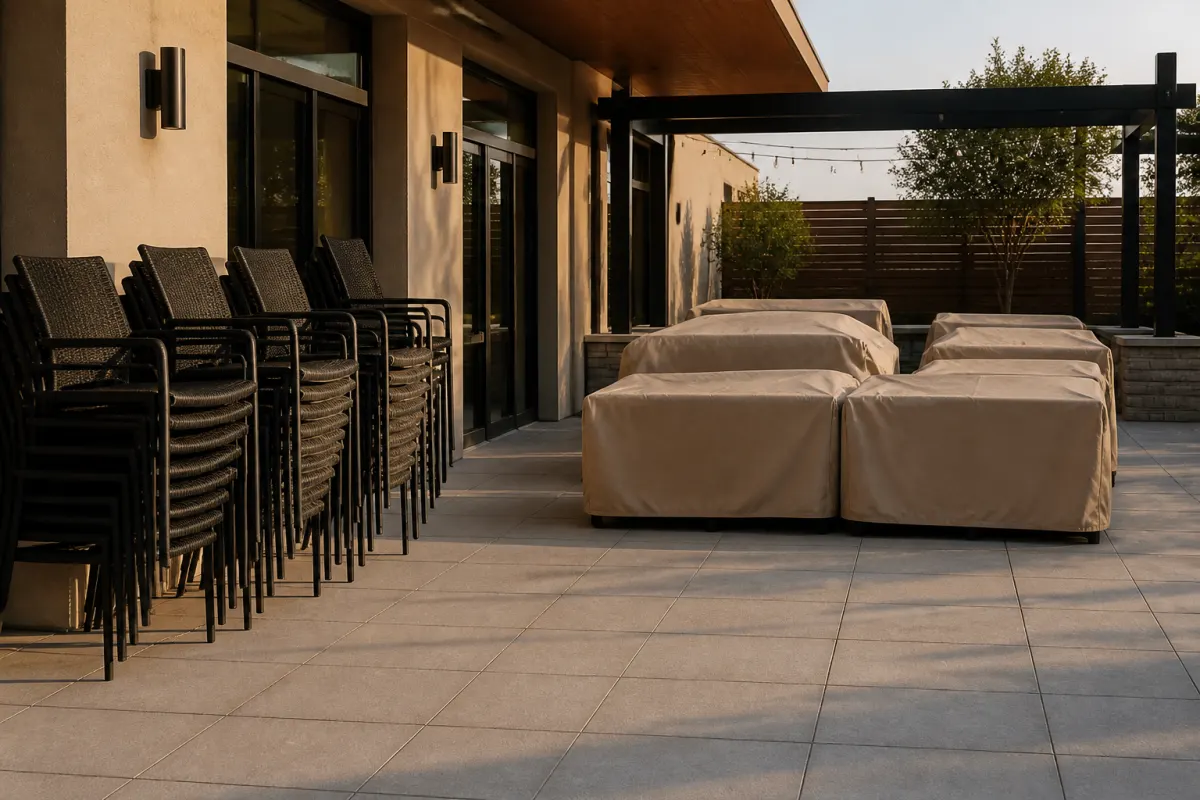
Follow the selected cushion assembly's drying and storage instructions during nightly closing and longer shutdowns. Check whether the underside stays wet against the frame, whether the storage space ventilates, and whether cushions are dry before packing. Storage can reduce exposure, but no measured lifespan increase is established here; keep inspection and replacement records for your own program.
Matching fabric grade to furniture tier
Compare fabrics by the requirements of each zone: exposure, cleaning, comfort, appearance, replacement availability, and the actual test and warranty information. A cabana may call for a different color or texture from general dining, but a higher price or fabric weight alone does not establish better performance or guest satisfaction. Review samples with the operations team before allocating the fabric budget.
Sourcing and lead times
Confirm fabric availability before locking the furniture order, since a custom sling or cushion can have a different schedule from its frame. If you use 10 to 14 weeks as an early custom-order planning window, treat it as a placeholder. Obtain the supplier's production, dispatch, transit, and receiving dates for the exact fabric and quantity before committing to an opening date.
Get a fabric recommendation
Share climate, furniture zones, cleaning, and storage requirements in a quote request for relevant independent suppliers to review. Suppliers need to confirm the proposed textile, actual product documentation, availability, price, and purchase terms directly with you.