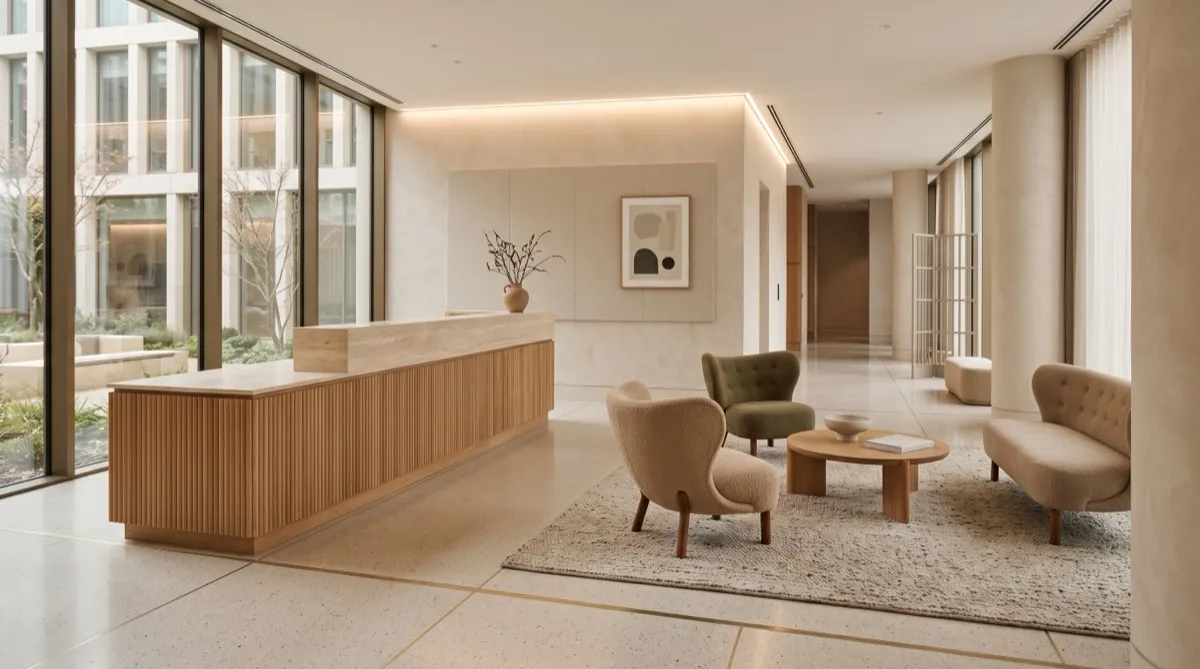
A circulation desk may use custom millwork, a modular system or a standard unit, depending on the branch workflow. Define checkout, holds, returns and staff tasks before selecting an approach; identical floor areas do not imply identical desk needs.
This guide covers how to think through that briefing process, then turns to the furniture around the desk that a library can order directly: entry benches, queue-adjacent seating, holds-pickup tables, and staff-side task seating.
What a circulation desk workflow brief actually needs to answer
Before anyone sketches a desk, get clear answers to a short list of workflow questions, because every one of them changes the footprint and layout.
How much of checkout is self-service versus staffed? A branch with a mature self-checkout program needs less staffed counter length but more clear floor space around the self-checkout kiosks themselves, plus a staff position nearby for exception handling rather than a long transaction counter.
Where does the holds shelf live relative to the desk? Some branches route holds pickup through the main desk, others separate it into its own express pickup point. That decision alone can change whether you need one long desk or two shorter service points.
How does the returns workflow separate from checkout? A staffed return slot next to active transactions creates congestion at peak hours; many branches route returns to a separate exterior or interior book drop specifically to keep the desk clear for people checking materials out.
What does the sightline requirement look like? Most branches need the desk positioned so staff can see the entrance and at least one or two other zones of the floor without leaving their post, which constrains where in the room the desk can sit as much as its shape does.
Hand your architect or millworker answers to all four before the design phase starts, not partway through it. A desk designed around assumed workflow, then retrofitted once real usage patterns emerge, is expensive to fix after installation.
Generic transaction-height guidance
Review the applicable service-counter and work-surface requirements with the architect and project authority. U.S. Section 904 distinguishes parallel and forward approaches for sales/service counters; it must not be reduced to a generic seated-height requirement. Confirm the actual scope, approach, dimensions and clear space on the drawings.
The desk is custom. The furniture around it doesn't have to be
After defining the desk and workflow, compare documented standard or custom furniture for the surrounding areas.
Entry benches near the door or just inside the vestibule give visitors a place to set down bags, put on or take off outerwear, or simply wait for someone without crowding the desk itself. A bench at this location should be low-maintenance and durable rather than plush, since it sees constant brief contact from a wide range of visitors.
Queue-adjacent seating placed a short distance from the desk gives people waiting during a busy period somewhere to sit rather than clustering in a line. Even a small library benefits from two or three seats positioned so a line doesn't back into a main aisle during peak after-school or weekend hours.
What furniture makes a busy circulation area function better?
Beyond entry benches and queue seating, two more categories round out a well-planned circulation area, and both are things a library can order and reorder as a standard spec rather than reinventing per branch.
Holds-pickup tables or shelving-adjacent surfaces near an express pickup point give staff and patrons a stable surface to set materials on during a fast holds transaction, separate from the main transaction counter. Keeping this surface distinct from the checkout desk speeds up both workflows by not making them compete for the same six feet of counter.
Staff-side task seating should fit the actual counter, staff tasks, users and flooring. Trial fit and adjustments and confirm permitted shift use. OSHA recommends trying chairs and evaluating adjustability; neither new task seating nor a label guarantees lower fatigue or staff turnover.
Ordering the surround furniture
Coordinate the desk and surrounding furniture against confirmed approval, production and installation milestones. Our lead time index is planning context, not confirmation that an order clears production before a date. Browse benches and entry seating as concepts for the brief and the library furniture hub for the broader categories.
Request a quote with the workflow, bench and seating quantities, storage needs and project schedule so independent suppliers can explain documented options and delivery terms.