Richmond runs on a different rhythm than the largest East Coast convention markets, but it is no less demanding on a hotel renovation schedule. As Virginia's capital and a real corporate headquarters city, Richmond draws a mix of state government travelers tied to General Assembly session, corporate business travelers moving through the headquarters and Innsbrook office corridors, and a steady stream of visitors drawn to the James River and the historic districts. Downtown Richmond has pushed a wave of boutique and adaptive reuse properties into old brick and warehouse buildings near Shockoe Bottom, while the interstate corridor and airport area carry the bulk of the branded, high-volume rooms. When you renovate in this market, you're working against a session calendar, convention dates, and an operator base that expects a supplier who understands East Coast logistics. Getting hotel renovation furniture Richmond procurement right is not a back-office task, it's a revenue decision.
Richmond's Renovation Calendar Runs on Session and Convention Cycles
General Assembly session sets real deadlines for properties across downtown Richmond. Session weeks fill every room within the downtown core, and a renovation that isn't finished before session begins means empty inventory during some of your highest-demand weeks of the year. The Greater Richmond Convention Center's show calendar adds a second, more predictable layer of demand that keeps hotels near downtown and the interstate corridor busy through much of the year.
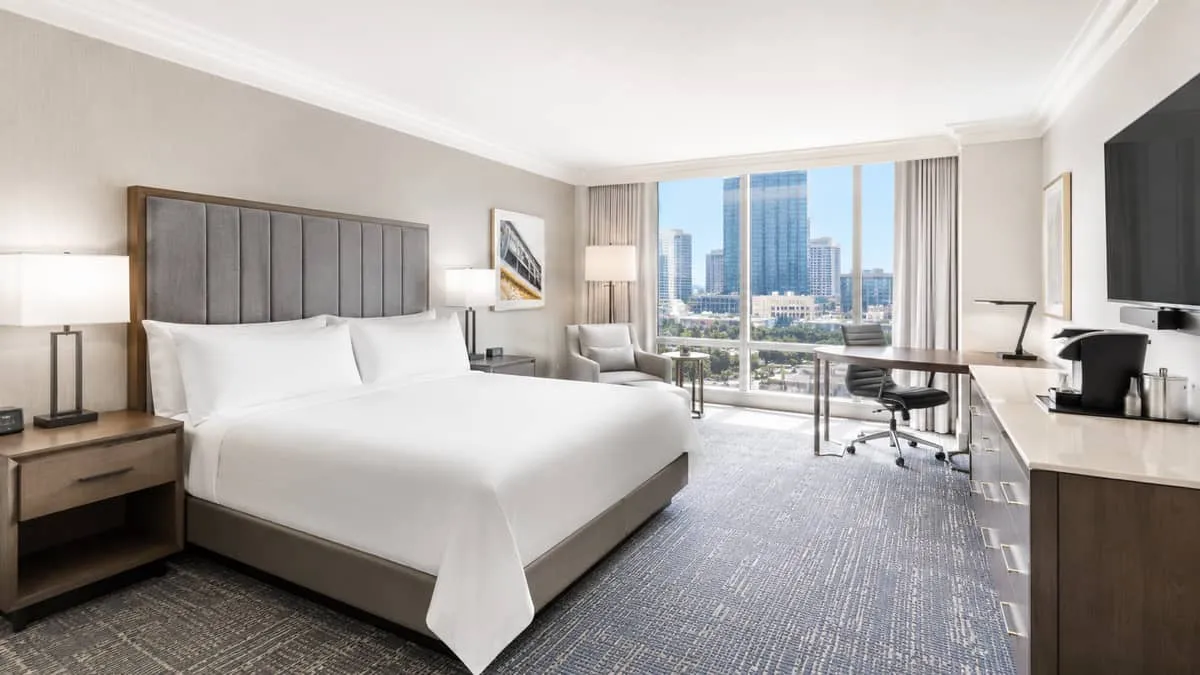
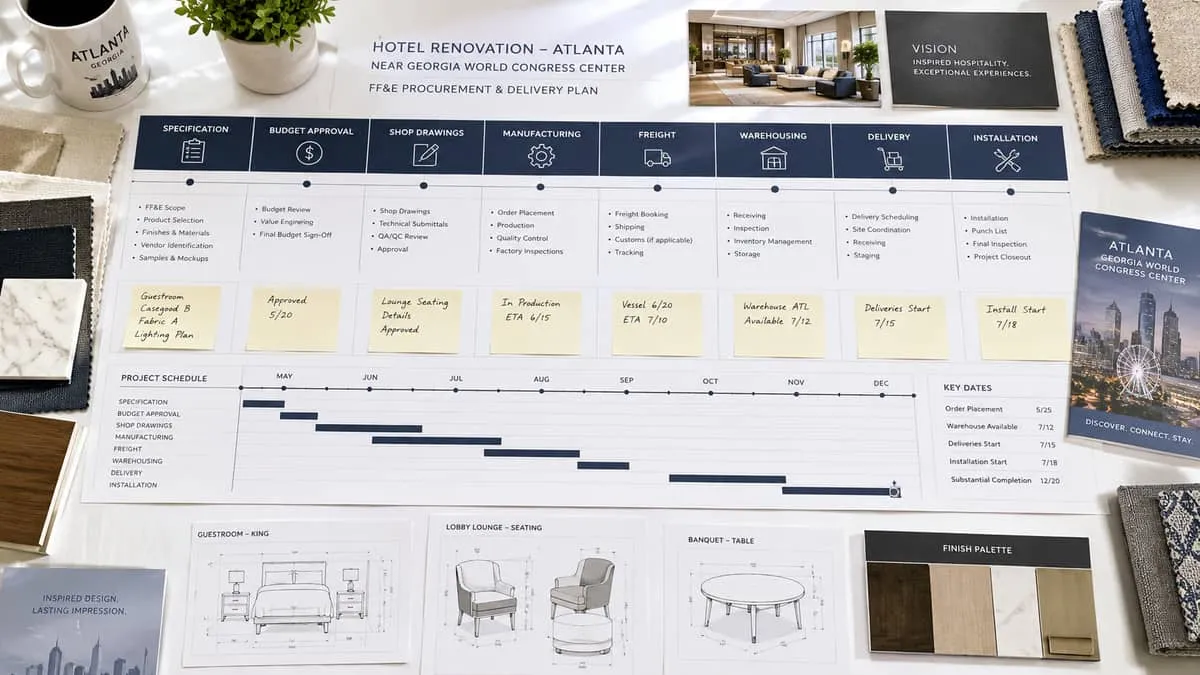
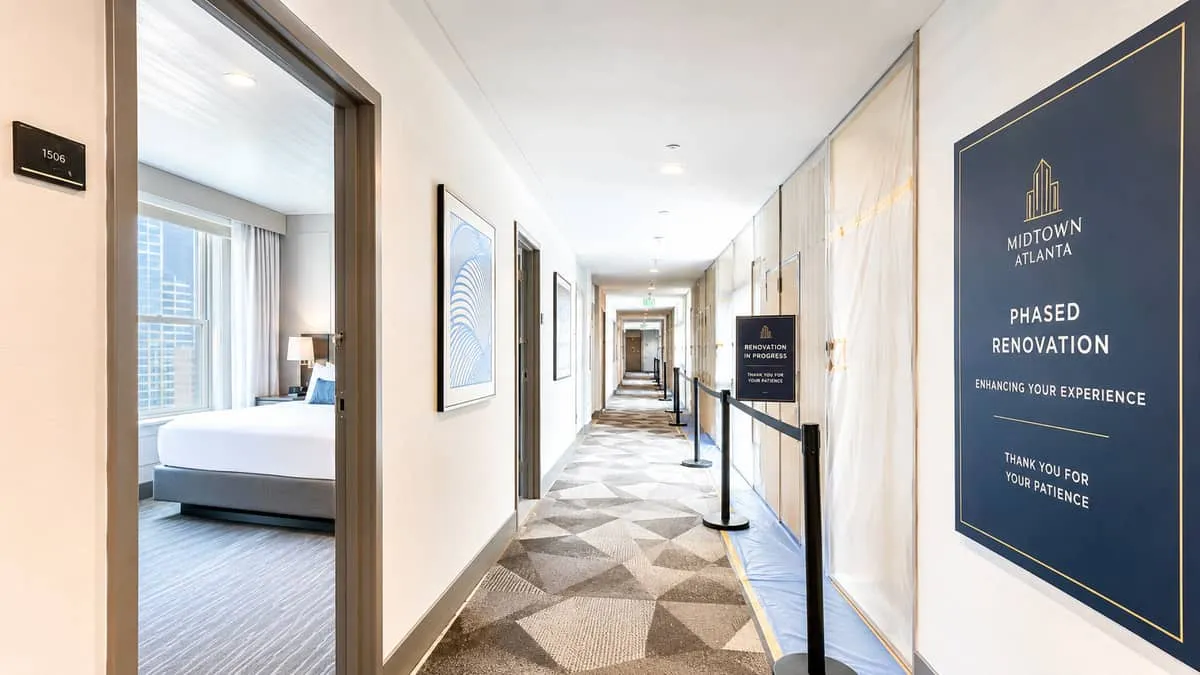
Most Richmond renovations run in phases, one wing or floor at a time, so the property stays bookable through the busy months. That phased approach protects revenue, but it puts real pressure on your FF&E supplier's logistics. Richmond's position on the East Coast interstate corridor is genuinely favorable for freight compared to more isolated markets, but you're still not placing one order and waiting, you're coordinating staggered deliveries tied directly to construction milestones and housekeeping handoffs.
Before you sign with any supplier, get written delivery windows and a dedicated logistics contact. Build phased delivery milestones directly into the procurement agreement, not as a verbal understanding but as a documented schedule with clear accountability on both sides.
FF&E Lead Times: Work Backward From Your Opening Date
Custom and semi-custom contract furniture typically runs 12 to 18 weeks from order confirmation to delivery on your loading dock. That covers case goods, upholstered headboards and seating, bed frames, and anything requiring COM fabric or brand-specified finishes. If your renovation involves custom millwork or design elements matching a downtown Richmond adaptive reuse property's exposed brick and historic character, add two to four weeks on top of that baseline for finish approvals.
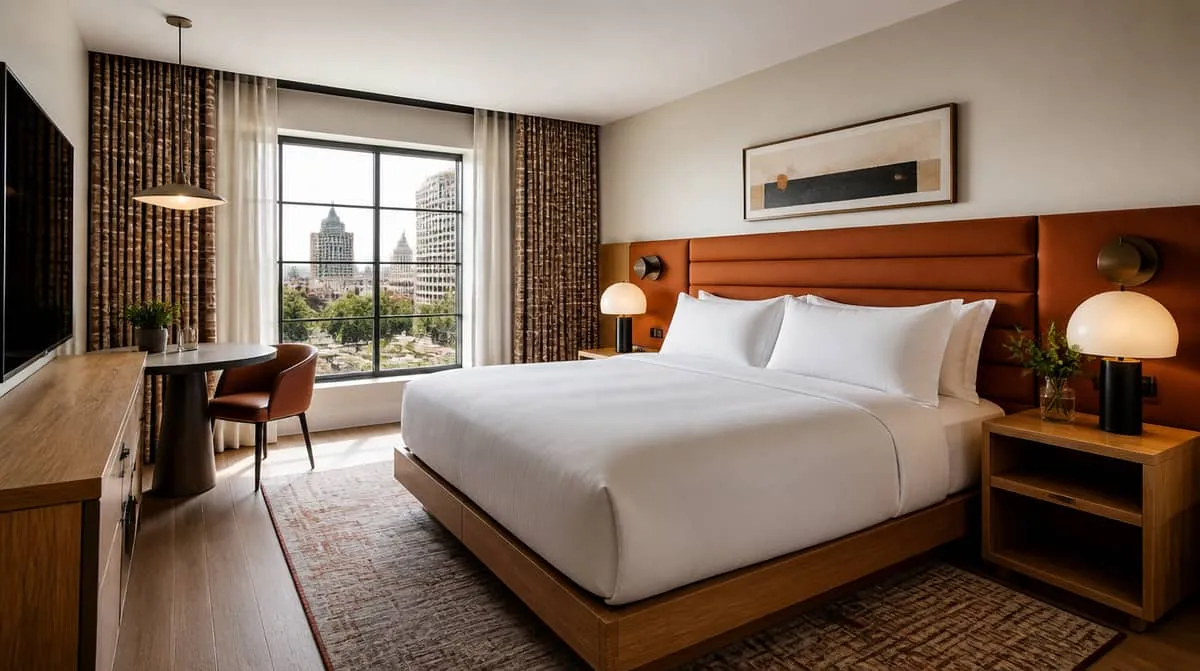
For a Richmond property targeting a reopening ahead of a major session period or before the summer river tourism season, those numbers matter precisely. Want rooms ready by early spring ahead of session? Furniture orders need to be placed the prior fall. Operators who wait until permits clear or construction breaks ground before thinking about FF&E procurement consistently end up choosing between two bad options: buy off the shelf and accept pieces that don't match the property's design intent, or miss the opening window and lose one of the most profitable stretches of the calendar year.
Outdoor and patio furniture carries its own timeline in Richmond. The humid summer and real winter cold both mean anything specified for a rooftop or riverfront patio space needs to handle real seasonal swings and needs to be ordered on a schedule that gets it installed and usable the moment the season turns. Factor outdoor pieces into your plan separately, since they often move through a different production queue than interior FF&E.
Brand Standards and the Richmond Design Context
Richmond's hospitality market spans a wide range of property types. Branded select-service and extended-stay hotels along the interstate corridor and near the airport operate under brand standard documents that govern case good construction specs, fabric fire ratings, and mattress minimum dimensions, and those standards do not bend for a smaller market. Independent and boutique properties downtown, in restored buildings near Shockoe Bottom and Church Hill, have real design freedom, and travelers who choose those properties over a chain option along the interstate are specifically choosing on character and design.
For flagged properties, compliance is non-negotiable regardless of market size. A piece that looks right but fails a fire rating review or misses the flag's seating height minimums gets rejected, and your renovation timeline absorbs the delay. Work with an FF&E supplier that keeps brand standard files on record for major flag groups and can cross-reference your selections before specs are finalized. Doing that review in the planning phase eliminates the expensive back-and-forth that stalls renovation schedules.
For independent downtown properties, design intent is your brand standard. Be specific about what that means before procurement begins. A supplier that asks real questions about your guest profile, your building's architectural history, and your competitive set in the Richmond market is far more useful than one that sends a catalog and waits for line-item requests.
Delivery and Installation in an Operating Property
Getting furniture from a supplier into a functioning Richmond hotel without disrupting operations requires real logistical competence. Downtown properties near Shockoe Bottom often deal with limited street access, tight loading areas, and historic building constraints on freight elevator size. Interstate and airport-corridor properties have more standard dock access but still deal with delivery windows that need to work around business travel patterns and, during session, a steady flow of government-related check-ins and checkouts on tight schedules.
A supplier with real experience delivering to occupied hotels in Richmond already understands these constraints. They show up with the right crew, the right equipment, and a schedule built around your property's operational calendar rather than their own convenience. They coordinate with your front desk, your engineering team, and your construction GC so new furniture arrives staged and ready to install in completed rooms rather than sitting in a hallway blocking guest access.
Ask every supplier you evaluate a direct question: have they delivered to occupied hotel properties in Richmond or comparable Mid-Atlantic markets specifically? What is their protocol for white-glove installation in active buildings? If the answer is vague or generic, that is a clear signal. You need operational experience in a market like this one, not just a product catalog and a freight quote. If you are early enough in planning that pricing would help, request a quote before you finalize your renovation budget.
The difference between a Richmond hotel renovation that opens on time and on budget and one that drags past every deadline usually comes down to the procurement decisions made in the first four weeks of planning. Treat FF&E as a core operational workstream from day one, and your renovation has a real chance of running the way it was designed.