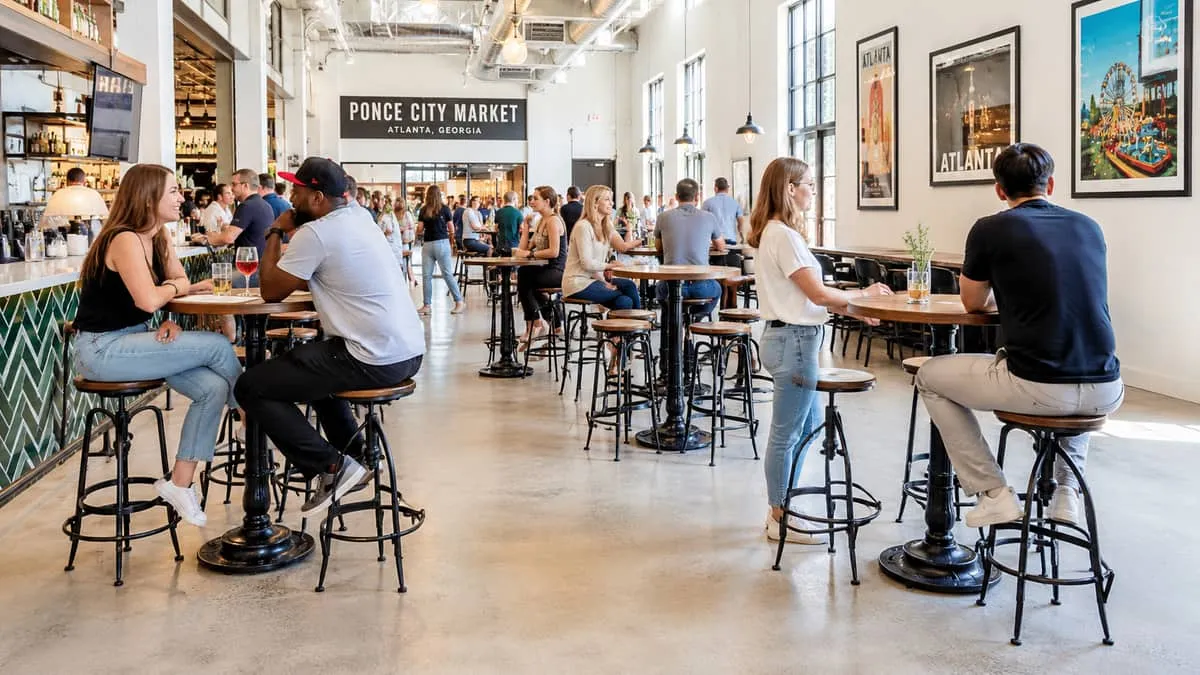
Richmond carries a bigger hospitality market than its size on a map suggests. As the capital of Virginia, it pulls in state government travel tied to General Assembly session, a genuine corporate headquarters economy centered downtown and in the Innsbrook office corridor, and a river and history tourism trade that keeps growing. Between Scott's Addition, a former industrial district that has turned into one of the densest brewery and cocktail bar corridors in the state, the downtown hotel bars serving business and convention travelers, and the James River waterfront where restaurants and lounges fill up every warm-weather weekend, the demand on furniture here is steadier than most operators expect from a mid-size Mid-Atlantic city. Sourcing bar lounge furniture Richmond operators can depend on means understanding each of these contexts because a stool built for a Scott's Addition taproom is not the same stool that belongs in a downtown hotel lobby bar during session week.
Scott's Addition and the Brewery and Cocktail Corridor
Scott's Addition has become Richmond's most design-conscious hospitality corridor. What used to be a strip of vacant warehouses and light-industrial buildings is now a run of breweries, distilleries, and cocktail lounges housed in buildings with exposed brick, tall windows, and original concrete and steel structure. Operators opening here are dealing with a crowd that expects a considered look, not just a place to sit down after work.
For these adaptive-reuse spaces, the material spec should account for two things: uneven original floors and a climate that swings between humid summers and cold, wet winters. Powder-coated steel or solid hardwood frames hold up better here than lighter aluminum builds meant for warm-climate outdoor use. Specify commercial-grade nylon or felt glides on every table base going into these buildings. Original concrete and old wood floors scratch and scuff easily, and a plastic glide cap dragged across the floor during a Friday night reset is an expensive mistake.
Upholstery in this corridor should run performance fabric rated at a minimum of 30,000 double rubs Wyzenbeek, since most Scott's Addition venues are indoor-focused with moderate but steady traffic. Warm, muted tones, rust, forest green, walnut, charcoal, pair well with the exposed brick and steel detailing that defines the district's aesthetic, and operators sourcing bar lounge furniture Richmond design-forward crowds respond to are increasingly moving away from generic black metal toward pieces with more material warmth.
Downtown Hotel Bars and the Business Travel Standard
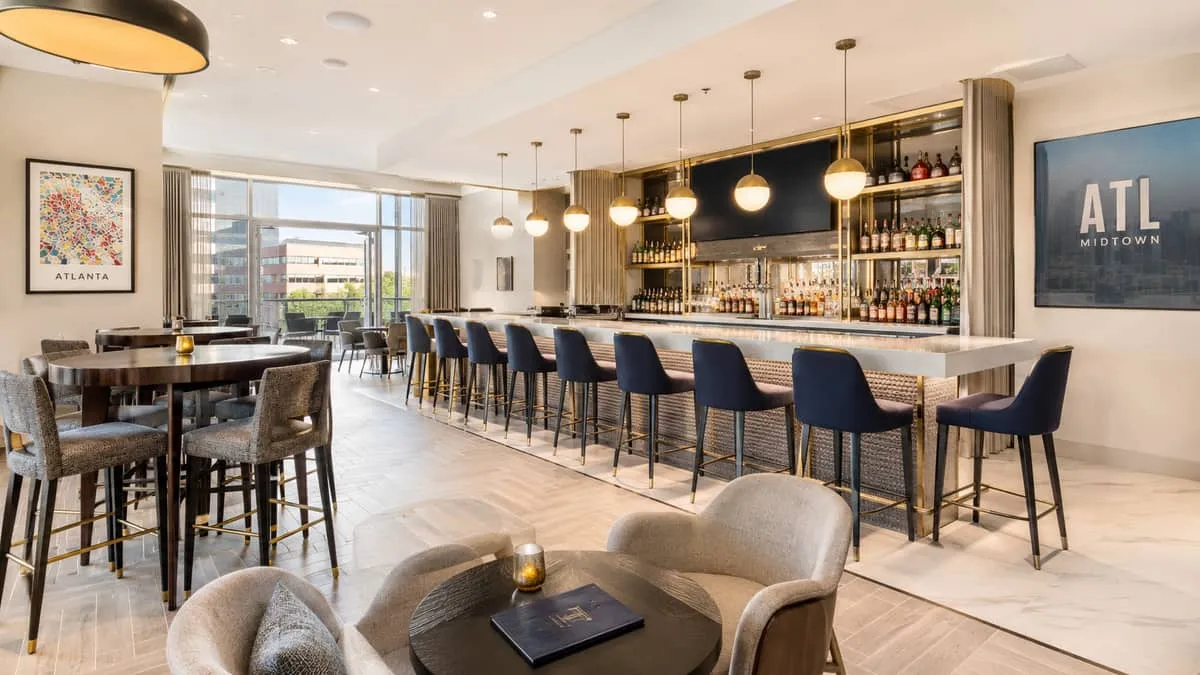
The downtown hotel corridor near the Greater Richmond Convention Center serves a different customer entirely: state government travelers in for session, corporate business travelers, and convention attendees who want a reliable drink and a comfortable seat after a long day, not a design statement.
Seating height accuracy matters here as much as anywhere. Confirm actual bar counter height before ordering: a standard bar-height counter runs 42 inches and pairs with a 28-to-30-inch seat, while counter-height surfaces at 36 inches need a stool in the 24-to-26-inch range. Hotel renovation projects in Richmond frequently swap counter heights during a remodel without updating the seating order, and a two-inch mismatch is the kind of complaint that shows up in guest reviews. For lounge seating in these lobbies, specify moisture-barrier foam construction under any cushion near a bar service area. Spill exposure is real in a lobby lounge that runs happy hour traffic every weeknight, and foam without a barrier saturates and needs early replacement.
COM programs are worth discussing with hotel groups renovating properties downtown. A custom order-material program lets a hotel brand match proprietary fabric standards to a commercially rated frame, which matters when a national flag has color and material specifications tied to brand guidelines. This is a sourcing conversation that belongs early in the renovation timeline, not after the design package is finalized.
The James River Waterfront and Warm-Weather Volume
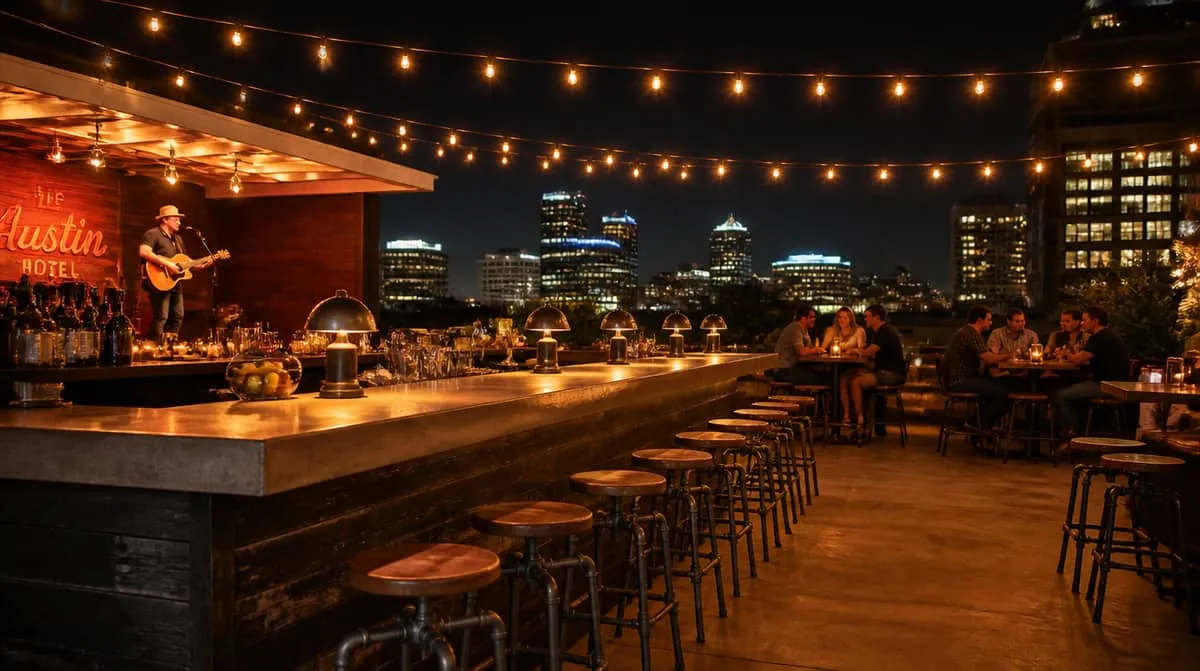
The James River waterfront, including the restaurants and lounges along the river and near Brown's Island and Belle Isle, drives an entirely different kind of volume: weekend outdoor and semi-outdoor seating that fills up hard from spring through early fall and needs to survive real humidity, direct sun, and the occasional flood-stage water event that affects lower-lying sites near the river.
Furniture serving this corridor needs to be treated as a seasonal-intensity investment. Bar stool and dining chair frames should run powder-coated aluminum or stainless at minimum, with fully welded joints rather than bolted construction that loosens under sustained heavy use. During a summer weekend on the riverfront, a venue can turn through more covers in a single afternoon than it sees most weekdays combined, and lightweight retail-grade frames simply do not hold up to that kind of concentrated stress in Richmond's humidity.
Replaceability is the other priority. A riverfront restaurant or bar running at capacity on a warm Saturday needs a supplier that can ship replacement stools in the same finish on short notice, not a made-to-order collection with an eight-week lead time. Ask whether your primary seating collection is held in stock before committing to it, and confirm actual reorder timelines in writing rather than relying on a verbal estimate.
Sourcing Bar Lounge Furniture for Richmond Projects
Richmond's hospitality construction market tends to move around specific triggers: a hotel brand commits to a renovation ahead of session or convention season, a new taproom opens in Scott's Addition, or a restaurant group times an opening to the warm-weather riverfront season. The standard commercial furniture lead time of 8 to 12 weeks for custom orders needs to be planned against these fixed dates well in advance.
The practical approach for most Richmond bar and lounge projects is in-stock contract inventory for the core seating program, with custom or COM orders reserved for accent pieces where a specific look matters most. Build supplier relationships ahead of a fixed opening date rather than after ground has already broken. Know which vendors hold in-stock bar stools in the finishes used most often in this market, which suppliers can turn a COM order in a realistic window, and which can fulfill a partial replacement order without a long wait.
If you are in the early planning stages of a bar or lounge build anywhere in Richmond, Scott's Addition, downtown, or the riverfront, request a quote before your layout is finalized. It is far cheaper to catch a seat height mismatch or a material issue on paper than after the furniture has arrived at the loading dock.