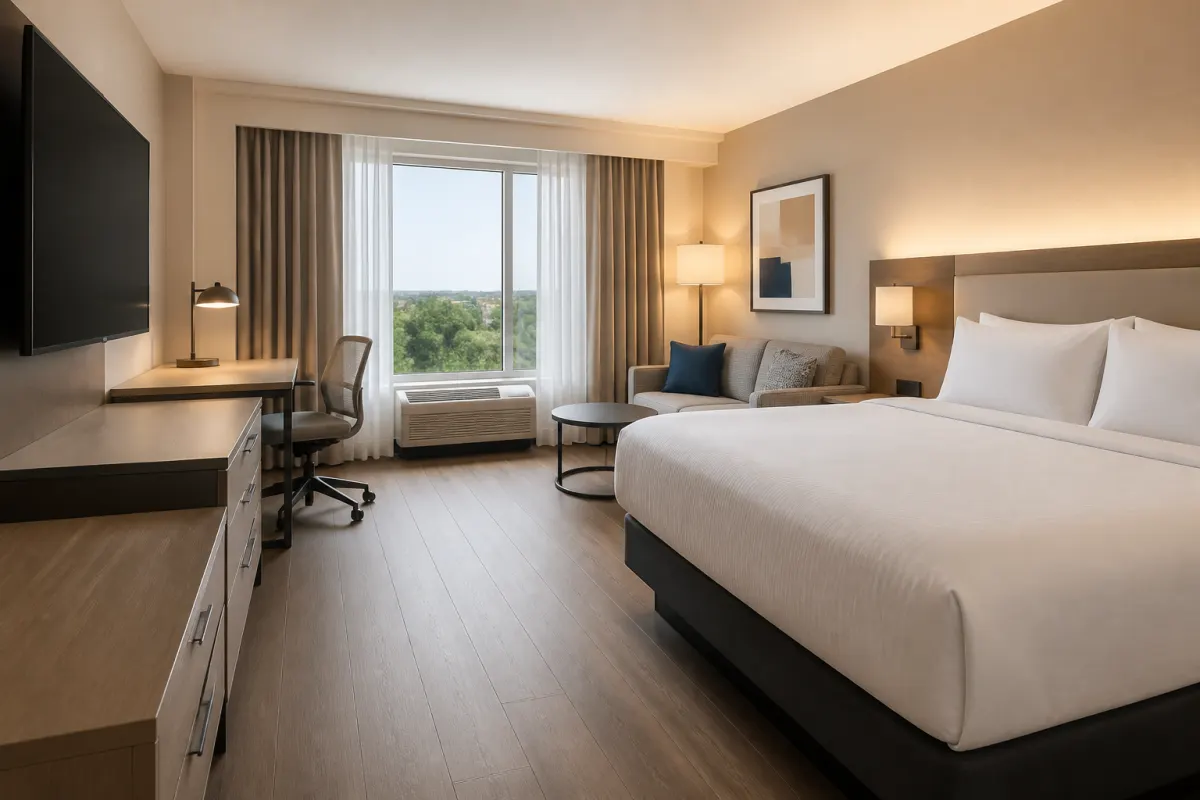
Hotel renovation in Raleigh is a different problem than hotel opening. The properties now cycling through their second and third full FF&E refresh mid-scale flags along the RTP corridor, full-service hotels near the convention center, independent properties in the Warehouse District are operating in a market that has evolved considerably since their original buildout. The Research Triangle's guest profile has grown more design-aware, competitive rates have risen, and the visual standard for hospitality spaces in the city has been reset by a wave of sophisticated new openings. Renovation furniture programs need to close that gap while respecting the operational realities of renovation in an occupied property.
The Raleigh Renovation Market
Properties in Raleigh's primary business travel corridor the US-1 and I-40 zones adjacent to Research Triangle Park have been renovating on rolling schedules driven by brand standard update cycles and competitive positioning needs. An RTP-adjacent hotel that was renovated eight years ago is now competing against properties that opened with Research Triangle contemporary design standards baked into their specifications from the start. Closing the gap requires renovation furniture programs that genuinely update the property's design language, not just replace worn pieces with identical substitutes.
The convention center corridor faces its own renovation dynamic. Properties that want to compete for pharmaceutical and biotech conference business need meeting room and public space furniture that communicates professional quality stained or worn banquet chairs, lobby sofas with compressed cushions, and guest rooms with dated casegoods all undercut rate positioning in this market. Raleigh convention business is price-sensitive but also quality-sensitive, and properties that invest in renovation furniture consistently see improvement in meeting room bookings and group business.
Warehouse District boutique properties have shorter renovation cycles than branded flags because their design-forward positioning requires staying current with a faster-moving aesthetic. A boutique hotel whose design felt cutting-edge at opening five years ago may need a public space soft-goods refresh and lobby furniture update to maintain its competitive position against newer openings that entered the market with more current specifications.
The NC State University corridor properties typically time major renovations to the summer window late May through August when university-related demand dips and occupancy permits taking floors offline. This creates a concentrated renovation season that puts pressure on furniture suppliers and installation crews, and it rewards hotel owners who have their furniture specifications locked and orders placed by February or March.
Renovation Furniture Specifications: Updating Without Overbuilding
Effective renovation furniture programs for Raleigh hotels need to differentiate between categories that drive guest perception and those that are purely functional. Not every piece in a guest room needs to be replaced in every renovation cycle but the pieces that guests interact with most directly, and that have the highest visual impact, deserve genuine investment.
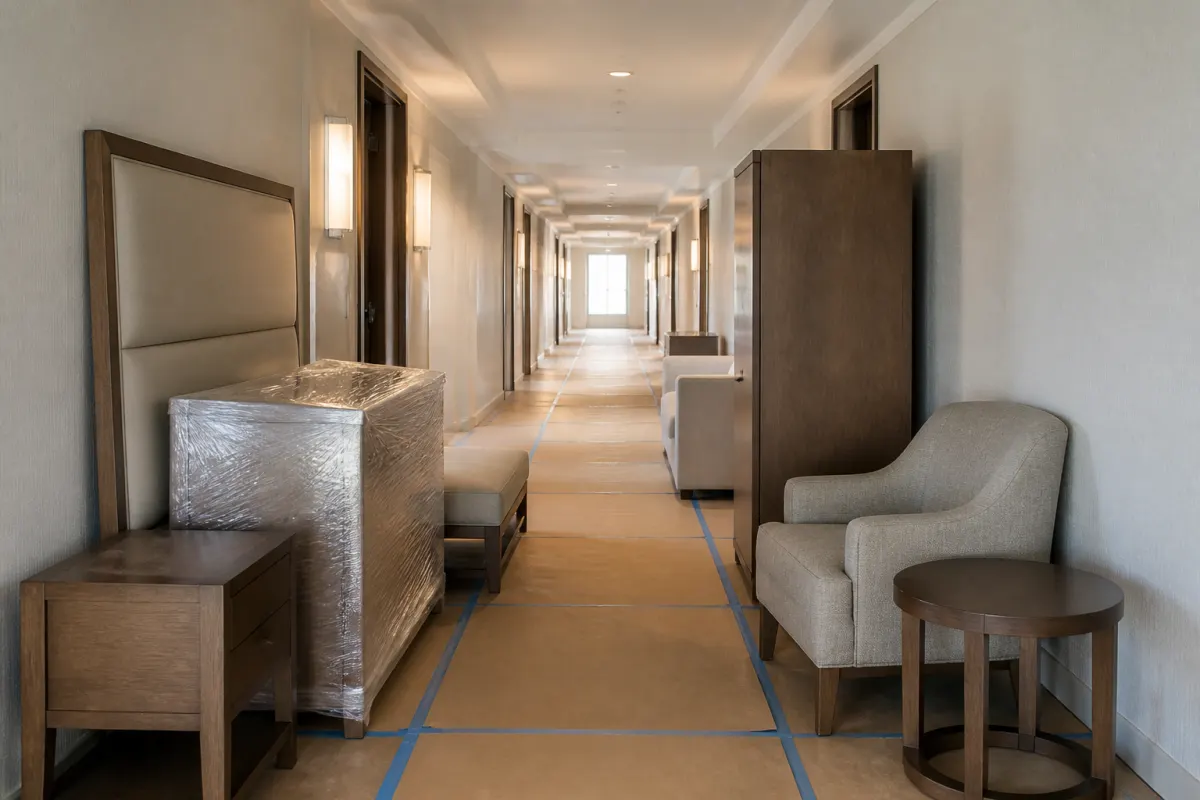
Headboards are typically the highest-impact renovation furniture investment in guest rooms. A floor-to-ceiling upholstered headboard with a contemporary profile and performance fabric covering transforms the visual character of a guest room more decisively than replacing casegoods, and at a lower cost-per-room than full furniture replacement. Raleigh hotel renovations that prioritize headboard investment consistently see higher guest satisfaction scores for room quality.
Lounge chairs in guest rooms the side chair or occasional chair that lives in the corner near the window are the second-highest-impact renovation target. A solid-wood-legged lounge chair with contemporary upholstery in a neutral performance fabric signals investment and quality in a way that an outdated upholstered chair with carved wood legs cannot, regardless of the fabric refresh.
For lobby renovations, sofas and lounge chairs are the primary visual elements. Replacing a dated lobby sofa program with COM upholstered pieces in a cohesive Research Triangle contemporary palette warm oak or walnut tones, performance fabrics in earthy neutrals creates an immediate and visible upgrade that guests notice and review.
Managing Renovation Furniture Procurement in Occupied Properties
Raleigh hotel renovation projects in occupied properties require furniture procurement strategies that account for operational constraints that don't exist in new construction. Floor-by-floor delivery scheduling, freight elevator access windows, installation crew coordination with housekeeping and front desk, and short-term furniture staging within the property all require active management.
Suppliers who have experience with occupied-property renovation delivery who can stage product in a regional warehouse and release it to the property on a floor-by-floor schedule rather than delivering the full order at once are significantly easier to work with in these situations. The cost of a poorly coordinated delivery that disrupts guest operations, generates complaints, and requires emergency storage solutions typically exceeds any savings from choosing the lowest-bid supplier without renovation logistics experience.
For Raleigh properties comparing hotel renovation furniture options, project-specific pricing tells you more than any published range. Request a quote and we will scope it to your space and volume.
Related reading
- What is contract furniture
- Hotel furniture supplier guide
- Hospitality furniture supplier guide
- Hotel headboards
- Guest room lounge chairs
- Hotel lobby sofas
- Commercial furniture in North Carolina