Hotel renovation in Pittsburgh is a different proposition than new construction, and the furniture procurement decisions that come with it are shaped by the same factors that make Pittsburgh's building stock distinctive: older structures with irregular room dimensions, historic preservation considerations in neighborhoods like the Strip District and Lawrenceville, and the operational reality that most Pittsburgh hotels cannot afford to close entirely during a renovation cycle. Phased renovation floors cycling offline while the rest of the property remains operational is the norm, not the exception, and furniture procurement for phased projects requires a supplier relationship built around schedule flexibility, not just product quality.
Pittsburgh's Hotel Renovation Market
The convention-market properties Downtown and on the North Shore run renovation cycles driven by brand standards franchise agreements that mandate guest room refreshes on 7 to 10 year intervals. A 300-room property on this cycle is a significant procurement event: new headboards, case goods, seating, and lobby furniture all specified within a brand framework but with latitude for market-specific design choices. Pittsburgh properties increasingly use that latitude to move away from the generic national brand aesthetic toward something that acknowledges where they are a shift that makes the furniture specification decisions more consequential but also more interesting.
The boutique renovation market is more varied. Properties in the Strip District that opened in the early 2010s are now approaching their first major renovation cycle after a decade of operation. These properties face a specific challenge: their original design was often executed with a mix of contract-grade and residential-grade furniture, and the residential-grade pieces have failed on a compressed timeline. Renovation procurement for these properties often involves upgrading to true commercial-grade construction throughout a one-time cost that substantially extends the interval before the next renovation is required.
Adaptive reuse projects buildings being converted to hotel use for the first time represent a growing segment of Pittsburgh's renovation market as the city's older commercial and industrial building stock continues to be repositioned. An adaptive reuse project in Pittsburgh's East Liberty or Bloomfield neighborhoods might involve a former department store, office building, or light industrial facility. These projects require furniture that fits within the existing architectural language of the space irregular column spacing, existing window configurations, non-standard ceiling heights rather than imposing a hotel-standard geometry that the building wasn't designed for.
UPMC's continued expansion of medical facilities in Oakland and the South Side creates renovation cycles for the extended-stay and limited-service properties in those corridors as they update to compete for the healthcare-adjacent guest segment that the hospital system continuously generates.
Specification Strategy for Renovation Projects
Renovation furniture specifications need to accomplish two things simultaneously: upgrade the guest experience and extend the time before the next renovation is required. These goals are aligned but not identical, and the specification decisions that achieve both are worth thinking through carefully.
For guest rooms, headboards are the highest-impact single furniture investment in a renovation. A room that has updated bedding but a dated or damaged headboard still reads as unrenovated. Conversely, a quality headboard upgrade steel-framed with upholstered panel, or solid wood construction with fabric insert transforms the room's first impression with a relatively contained capital outlay. Specifying headboards in dark metal or reclaimed-look wood for Pittsburgh properties gives the renovation a design identity rather than just a condition upgrade.
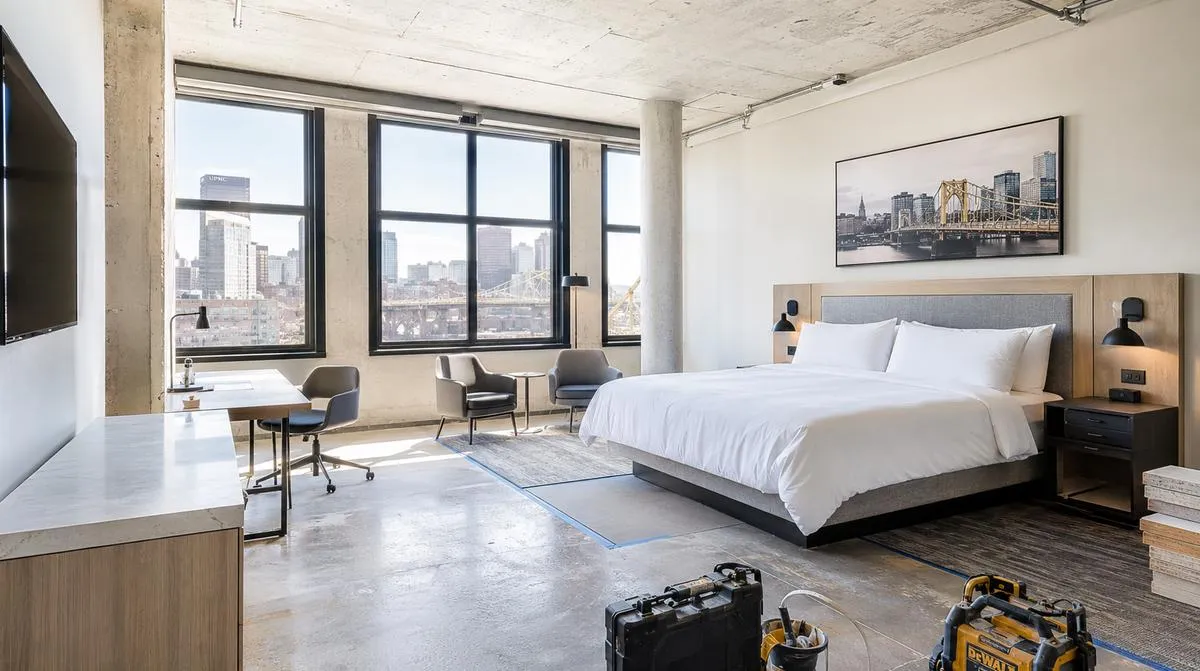
Seating the desk chair, the occasional chair or loveseat in larger rooms is the second-highest-impact renovation investment. Replacing worn-out, visually dated seating with contract-grade pieces in performance fabric appropriate to Pittsburgh's aesthetic registers immediately with guests and dramatically improves room photography, which drives online booking conversion.
Lobby renovation furniture for Pittsburgh properties should be specified with the market context in mind. A lobby refresh that swaps generic contract lounge seating for pieces with genuine design character lounge chairs with steel frames and leather or performance fabric, sofas with wood arm details and structured cushions can move a property's perceived positioning in a market where boutique alternatives have set a new design baseline.
Procurement and Phasing
Phased renovation procurement requires a supplier who can hold finished furniture in a regional warehouse and release it on a floor-by-floor schedule that matches construction progress. This warehouse-hold arrangement is standard for large renovation projects but needs to be negotiated at the purchase order stage it is not a default service from every supplier.
Lead times for renovation furniture orders run 10 to 14 weeks for standard specifications and 14 to 20 weeks for custom finishes or case goods. Properties planning renovations around low-demand periods typically January and February for Pittsburgh convention-market hotels should initiate procurement in September or October of the prior year.
Pittsburgh's older building stock frequently produces installation surprises: existing casework that doesn't match drawings, elevator dimensions that don't accommodate standard delivery packaging, loading dock access that wasn't designed for modern freight. Suppliers with regional installation experience in Pittsburgh particularly in Downtown and Strip District buildings are worth the preference over lowest-bid options that haven't navigated these conditions before.
Ready to spec hotel renovation furniture for your Pittsburgh project? Send us the details and we will price it around your requirements. Request a quote to start.