
Hotel renovation timing in Phoenix is not a suggestion it is a hard operational constraint imposed by one of the most pronounced seasonal demand cycles in North American hospitality. The snowbird migration that arrives in November and stays through April pushes occupancy at Camelback Corridor properties, Paradise Valley resorts, and downtown Phoenix hotels to levels that make taking rooms out of inventory prohibitively expensive. Any renovation not completed before the November arrival either gets pushed into peak season generating real revenue loss for every room offline or gets deferred to the following summer. The cost of getting the renovation calendar wrong in Phoenix is measured in both lost revenue and delayed asset improvement, which creates the urgency that defines hotel renovation furniture Phoenix procurement from start to finish.
The Summer Window: How It Works and Why It Is Shorter Than It Looks
Phoenix hotel operators have a renovation window that runs from roughly June through September. June through August is the deepest part of the summer trough leisure travel drops precipitously as Phoenix temperatures exceed 110°F, and business travel from the semiconductor and financial sectors moderates. September begins to recover as temperatures ease, and by October the market is already moving toward the November snowbird arrival.
The practical renovation window is shorter than the calendar suggests. Rooms being renovated cannot be generating revenue during the work period. Installation of FF&E furniture installation specifically cannot begin until room construction and painting are complete and trades have cleared. The sequencing of renovation work and FF&E delivery needs to be coordinated carefully so that furniture is arriving when rooms are ready to receive it, not sitting in a receiving warehouse for three weeks because construction ran long.
Working backward from a September completion target, with a July and August installation period, the procurement mathematics look like this: furniture installed in July or August needs to be ordered in March or April to account for the 10-to-16-week manufacturing lead times that define contract upholstered furniture. The design specification and sample approval process that precedes order release runs four to six additional weeks. That puts the start of procurement conversations in January or February for properties targeting summer renovation completion.
Properties that begin renovation planning in May or June for the current summer season have already missed the timeline for custom or COM upholstered pieces. They can still source standard catalog furniture from manufacturers with available inventory, but the custom specification work that defines Phoenix's higher-end hospitality properties requires the full lead time. Operators who consistently renovate on schedule in Phoenix are having procurement conversations in winter, not spring.
Guestroom Renovation Specification for Phoenix
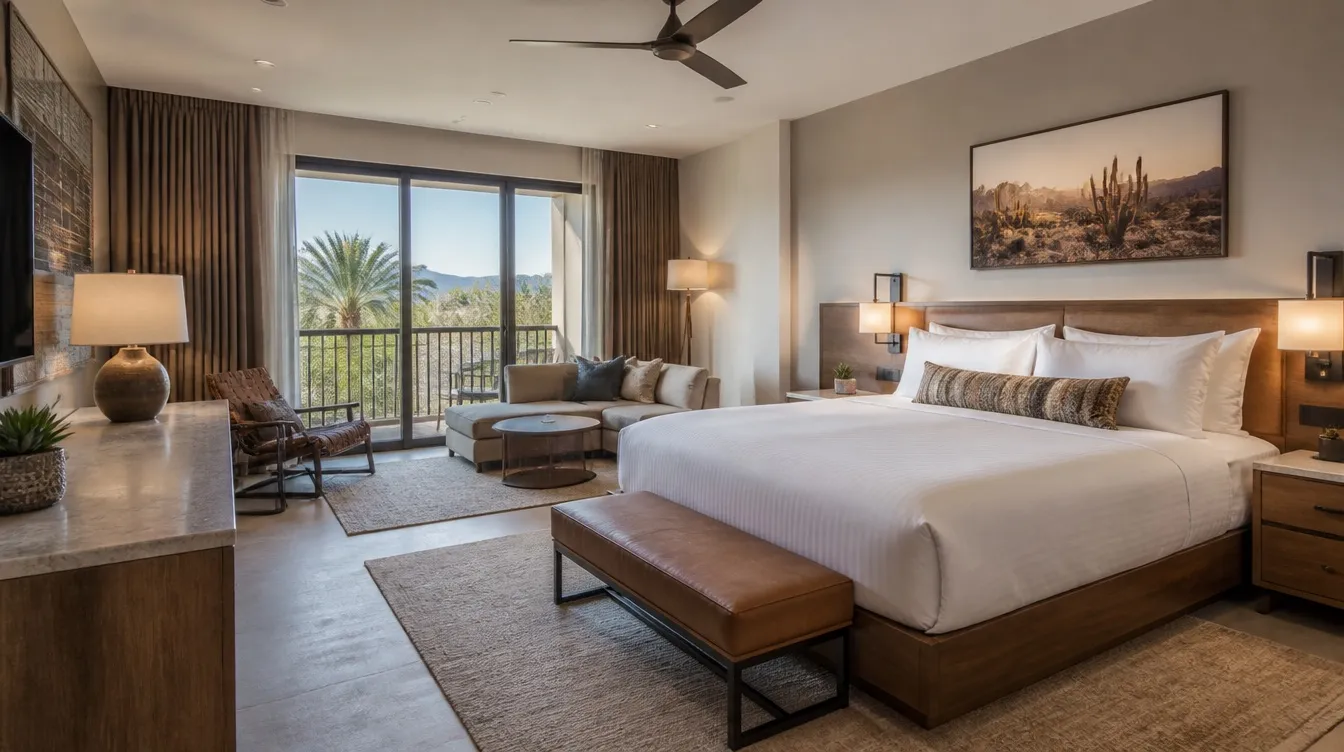
Guestroom furniture renovation in Phoenix hotels has to address both the commercial durability requirements of hospitality use and the specific material challenges of the desert climate. The two categories most sensitive to Phoenix-specific specification are upholstered pieces and case goods.
Upholstered guestroom seating lounge chairs, ottomans, desk chairs should be specified in commercial performance fabrics rated for the UV exposure that Phoenix guestrooms with south-facing windows receive. Even behind glass, significant UV load reaches furniture near large window walls. The cost difference between standard commercial upholstery and UV-stable performance fabric is small relative to the replacement cost when UV-degraded fabric needs to be replaced two years early.
Case goods dressers, nightstands, desks, armoires need to be constructed with properly conditioned solid wood components if solid wood is used. Phoenix's extreme dryness, particularly during summer when ambient relative humidity can drop below 10 percent, creates conditions that will cause improperly conditioned solid wood to check, crack, and show joint movement. Quality commercial case goods manufacturers specify moisture content at the time of manufacture; less rigorous operations ship whatever is available. Ask your supplier specifically about moisture content practices for solid wood components in Phoenix-bound furniture.
Headboards are the highest-visibility guestroom renovation decision and the most photographed element of any guestroom update. Headboards that reflect the desert modern aesthetic warm-toned performance fabrics in terracotta, sand, or ochre on clean-lined frames in natural wood or matte steel have a long shelf life in Phoenix's design market. Trend-chasing headboard designs that look current for a single cycle will look dated within three to four years; the desert modern idiom that is the regional design language has more staying power.
Lobby and Common Area Renovation
Lobby renovation is typically the highest-visibility component of a Phoenix hotel renovation project and the one most likely to require custom specification work. Lobby sofas, lounge chairs, and occasional tables for a Camelback Corridor property or a Roosevelt Row boutique hotel are selected with design precision that requires COM fabric programs, finish approvals, and in some cases custom fabrication.
The lead time implications of custom lobby furniture are the most significant in the renovation project. Standard catalog upholstered pieces run 10 to 14 weeks. COM fabric work adds two to four weeks for material receipt and inspection. Custom fabricated pieces bespoke sofas, architectural lobby seating, proprietary lounge configurations can run 20 to 24 weeks from design approval to delivery. For properties with major custom lobby furniture components, procurement needs to begin six months before the target installation date.
Outdoor common area renovation pool deck furniture, patio seating, rooftop lounge configurations has the same summer-window timing constraint as indoor renovation but with a specific Phoenix complication. Properties often want to have outdoor furniture refreshed and looking its best for the November snowbird arrival when outdoor programming becomes the most valuable part of the guest experience. That November target requires outdoor furniture orders placed by July or August at the latest, which means outdoor procurement planning needs to start in April or May.
Restaurant and bar furniture renovation within hotel properties follows the same procurement rhythm. High-volume restaurant seating banquettes, dining chairs, bar stools in commercial-grade product runs 8 to 12 weeks. Restaurant renovation at a Phoenix hotel property should coordinate furniture delivery with the restaurant's closure period, ensuring new furniture is installed and the space is operational before the November restaurant programming peak.
Managing Phased Renovation Projects
Large Phoenix hotel properties often renovate in phases refreshing one floor or wing at a time to keep most of the property operational while still making progress on the FF&E update. Phased renovation adds procurement coordination complexity because each phase has its own delivery window and installation sequence.
A qualified hotel renovation furniture Phoenix supplier will help you structure phased procurement so each wave of furniture arrives on schedule for its installation window. This requires communication between the supplier, the property's project manager, and the installation crew about exact delivery timing and staging logistics. Furniture that arrives too early consumes storage space the property may not have. Furniture that arrives late delays installation and risks pushing rooms back into inventory past the target date.
Phased renovation also requires inventory continuity decisions. If you are replacing guestroom chairs floor by floor, do you need all chairs to match across floors during the transition period? If the lobby renovation is happening in Phase 2 while guestrooms are renovated in Phase 1, how do you manage the visual disconnect between refreshed rooms and the existing lobby? These are legitimate design questions that experienced renovation projects address in the planning phase rather than discovering mid-project.
The properties that execute Phoenix hotel renovations on schedule are the ones who started planning with the right supplier six to eight months before the target completion date and maintained discipline on the procurement timeline through the process. The summer renovation window is real, but it is also unforgiving it does not expand to accommodate late starts or under-estimated lead times.
If you are sourcing hotel renovation furniture for your Phoenix property, the fastest way to real numbers is to tell us what you need. Request a quote with your quantities and timeline.