Hotel renovation in Milwaukee is constrained in ways that renovation in slower-paced markets is not. When Fiserv Forum is hosting playoff runs that can extend into June, Summerfest is occupying the lakefront for eleven days in late June and early July, and the Wisconsin Center is running conventions on a schedule that rarely goes quiet for more than a few weeks, the window for taking rooms offline without material revenue impact is narrow. Operators who try to renovate around the edges of that calendar without a proper procurement and phasing plan discover the hard way that furniture lead times don't bend to accommodate compressed windows.
Why Milwaukee Hotels Are Renovating Now
The pressure to renovate comes from multiple directions simultaneously in Milwaukee's current market. The city's event infrastructure has elevated quality expectations guests arriving for Fiserv Forum playoff games and Summerfest compare their Milwaukee hotel experience directly against properties in Chicago, Minneapolis, and other major event markets. Properties that haven't updated their guest rooms and public spaces within the past five to seven years are competing on price rather than quality, which is a difficult position in a market where event-driven demand creates genuine pricing power for well-positioned properties.
The Historic Third Ward and Deer District development momentum has raised the design bar significantly. New boutique hotels opening in converted warehouse spaces are setting a visual standard industrial-lakeside contemporary, honest materials, deliberate design choices that flags aging properties with dark espresso furniture and generic chain hotel aesthetics as due for replacement. Operators who can close that design gap attract the demographic that Summerfest, Bucks, and Milwaukee's growing food and beverage tourism drives to the city.
Corporate travel from Milwaukee's healthcare and financial services sectors adds a third dimension. These guests are frequent travelers with clear preferences and the Marriott Bonvoy or Hilton Honors points to back them up. A guest room with a 15-year-old casegood package and a compressed mattress loses that traveler to the newest property in the corridor, and the damage compounds when it shows up in corporate account feedback to the travel manager who controls 500 room nights per year.
Headboards and case goods are typically the primary renovation targets in guest rooms they carry the most visual weight and age the most visibly. Sofas and lounge chairs in suites and guest rooms follow. Public space renovations lobby seating, bar and restaurant furniture often accompany a guest room renovation in properties targeting repositioning rather than maintenance renovation.
Phasing a Milwaukee Hotel Renovation
The practical architecture of a Milwaukee hotel renovation is almost always floor-by-floor phasing rather than full-property closure. Taking 20 to 30 rooms offline at a time blocking a floor from booking while the renovation proceeds allows the property to maintain meaningful occupancy and revenue while the work progresses. It also allows for a phased approach to furniture delivery: product arrives and installs as each floor opens, rather than requiring the full order to be staged and held on property simultaneously.
The calendar constraint that shapes all of this is the dead zone the narrow window when Milwaukee's event calendar clears enough to allow construction and installation with minimum revenue impact. That window typically runs mid-July through mid-September, after Summerfest ends and before the NBA preseason begins. Properties targeting this window for their heaviest renovation phases need purchase orders placed by late January to guarantee delivery within the window for custom furniture, and by April for standard contract pieces.
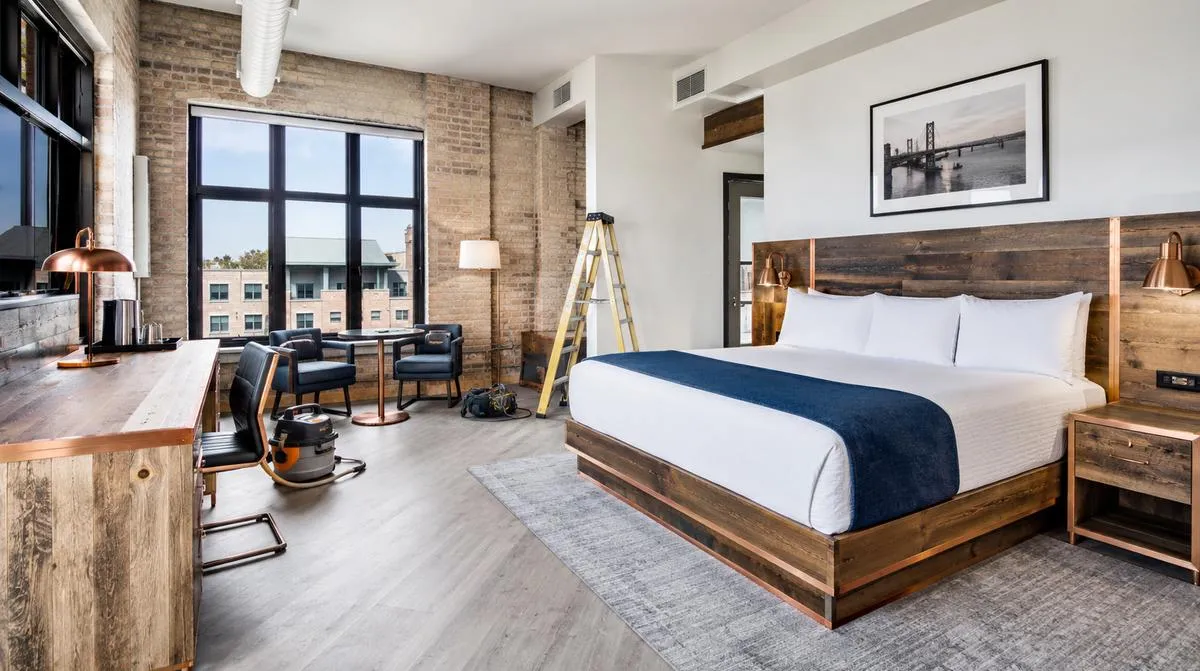
A typical Milwaukee renovation procurement timeline for a 100-room property renovating 25 rooms per phase over four phases might look like this: Long-lead custom pieces headboards, case goods with custom finishes, signature lobby pieces ordered in January for June delivery. Standard contract pieces dining chairs, lounge chairs, ottomans ordered in April for July delivery aligned with the renovation window. Punch-list and replacement items ordered on a running basis as the renovation progresses.
Specifying for Longevity in Milwaukee's Market
A renovation investment in Milwaukee's hotel market needs to carry the property forward for seven to ten years before the next major refresh. Specifying to that horizon means prioritizing construction quality and material durability over trend responsiveness.
For guest rooms, this means case goods built with solid wood drawer boxes and full-extension undermount slides, not particleboard construction with side-mount hardware. It means headboards with solid substrate construction and fabric or leather upholstery rated for commercial use, not residential-grade foam and staple-gun fabric application that shows wear within two years. It means sofas and lounge chairs with eight-way hand-tied spring construction or sinuous spring systems not webbing that loses tension within three years of hotel-cycle use.
For public spaces, it means upholstery fabrics with legitimate commercial ratings 100,000 double rubs minimum for moderate traffic, 250,000 for high-traffic lobby seating and frame construction in solid wood or welded steel that won't develop joint wobble in year three of a ten-year ownership horizon.
The Milwaukee design direction industrial-lakeside contemporary anchored in reclaimed wood tones, aged metal hardware, and Lake Michigan-inspired palette has enough visual durability to hold up over that time horizon without feeling dated. Chasing trend-specific aesthetics creates renovation products that look current for two years and tired for five.
Planning hotel renovation furniture for your Milwaukee project? Share your specs and quantities and we will build pricing around your actual program. Request a quote to get numbers for your space.