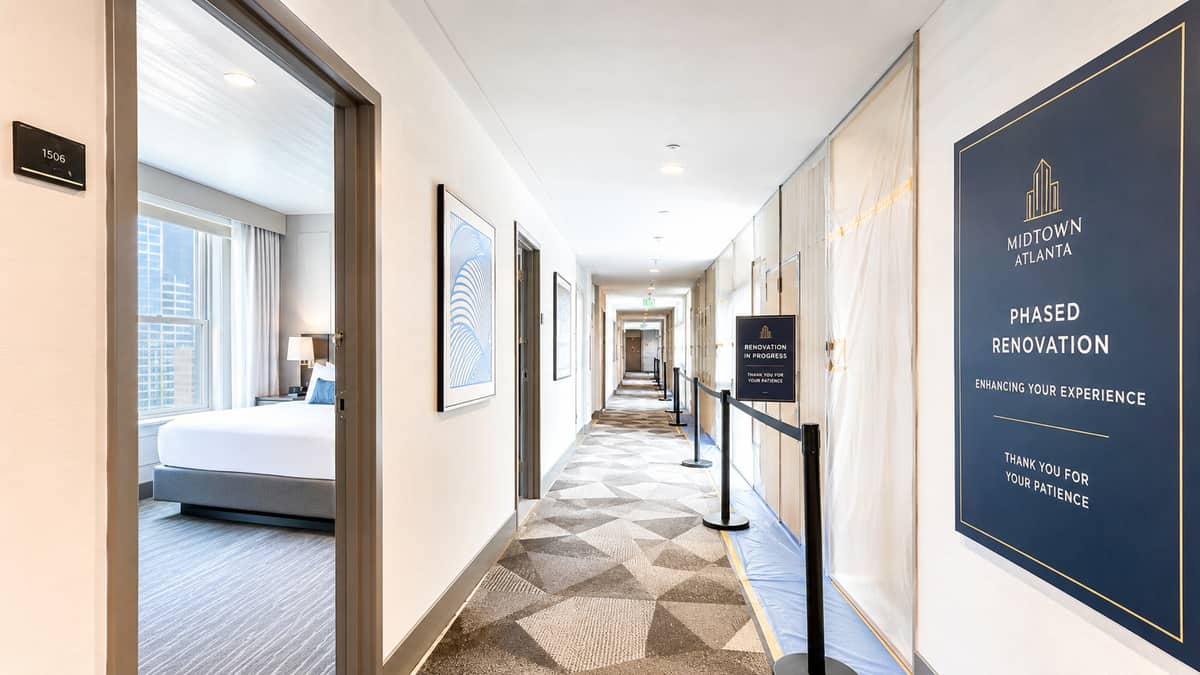
Renovating an occupied hotel in Madison is a different project than furnishing new construction, and the market here adds its own scheduling pressure on top of the usual complexity. Legislative session brings a steady base of state government travelers who expect a functioning property regardless of what floor is under construction. Monona Terrace keeps convention and meeting traffic flowing through downtown hotels for stretches of the year that renovation crews have to work around. And the university drives predictable but intense demand spikes, move-in weekend, graduation, Camp Randall Stadium football Saturdays, that make certain calendar windows effectively off-limits for major disruption. If you are planning a renovation for a Madison property, your furniture procurement timeline needs to be built around those realities from day one.
Phasing a Renovation Around Madison's Occupancy Patterns
Full-property renovations that take a hotel offline entirely are rare in this market, because Madison's demand base does not have enough slack to absorb a property going dark for months. Most Madison renovation projects run in phases, floor by floor or wing by wing, keeping a portion of the property operational while another section is under construction.
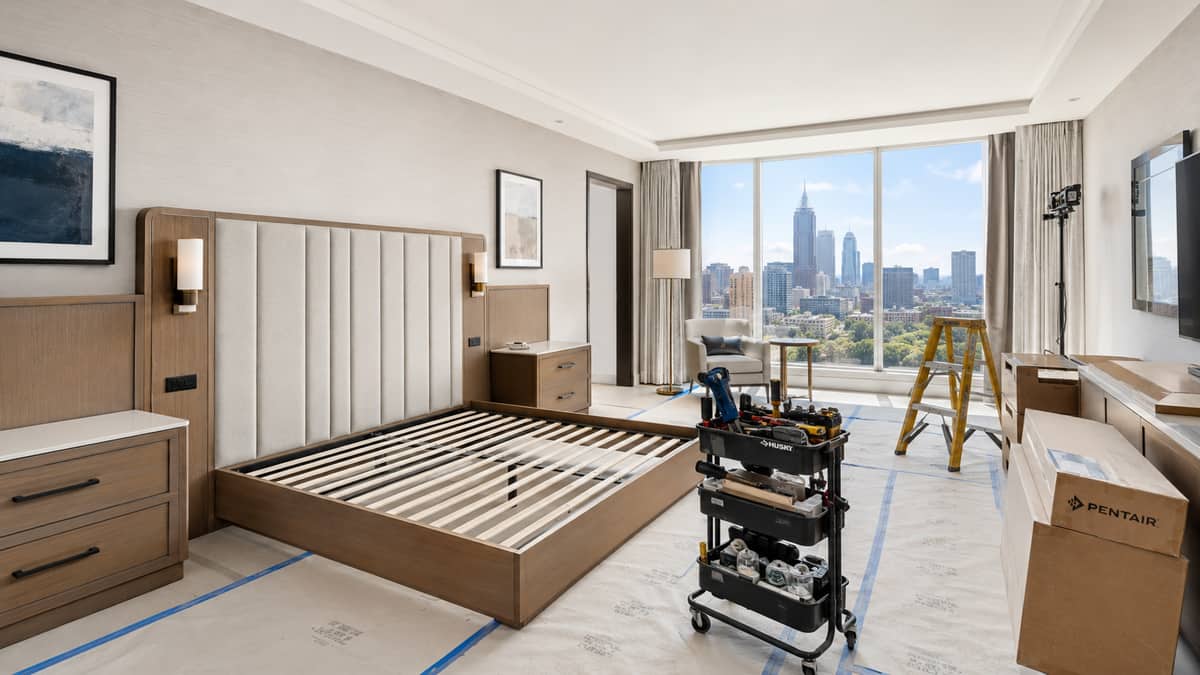
That phasing approach puts real pressure on furniture procurement and delivery logistics. You need enough new inventory on hand to complete each phase without a gap between old furniture removal and new furniture installation, since an out-of-service room during a legislative session or a Monona Terrace conference week is lost revenue you cannot recover. Work with your supplier to sequence delivery in matched batches tied to your construction schedule, not a single bulk shipment that shows up before you are ready to install it or arrives too late to keep your phase on track.
Matching New Furniture to What Stays
Most Madison renovations do not replace every piece of furniture in a room. Casegoods might get replaced while soft seating is reupholstered, or vice versa, depending on budget and what the existing inventory's condition actually supports. That partial-replacement approach requires careful finish and fabric matching so the renovated room does not read as a patchwork of old and new.
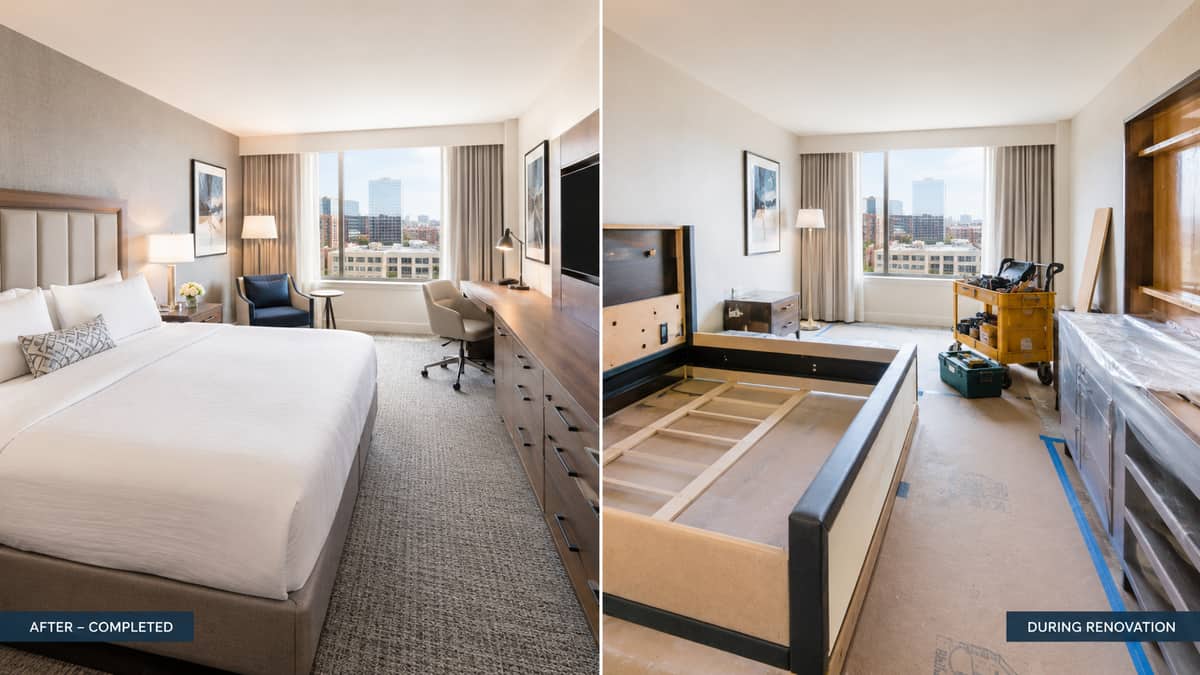
Bring physical samples of your existing furniture finishes to any supplier conversation early in the process. Wood tones and hardware finishes shift over the years due to sun exposure and cleaning products, and a supplier working from a paint chip or a manufacturer's original spec sheet without seeing the actual in-place furniture is guessing. A supplier experienced in renovation work will ask to see or photograph the existing pieces before quoting a matching program, and that step alone catches most of the mismatch problems before they become a costly reorder.
Lead Times for a Renovation That Cannot Slip
Renovation projects carry the same lead time realities as new construction, 10 to 16 weeks domestic, 20 weeks or more for import product, but with less flexibility to adjust your calendar if something slips. A new hotel can push its opening date if furniture is delayed. A renovation phase tied to your legislative session downtime window or a gap in your Monona Terrace conference calendar usually cannot move without real financial consequences.
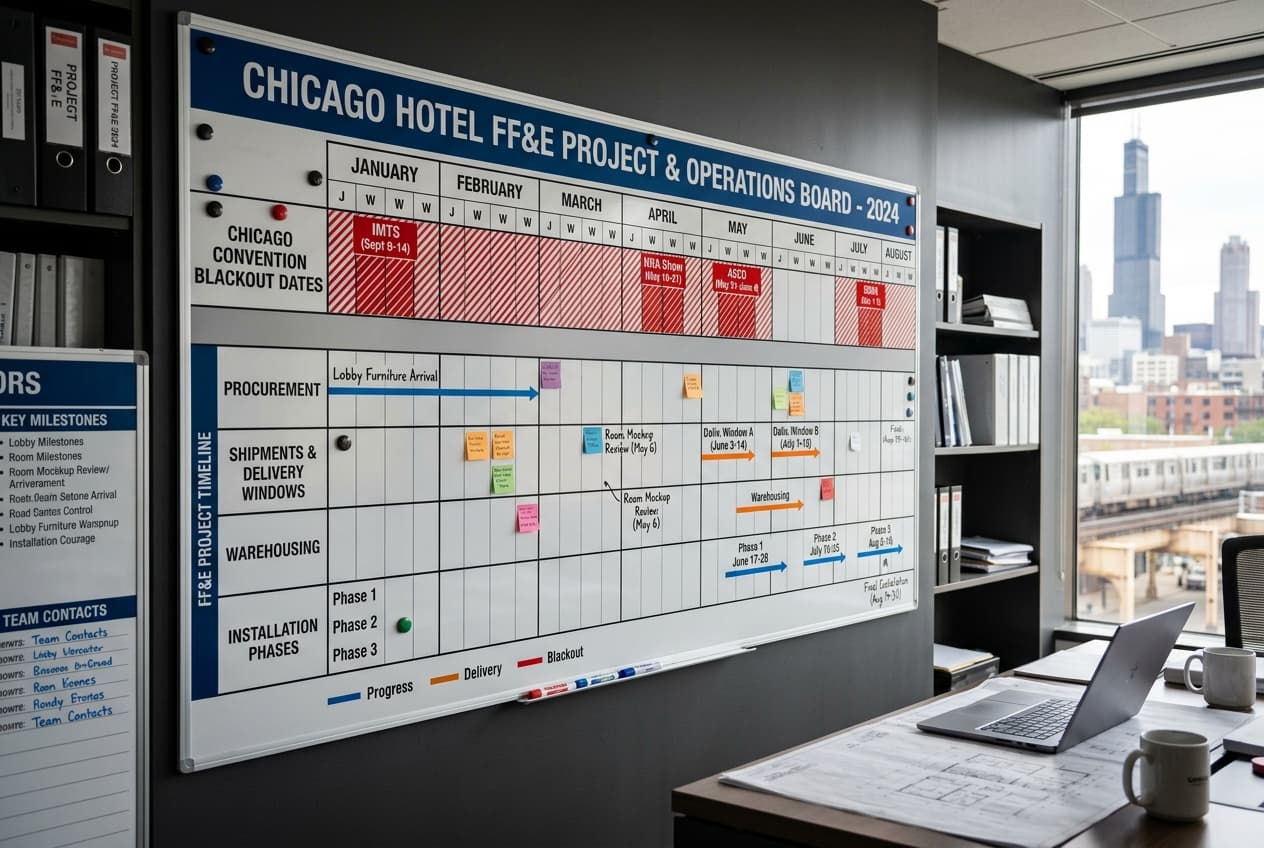
Order your renovation furniture with real buffer built into the timeline, and confirm your supplier's actual production and shipping commitments in writing rather than working off a verbal estimate. Ask specifically how they handle a delay if one occurs, since a renovation project has far less schedule slack than new construction to absorb a late shipment.
Working Around an Occupied Building
Renovation logistics in an occupied Madison hotel require coordination that a new-build project does not. Elevator access, loading dock scheduling, and construction noise all need to work around guests who are staying in the building while work happens elsewhere. A supplier with genuine experience in occupied-building hospitality renovation understands how to sequence delivery and installation to minimize disruption, staging furniture off-site until installation day rather than cluttering hallways with boxes for days at a time.
Ask your supplier about their white-glove delivery and installation capabilities specifically for renovation projects, not just new construction. The skill set is different: renovation installation crews need to work carefully around finished, occupied spaces and coordinate closely with your general contractor and property operations team to avoid guest complaints during an active renovation phase.
The Madison hotel renovations that go smoothly are the ones where furniture procurement started early, matched carefully to what the property is keeping, and sequenced tightly against a construction and occupancy calendar shaped by the legislative session, the university, and the convention business downtown. Treat your furniture supplier as part of that scheduling conversation from the start, not a vendor you call once construction plans are finalized.
Ready to plan an FF&E renovation for a Madison property? Request a quote and a member of our team will follow up with next steps.
Related reading
- What is contract furniture
- Commercial furniture vs retail
- Hospitality furniture supplier guide
- Hotel renovation furniture: an FF&E buying guide
- Hotel lobby furniture in Madison
- FF&E procurement in Madison
- Hotel headboards
- Guestroom dressers
- Nightstands and case goods
- Commercial furniture in Wisconsin