Hotel renovation projects in Louisville operate on a different clock than comparable projects in most American cities. The Kentucky Derby creates a hard revenue peak that no property owner wants to miss with construction debris in the hallways, and the city's bourbon tourism season sustains enough year-round demand that there's rarely a truly convenient renovation window. Understanding how to plan furniture procurement around Louisville's calendar is the difference between a renovation that opens on schedule and one that costs its owner a Derby Week's worth of RevPAR.
Louisville's Hotel Renovation Landscape
Louisville's hotel stock includes some of the most historically significant properties in the mid-South and some of the most challenging renovation subjects. The Brown Hotel, opened in 1923, represents one end of the spectrum: landmark properties where renovation decisions must balance historic preservation considerations with contemporary hospitality standards. At the other end, the airport corridor and suburban hotel market has a stock of 1990s and early 2000s properties that have aged out of competitive relevance and need complete FF&E replacement programs.
Downtown Louisville has seen significant renovation activity over the past decade, driven by the bourbon tourism economy's growth and the competitive pressure from major new builds like the Omni Louisville. Properties on West Main Street and in the CBD have largely upgraded their furniture programs to compete with the Omni's high-standard interior design, often doing phased renovations that allow them to maintain partial occupancy through the process.
NuLu boutique property renovations represent a distinct category: smaller room counts, more design-intensive briefs, and buyers who are often doing their first major FF&E procurement. These projects benefit from a supplier who can provide specification support helping select pieces that work together as a collection, not just individual items that are individually acceptable.
Healthcare-adjacent properties near Humana's East Ormsby campus and UofL Health facilities tend toward value-driven renovation programs focused on durability and ease of maintenance. Headboards in cleanable vinyl or performance fabric, sofas with removable cushion covers, and hard-surface dining and desk pieces that resist moisture and staining are the practical priorities in this segment.
Furniture Specifications for Louisville Renovations
Renovation projects differ from new construction in one important way: the new furniture must work with existing architecture that can't be changed. Louisville's older downtown and Highlands properties often have room configurations that differ from contemporary hotel room standards floor plans that were designed around different furniture scales, door swings that limit casegood placement, and bathroom footprints that affect the amount of seating that fits in the sleeping area.
Measure every room configuration before specifying. This sounds obvious, but it's the most common source of furniture delays in renovation projects: pieces that spec correctly on paper don't fit through doorways or around existing fixed elements. For Louisville's historic properties especially, verify ceiling heights, crown molding dimensions, and baseboard depths that can affect headboard installation.
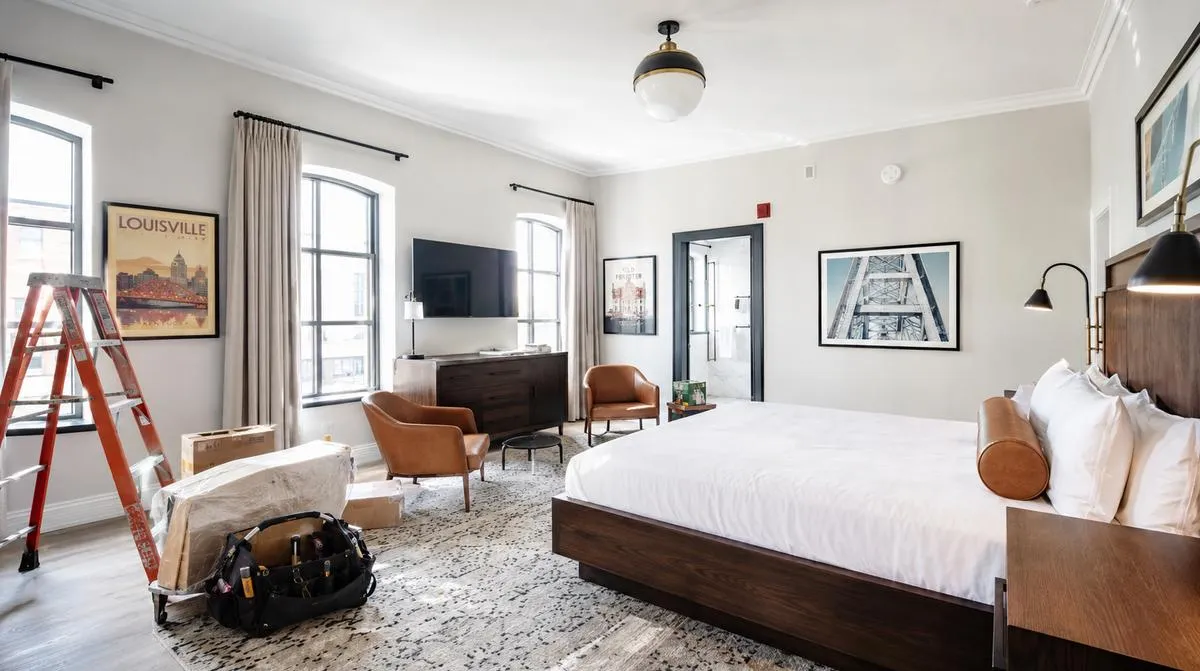
For upholstered pieces headboards, lounge chairs, and case-seating renovation projects often benefit from a COM (customer's own material) approach, specifying frames from a supplier's standard program and selecting upholstery fabrics that match the specific color palette of the renovation. This gives design flexibility without the lead-time hit of fully custom pieces.
Durability specs should be non-negotiable: Louisville renovations are intended to last 7-10 years before the next major FF&E cycle, and the properties that get the most out of that cycle specify correctly from the start. Double-doweled frames, 8-way hand-tied or sinuous spring systems, and commercial-grade upholstery minimize mid-cycle replacement costs.
Renovation Scheduling Around Louisville's Calendar
The ideal Louisville hotel renovation window is June through February after Derby Week concludes and before the following year's pre-Derby booking rush. Properties that manage full floor-by-floor renovations in this window can complete the project, photograph the upgraded rooms, and have those images driving online bookings by January, just as Derby Week demand accelerates.
For phased renovations that require maintaining partial occupancy, sequence floors from top to bottom (or least visible to most visible) to protect lobby and lower-floor presentation while upper floors are in active renovation. Coordinate furniture delivery dates with your GC's completion schedule floor by floor having furniture staged in hallways adds risk of damage and creates guest experience problems on occupied floors.
Lock FF&E purchase orders by October or November for a spring completion target. Custom upholstered pieces at 10-14 week lead times, placed in November, arrive in February enough time for installation, photography, and punch-list resolution before mid-April.
Ready to spec hotel renovation furniture for your Louisville project? Send us the details and we will price it around your requirements. Request a quote to start.
Related reading
- Banquet tables in Louisville: sizing and specs
- What is contract furniture
- Hotel furniture supplier guide
- Hospitality furniture supplier guide
- Hotel headboards for guest room renovation programs
- Lounge chairs for hotel room and lobby renovation
- Commercial sofas for hotel renovation projects
- Commercial furniture in Kentucky