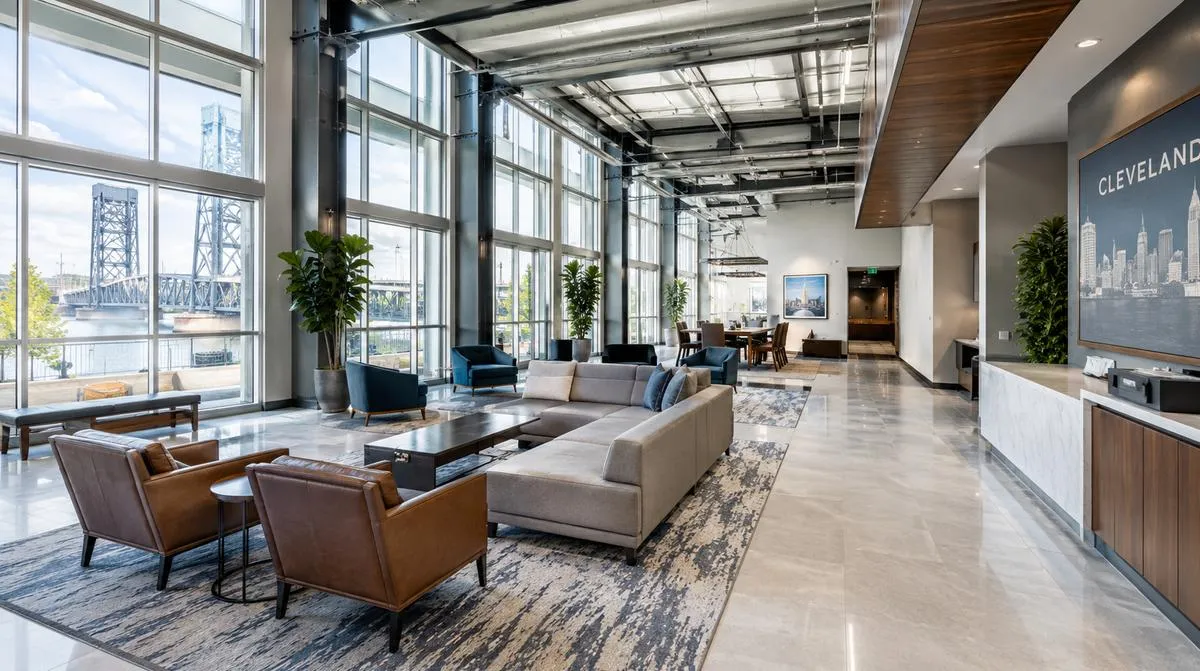
A Spirit AeroSystems supplier flies in for a two-day plant visit, checks into a downtown property a few blocks from Century II, and walks into the lobby still thinking about the meeting ahead. A wedding party from a small Kansas town two hours west checks into the same hotel that same weekend for a Saturday reception. An engineering recruiter working the Wichita State University pipeline is in the lobby on a laptop between interviews. Three completely different guests, same room, same furniture, all forming an opinion about your property in the time it takes to cross from the door to the front desk.
That range is normal in Wichita's hotel market, and it is exactly why lobby furniture specification here cannot be an afterthought. The city runs on a mix of aviation industry business travel, a steady convention and meeting calendar centered on Century II Performing Arts and Convention Center, and a leisure and events market that fills rooms for weddings, youth sports tournaments, and the Wichita River Festival every June. Your lobby furniture has to perform for all of it at once.
Wichita's Hotel Market Is Built on Business Travel, Not Just Tourism
Wichita is the largest city in Kansas and the hub of the state's aviation manufacturing base, home to Textron Aviation, Spirit AeroSystems, Bombardier's Learjet operations, and a dense supply chain of aerospace vendors that fly engineers, suppliers, and buyers in and out of the city on a rolling basis. That travel pattern is different from a leisure-driven market. Aviation industry travelers book on a company account, stay midweek, and expect a lobby that reads as functional and professional rather than performative. They are not choosing your property because of the photos. They are choosing it because it is close to the plant, and once they arrive, the furniture either confirms that this is a well-run business hotel or it does not.
Downtown properties near Century II and the Old Town district face a second demand curve entirely. Century II hosts conventions, trade shows, and touring productions that bring in groups ranging from a few hundred to several thousand attendees, and those groups arrive and depart the lobby in waves tied to the event schedule rather than a normal check-in curve. A property near Century II can see its entire lobby seating capacity turned over multiple times in a single evening during a large convention or a Broadway touring show at the adjacent theater. Furniture in that setting needs the same contract-grade construction that any high-volume commercial space requires: kiln-dried hardwood or steel frames, high-resilience foam built for continuous public use, and upholstery textiles rated well above the wear thresholds of residential furniture. Anything specified to a lower standard shows sagging cushions, loose joints, and worn arms inside two years, well before most capital plans account for replacement.
Old Town and the Douglas Design District Are Changing the Boutique Conversation
Wichita's boutique and independent hotel segment has grown around Old Town and the Douglas Design District, where converted warehouse buildings and historic storefronts now house restaurants, breweries, and a small but growing set of design-forward hotels. Guests booking these properties have usually already seen the photos, and they are choosing the property specifically because it does not look like a standard highway-exit hotel. That expectation puts real pressure on lobby furniture to read as intentional rather than assembled from a catalog.
In this segment, low-profile lounge seating, wood tones and metal finishes that reference the exposed brick and timber architecture common to Old Town's converted buildings, and upholstery in richer, less generic color stories all do real work. The construction underneath still has to meet full contract-grade standards, the piece just has to look like a design decision rather than a furniture-budget decision. A property that gets the aesthetic right but cuts corners on frame and foam quality will lose the argument within a year, once the furniture that looked sharp at opening starts to visibly wear under regular guest use.
Kansas Weather Is a Real Furniture Variable in This Market
Wichita sits in a continental climate zone with genuine seasonal extremes, and that matters more for lobby furniture than operators sometimes account for. Summers run hot, frequently well above 95 degrees, and guests are walking into air-conditioned lobbies carrying humidity, sweat, and condensation from cold drinks. Winters bring hard freezes, road salt and de-icing residue tracked in on boots and luggage wheels, and dry indoor heating air that stresses wood joinery and upholstery adhesives differently than a humid climate does. Add in the wind Wichita is known for, which drives fine dust and grit into entryways nearly year-round, and lobby furniture here is absorbing more environmental stress than a comparable piece in a milder market.
Performance upholstery rated for stain and moisture resistance is the baseline call, not an upgrade, for any lobby seating cluster near the entrance doors. Frame construction matters just as much. Solid hardwood or steel frames with reinforced corner blocking hold up to the expansion and contraction that comes with Kansas's swing between summer humidity and dry winter heat, while particleboard components are more likely to loosen and fail under those same seasonal cycles. In a lobby that gets rearranged for private events, wedding block check-ins, or convention overflow seating, frames that can be re-tightened rather than replaced are a practical requirement, not a nice-to-have.
Designing the Arrival Sequence for Wichita's Guest Mix
Every lobby has a sequence guests move through instinctively: the primary seating cluster registers first, then the front desk, then the path toward elevators or the meeting space corridor. For a business-travel-heavy market like Wichita, that sequence has to communicate efficiency and quality at the same time.
Near the aviation corridor and the office parks serving Textron and Spirit AeroSystems, guests are often arriving after a full day of plant visits or supplier meetings and want a lobby that lets them orient quickly. Clean-lined lounge chairs, a scale that fits the room without crowding walkways, and seating that is easy to exit without maneuvering around a rolling bag all support that goal. Nothing about the furniture should suggest it was chosen to fill square footage rather than to work.
Closer to Century II and the convention corridor, the priority shifts toward flexibility. Seating clusters need to support groups checking in together, badge holders looking for a few minutes to sit before a session, and the occasional need to clear or reconfigure the lobby for a private reception tied to a convention week. Modular pieces and durable occasional tables that can be moved without damage to floors or finishes earn their keep here in a way that a fixed, oversized sectional never will.
Lead Times and Wichita's Renovation and Opening Calendar
Contract-grade lobby furniture is built to order, and standard lead times for commercial-grade pieces typically run eight to twelve weeks from confirmed specification, with custom fabric programs or non-catalog finishes adding time on top of that. Wichita's hotel market has seen a steady run of renovations tied to brand-standard refresh cycles and a handful of new builds and conversions near Old Town and the airport corridor, and projects on those schedules run into the same problem repeatedly: furniture ordered too late arrives after the opening date, and the pieces used as placeholders end up staying far longer than planned.
If your property has an opening or renovation completion tied to a convention booked at Century II, a graduation weekend tied to Wichita State University, or the spring and summer wedding season that fills Wichita hotels on weekends, those lead times need to be part of the project plan from day one, not an afterthought once construction is finished. A supplier who can commit to realistic timelines, who understands hospitality volume and Kansas's climate demands, and who can run a COM program for properties chasing a specific design story is worth more over the life of the furniture than a marginally lower unit price from a vendor treating a hotel order like a standard retail purchase.
Tell us about your Wichita hotel lobby furniture needs and we will turn your quantities, finishes, and timeline into a firm quote. Request a quote whenever you are ready to compare.