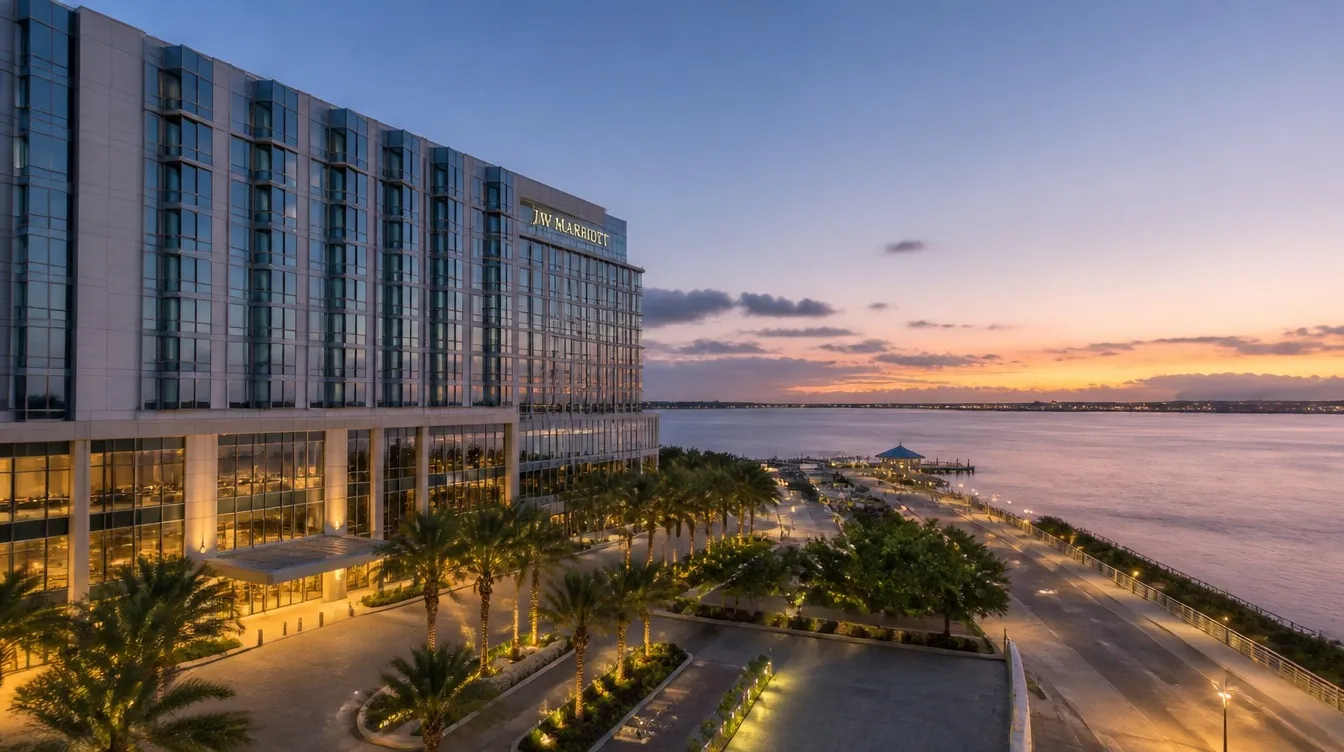
A Tampa hotel lobby does not get a quiet season. Port Tampa Bay's cruise departure traffic means Friday and Sunday lobby volumes that hotels in most markets only see during holidays. The Convention Center's association conference calendar keeps weekday business travel flowing through the Channelside and downtown corridor for most of the year. Amalie Arena events push evening arrivals and checkouts into compressed windows that test lobby furniture and lobby staff in equal measure. In this operating environment, hotel lobby furniture Tampa FL buyers select is making real commercial decisions not aesthetic ones that happen to involve purchasing.
The Lobby as a Signal in Tampa's Competitive Market
Tampa's hotel market is more competitive and design-aware than it was a decade ago. The growth of the Channelside corridor, the emergence of Ybor City as a genuine boutique hotel and event destination, and the continued development of the Convention Center's surrounding district have brought in new flags, new independent properties, and guests who are choosing between options with real differences in quality and feel.
In that environment, the lobby is not a pass-through. It is the first physical impression a property makes, and it sets the frame for every subsequent guest experience. A lobby that feels well-considered seating that is proportionate, materials that are warm and cared for, a layout that actually serves how guests use the space communicates that the operation is run with intention. Furniture that looks institutional, worn, or mismatched does the opposite.
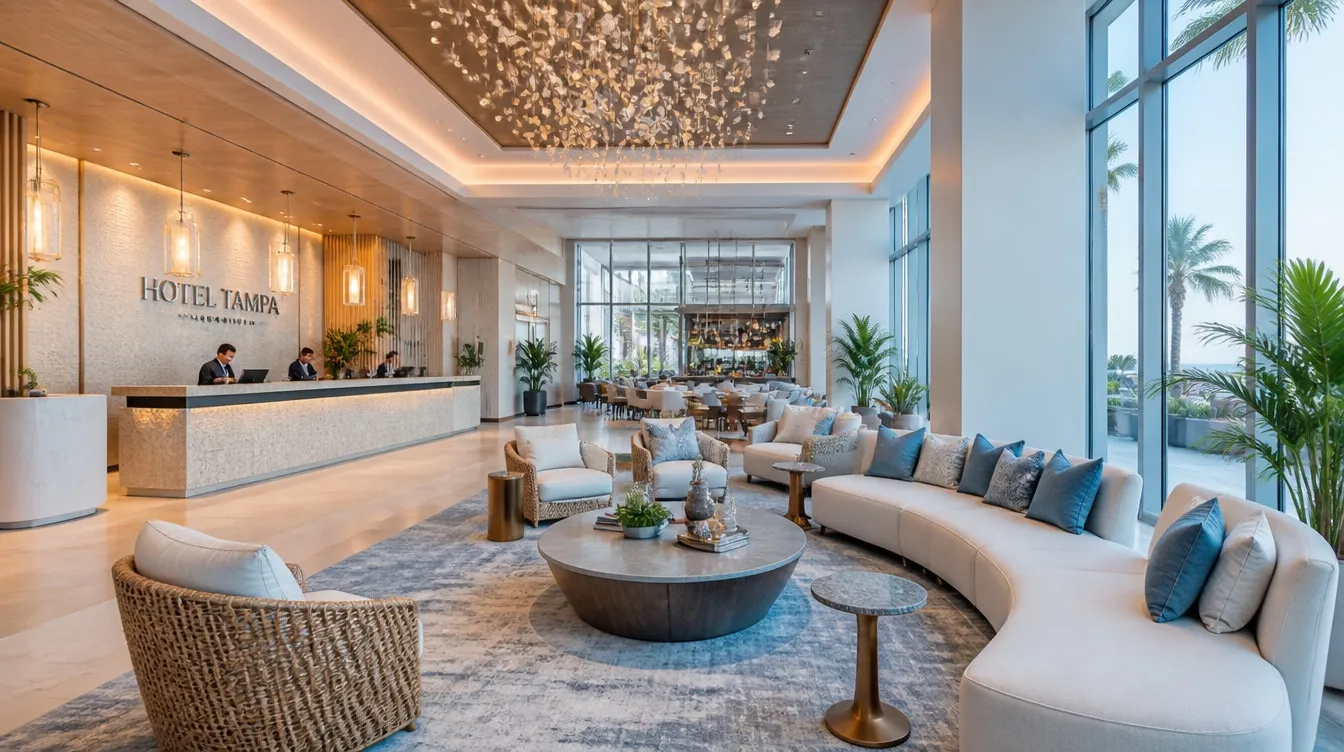
For properties in the Channelside waterfront corridor, the lobby design language that performs is coastal Florida contemporary with real substance warm wood tones, leather or performance leather in neutral and teal-accent palettes, frames in warm matte metal finishes that do not read as corporate. For properties in or adjacent to Ybor City, the design language should lean into the neighborhood rather than away from it: exposed brick references, warm leather, iron-finish metal, upholstery in tobacco and cognac tones. The worst outcome in Ybor City is a lobby that could be in any hotel in any city the neighborhood offers a design identity that is genuinely distinctive, and furniture selections that ignore it are a missed opportunity.
Durability Specifications for Tampa Lobby Environments
Tampa's Gulf Coast climate creates conditions that standard contract furniture specifications do not always account for explicitly. High summer humidity, frequent rain, and the moisture that cruise travelers and waterfront guests bring into a lobby after extended time outdoors mean fabric and finish choices need to perform in wet-adjacent conditions.
For main seating areas sofas, lounge chairs, armchairs specify performance fabrics rated at 100,000 double rubs minimum. Solution-dyed construction holds color significantly longer in environments with indirect UV exposure and high humidity than surface-treated alternatives. For lobby pieces near entrances or in properties with heavy outdoor traffic flow, performance leather or commercial-grade vinyl is worth considering it handles moisture contact directly and cleans without the material degradation that fabric absorbs from repeated damp contact.
Frame construction matters at the joint level. Lobby seating in a high-traffic Tampa hotel goes through heavy use guests dropping luggage next to chairs, leaning on armrests at angles they were not designed for, and occasionally children climbing on sofas that were not spec'd for it. Eight-way hand-tied spring construction for upholstered seating and solid hardwood or steel subframes hold their shape and structural integrity through that kind of use. Staple-and-glue frame construction does not.
Reception and entry-adjacent seating takes the most punishment per square foot of any furniture in the hotel. These pieces cycle through the most contact, the most moisture exposure, and the most physical stress from bags and luggage. Specifying contract-grade construction here is not an upgrade it is the minimum that makes economic sense when you account for how quickly under-spec'd pieces show wear in this location.
Layout That Serves How Tampa Hotel Guests Actually Move
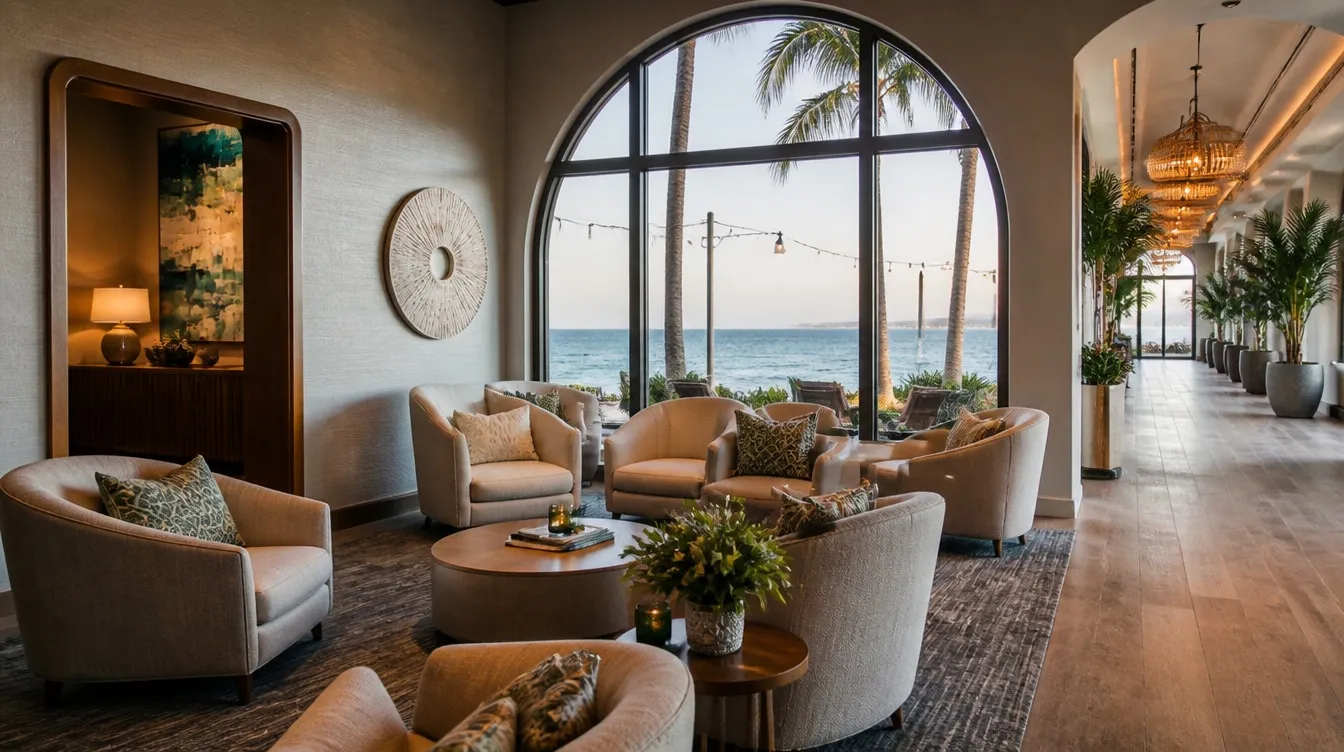
Lobby layout in a Tampa hotel needs to account for the specific guest mix cruise travelers with luggage arriving and departing in clusters, convention groups organizing themselves before moving to the Convention Center, business travelers with laptops looking for fifteen minutes of focused connection before a meeting, and leisure guests who want to decompress after a day at the port.
These use patterns call for a segmented layout rather than a single seating concept. A cluster of deeper lounge chairs and sofas serves the leisure traveler who wants to settle in. Smaller two-person configurations near power access serve the business traveler who needs a quick stop. An open, easily navigable path through the main lobby serves the cruise traveler with a rolling bag who needs to move efficiently to the desk or the elevator.
The mistake that shows up in Tampa hotel lobbies repeatedly is treating the lobby as a single-use space and furnishing it that way a row of identical chairs along one wall, a pair of sofas facing each other in the center, nothing else. That layout does not serve multiple use patterns, it looks like it was assembled rather than designed, and it does not hold up well as guest needs change across the day.
Side tables are consistently underspecified. A lounge chair without an adjacent surface is functionally incomplete and in Tampa's market, where guests are spending time in the lobby waiting for cruise shuttles, convention transportation, or event check-in, the need for a surface to set a coffee or a phone is real and constant. Specify tables at heights that work with both standard-height and low-profile seating. Choose tabletop materials that handle condensation without staining marble and stone look excellent and require sealing maintenance. Compact laminate and Dekton provide comparable visual quality with less upkeep.
Working with Suppliers for Tampa Lobby Projects
Contract furniture suppliers who understand the Tampa market bring a specific combination of knowledge that makes lobby projects go more smoothly: familiarity with Gulf Coast climate material requirements, understanding of the different design identities across Tampa's hotel districts, and realistic regional freight and delivery capabilities.
Ask suppliers about their experience with Tampa-area hotel projects specifically. A supplier who has delivered lobby furniture to properties in Channelside, downtown, or the Ybor City district has already navigated the specific combination of design requirements and climate specs that Tampa demands. Their lead time estimates and material recommendations will be grounded in what actually works here rather than in general contract furniture knowledge that does not account for local conditions.
COM upholstery is standard practice for hotel lobby projects the ability to specify a fabric or leather and have it applied to a commercial frame is how lobby seating achieves the visual cohesion that makes a space feel designed rather than assembled. Confirm COM capability early in the conversation, along with minimum order quantities and lead time implications for non-standard materials.
We quote hotel lobby furniture for Tampa operators against their own layouts and order sizes rather than a generic sheet. Request a quote and we will put together pricing for your property.