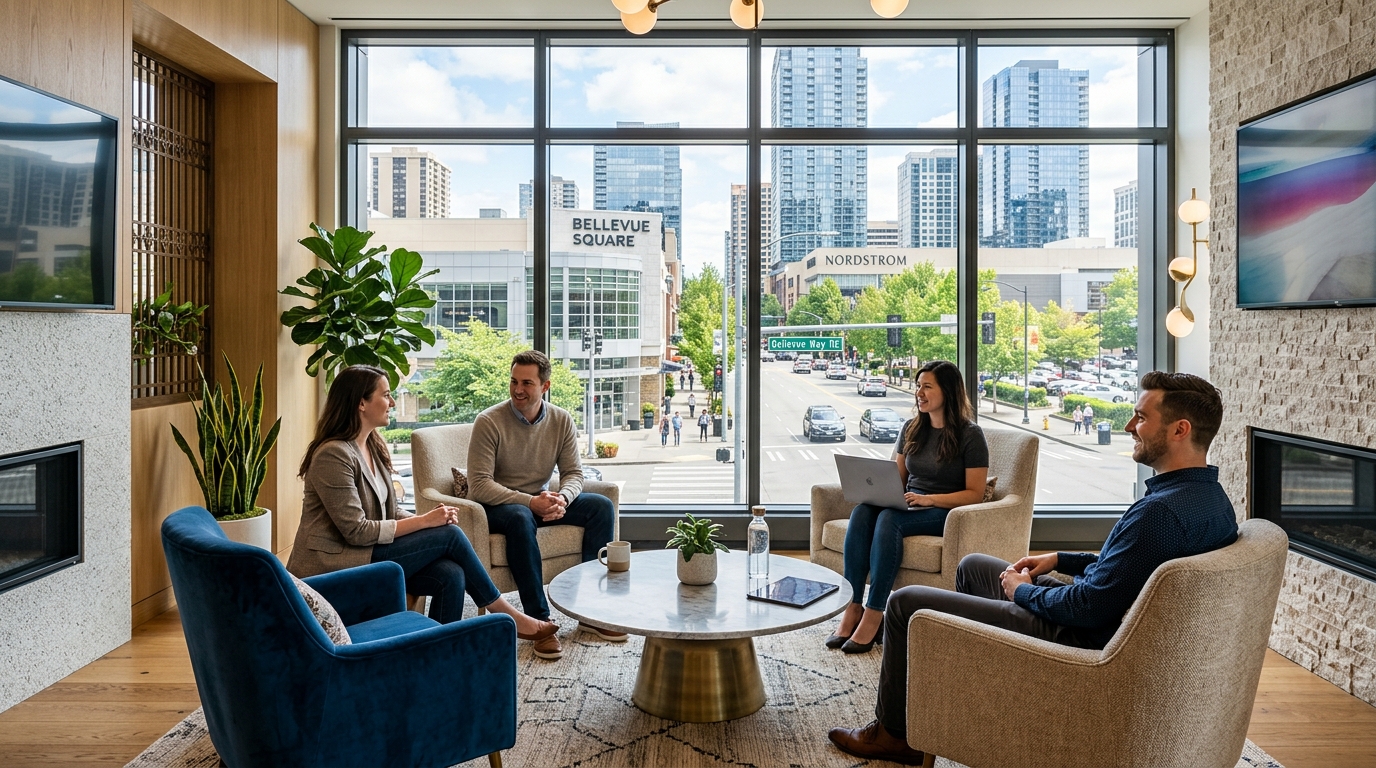
A tour bus pulls into a downtown Sioux Falls hotel after a concert lets out at the Denny Sanford Premier Center, and thirty guests move through the lobby inside of ten minutes looking for a place to sit while the front desk works through the line. Two nights later, that same lobby is quiet by nine, holding a handful of traveling nurses and a sales rep working a laptop before an early meeting near the Empire Mall corridor. Same room, same furniture, two completely different jobs to do. That range is the real story of hotel lobby furniture in Sioux Falls, and it is why generic seating packages tend to fail here faster than operators expect.
Sioux Falls is South Dakota's largest city and the primary hub for a region that stretches well past the state line, drawing business travel from banking and healthcare, event traffic tied to the Denny Sanford Premier Center and the Sioux Falls Convention Center, and a steady stream of families passing through on the way to Falls Park and the Sculpture Walk downtown. Your lobby furniture has to hold up to all three audiences without looking like it was specified for none of them.
Sioux Falls' Market Segments Demand Different Things From the Same Room
Sioux Falls hospitality is not one market, and treating it like one is where furniture specification goes wrong. The properties clustered around the Denny Sanford Premier Center, the Sioux Falls Convention Center, and downtown's Phillips Avenue corridor face a different durability challenge than the hotels lining the 41st Street and Empire Mall retail corridor or the newer builds along I-29 near the airport. All of them need contract-grade construction, but the volume pattern and the design expectation are not the same, and the specification should reflect that before a purchase order goes out.
Downtown and arena-adjacent properties, the hotels serving concert nights, hockey and arena football weekends, and Convention Center trade shows, deal with lobby traffic that spikes hard and fast rather than staying level all day. A property near the Premier Center can see its entire lobby seating capacity turn over multiple times in a two-hour window after an event lets out, with guests standing, sitting, setting down bags, and moving through in coats during half the year. That kind of concentrated, high-friction use wears out under-built furniture quickly. Contract-grade kiln-dried hardwood or steel frames, high-resilience foam rated for commercial use, and performance textiles rated above 100,000 double rubs are the baseline for this segment, not an upgrade.
The 41st Street and Empire Mall corridor is a different animal. This stretch carries the highest concentration of hotel rooms in the metro, much of it corporate and extended-stay travel tied to Sanford Health, Avera, the regional banking and finance sector, and business visiting the mall's retail and office campus. Guests here are repeat business travelers who notice consistency more than spectacle. Lobby furniture in this segment earns its keep through comfort during long stays, ease of maintenance for housekeeping staff turning rooms and common areas daily, and a look that reads as clean and current without chasing a boutique design story the property is not actually telling.
What Sioux Falls' Climate Actually Does to Lobby Furniture
South Dakota's climate is one of the more demanding in the country for lobby furniture, and it is a variable operators sometimes underweight when they specify based on a catalog photo rather than the local conditions. Sioux Falls winters bring routine stretches below zero, wind chill that keeps guests bundled in heavy coats and boots well into March, and de-icing salt and sand tracked in on every pair of shoes that crosses the entrance. Summers swing the other direction with heat and humidity that can climb into the nineties. Lobby furniture here is absorbing moisture, salt residue, and temperature swings that a mild-climate market never has to plan for.
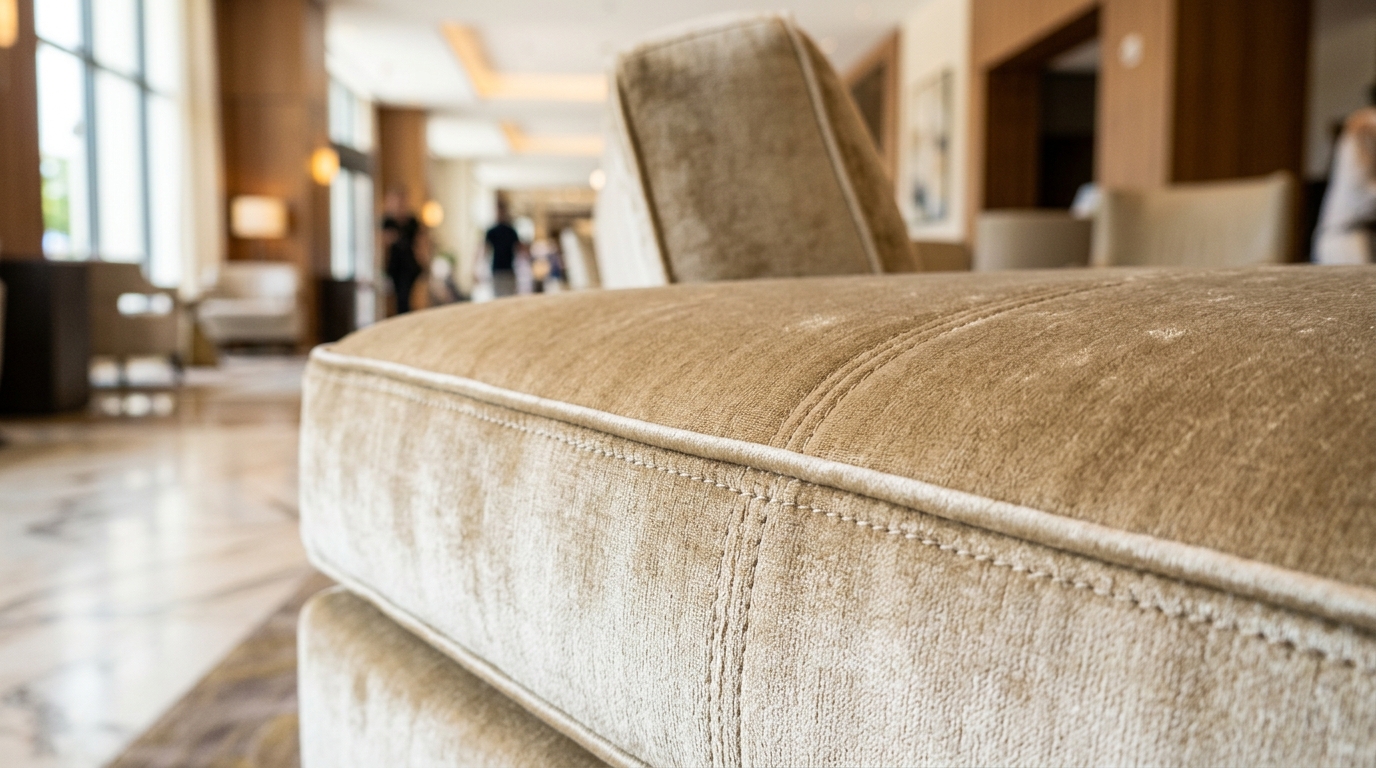
Performance textile specification is the frontline defense. Upholstery that is not rated for moisture and abrasion resistance will show salt staining and fabric breakdown fast, particularly on seat cushions and chair arms where wet coats, gloves, and bags make contact through the coldest months. Stain-resistant, moisture-resistant fabric treatment is not a nice-to-have for a Sioux Falls hotel lobby, it is a baseline call, the same way it is a baseline call in coastal markets dealing with humidity, just triggered by snowmelt instead of rain.
Frame construction matters just as much. Sioux Falls sees real seasonal swings in indoor humidity as HVAC systems shift from heating dry winter air to cooling humid summer air, and that cycle stresses wood joinery and adhesives over time. Solid hardwood or steel frames with reinforced corner blocking and mechanical fasteners that can be re-tightened hold up to that expansion and contraction far better than particleboard components, which absorb moisture and swell, loosening joints and shortening the furniture's working life. In lobbies where seating gets pushed aside for a holiday event, a wedding block, or staging for a Convention Center overflow crowd, frame integrity under repeated movement is not optional.
Designing for the Arrival Experience in Sioux Falls' Signature Spaces
The arrival sequence in a hotel lobby happens whether a property plans for it or not. Guests scan the room in order, primary seating first, then the front desk, then the path toward elevators or the breakfast area, and every piece of furniture in that sequence is communicating something before a staff member says a word.
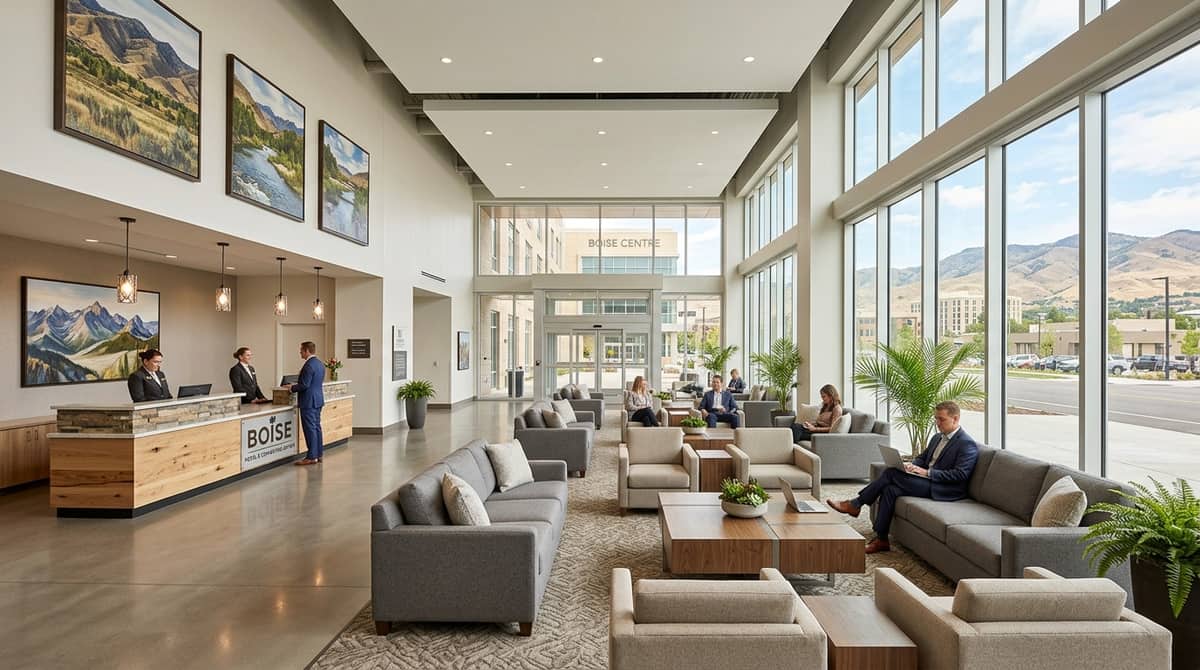
In downtown Sioux Falls, near Phillips Avenue, Falls Park, and the growing restaurant and gallery scene along the Sculpture Walk, the guest mix leans toward business travelers who have chosen a downtown location on purpose, arts and event attendees, and visitors extending a trip to see Falls Park. Furniture that fits this context has clean lines, upholstery that holds color and shape through repeated use, and a scale that suits rooms in a downtown that has been steadily investing in its streetscape. A well-proportioned lounge chair in a warm neutral fabric, paired with a side table finished in a material that reads as solid rather than laminate, tells the guest this property was set up with intention, in the same way a well-run front desk does.
Properties along the 41st Street corridor and near the airport are working a different priority. These lobbies serve travelers who arrive tired from a flight or a long drive across the plains and want to orient quickly, and business travelers checking in and out on tight schedules through the week. Seating clusters here should support quick, efficient movement rather than lingering, with chairs that are easy to exit without awkwardness for someone carrying a laptop bag and a rolling suitcase, and configurations flexible enough to be cleared for a group check-in during a Sanford or Avera conference block.
Arena and Convention Center-adjacent properties carry their own version of this problem on event nights. Guests arriving in a rush after a Premier Center show or a trade show closing session need seating that absorbs a temporary crowd without creating a bottleneck between the door, the desk, and the elevator bank. Durable, easy-to-clean upholstery matters here as much as layout, since coats, snow, and drink spills are part of the standard traffic pattern on a busy event night.
Procurement Timing and the Sioux Falls Renovation Cycle
Sioux Falls has seen steady hotel development for years, with new builds along the I-29 corridor and near the airport, renovation activity refreshing common areas in longer-standing downtown and 41st Street properties, and continued investment tied to the city's growth in healthcare and financial services employment. That pace puts real pressure on furniture procurement timelines that are easy to underestimate.
Contract-grade furniture is built to order, and standard commercial pieces typically run eight to twelve weeks lead time from a confirmed specification. Custom or semi-custom work, COM fabric programs, frame modifications, finishes outside the standard catalog, adds coordination time on top of that baseline. Projects that push furniture decisions to the back half of a construction or renovation schedule run into the same problem every time: whatever arrives on schedule is not the right specification, and the right specification does not arrive on schedule.
If a property has a hard opening date tied to a Premier Center concert season, a Convention Center booking calendar, or a spring push ahead of the Sioux Falls tourism season around Falls Park, those lead times need to be built into the project plan from day one. The cost of opening with placeholder furniture and replacing it within the first year, measured in guest review scores, in staff hours spent managing complaints, and in the capital expense of paying for two purchase cycles, runs well past the cost of getting the specification right from the start.
Working with a supplier who gives clear, honest lead time commitments, who understands hospitality projects at the scale and rate category of your property, and who can run a COM program when a design team has a specific material story to tell, is worth more than a marginally lower unit price from a vendor treating a hotel lobby order like a retail transaction. In a market like Sioux Falls, where business travel loyalty is built on consistency and event weekends test furniture harder than most cities ever will, the difference between lobby furniture that confirms a guest's booking decision and furniture that introduces doubt is a revenue line, not just a design choice.