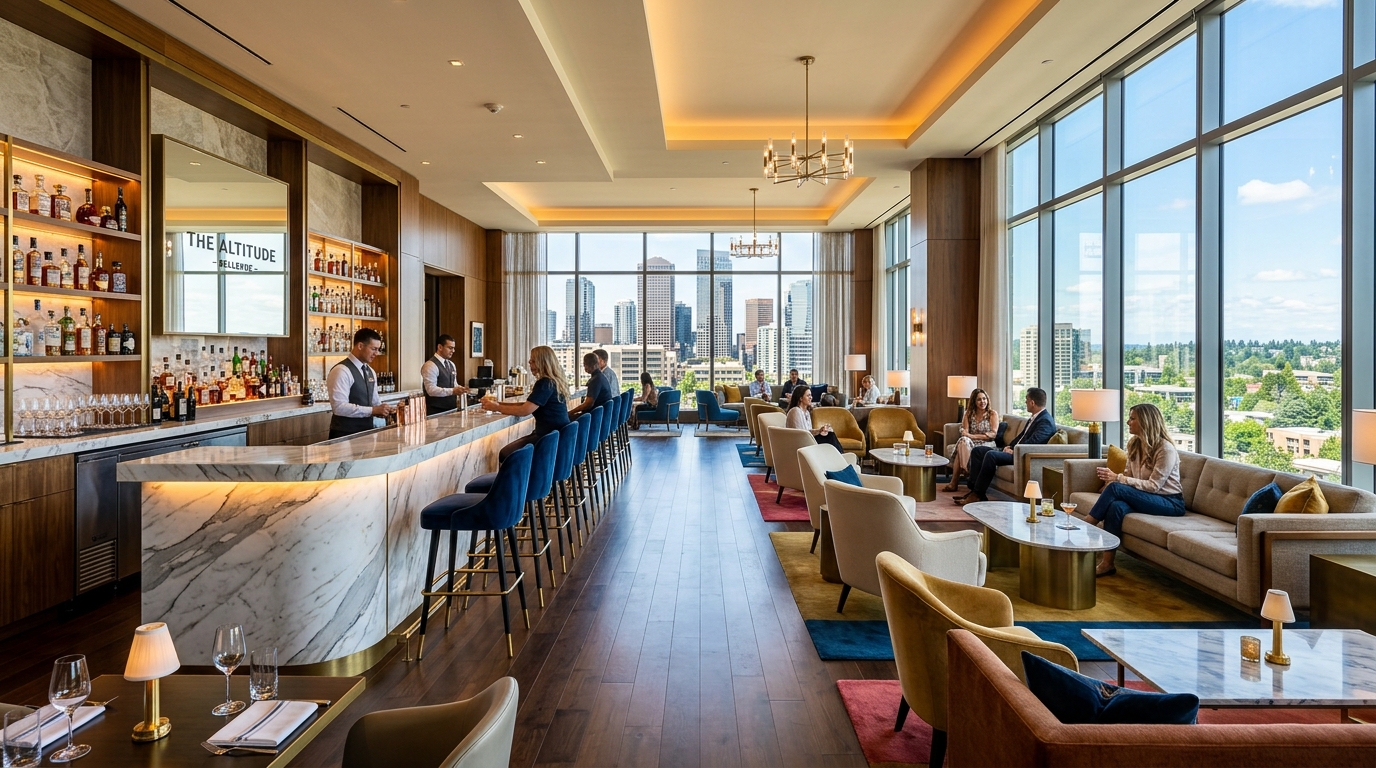
Sioux Falls runs a smaller bar and lounge market than the coastal metros, but it is a deceptively steady one. Between the Phillips Avenue and downtown entertainment district that has turned a once-quiet warehouse core into the city's busiest concentration of bars and restaurants, a convention and events calendar built around the Denny Sanford Premier Center and the Sioux Falls Convention Center that keeps downtown occupied well beyond a typical weekend pattern, and a hotel corridor along I-29 and I-90 that serves both business travel and the tourist traffic passing through on the way to the Black Hills, the furniture demands here are more varied than the city's size would suggest. Sourcing bar lounge furniture Sioux Falls operators can depend on means understanding each of these contexts, because a stool built for a downtown rooftop patio is not the same stool that belongs in a hotel lobby bar serving a convention crowd on a Tuesday night in February.
Downtown and Phillips Avenue: The Entertainment Core
Phillips Avenue and the blocks surrounding it, including the redeveloped warehouse district near Falls Park, form the center of gravity for Sioux Falls nightlife. What used to be a handful of scattered bars has become a genuine entertainment corridor, with cocktail lounges, brewery taprooms, and rooftop patios opening in renovated brick buildings that were never designed to hold a bar program. Operators sourcing bar lounge furniture for this district are working with older structures, tighter footprints, and a design-conscious customer base that has plenty of options within a four-block walk.
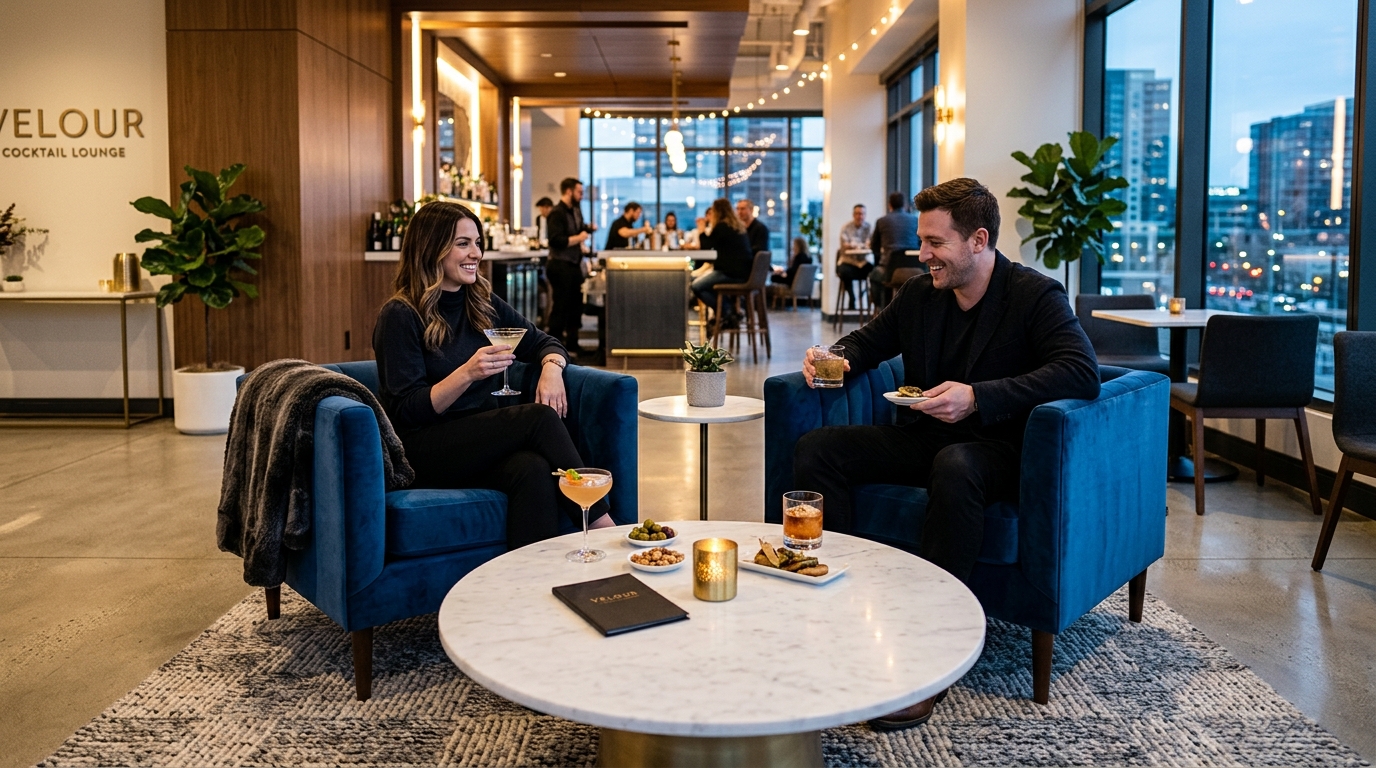
Seasonal patio and rooftop seating is a real consideration here, not an afterthought. South Dakota summers bring heat and sun that patio furniture has to withstand, and the winters bring cold, salt, and moisture that will corrode the wrong frame material within a couple of seasons. Powder-coated aluminum is the correct call for any Phillips Avenue rooftop or patio program, lighter than steel and resistant to the freeze-thaw cycle that damages furniture left in unheated storage between seasons. Avoid hollow footrests on outdoor barstools in this market. The temperature swings that Sioux Falls sees between summer and winter accelerate wear on hollow tube components, and solid bar stock footrests simply last longer under that kind of stress.
Inside, the warehouse-conversion aesthetic that defines much of downtown calls for furniture that reads as intentional rather than mismatched. Curved lounge silhouettes, warm-toned upholstery in cognac or deep olive, and mixed-material tables that pair metal bases with wood or stone tops fit the exposed brick and timber ceilings that many of these buildings kept during renovation. A custom order-material program through your contract furniture supplier is worth exploring for any bar owner trying to differentiate a Phillips Avenue concept from the half-dozen others within sight of it. It lets a designer specify proprietary fabric on a frame that has already been proven in commercial use, which matters in a market where furniture failure during a Friday night rush is not an option.
The Convention and Events District: Premier Center Volume
The area surrounding the Denny Sanford Premier Center and the Sioux Falls Convention Center produces a different kind of demand entirely. Concerts, trade shows, and sporting events at the Premier Center bring several thousand people downtown at once, several nights a month, and the hotel bars and restaurants within walking distance see volume on those nights that would be unusual for a city this size on an ordinary Tuesday. Furniture serving this corridor needs to be specified as infrastructure first and design second.
Bar stool frames for venues near the events district should be a minimum of 16-gauge steel on every structural member, with fully welded joints at the footrest and at each leg-to-seat connection. Bolted-frame furniture loosens under the repeated stress of hundreds of different guests sitting, shifting, and standing over the course of an event night, and a wobbling stool is the kind of complaint that shows up in reviews. Ask your supplier for weld documentation if you are ordering in volume for a hotel or restaurant program tied to the events calendar. A credible contract furniture supplier will have it ready.
Replaceability is the piece operators in this district underestimate. A hotel bar running at capacity on a concert night will have individual pieces fail, and they need to be swapped without disrupting service or waiting on a made-to-order production run. Specify a primary collection your supplier keeps in stock rather than one that only ships from a single custom run. Being able to order a matched set of replacement barstools for delivery within weeks, rather than months, is worth more than a small savings on a collection with a longer lead time.
The I-29 Hotel Corridor and the Business Travel Market
Sioux Falls sits at the junction of I-29 and I-90, and the hotel corridor that has grown up along both interstates, stretching from the airport area through the west side and out toward the Empire Mall retail district, carries a different furniture profile than downtown. This is business travel and pass-through tourist traffic rather than a destination nightlife crowd, and the lobby bars and lounges in these properties need to work equally well for a solo business traveler having a quiet drink and a group of eight stopping for the night on a longer road trip.
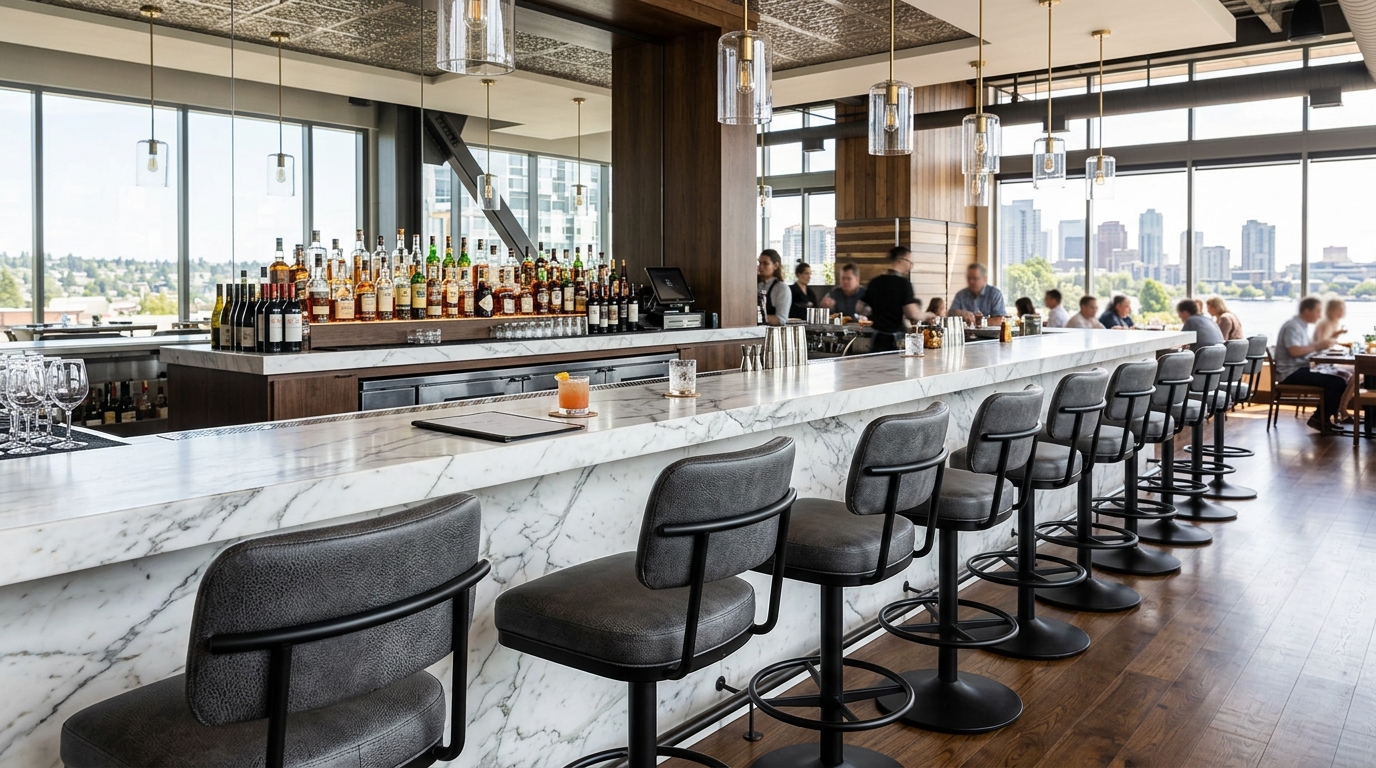
Confirm your bar counter height before placing any stool order for these properties, since it is a common point of failure on new hotel builds. A standard bar-height counter runs 42 inches and pairs with a 28-to-30-inch seat height, while counter-height surfaces at 36 inches need a stool in the 24-to-26-inch range. Getting this wrong by even a couple of inches makes the seating uncomfortable for every guest who sits there, and it is not a fix that can be made after the furniture has already arrived.
Upholstery for this corridor should hold up to steady daily use rather than weekend peaks. Specify performance fabrics rated for at least 50,000 double rubs Wyzenbeek, with a moisture barrier under the seat cushion, since a hotel lobby bar sees consistent traffic every day of the week rather than concentrated bursts. Table bases throughout should carry commercial-grade nylon or felt glides instead of plastic caps, since housekeeping staff moving furniture for cleaning and event setup across tile and hard flooring will wear through plastic glides within a season.
Sourcing Bar Lounge Furniture for Sioux Falls Projects
Sioux Falls hospitality construction tends to move in shorter, more predictable cycles than larger metros, but the lead time math is the same. The standard 8 to 12 week window for custom commercial furniture orders does not stretch to fit a schedule where a hotel renovation or a new downtown bar has a fixed opening date and the buildout ran long. A combination of in-stock contract inventory for the core seating program, paired with custom or COM orders reserved for the accent pieces that carry a concept's design identity, is the practical approach for most projects in this market.
Build the supplier relationship before the urgent need arrives. Know which vendors keep in-stock bar stools in the finishes used most often around Sioux Falls, which suppliers offer COM programs with realistic turnaround, and which can fill a partial replacement order on short notice when something breaks mid-season. Confirmed delivery windows in writing, not verbal estimates, are what determines whether a downtown opening or a hotel renovation stays on schedule.
If you are in the early planning stages of a bar or lounge build anywhere in Sioux Falls, downtown and Phillips Avenue, the events district around the Premier Center, the I-29 hotel corridor, or the growing retail and dining area near the Empire Mall, request a specification consultation from your supplier before the layout is finalized. It will surface seat height mismatches, material issues, and clearance problems while they are still cheap to correct on paper.