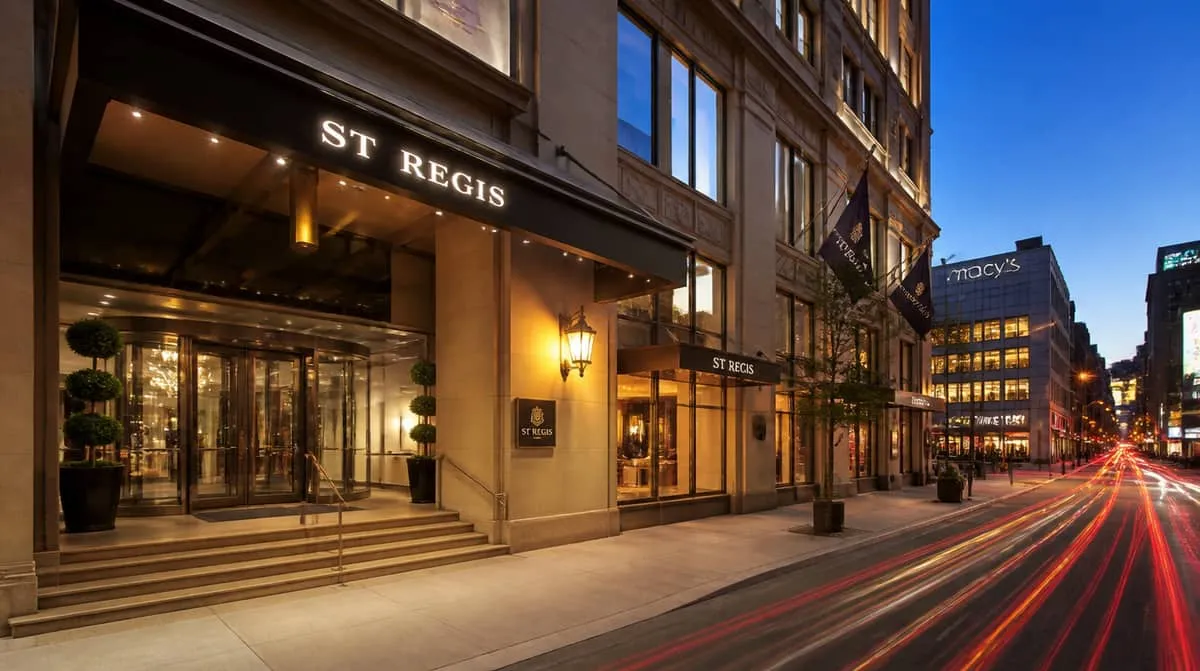
The hotel lobby in San Francisco does more work per square foot than almost any other hospitality space in the country. Real-estate economics force the calculation: a Union Square hotel lobby that sits at 3,000 square feet is sitting on land worth more than almost any equivalent footprint in North America, and every chair, sofa, and table in that room needs to justify the space it occupies by generating revenue, improving guest satisfaction scores, or both. At the same time, the guests arriving through those doors tech executives from Salesforce and Airbnb, Oracle partners arriving for OpenWorld, international tourists who have just flown into SFO after stays at Claridge's or the Mandarin Oriental arrive with calibrated design expectations. A lobby that reads as an afterthought communicates something that no amount of front desk service can fully correct.
The San Francisco Lobby Experience
Hotel lobbies in San Francisco occupy a specific cultural position in the city's social geography. During Dreamforce week, the lobbies of Union Square and SoMa properties become de facto conference spaces impromptu meetings happen on every sofa, deals are closed in lounge chairs, and the check-in queue stretches past seating zones that are fully occupied by guests who arrived three days ago and have not stopped working since. During the quieter months, those same lobbies serve as neighborhood coffee shops in the morning, as extended remote offices for tech workers who live in the neighborhood, and as pre-dinner gathering spaces for hotel guests in the evening.
This multiplicity of function drives specific furniture decisions. Lounge chairs and sofas in San Francisco hotel lobbies need seat depths and back heights calibrated for genuine comfort during 90-minute work sessions, not just the photogenic moment of first impression. Armrests need to be solid enough to support a laptop at a working height. Seat cushions need to recover their shape after continuous occupation through a 12-hour convention day. These are engineering requirements as much as aesthetic ones.
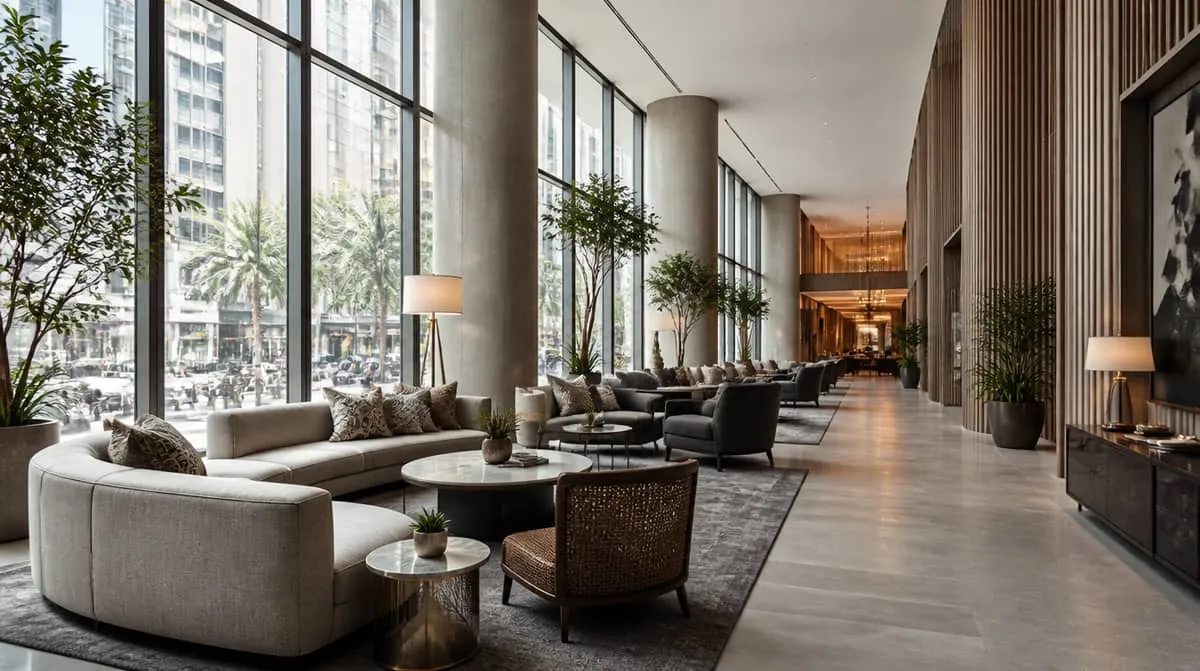
The tech guest profile that dominates San Francisco's business travel market has an almost clinical sensitivity to design authenticity. A lobby furnished with pieces that are trying to look designed but are not knockoff silhouettes in inferior materials, or pieces that photograph well but feel cheap on contact registers immediately with guests who spend significant time in genuinely considered hotel environments. The properties that earn the best guest reviews in San Francisco are uniformly the ones where the lobby furniture feels as deliberate as the architecture.
Nob Hill properties carry an additional layer of expectation: their lobbies are often architecturally significant spaces in historic buildings, and the furniture must hold its own against period plasterwork, marble floors, and coffered ceilings. The California contemporary vocabulary is appropriate even here light oak and warm linen read as contemporary rather than incongruous against historic architecture if the proportions and quality level are correct but the specification standard is elevated.
California Contemporary Lobby Furniture in Practice
The defining California contemporary lobby looks warm without being rustic, minimal without being cold. The furniture vocabulary that achieves this in San Francisco's leading properties centers on three or four key pieces repeated and varied throughout the space.
The primary seating cluster the arrangement most visible from the entry and most photographed by guests typically anchors around a generous low sofa in performance linen or performance boucle, flanked by two lounge chairs with a contrasting material or texture. The sofa might be in oatmeal or warm white; the lounge chairs in caramel leather or a warm sage performance fabric. A low coffee table in light oak or a concrete-top table with a natural wood base completes the primary cluster.
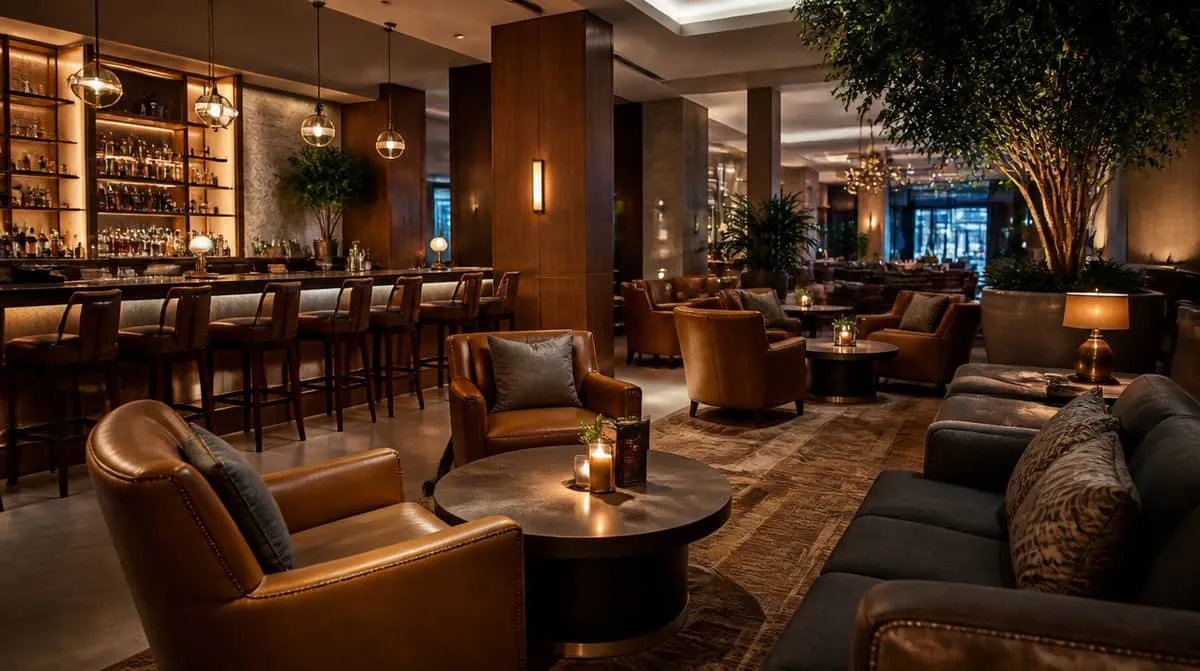
Secondary seating zones the areas that serve as overflow during conventions and as working spaces during quieter periods typically use a lighter, more flexible chair: a generously proportioned accent chair in performance fabric that can be repositioned by a single staff member, or a pair of chairs with a shared side table between them. Ottomans in leather or performance fabric serve as additional flexible seating during peak periods and as visual anchors during quieter periods.
The palette for all of these pieces stays within a warm neutral range: oatmeal, flax, warm white, caramel, cognac, saddle, sage. The contrast is textural rather than coloristic smooth leather against nubby boucle, matte wood against a velvet seat which creates visual interest without the color contrast that would date the interior within a few years.
Sofas in commercial lobby applications should be specified with kiln-dried hardwood frames, 8-way hand-tied or sinuous spring seat systems, and seat cushions at 2.5 lb density foam with a fiber wrap for a residential feel that recovers from continuous use. These specifications are meaningfully different from residential furniture at the same price point, and the difference becomes apparent within six months of operation.
Procurement and Delivery for SF Hotel Lobbies
Lobby furniture installations in San Francisco hotel properties come with specific logistical requirements. Union Square and Nob Hill properties often have restricted loading dock access, requiring freight deliveries to be coordinated with building management and scheduled around neighboring property operations. SoMa properties have more accessible loading dock situations in most cases but face street parking restrictions during business hours.
Large lobby furniture pieces oversized sofas, sectional configurations should be measured against elevator and stairwell dimensions before order confirmation. It is not uncommon for a San Francisco hotel's service elevator to impose constraints that require furniture to be ordered in a split-back configuration or an alternative size, and discovering this after delivery is a costly problem.
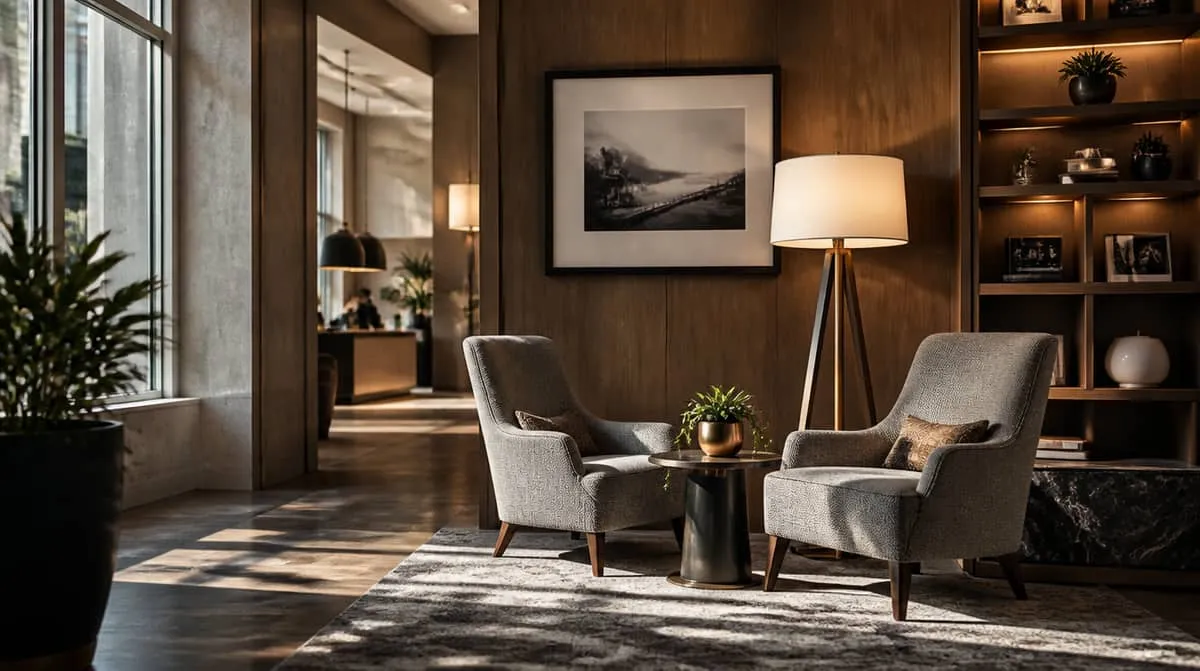
Commercial Furniture Depot can provide detailed dimensional specs for every piece and work with San Francisco hotel procurement teams to confirm access before order placement. Lead times for upholstered lobby furniture run 10 to 16 weeks; case goods and accent tables typically run 8 to 12 weeks.
Ready to spec hotel lobby furniture for your San Francisco project? Send us the details and we will price it around your requirements. Request a quote to start.