The hotel lobby in Raleigh carries more functional weight than in most comparable American cities. Research Triangle Park's business travelers engineers, researchers, pharmaceutical executives, software architects routinely use hotel lobbies as informal offices, pre-meeting staging areas, and working lunch venues. A lobby that provides only aesthetic hospitality without supporting the work behaviors of its primary guests is leaving revenue and loyalty points on the table. For hotel operators in Raleigh, lobby furniture specification is inseparable from lobby programming strategy.
The Raleigh Lobby as a Work and Hospitality Hybrid Space
The hotels that have gained the strongest positioning in Raleigh's business travel market are the ones whose lobbies function effectively as work environments without feeling like co-working offices. The distinction matters: an RTP visitor wants to feel hosted, not rented. Lounge chairs with small integrated side tables or positioned near power access points, comfortable enough for 45 minutes of focused laptop work but designed as hospitality furniture rather than office furniture, strike the right balance.
Properties near the Raleigh Convention Center face a different lobby challenge. During major pharmaceutical or biotech conferences, their lobbies transform into high-intensity social environments networking conversations happening simultaneously across dozens of seating clusters, F&B service moving through the space, event signage competing with furniture arrangements for visual attention. Lobby furniture that can be quickly reconfigured by staff without requiring tools or excessive physical effort gives operators significant flexibility during event cycles.
Glenwood South and Warehouse District boutique properties use their lobbies as brand-making spaces. The first impression of the property is formed in the lobby, and in a market as design-literate as Raleigh, that first impression needs to be deliberate. Sofas and lounge chairs in a boutique lobby should feel like they were curated by someone with a point of view not pulled from a catalog because they were available. Custom COM upholstery, distinctive frame designs, and furniture arrangements that direct the eye toward architectural features are all tools that Raleigh's best boutique lobby designers are using effectively.
Hotels serving the NC State University market need lobbies that work for a broader guest demographic: prospective students and their families, academic visitors, athletics travel groups, and alumni returning for events. Lobby furniture in these properties benefits from a mix of seating types formal sofas for adult conversations, individual lounge chairs for solo guests, and strategically placed heavier pieces that anchor the space and resist casual repositioning by guests.
Specifying Lobby Furniture for the Research Triangle Guest Profile
The Research Triangle contemporary aesthetic for hotel lobbies emphasizes material authenticity and functional intelligence. Guests who spend their working days on campuses designed by the world's best corporate architects respond to furniture that reflects similar values: solid construction, honest materials, proportions that feel considered rather than default.
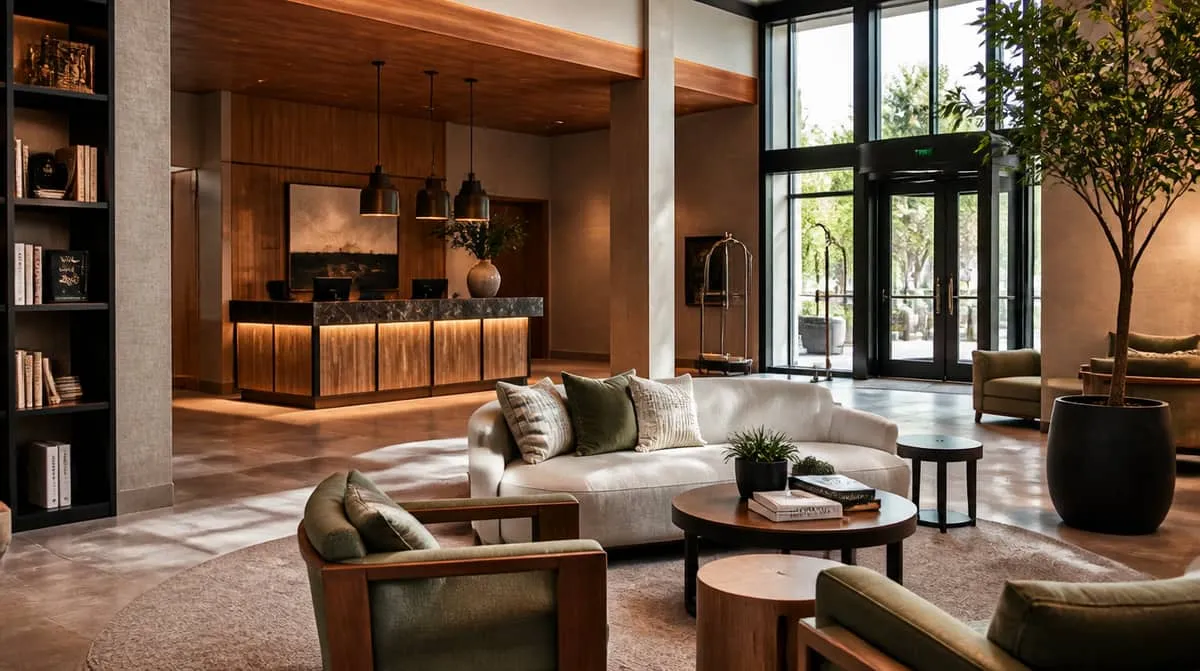
Sofas for Raleigh hotel lobbies should be specified with removable cushion covers in commercial-grade performance fabrics. Lobby sofas accumulate substantial wear in high-occupancy business travel hotels a property running 85 percent occupancy with an active lobby program may see its sofas used by hundreds of guests per week. Performance fabrics with antimicrobial treatments and double-rub counts above 100,000 are effectively required for long useful life without expensive reupholstery cycles.
Lounge chairs in lobby applications benefit from seat heights that accommodate a wide guest height range a 17 to 18 inch seat height works for most adults without the awkward extraction problem created by lower, deeper lounge configurations. Solid wood or powder-coated metal legs with furniture glides that protect the floor finish are standard specification requirements for lobby applications on the hard-surface flooring common in Raleigh's contemporary hotels.
Ottomans as lobby supplemental seating offer flexibility that fixed chairs cannot. An ottoman cluster near a feature wall can serve as a coffee table, a footrest, or pulled-forward extra seating during peak lobby occupancy. Fully upholstered commercial ottomans in a lobby-compatible fabric provide this flexibility without creating the visual clutter of mixed seating types.
Procurement and Maintenance Considerations
Lobby furniture is the most publicly visible component of a hotel's FF&E investment, and it requires a procurement approach that accounts for long-term maintenance as well as initial specification. Selecting furniture with readily available replacement parts cushion inserts, seat covers, glides from a supplier with ongoing inventory programs protects the lobby investment beyond the initial installation.
For Raleigh properties undergoing lobby renovation during operating periods, phased furniture delivery coordinated with construction milestones minimizes guest disruption. A supplier capable of holding finished lobby furniture in a regional staging facility and releasing it on a construction-coordinated schedule is a significant asset for renovation projects in occupied properties.
Ready to spec hotel lobby furniture for your Raleigh project? Send us the details and we will price it around your requirements. Request a quote to start.