
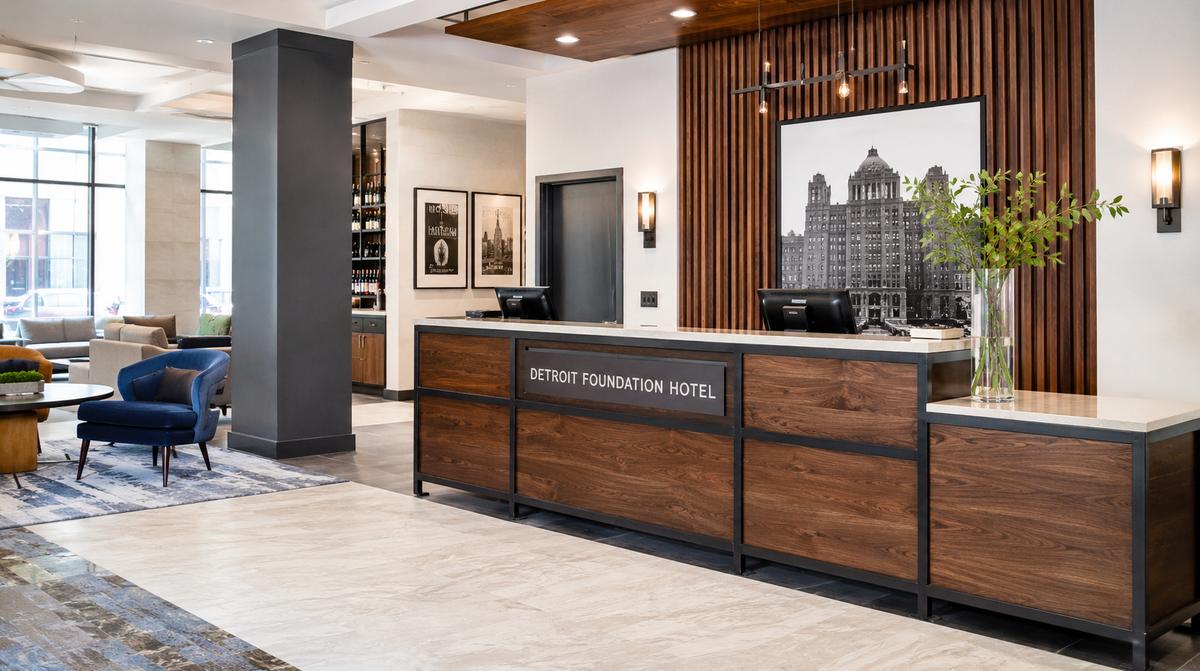
A conference attendee steps out of a session at the Rhode Island Convention Center, walks a few blocks past the Dunkin' Donuts Center, and checks into a boutique property tucked into a converted 19th-century building downtown. They have spent the day in a modern exhibit hall built for volume, and now they are standing in a lobby that is making an entirely different argument, one about history, craft, and a smaller, more curated kind of hospitality. That transition happens in seconds, and the furniture in the room is doing most of the work of making it convincing.
Providence runs a hospitality market that is small in scale compared to the country's largest convention cities but unusually layered for its size. The city anchors Rhode Island's tourism and meetings economy, draws steady traffic from Brown University and the Rhode Island School of Design, and pulls weekend visitors headed to Newport and the rest of the state's coastline. Hotel lobby furniture in this market has to work across event-driven downtown properties, restored historic buildings, and a growing set of design-forward boutiques, often within a few blocks of each other.
Providence's Market Segments Demand Different Things From the Same Room
Providence's hospitality footprint splits cleanly into a few categories, and each one puts a different demand on the same square footage of lobby. The properties clustered around the Rhode Island Convention Center, the Dunkin' Donuts Center, and Kennedy Plaza are managing meeting and event traffic on a schedule, while the boutique hotels housed in former banks, mills, and Gilded Age mansions on College Hill and in the Jewelry District are selling atmosphere and story. Both categories require contract-grade construction, but the design brief underneath that requirement is different.
Convention-adjacent properties downtown are handling a guest population that moves through the lobby in concentrated waves tied to a conference schedule rather than a steady daily trickle. A mid-size convention hotel near the RICC can see its entire event block check out within a two-hour window on a Friday morning, and lobby seating absorbs that spike along with the luggage, laptop bags, and coffee cups that come with it. Frame joinery, glide hardware, and upholstery seams are all under real stress in that scenario. Kiln-dried hardwood or steel frames, high-resilience foam built for commercial-cycle use, and performance fabrics rated well above standard retail thresholds are the baseline here, not an upgrade.
The boutique and historic-conversion segment, concentrated on College Hill, in the Jewelry District, and along the restored stretches of downtown near Westminster Street, is playing a different game entirely. A guest who books a small hotel inside a converted 1800s mill building or a former bank headquarters has already decided the building's history is part of what they are paying for. Furniture that reads as generic commercial output undercuts that entire premise. These properties need pieces with genuine design intention, wingback or camelback silhouettes, tailored upholstery, materials that hold their own next to original millwork and masonry, while still meeting the same commercial durability standard as the convention hotels a few blocks away.
What Providence's Climate Actually Does to Lobby Furniture
New England's seasonal swing is a real specification variable in Providence, and it is a different kind of variable than the humidity operators plan for in Southern markets. Winters bring salt, slush, and road treatment chemicals tracked in on boots and rolling luggage, while summers bring the same humid air-conditioning load that any coastal city deals with from June through September. Lobby furniture here needs to handle both extremes in the same calendar year, not one or the other.
Winter traffic is the more underrated risk. Guests arriving from a snow-covered sidewalk on Weybosset or Fountain Street bring in melting ice, road salt residue, and moisture that settles into carpet and upholstery near entry points. Performance textiles rated for stain and moisture resistance protect against that kind of contact damage in a way that standard decorative fabric simply cannot. Frame finishes matter too; upholstered pieces positioned near revolving doors or vestibules need protective treatments that resist the corrosive effect of salt residue on metal hardware and exposed wood edges.
Summer humidity adds the second half of the equation. Foam and frame joinery that swell and contract with seasonal humidity changes loosen over time, particularly in older buildings where climate control is not always uniform across the lobby floor plan. Solid hardwood frames with reinforced corner blocking and mechanical fasteners that can be retightened hold up through that cycle far better than particleboard construction, which absorbs ambient moisture and degrades from the inside out.

Designing for the Arrival Experience in Providence's Signature Spaces
The arrival sequence in a Providence hotel lobby is shaped as much by the building's architecture as by the furniture inside it, and a good specification works with that architecture rather than against it. Downtown properties near Kennedy Plaza and the convention district are typically working with more contemporary floor plans built for efficient movement. Guests arriving off a train from Providence Station or finishing a long drive down I-95 want a clear path from door to desk to elevator, seating that does not create a bottleneck near the entrance, and clusters that can be reconfigured quickly when the property is hosting a private meeting or a conference-adjacent reception.
College Hill and the properties closer to Brown and RISD are working with an entirely different guest expectation. Visiting faculty, parents during move-in and graduation weekends, and design-literate travelers drawn by RISD's reputation notice detail. Furniture here benefits from a more considered material story, leather or leather-alternative accents, wood tones that reference the neighborhood's Colonial and Federal-era architecture, and a scale that respects rooms with genuine period proportions rather than the larger open floor plans of newer construction.
The historic mansion and mill conversions scattered through the Jewelry District and along the Providence River waterfront face the hardest version of this problem, because the room itself is already doing a lot of talking. Original tin ceilings, exposed brick, and restored millwork set an expectation that furniture cannot ignore. Lounge seating with tailored lines, quality upholstery in a limited, coordinated palette, and side tables in real wood or stone rather than laminate read as appropriate in that context. A furniture package that looks assembled from a standard commercial catalog undercuts the renovation investment the property has already made in the architecture.
Procurement Timing and the Providence Renovation Cycle
Providence's hotel development activity is steady rather than explosive, which is its own kind of planning challenge. New boutique conversions continue to open in previously underused historic buildings downtown and on the East Side, and existing properties near the convention center periodically refresh common areas to stay competitive with newer entrants. That pace means furniture procurement often gets scheduled around a single renovation window rather than a continuous pipeline, and there is less margin for error if the timeline slips.
Contract-grade lobby furniture is built to order, and standard lead times run eight to twelve weeks from confirmed specification. Custom or semi-custom work, COM fabric programs, non-standard finishes matched to a historic interior, frame modifications for a specific floor plan, adds meaningful time on top of that baseline. Projects tied to a hard opening date, a graduation or reunion weekend at Brown, or a booked conference block at the RICC need those lead times built into the schedule from the start, not treated as a line item to solve later.
Working with a supplier who understands the difference between a convention-district refresh and a historic boutique conversion, and who can commit to realistic lead times for both, protects a property from the common failure mode: furniture that arrives on schedule but was specified for the wrong segment, or furniture that was specified correctly but arrives too late for opening. In a market where Providence's smaller hotel inventory means every property is competing hard for the same review scores and repeat corporate accounts, getting the lobby specification right the first time is worth more than a marginally lower unit price.