A hotel lobby in Pittsburgh carries more design pressure than in most comparable markets. Guests arriving from Carnegie Mellon, from the David L. Lawrence Convention Center, from the Strip District or Lawrenceville are arriving from a city with a strong and legible visual identity a city where good design is recognizable and generic design is noticed as a failure. The lobby is the first room that makes the argument for why this property belongs here, and furniture is the most immediate material expression of that argument. Properties that get the lobby right generate social media content, repeat visits, and word-of-mouth that paid marketing can't replicate.
What Pittsburgh Hotel Lobbies Demand
Full-service properties Downtown and on the North Shore face a lobby challenge that is part convention-center functionality and part design credibility. During peak convention periods around the David L. Lawrence Convention Center, lobbies handle check-in volumes that make seating configuration and traffic flow as important as aesthetic choices. Lounge chairs need to be positioned for both dwell and transit guests waiting for rooms, guests waiting for colleagues, guests using the lobby as a brief work stop and the furniture mix should accommodate all of these uses without the space feeling chaotic at full capacity.
At the same time, convention-market properties in Pittsburgh increasingly compete on design quality against boutique alternatives that guests book specifically for the room experience. A lobby that reads as generic national chain is a negative signal to the tech-sector and academic guests who make up a significant share of Pittsburgh's hotel market and who are accustomed to making lodging decisions the same way they make restaurant decisions based on visible quality signals.
Boutique properties in Lawrenceville and the Strip District have a different lobby mandate: the entire guest experience is predicated on design distinctiveness, and the lobby is where that promise is first made or broken. These lobbies are smaller often converted ground floors of industrial or commercial buildings which means furniture scale and placement matter in a way that large ballroom lobbies can afford to manage differently. Every sofa and lounge chair is visible from the entry, and every piece is an argument for the property's design intelligence.
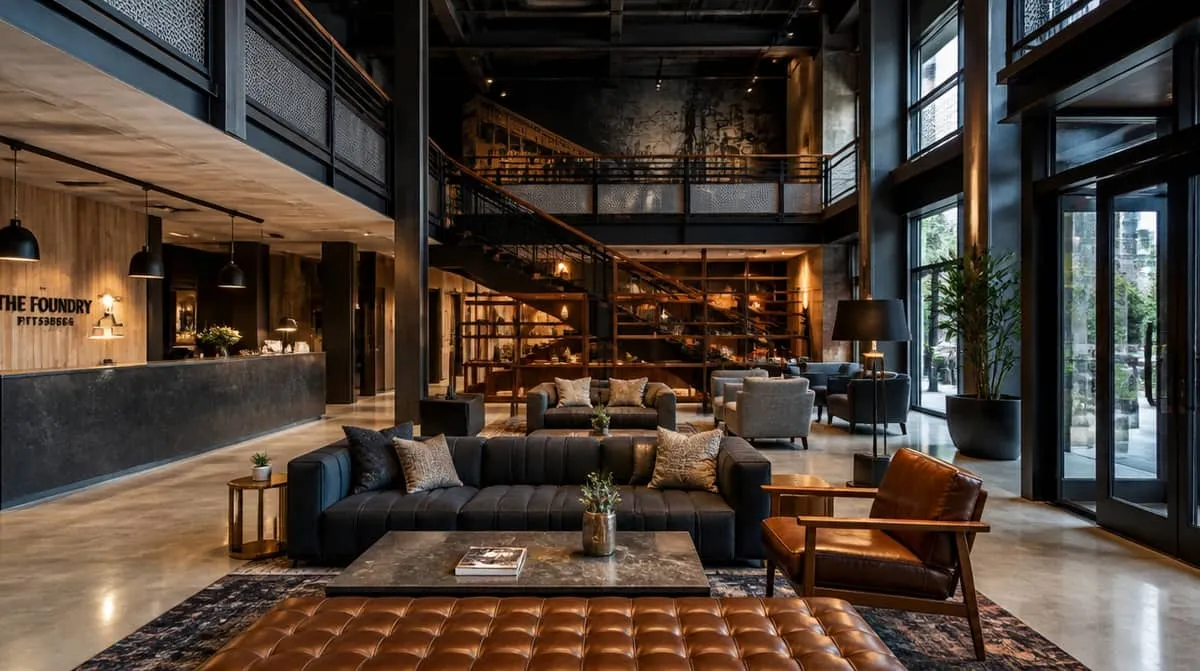
Extended-stay properties near UPMC campuses in Oakland and Shadyside serve a guest base that uses the lobby more like a living room than a transient waiting space. Guests who are in Pittsburgh for medical appointments, research rotations, or extended healthcare stays return to the lobby repeatedly over the course of a stay. Furniture comfort and durability for sustained, repeated use matters more than first-impression visual impact for these properties.
Properties near Acrisure Stadium on the North Shore serve a game-day lobby function that is unlike any other hotel environment: the lobby becomes a gathering and staging space for groups of sports travelers who bring energy, volume, and physical presence that tests both furniture durability and spatial planning. Sofas and seating arrangements in these lobbies need to accommodate group gathering without creating bottlenecks at the front desk.
Design Principles for Pittsburgh Lobbies
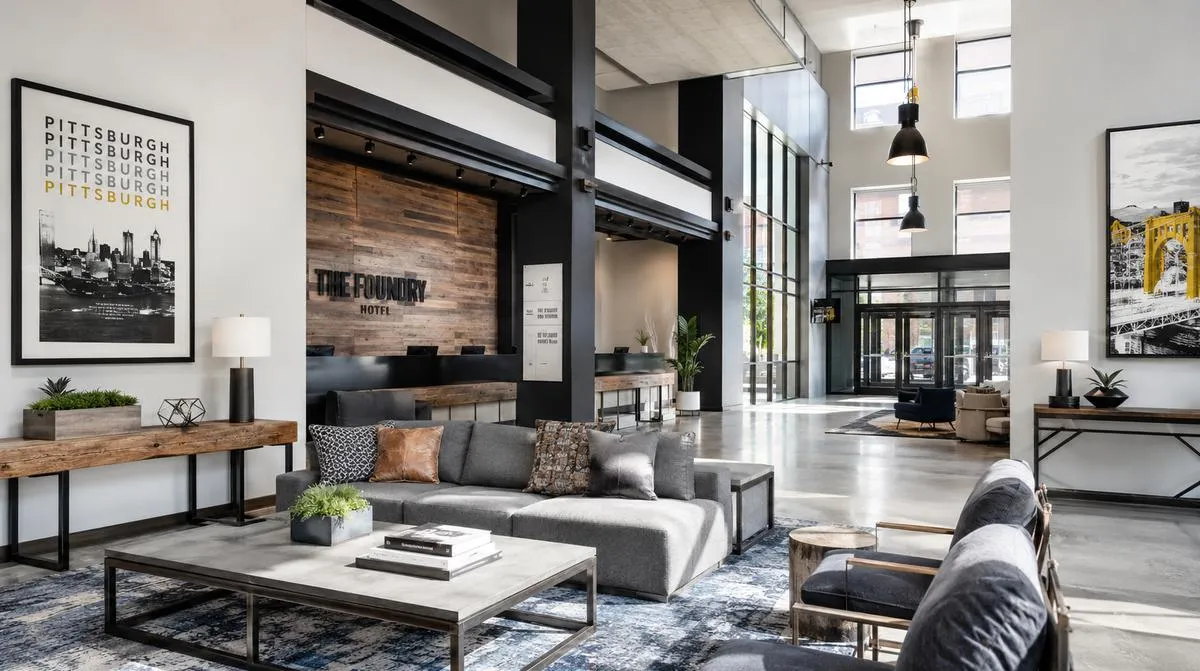
Pittsburgh's lobby design vocabulary has converged on several elements that translate the city's industrial character into interior space. Exposed structural steel whether original to the building or newly introduced provides a ceiling and wall framework that furniture must relate to rather than ignore. Lounge chairs in steel-frame designs with leather or performance fabric seats and backs are native to this environment in a way that fully upholstered club chairs are not.
Reclaimed wood surfaces tabletops, reception desk cladding, accent walls are frequently integrated into Pittsburgh lobby designs. Furniture that shares this material reference without copying it exactly creates visual coherence: a sofa with a wood arm detail, a coffee table with a steel-banded reclaimed wood top, an ottoman cluster in waxed canvas or leather that sits comfortably in a room defined by honest materials.
The color palette that works in Pittsburgh lobbies runs from warm charcoals and raw steel tones through amber and honey wood tones, with occasional punctuation in the warm yellows and blacks that reference the city's sports teams without being literal about it. A thoughtful use of Steelers gold in an accent pillow or a lounge chair upholstery insert is a knowing nod; a full yellow-and-black decorating scheme is something else.
Ottomans in lobby configurations serve multiple functions seating expansion when traffic spikes, informal surfaces for laptop use, and footrests in lounge zones. Specifying a set of ottomans in coordinating fabric that can be repositioned easily gives operations staff flexibility without requiring a furniture purchase every time the room configuration needs adjustment.
Procurement Considerations
Lobby furniture procurement deserves priority timeline treatment within a hotel project schedule these are the pieces that will be photographed before opening, featured in press coverage, and evaluated by every guest who enters the property. Shortcutting lead times on lobby furniture by selecting in-stock generic product is a false economy for properties competing on design.
Custom or semi-custom lobby furniture specifications should be locked 16 to 20 weeks before the opening date. Properties with adaptive reuse construction timelines should add a buffer given the schedule variability that characterizes Pittsburgh's older building stock.
Pricing for hotel lobby furniture in Pittsburgh depends on quantities, finishes, and your delivery window, so a project-specific quote beats any list figure. Request a quote to get yours.