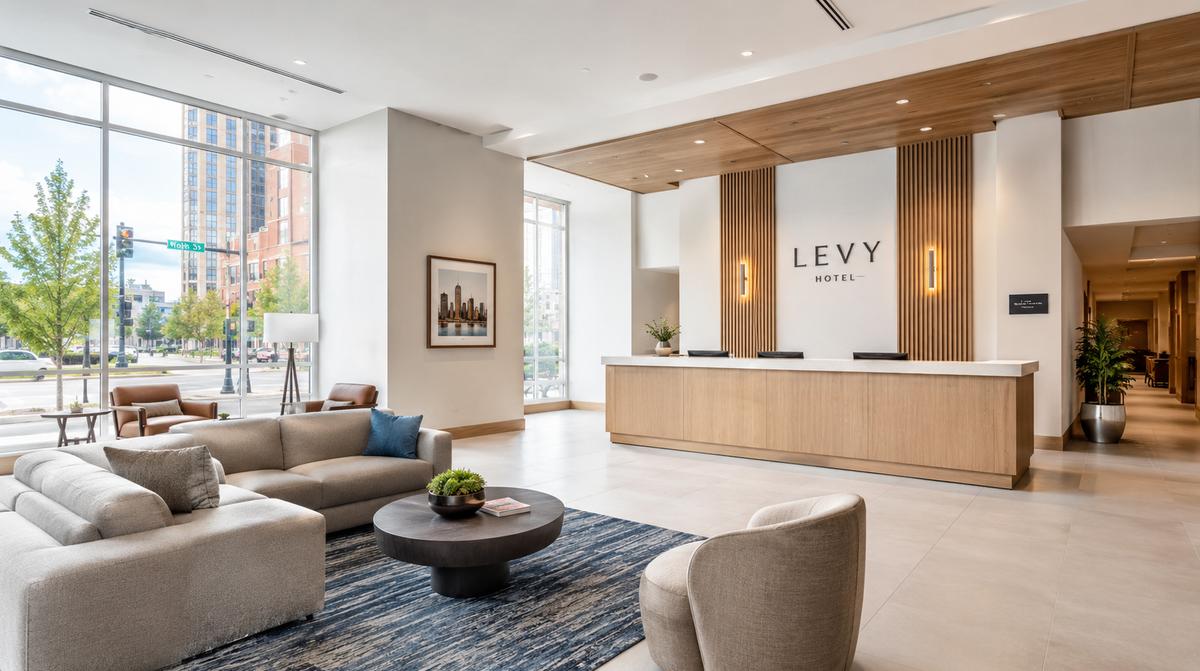
A shareholder flies into Eppley Airfield on the Friday before the Berkshire Hathaway annual meeting, shares a cab downtown with three strangers doing the same trip, and walks into a hotel lobby that will see more foot traffic in the next seventy two hours than most properties see in a slow month. Multiply that guest by tens of thousands, add in a College World Series crowd two weeks later filling the same downtown corridor, and you start to understand why hotel lobby furniture Omaha buyers specify has to be built for load, not just for looks.
That is the paradox of Omaha's hospitality market. On paper it is a mid-size Midwest city with steady, unglamorous demand. In practice it hosts some of the most extreme short-term occupancy spikes in the country, tied to specific calendar events that fill every downtown property to capacity within the same 48 hour window. Your lobby furniture has to perform on the quiet Tuesday and the sold-out Saturday, and it needs to look intentional doing both.
Omaha's Demand Spikes Are Different From a Typical Convention City
Most cities with a busy convention calendar see traffic build gradually across a multi-day event and taper the same way. Omaha's downtown hotel corridor, the properties within walking distance of the CHI Health Center and the ballpark now known as Charles Schwab Field, deals with something closer to a flash flood. The Berkshire Hathaway shareholders meeting alone is estimated to bring more than 40,000 visitors into the city for a single weekend in early May, and nearly all of them need a hotel room and a place to sit while they wait for a cab, meet up with a group, or simply decompress after a day on the CHI Health Center exhibit floor.
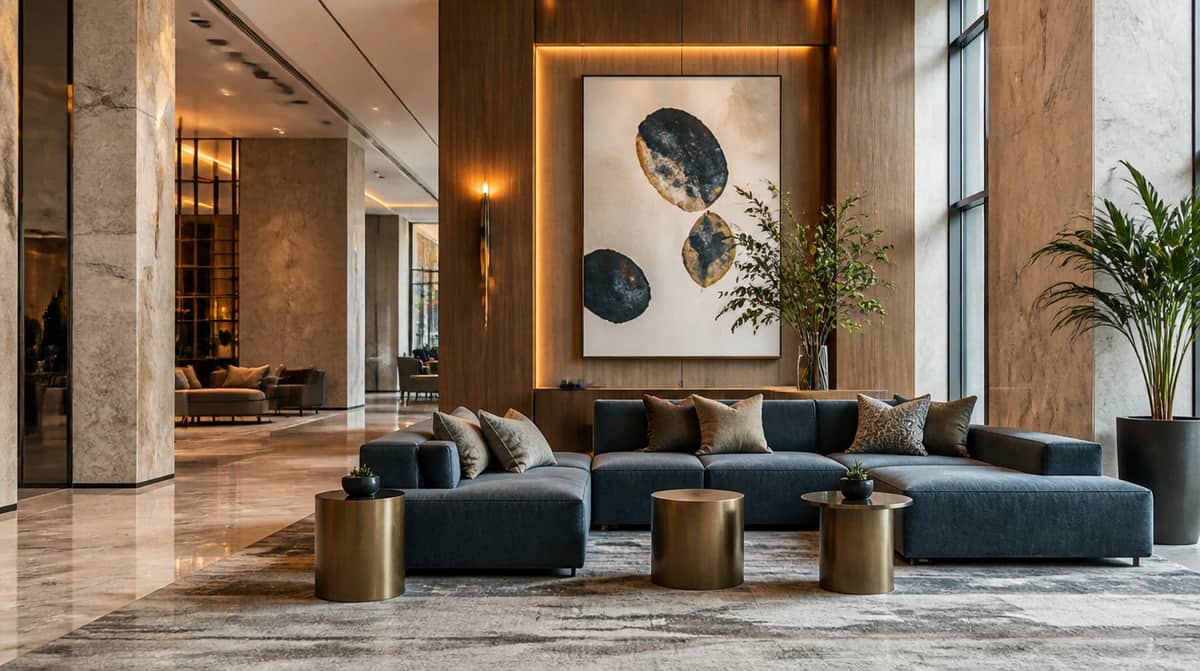
The College World Series brings a different but comparably intense crowd two to three weeks in June, filling the same downtown footprint with families, alumni groups, and out-of-town fans moving between the ballpark and the Old Market on foot. Lobby furniture in this corridor has to absorb concentrated, short-duration abuse: cushions compressed for hours by guests waiting on luggage, arms and backs handled by people carrying bags and gear, frames pushed and repositioned as groups rearrange seating clusters around their own party. Furniture that was never built past a light residential-adjacent grade shows the wear from a single Berkshire weekend the way other markets take a full year to produce.
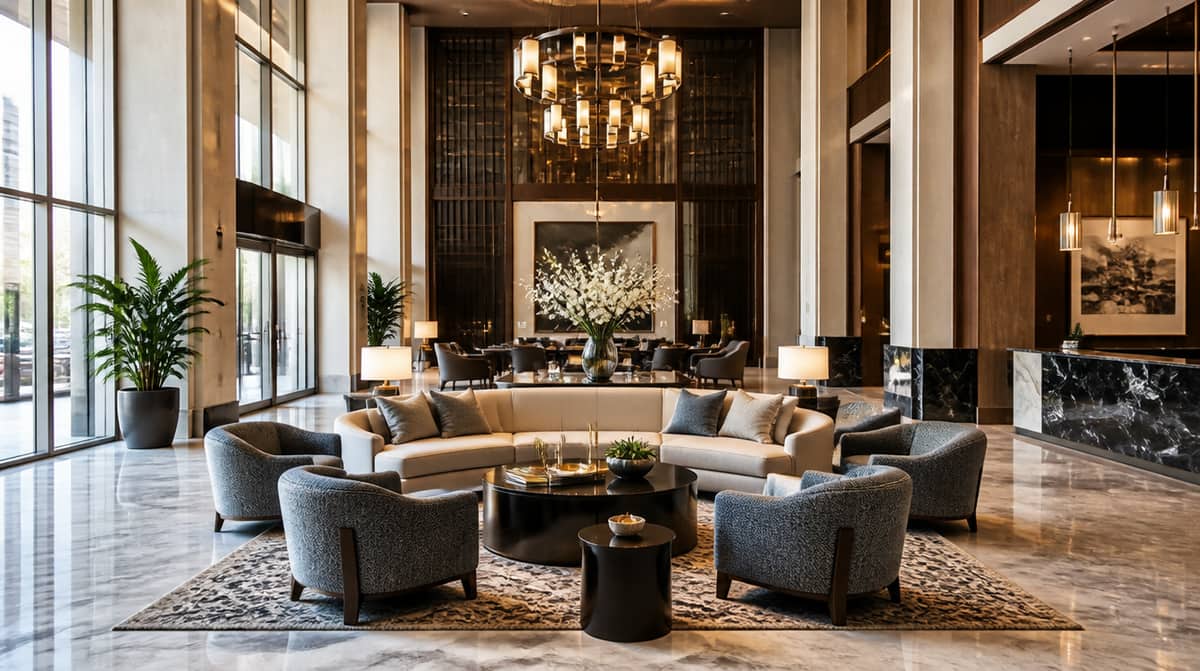
Contract-grade construction, kiln-dried hardwood or steel frames, high-resilience foam, and upholstery rated well above standard double-rub thresholds, is not a premium add for downtown Omaha properties. It is the baseline that keeps a lobby looking presentable through its two or three most extreme weekends of the year, without a mid-season replacement order.
The Old Market and Blackstone District Are Raising the Design Bar
While the convention corridor is managing volume, a different segment of Omaha's hotel market is managing expectations. The boutique properties that have opened in and around the Old Market, the city's historic cobblestone warehouse district, are competing on atmosphere as much as location. Guests booking a boutique stay near the Old Market's brick facades and independent restaurants have already decided what kind of trip they are having, and generic contract furniture that reads as a national chain package undercuts the story the property is trying to tell.
The Blackstone District, once a fading commercial strip and now one of the fastest-changing neighborhoods in the city, is producing the same pressure from a different angle. New hotel and extended-stay development in and around Blackstone is drawing a guest who has options and compares properties on design before they compare them on rate. Lobby seating here needs the same durability floor as anywhere else in the market, but the material story matters just as much: tailored silhouettes, upholstery in a considered color palette rather than a default neutral, and side tables that read as furnished rather than provisioned.
Nebraska's Climate Is a Real Specification Variable
Omaha's weather swings harder than most markets that share its convention calendar. Winters bring sustained cold, snow, and the rock salt that clings to boots and rolling luggage, all of it tracked directly across lobby flooring and onto the base of nearby seating. That salt residue and moisture load is hard on fabric finishes and on any frame component that is not sealed or moisture resistant, and it accelerates the kind of quiet degradation that shows up as discoloration and stiffened upholstery well before a piece is due for replacement.
Summers swing the other direction, running hot and genuinely humid for a Plains city, which puts the same stress on foam and fabric that Gulf Coast properties deal with, just compressed into a shorter season. Add in Nebraska's low-humidity winter air, which dries out leather and leather-alternative upholstery and can loosen glued joinery in cheaper frame construction, and you have a year-round case for performance textiles and mechanically fastened hardwood or steel frames rather than particleboard components held together with adhesive alone. Furniture specified for a mild, single-season climate does not hold up to Omaha's actual range.
Planning Around a Fixed, Unmovable Calendar
Unlike cities where convention business is spread across the year, a meaningful share of Omaha's highest-value hotel traffic is locked to fixed dates that do not move. The Berkshire Hathaway meeting, the College World Series, and the CHI Health Center's convention and concert calendar are known well in advance, which means furniture procurement timelines can and should be planned around them rather than reacted to.
Contract furniture typically runs eight to twelve weeks lead time from a confirmed order, longer for COM fabric programs or custom finishes. A property renovating its lobby ahead of a May shareholder weekend has to place that order in the winter, not the spring, or risk opening its highest-traffic weekend of the year with placeholder seating. Working with a supplier who understands Omaha's specific calendar pressure points, and who can commit to lead times that respect them, is worth more than chasing the lowest unit price from a vendor treating the order like a standard retail transaction.