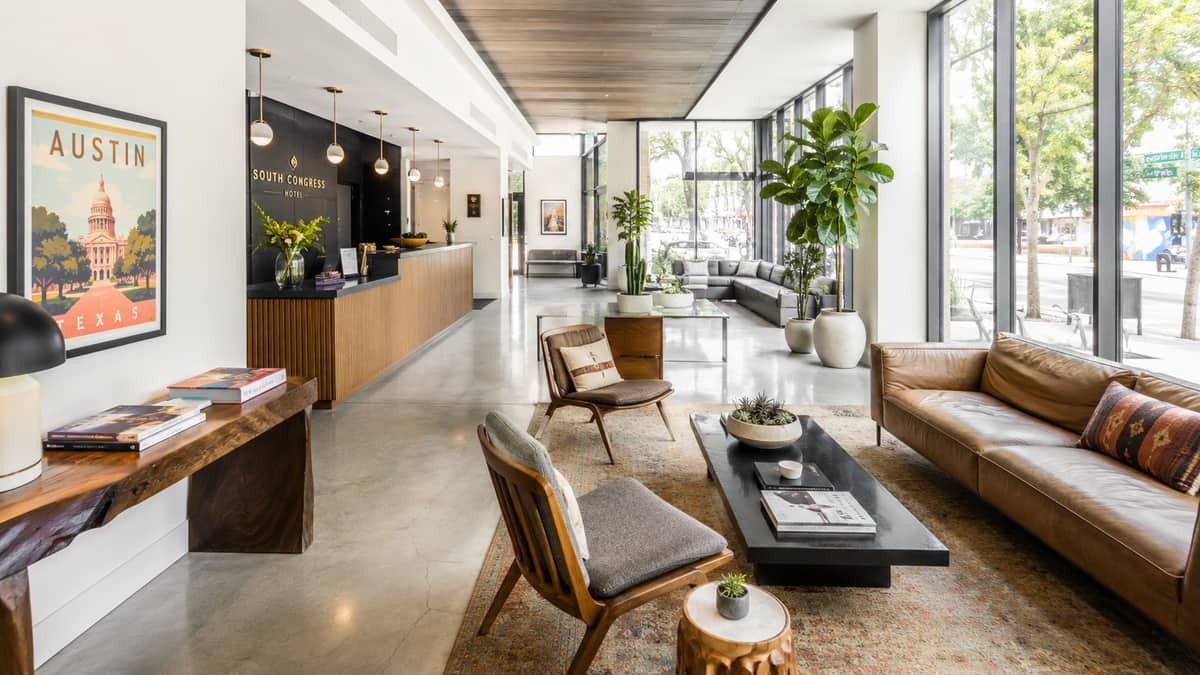
A traveler lands at Newark Liberty International Airport on a delayed evening flight, clears the AirTrain, and walks into a hotel lobby off Route 1&9 forty minutes later than planned. They are not looking for a design statement. They are looking for a seat that confirms they have arrived somewhere competently run, after a day that has not been. That same night, three miles east, a different guest steps out of a Prudential Center concert or a Broadway-touring show at NJPAC and walks into a downtown property near Military Park expecting something with more polish. Both guests are reading your furniture in the first fifteen seconds, and both are drawing conclusions before anyone reaches the front desk.
That range is the defining fact of Newark's hotel market. The city runs one of the busiest airports on the East Coast, hosts a dense corporate base anchored by Prudential Financial and the Gateway Center office complex, and has a growing downtown hospitality scene built around NJPAC, Prudential Center, and the university presence around Rutgers-Newark. Your lobby furniture is doing real work across very different guest expectations in the same metro, and how it holds up physically and visually is a direct business variable.
Newark's Market Segments Demand Different Things From the Same Room
Newark's hospitality market is genuinely segmented in ways that matter for furniture specification. The airport corridor properties along Routes 1&9 and Spring Street face a different durability challenge than the downtown properties built around the arena and arts district. Both segments need contract-grade construction, but the design brief is different and worth understanding before you commit to a specification.
Airport-adjacent properties the hotels lining the corridor near Newark Liberty and the Meadowlands-facing stretch toward Elizabeth are managing lobby traffic that never really stops. Red-eye arrivals, early crew changes, and rolling business travel mean the lobby sees meaningful foot traffic at three in the morning as reliably as at three in the afternoon. A 250-room airport hotel can turn its lobby seating over dozens of times a day between shuttle waits, late check-ins, and guests killing an hour before a flight. At that pace, upholstery fabric, frame joinery, and glide hardware are all in a race against time. Contract-grade kiln-dried hardwood frames, high-resilience foam rated for commercial use, and performance textiles rated above 100,000 double rubs are not premium options in this context they are the floor.
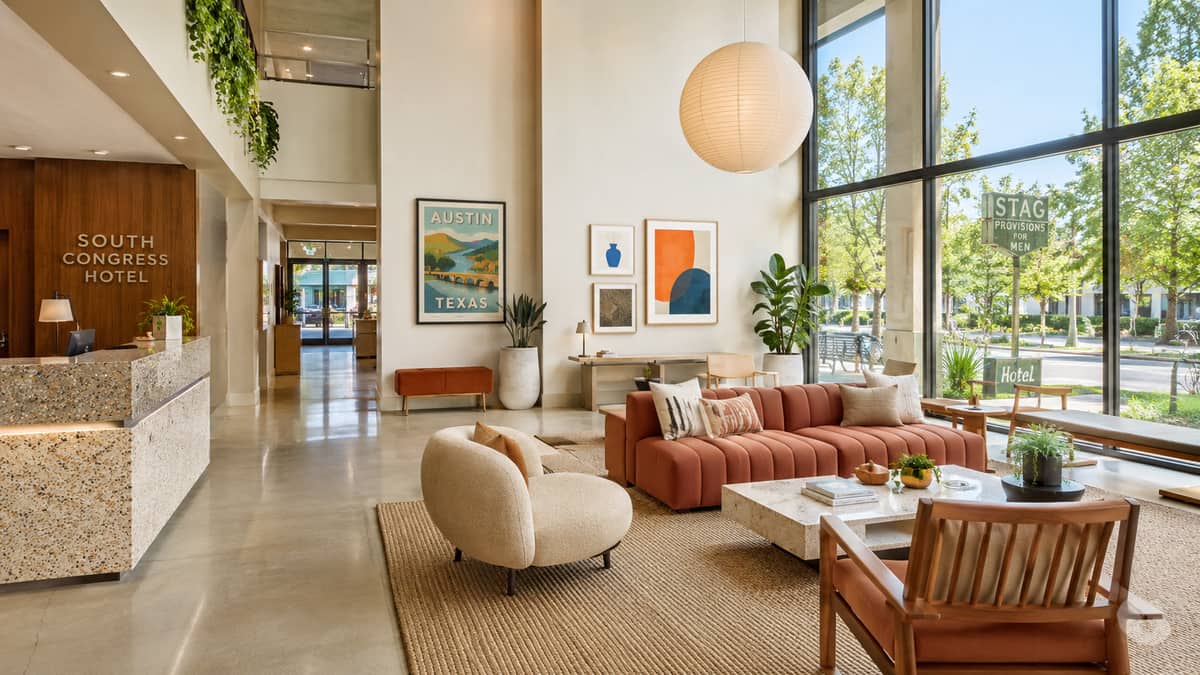
Downtown properties near Military Park, the Ironbound, and the NJPAC and Prudential Center corridor are managing a different expectation. The guest booking a downtown Newark property for a concert weekend or a corporate event tied to Panasonic's or Audible's Newark offices has already compared it against options in Jersey City and Manhattan, a fifteen-minute train ride away. The lobby furniture in that context needs to hold its own against that comparison. Here, durability remains non-negotiable but the design judgment required to specify furniture that reads as intentional, rather than like an airport-hotel package dropped into a downtown address, is just as important as the rub count.
What Newark's Climate Actually Does to Lobby Furniture
New Jersey's climate is a real durability variable that operators sometimes underweight when specifying lobby furniture. Newark runs a full four-season cycle, humid summers that push past 90 degrees, and winters that bring snow, road salt, and guests tracking in slush from November through March. That means lobbies handling moisture and grit from outside for a solid third of the year, on top of the condensation and spills that any hotel common area generates.
Performance textile specification matters here for exactly that reason. Upholstery that is not rated for moisture and soil contact shows degradation fast in a winter climate, particularly on chair arms and seat edges where wet coats, bags, and gloves make regular contact. Stain-resistant, moisture-resistant treatment on upholstery fabric is not an upgrade for Newark hotel lobbies it is a baseline call that operators sometimes skip until they are replacing furniture at thirty months instead of sixty.
Frame construction is equally relevant. Solid hardwood or steel frames with reinforced corner blocking and mechanical fasteners that can be re-tightened handle the seasonal humidity swing between a dry, heated winter lobby and a humid summer one. Particleboard frame components absorb and release moisture with that cycle, which loosens joints and accelerates structural failure. In a lobby where pieces get repositioned for airport shuttle queues, moved for holiday displays, or rearranged for a corporate meeting spillover from a nearby office tower, frame integrity under repeated movement is a practical requirement, not a nice-to-have.
Designing for the Arrival Experience in Newark's Signature Corridors
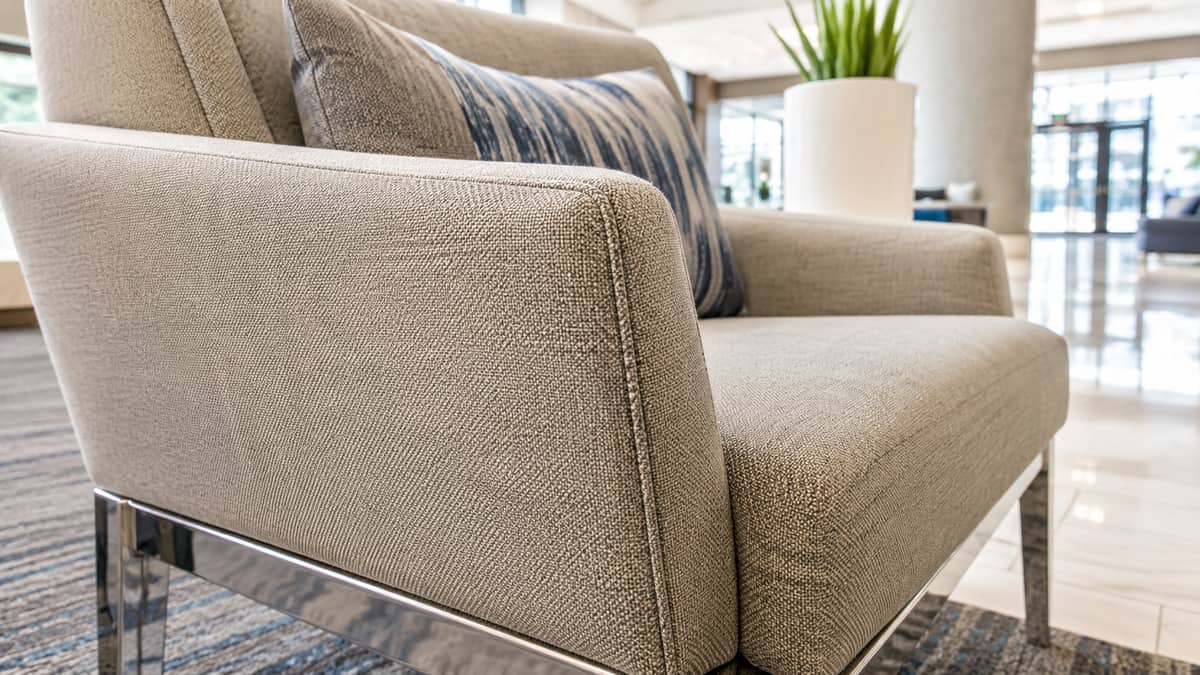
The lobby arrival moment is choreographed whether you plan it or not. Guests process the room in a specific sequence, primary seating cluster first, then the front desk, then the path to elevators. Every element in that sequence communicates something about your property before any staff interaction occurs.
In the airport corridor along Spring Street and the Routes 1&9 hotel cluster, the guest demographic trends toward business travelers on tight schedules, flight crews on standard turnarounds, and families managing a layover or an early departure. The furniture that registers as right here supports fast orientation: clear sightlines from the door to the desk, seating that is easy to enter and exit with carry-on luggage, and a scale that does not crowd a lobby that is also functioning as a shuttle waiting area. Nothing about it should suggest the room was furnished as an afterthought to the airport itself.
Downtown Newark properties near NJPAC, Prudential Center, and the Ironbound are competing on a different register. Guests here are dressed for a show or a client dinner, and they are comparing the lobby against properties across the river. Lower-profile lounge seating with tighter backs and wrapped arms, warmer wood tones that reference the brick and cast-iron character of the surrounding historic district, and side table materiality that reads as intentional rather than standard-issue these details register as appropriate to the context. Furniture that looks like a generic airport-hotel package reads as a mismatch against the address and the evening the guest has planned around it.
Procurement Timing and the Newark Renovation Cycle
Newark's hotel development has been active on both ends of the market, new build near the airport keeping pace with air traffic growth, and renovation and conversion activity downtown as the arts and corporate district continues to draw investment. That pace creates real planning pressure around furniture procurement.
Contract-grade furniture is built to order. Lead times for standard commercial pieces run eight to twelve weeks from confirmed specification. Custom or semi-custom pieces, COM fabric specifications, frame modifications, non-catalog finishes, add coordination time on top of that. Projects that leave furniture to the back half of a construction or renovation schedule consistently run into the same problem: the pieces that arrive on time were not the right pieces, and the right pieces did not arrive in time.
If your property has a hard opening tied to an airport traffic season, a Prudential Center event calendar, or a corporate relocation announcement driving advance bookings, those lead times need to be built into the project schedule from the beginning. The cost of opening with placeholder furniture and replacing it inside the first year, measured in OTA review scores, in staff time managing complaints, and in the capital expense of two purchase cycles, is higher than the cost of getting specification right the first time.
Working with a supplier who can provide clear lead time commitments, who has experience with hospitality projects at your property's volume and rate category, and who offers COM programs for properties where the design team has developed a specific material story, is worth more than a lower unit price from a vendor who treats a hotel lobby order like a retail transaction. Newark's market sits between the airport's around-the-clock demands and downtown's design expectations closely enough that the difference between lobby furniture that confirms a guest's booking decision and furniture that introduces doubt is a revenue variable, not just an aesthetic one.