Walk into any boutique hotel in Silver Lake or West Hollywood on a Friday afternoon and you will see the lobby doing more work than any other room in the building. Guests are checking in from red-eyes. Locals are nursing cocktails. Influencers have claimed the best-lit corner. A production assistant is waiting on a meeting that started twenty minutes ago somewhere else. Los Angeles lobbies are not waiting rooms they are activated social spaces, and the furniture is performing all day, every day, without a break. Get the specification wrong and you are not just looking at an aesthetic miss. You are looking at early replacements, guest complaints, and reviews that mention the lobby before they mention the rooms.
Why Los Angeles Lobbies Demand More From Furniture
Here is what you need to know about the LA hospitality market: it is not monolithic, and treating it that way is the first mistake buyers make. You have historic grand hotels anchoring Downtown, design-driven boutiques concentrated along Santa Monica Boulevard in WeHo and up into Silver Lake, lifestyle properties serving the Venice and Abbot Kinney crowd, and business hotels stacked around Century City and LAX. Each of those micro-markets has its own guest profile and aesthetic expectation. But they all share the same core problem constant use with no real slow season.
Other cities give hotel furniture a recovery period. A hard winter in Chicago or a quiet January in Boston means fewer bodies in the lobby for weeks at a time. Los Angeles does not work that way. Awards season runs from January into spring. Festival activations fire through summer. Thanksgiving through New Year is packed. Hotel lobby furniture Los Angeles buyers are frequently surprised when pieces rated for heavy commercial use in other markets need replacement ahead of schedule here because the cumulative wear is simply higher. Spec accordingly. That means BIFMA-tested frames, fabrics rated above 50,000 Martindale, and construction built to handle the specific behavior patterns of LA guests: longer dwell times, constant outdoor-to-indoor traffic, and the particular abuse that comes from a city where everyone carries a tote, a camera bag, or a sample case.
Lounge Seating That Reads as Design-Forward
Los Angeles is a city built around entertainment, visual culture, and the immediate read. Your lobby furniture signals the property's taste level within the first ten seconds of arrival. That is not hyperbole it is how this market works. The entertainment and creative industry clients who fill boutique properties in Los Feliz, Culver City, and Hollywood have extremely calibrated design literacy built up over careers spent on sets and in showrooms. A lobby that looks assembled from a generic contract catalog will register as cheap regardless of the price tag on the pieces.
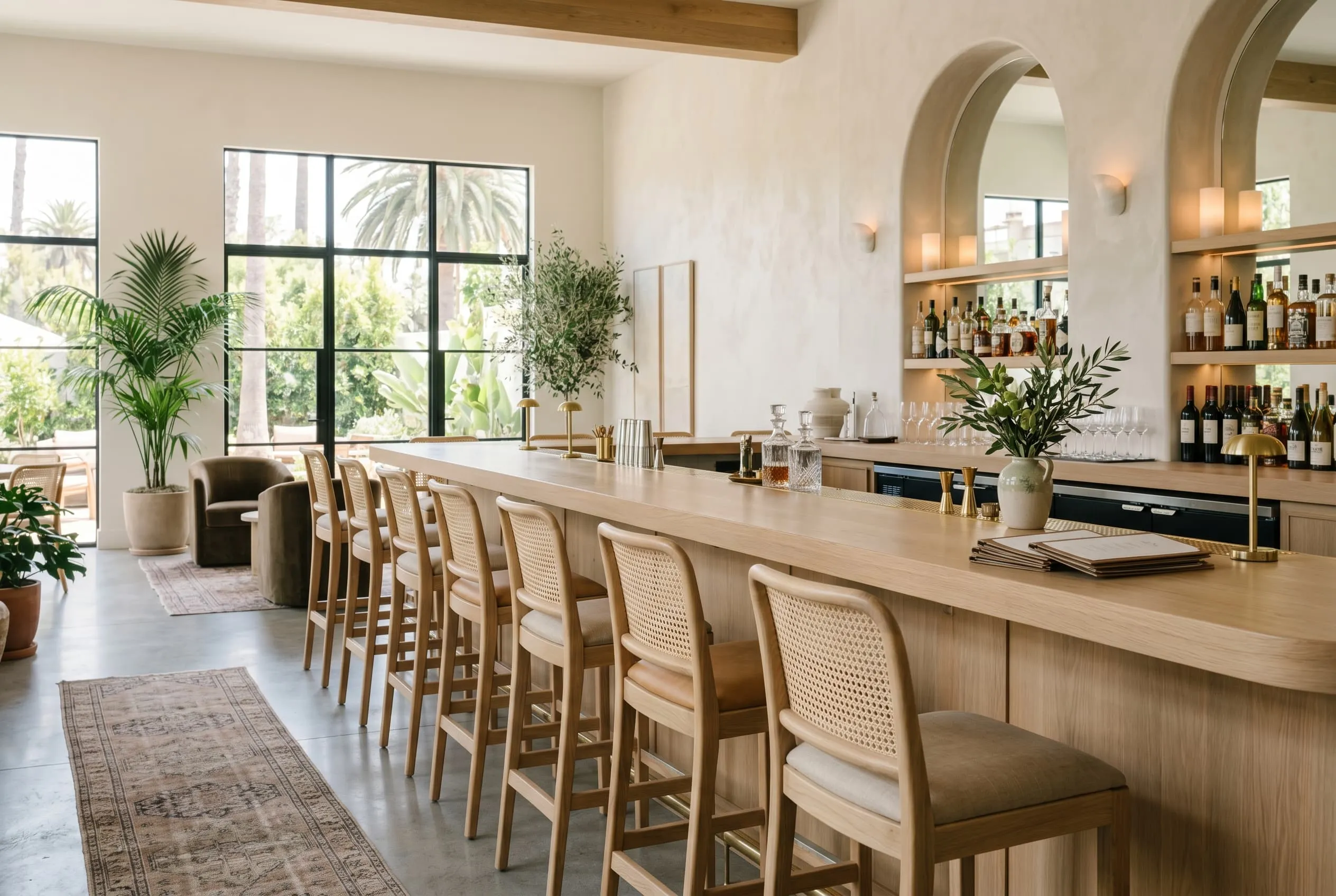
What actually moves the needle here tends toward architectural restraint. Lower seat heights. Clean lines without excessive ornament. A material palette that leans into California references natural linen blends, warm woods, leather in terracotta or cognac tones that read as intentional rather than default. Modular configurations have become a near-standard ask for properties that need to reconfigure common areas for private events, film shoots, and brand activations. Those are not edge cases in this market they are a significant revenue line for many LA boutique hotels, especially in WeHo and mid-city where the lobby-as-event-venue model has become standard operating procedure. When you are specifying hotel lobby furniture Los Angeles properties will actually use, flexibility is not a nice-to-have. It is part of the brief.
Reception Area and Side Table Considerations
Let me walk you through what most buyers get wrong around the reception desk: they focus on the desk itself and treat the surrounding furniture as afterthought. That is backwards. The pieces immediately adjacent to your check-in area the accent chairs for waiting guests, the side tables where they set their coffee or drop their phone are the first things a tired traveler physically interacts with when they arrive. That experience shapes the entire stay before a room key is handed over.
For reception-adjacent seating, ease of exit is the design constraint that matters most. Guests in a hotel lobby are transitional. They sit for five minutes, not fifty. A deep bucket chair that requires effort to stand up from is frustrating in a check-in context no matter how well it photographs. A better call is a higher seat height with a firm cushion, armrests at a practical height, and a leg profile that allows housekeeping to clean underneath without pulling the piece away from the wall. For side tables, surface area matters more than aesthetics a guest with a laptop and a coffee needs room for both, and that combination is the default working posture for a large percentage of LA hotel guests regardless of whether it is 8am or 8pm.
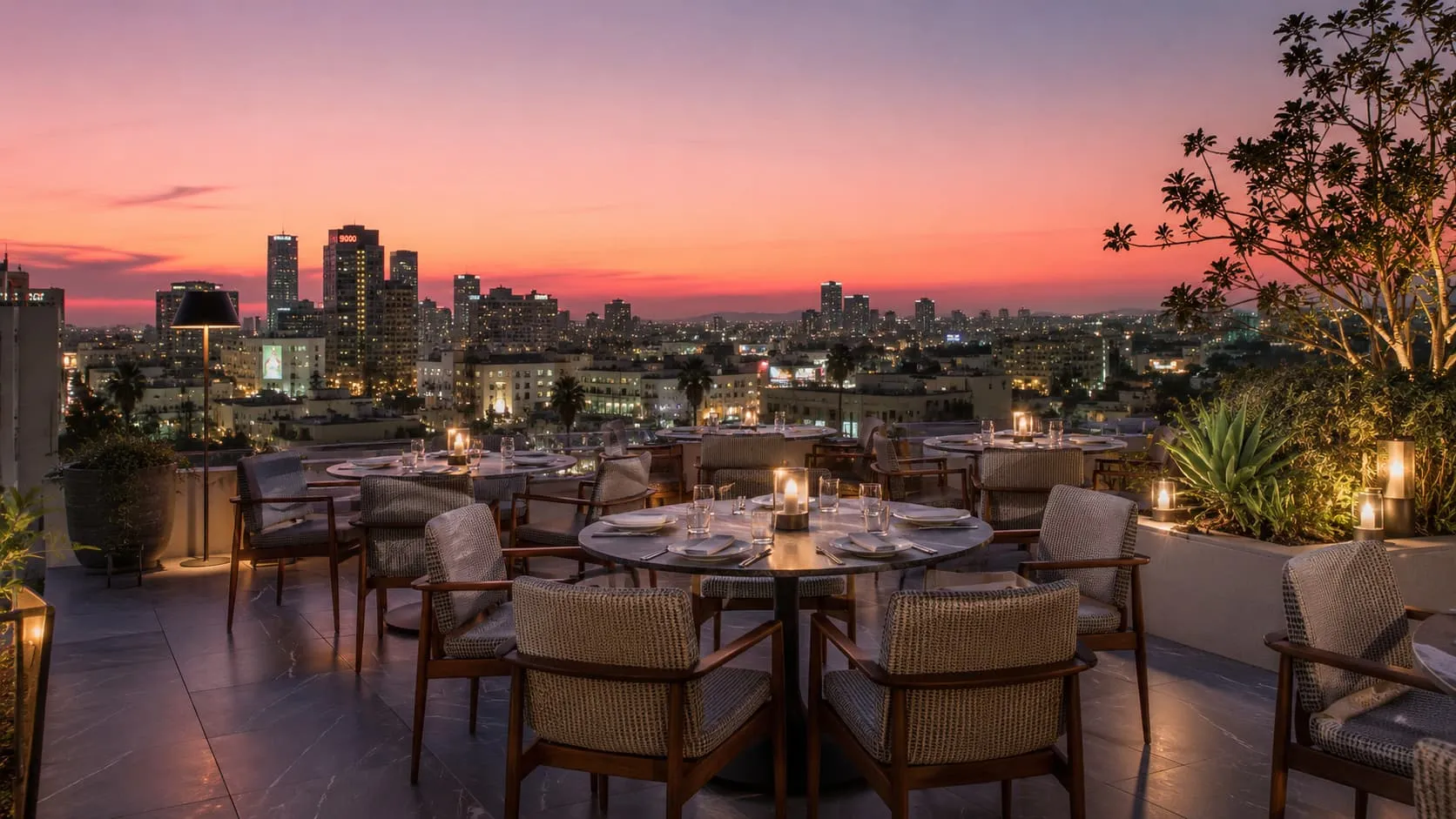
Outdoor adjacency is another factor specific to this market. Properties in West Hollywood, Beverly Hills, and along the Westside routinely have rooftop pools and open-air terraces that blur the line between inside and outside. Pieces near entry points and elevator banks will take on more humidity and UV exposure than equivalent furniture in virtually any other major US market. Factor that into your material selections early, not after you have already committed to a finish.
Durability, Maintenance, and Total Cost
The sticker price on contract furniture is not what you will actually spend. A lower-cost piece that needs reupholstering every eighteen months will cost more over a five-year horizon than a higher-spec piece with a proper commercial warranty and construction that holds. For hotel lobby furniture Los Angeles properties, total cost of ownership is the right unit of analysis. Unit price is a distraction.
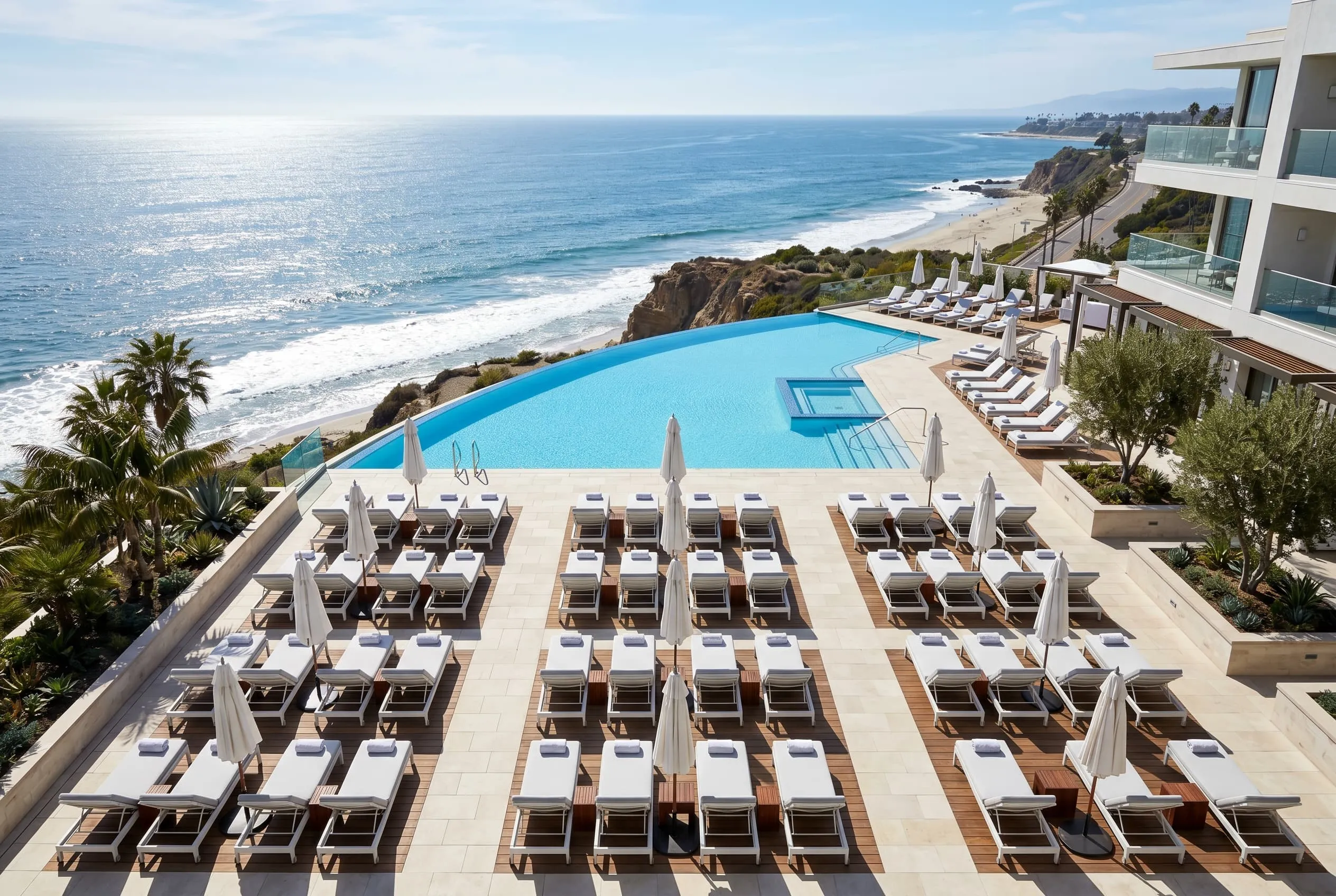
Here is what drives maintenance costs in LA lobbies specifically: dust from the dry climate, sunscreen tracked in from rooftop pools, food and beverage spills from lobby bars that run service through the afternoon and into the evening, and the general traffic volume that comes with a city that does not slow down in winter. Specify fabrics that can be cleaned with water-based solutions without requiring professional treatment every cycle. Performance fabrics with moisture barriers are worth the premium you will earn it back in labor savings alone. Frames should be solid hardwood or welded steel, not staple-and-spring construction that loosens under sustained commercial load. And when you are vetting vendors, ask for warranty documentation and verify that it covers commercial use explicitly. Residential warranty language is not your friend when a piece fails in a contract setting after fourteen months.
The Los Angeles hospitality market is unforgiving about design and even less forgiving about durability failures. A lobby renovation that cuts corners on specification will show up in reviews within the first six months. When you are sourcing for a new build or a refresh whether that is a property near the Convention Center prepping for a major run of events, or a boutique in Silver Lake repositioning for a new ownership group the lobby specification is not where you negotiate down. Get the grade right from the start, build in a realistic replacement cycle, and your common areas will hold up to everything this city asks of them.
We quote hotel lobby furniture for Los Angeles operators against their own layouts and order sizes rather than a generic sheet. Request a quote and we will put together pricing for your property.