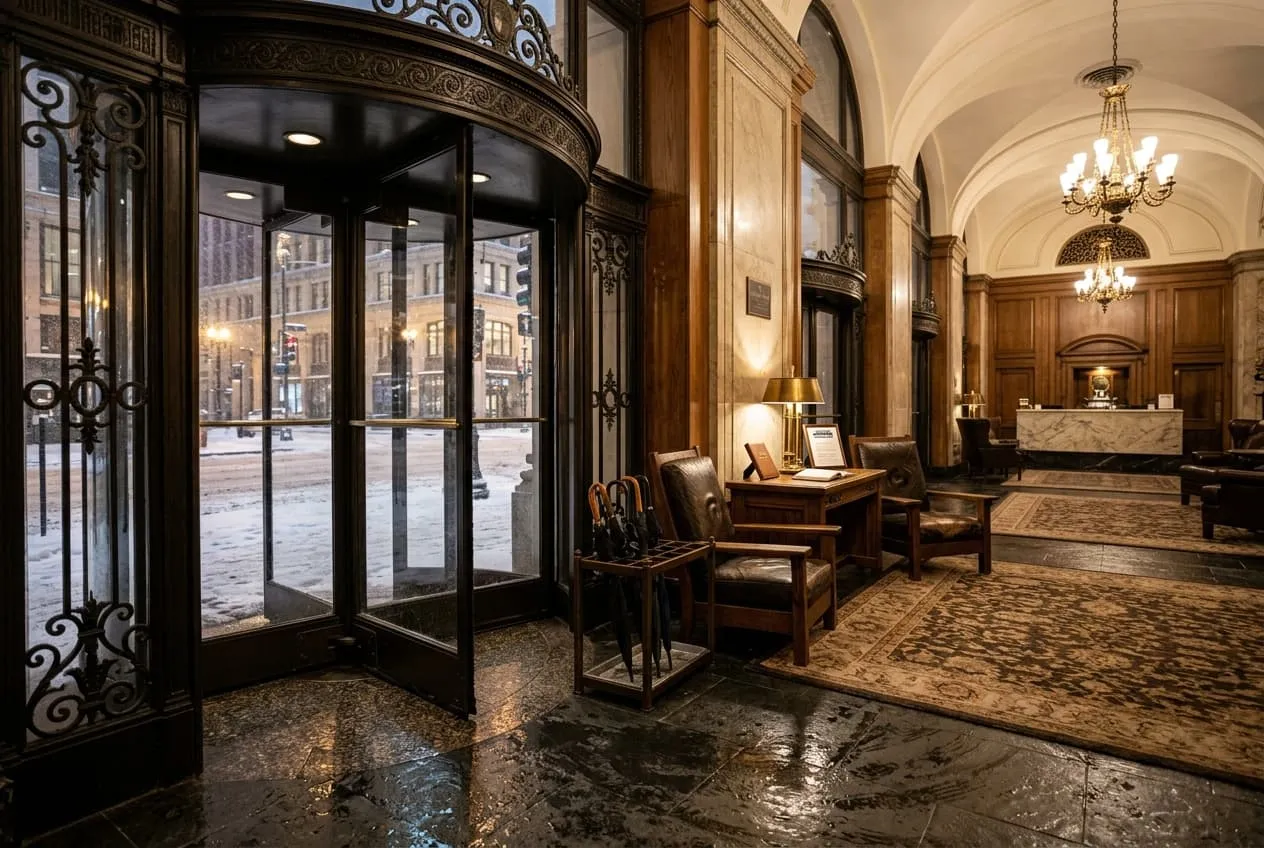
A legislative delegation wraps up a two-day session at the Statehouse Convention Center, walks four blocks down Markham Street, and checks into a boutique property overlooking the River Market District. They have spent two full days in committee rooms and hallway meetings, moving through carpet and conference chairs the whole time. Now they want somewhere to sit that does not feel like an extension of the statehouse. In the first fifteen seconds inside your lobby, before the front desk greets them, your furniture has already told them what kind of property this is.
That moment carries real weight in Little Rock's hotel market. The city anchors a metro of roughly 750,000 people, runs a steady calendar of state government, legal, and association conventions downtown, and has a growing boutique and lifestyle hotel segment concentrated around the River Market District and the Argenta District across the river in North Little Rock. Lobby furniture is doing genuine business work in that mix, and how it holds up, both visually and structurally, is a variable that shows up directly in guest reviews and repeat bookings.
Little Rock's Market Segments Demand Different Things From the Same Room
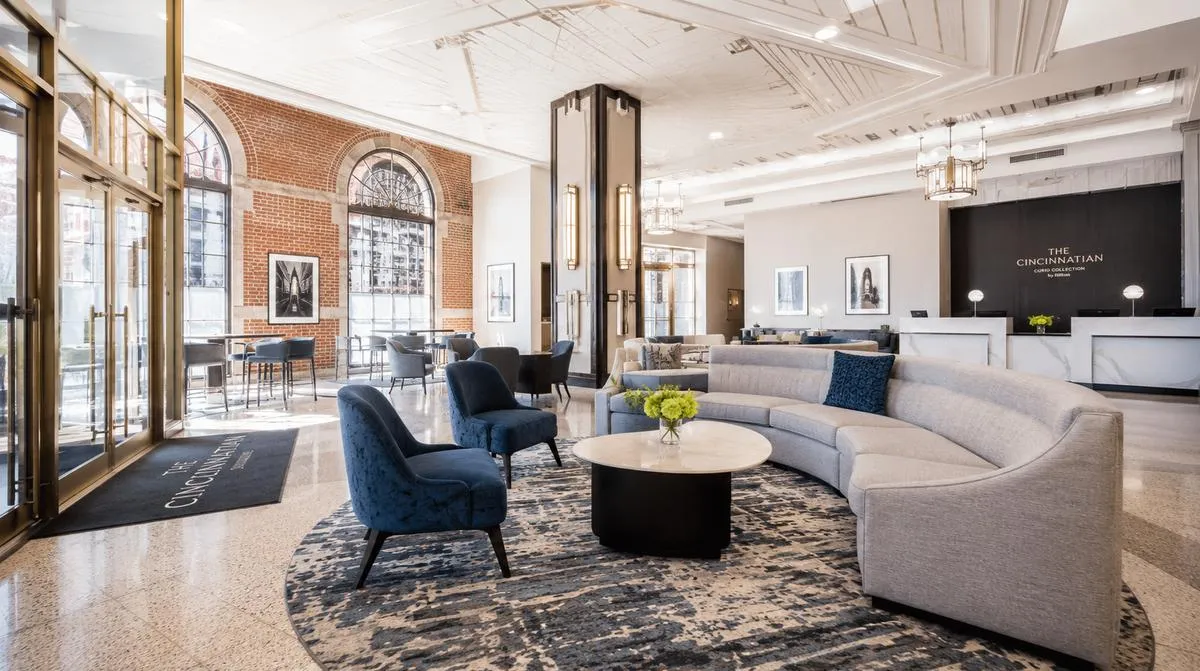
Little Rock's hospitality market splits fairly cleanly into segments that pull furniture specification in different directions. Properties clustered around the Statehouse Convention Center, the Robinson Center, and the downtown government and legal corridor face a different durability profile than the boutique hotels reshaping the River Market District and the Argenta arts district. Both need contract-grade construction underneath, but the design brief on top of that construction is not the same.
Convention-adjacent properties, the mid- and large-format hotels serving the Statehouse Convention Center, legislative session traffic, and the downtown association and legal conference circuit, are managing lobby volume that punishes anything under-built. A legislative session, a bar association conference, or a statewide association meeting can move hundreds of attendees through a lobby in a compressed morning window, then again at evening reception time. Under that kind of repeated cycling, upholstery seams, frame joinery, and glide hardware are all being tested continuously. Furniture that looked sharp on opening day will show fabric pilling, loosened joints, and seat sag within a couple of years if it was not built for this category of use. Kiln-dried hardwood or steel frames, high-resilience foam rated for commercial use, and performance textiles rated well above 100,000 double rubs are not upgrades in this context, they are the baseline.
The River Market District and the Argenta District across the river are managing a different expectation entirely. Guests booking a boutique property near the River Market pavilions or the Argenta arts corridor have already looked at photos and picked the property partly for what those photos communicated. In that context, lobby furniture is part of a curated visual story, and pieces that read as generic or catalog-selected undermine the argument the property is making about itself. Durability still has to be there underneath, but the design judgment required to specify furniture that reads as intentional within a specific aesthetic matters just as much as the rub count on the fabric.
What Little Rock's Climate Actually Does to Lobby Furniture
Arkansas's climate is a real durability variable that gets underweighted in a lot of lobby furniture specifications. Little Rock runs hot and humid from May through September, with regular stretches above 90 degrees and the kind of heavy, still humidity that comes off the Arkansas River valley. Guests are walking into air-conditioned lobbies straight from that heat, and the furniture is absorbing the moisture load they bring with them, along with condensation from cold drinks, damp bags set on cushions, and general seasonal humidity swings.
Performance textile specification matters here for the same reason it matters in any humid Southern market, just distributed across a long summer season. Upholstery that is not rated for moisture contact shows degradation in the fabric face and in the foam underneath it, particularly on seat cushions and chair arms where hands and bags make the most contact. Stain-resistant, moisture-resistant treatment is not an optional finish for Little Rock hotel lobbies, it is a baseline decision that some projects skip until they are replacing furniture at thirty months instead of sixty.
Frame construction matters just as much. Solid hardwood or steel frames with reinforced corner blocking and mechanical fasteners that can be re-tightened handle the seasonal expansion and contraction that Arkansas humidity swings create. Particleboard components absorb moisture and swell, which loosens joints over time and accelerates structural failure. In a lobby where furniture gets pulled aside for a legislative reception, reconfigured for a wedding block, or shifted to make room for banquet staging, frame integrity under repeated movement is a practical, not theoretical, requirement.
Designing for the Arrival Experience in Little Rock's Signature Spaces
The lobby arrival sequence is choreographed whether a property plans it or not. Guests read the room in order, primary seating cluster first, then the front desk, then the path toward elevators. Every piece in that sequence is communicating something before a staff member says a word.
In downtown properties near the Clinton Presidential Center, the Robinson Center performance hall, and the Statehouse Convention Center corridor, the guest mix trends toward state government visitors, legal and association travelers, and conference attendees who have seen a lot of hotel lobbies. The furniture that reads as right here has clean lines, upholstery that holds its shape through heavy daily contact, and a scale that fits the room rather than filling it. A well-scaled lounge chair in a durable neutral fabric, sized correctly for ceiling height, communicates the same intention as a quiet check-in process: this property is run with attention to detail.
River Market District and Argenta boutique properties are competing on a different register. Guests here have chosen the property for its character, whether that is a converted historic building near the pavilions or a design-forward property in the Argenta arts district across the river. Low-profile lounge seating with tight backs and wrapped arms, leather or leather-alternative accents, and side tables in materials that reference wood or stone rather than laminate, all read as appropriate to that context. Furniture that looks like a standard national-chain package reads as a mismatch against the rate and the neighborhood.
For properties near the convention center and the downtown government corridor, the priority is efficient movement. Guests arriving after a full travel day and a badge pickup want to orient quickly and get to their room. Lobby furniture here needs seating clusters that do not bottleneck the path from door to desk to elevator, chairs that are easy to exit without awkwardness for someone carrying luggage, and layouts that can be cleared or reconfigured when the property hosts a reception or breakout session during a session week.
Procurement Timing and the Little Rock Renovation Cycle
Little Rock's hotel development pace has picked up over the past several cycles. New boutique properties have opened in the River Market District and Argenta, and legacy downtown hotels have run common-area renovations to stay competitive with that boutique segment. That pace creates real planning pressure around furniture procurement timelines.
Contract-grade furniture is built to order. Lead times for standard commercial pieces run eight to twelve weeks from confirmed specification. Custom or semi-custom pieces, COM fabric programs, frame modifications, non-catalog finishes, add coordination time on top of that baseline. Projects that leave furniture decisions to the back half of a renovation or construction schedule tend to run into the same problem: the pieces that show up on time were not the right pieces, and the right pieces did not show up in time.
If a property has a hard opening tied to a legislative session calendar, a downtown convention booking, or a spring event season that drives advance reservations, those lead times need to be built into the project timeline from the start. The cost of opening with placeholder furniture and replacing it inside the first year, measured in OTA review scores, staff time spent managing complaints, and the capital expense of two purchase cycles, runs higher than the cost of getting the specification right the first time.
Working with a supplier who can commit to clear lead times, who has hospitality project experience at a property's volume and rate category, and who offers COM programs for design teams with a specific material story in mind, is worth more than a marginally lower unit price from a vendor treating a hotel lobby order like a retail transaction. Little Rock's hotel market is competitive enough that the difference between lobby furniture that confirms a guest's booking decision and furniture that introduces doubt is a revenue variable, not just an aesthetic one.
We quote hotel lobby furniture for Little Rock operators against their own layouts and order sizes rather than a generic sheet. Request a quote and we will put together pricing for your property.