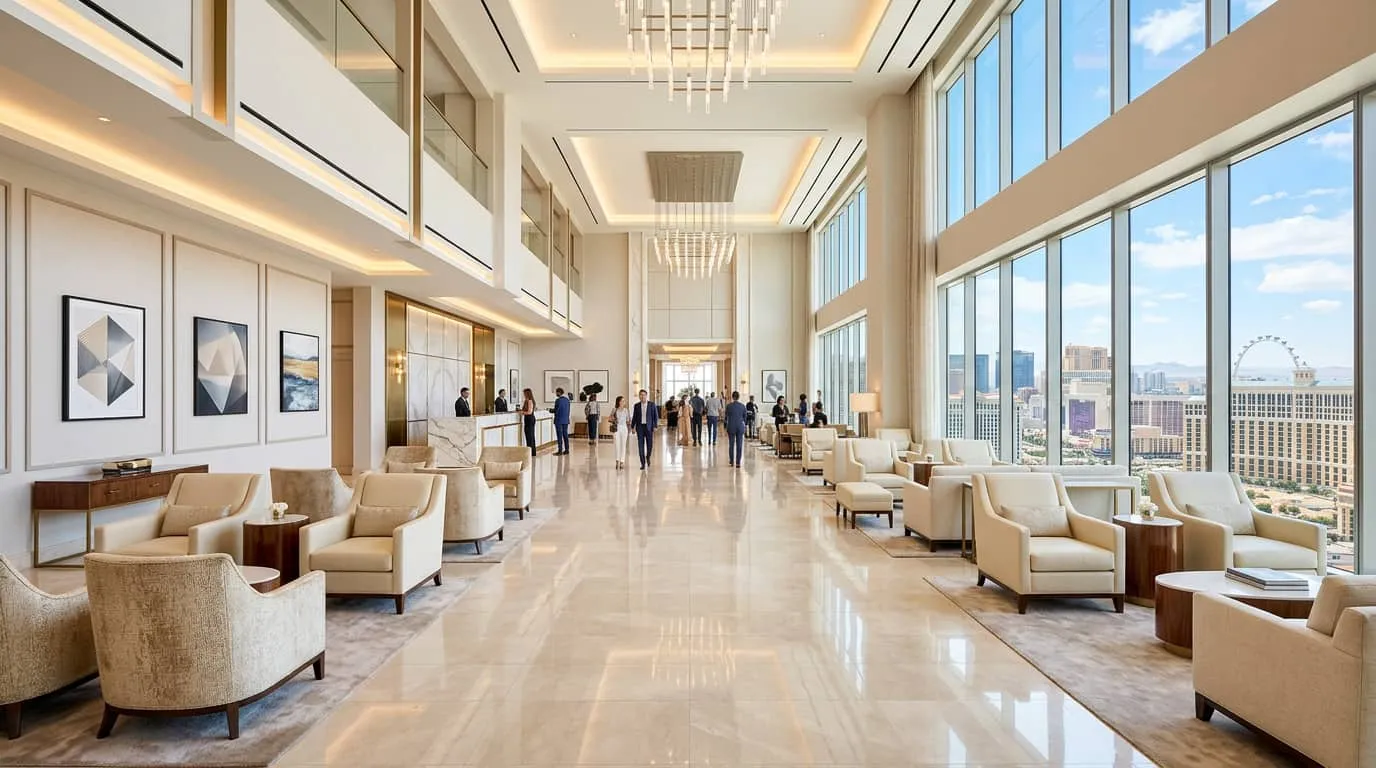
A hotel lobby in Las Vegas is not just a transition space. It is the first physical expression of your brand that a guest encounters after arriving through a city where every building is designed to compete for attention. On the Strip, mega-resort lobbies process tens of thousands of guests per week through check-in, check-out, and continuous pedestrian flow. In the downtown Arts District, boutique hotel lobbies serve as a design statement that tells guests they made the right choice in skipping the casino corridor. In Summerlin and Henderson, corporate hotel lobbies set expectations for a guest segment that is making a deliberate choice based on efficiency and comfort. Across all of these contexts, hotel lobby furniture Las Vegas has to accomplish two things simultaneously: perform at commercial grade under sustained high traffic, and communicate something specific about the property it furnishes.
Lobby Furniture Specifications for High-Traffic Hotel Environments
Las Vegas hotel lobbies are among the highest-traffic commercial environments in hospitality. A large Strip property may see 5,000 or more lobby transits on a peak day. Even a mid-size boutique hotel will have its lobby furniture occupied and walked past continuously during check-in and check-out peaks. That traffic volume is the starting point for understanding why commercial lobby furniture specifications matter.
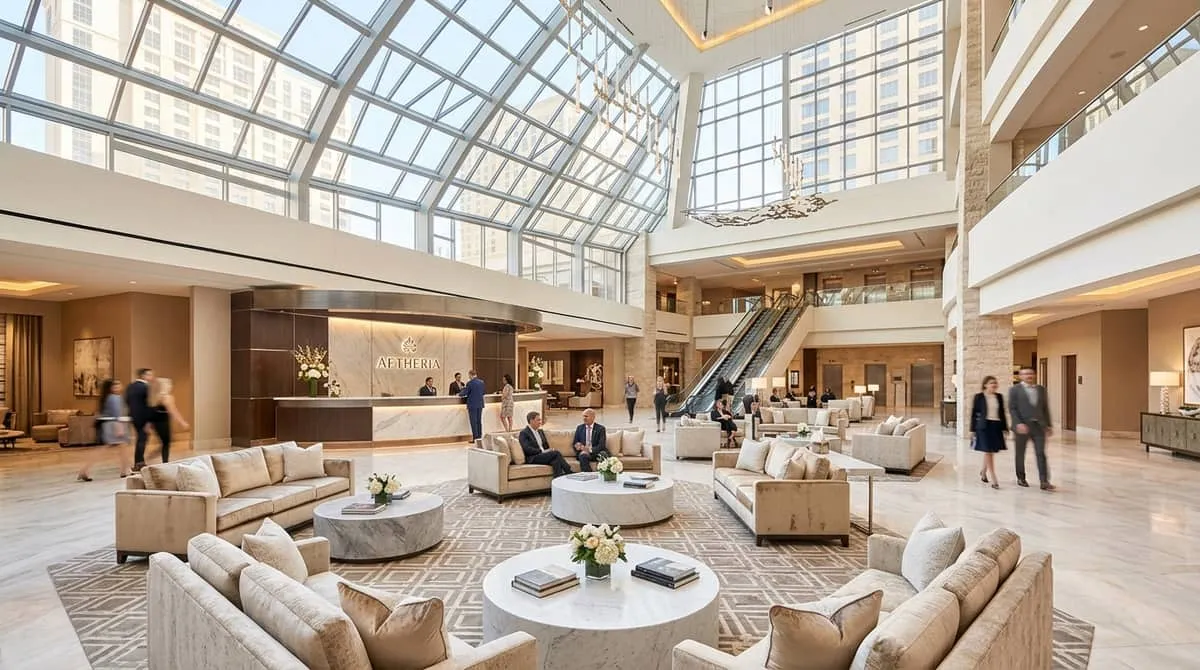
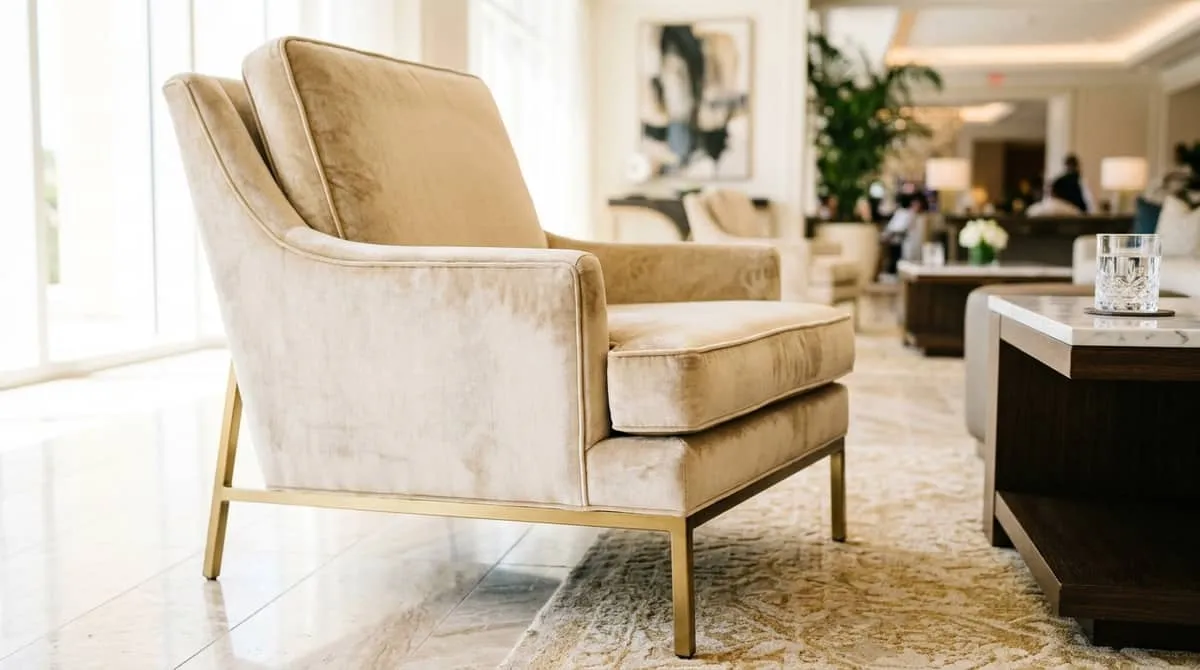
Seating construction for high-traffic hotel lobbies should start with frames built to commercial load ratings typically 300 pounds or more, tested to BIFMA standards for repeated cycle durability. Upholstered lobby seating should use high-density commercial foam in seat cushions, rated for 1.8 pounds per cubic foot or higher. Lower-density foam compresses and loses shape within months under commercial use, turning lobby seating into an embarrassing statement about your property's maintenance investment.
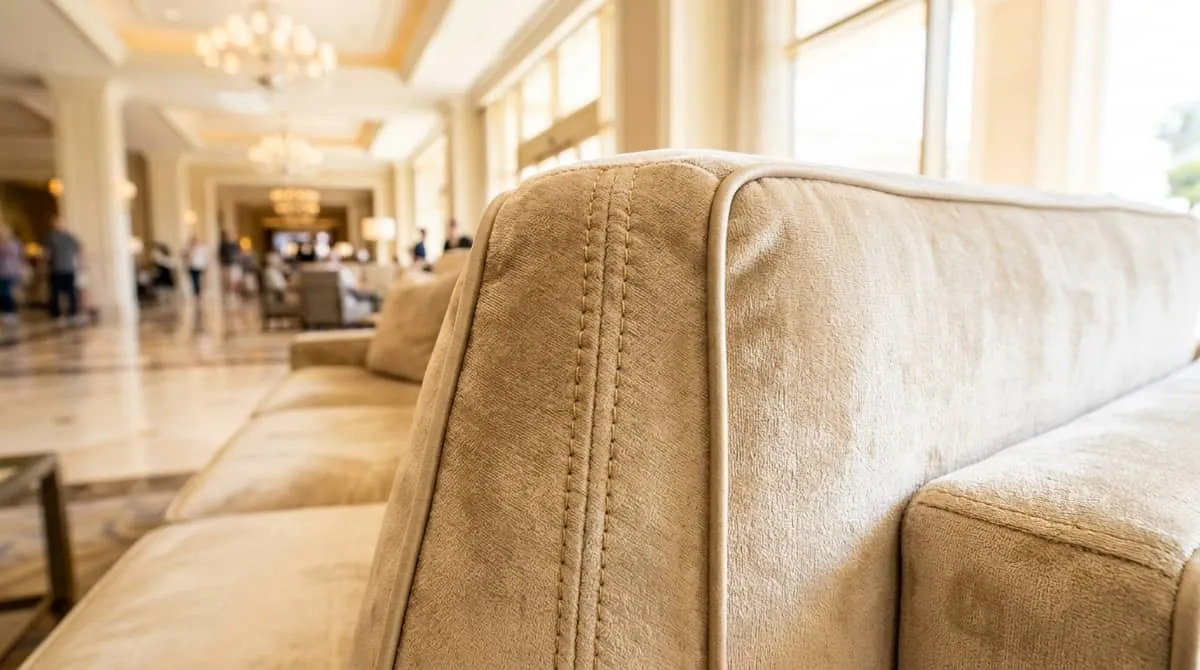
Fabric selection for lobby upholstery should prioritize cleanability alongside double-rub rating. A 100,000 double-rub fabric that cannot be spot-cleaned effectively is a poor choice for a lobby environment where guests arrive with luggage, drinks, and the full range of what Las Vegas evenings involve. Solution-dyed or performance fabrics many are now available with genuinely attractive aesthetics alongside commercial durability allow your housekeeping team to address stains before they set without damaging the fabric. Crypton, Brentano's commercial performance line, and Sunbrella's indoor collection are all worth specifying for lobby upholstery.
Hard surface lobby tables coffee tables, side tables, occasional tables should use materials and finishes rated for commercial use. Powder-coated steel, tempered glass, and sealed stone are appropriate. Solid wood and veneer tables require catalyzed finish coatings, not furniture polish, to survive commercial cleaning protocols. Lacquer and varnish that are not catalyzed will cloud, blush, and eventually delaminate under the cleaning chemicals your housekeeping team uses.
Lobby Design as Brand Communication
In Las Vegas, lobby furniture is brand communication as much as it is functional furnishing. This is especially true in the boutique and independent hotel segment, where the lobby is one of the primary tools for differentiating from the mega-resort experience guests could have chosen instead. But it is also true on the Strip the lobbies of the major casino hotels are designed environments where furniture selections are made as deliberately as any other design element.
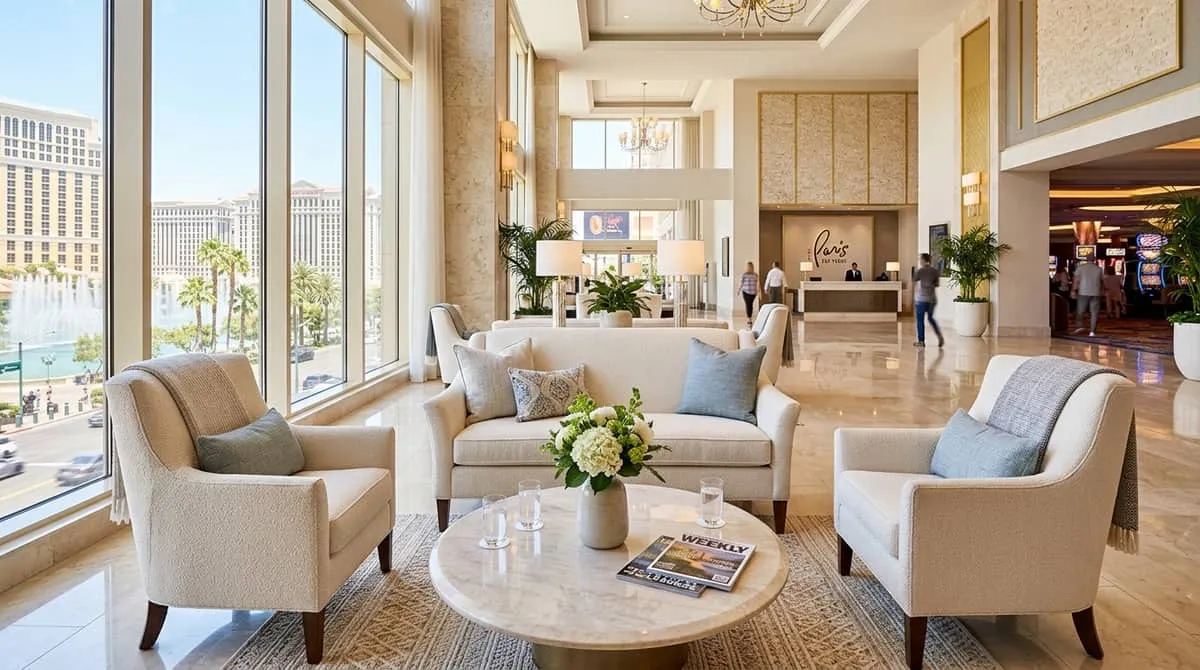
Your lobby furniture tells arriving guests something about your property's positioning, your price tier, your aesthetic sensibility, and your attention to detail. A well-chosen lobby chair or sofa composition signals curation and quality. Generic commercial seating in standard finishes signals that no one spent time on this decision. In a market where every property is competing for the same guest dollar, that difference in perception has measurable value.
Working with a commercial furniture supplier who understands the design dimension of lobby furniture not just the structural and material specifications is important. Suppliers with strong hospitality portfolios will help you navigate the range of commercial-grade product available and identify pieces that deliver both performance and the design quality your property's positioning requires. Suppliers who only operate in commodity commercial product will give you furniture that is durable but aesthetically neutral at best.
The scale of your lobby, the height of your ceilings, and the overall spatial flow through check-in and into the hotel's interior all inform furniture sizing and configuration. A lobby with 14-foot ceilings and an open floor plan can accommodate larger-scale statement pieces a long low sectional, oversized accent chairs, substantial occasional tables. A more intimate boutique lobby needs furniture that works at human scale without making the space feel cramped. An experienced supplier or their design team can help you think through furniture sizing relative to your specific lobby dimensions.
Lobby Furniture for Convention-Adjacent Las Vegas Properties
Las Vegas is home to the Las Vegas Convention Center one of the largest convention facilities in the world and a surrounding hotel ecosystem that absorbs the overflow of every major trade show and convention that comes through the city. Properties near the Convention Center, along the Paradise Road corridor, and throughout the midtown hotel zone serve convention guests who treat hotel lobbies as extended work environments.
Those guests need lobby furniture that supports multiple uses comfortable seated conversation, laptop and device use, waiting with luggage, and the informal meetings that happen at all hours during convention weeks. Lobby furniture for a convention-adjacent Las Vegas property should include a mix of seating configurations: soft lounge seating for longer stays, firmer chairs suitable for working, and standing-height surfaces for quick interactions.
Power access has become a baseline expectation in convention hotel lobbies. If your lobby seating configuration does not include accessible power outlets integrated into furniture, in floor boxes, or in adjacent architectural elements convention guests will route around your lobby seating to find power elsewhere. That is a fixable specification issue and worth addressing at the furniture planning stage rather than retrofit.
The convention calendar creates predictable demand peaks. CES in January, NAB in April, and the fall convention rotation bring sustained high-occupancy periods to Las Vegas properties across the metro area. Your lobby furniture needs to look and function well under those peak conditions not just on a quiet Tuesday morning. Durability and cleanability specifications that seem conservative when you plan them become justified immediately during a week when your lobby processes triple its normal traffic volume.
Procurement and Planning for Hotel Lobby Furniture
Lobby furniture is often the most visible component of a hotel renovation or new build, which means it tends to receive significant design attention and organizational scrutiny. That attention is appropriate but it also means that the lobby furniture specification process can take longer than anticipated, and procurement timelines need to account for the decision-making layers involved.
Design sample review for lobby pieces reviewing fabric swatches, finish samples, and prototype chairs typically runs four to six weeks from initial supplier contact to final approval. Custom COM orders add manufacturing lead time on top of that. Fully custom pieces, such as bespoke lobby sofas or built-to-spec occasional tables, require detailed drawings and approval cycles before production begins. Total elapsed time from first supplier meeting to installed lobby furniture runs five to seven months on a complex custom-heavy specification, and three to four months on a more straightforward project using catalog commercial pieces.
Timing your lobby renovation in Las Vegas requires awareness of the convention calendar and the city's occupancy patterns. The low-occupancy windows that allow for lobby closures during renovation are often narrow a few weeks in January after the holiday period and before CES, or the brief gap between summer and the fall convention rotation. An experienced hotel lobby furniture Las Vegas supplier will help you plan within those windows and flag lead time risks that could push your installation into a peak-occupancy period.
Ask your supplier about freight and installation coordination specific to Las Vegas. Delivering to a Strip casino hotel requires navigating loading dock protocols, property management approvals, and freight coordination with the hotel's operations team. Boutique properties in the Arts District may have limited loading access and require smaller delivery vehicles and more manual labor to bring pieces from curb to lobby. A supplier who has delivered to Las Vegas hospitality properties before will have this infrastructure in place. One who is new to the market will be figuring it out on your project's timeline.
Tell us about your Las Vegas hotel lobby furniture needs and we will turn your quantities, finishes, and timeline into a firm quote. Request a quote whenever you are ready to compare.