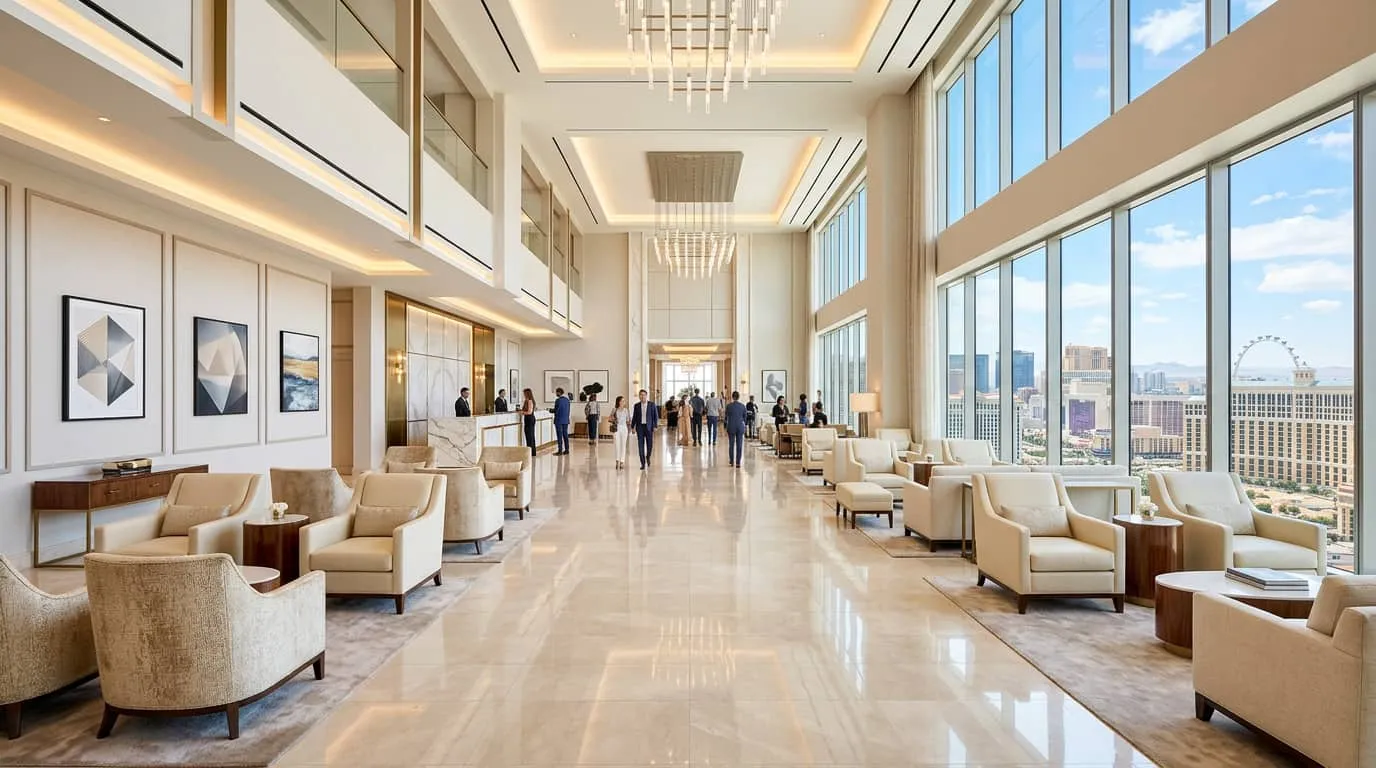
Las Vegas operates on a bar and nightlife economy unlike any other city in the world. The Strip's mega-resort lounges, dayclub pool bars, high-end cocktail rooms, and casino floor service bars all run at volumes and hours that most hospitality markets never experience. Fremont Street bar concepts cater to a different crowd than the Strip but operate with the same intensity long hours, high throughput, and guests who are there to stay awhile. The downtown Arts District has developed a growing cocktail and lounge scene oriented toward a design-conscious local and visitor market. Across all of these environments, one fact holds: bar and lounge furniture Las Vegas has to perform at a level that retail furniture cannot match, while still delivering the visual quality that guests expect from a city built on spectacle.
Commercial Specifications for Bar and Lounge Environments
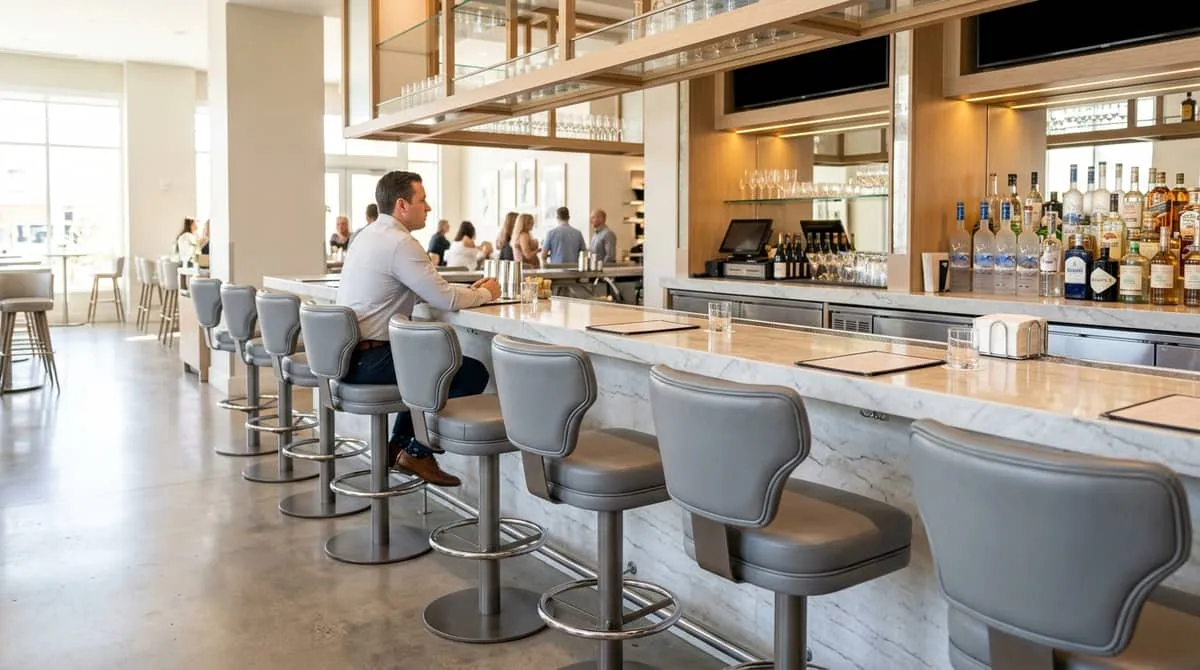
Bar and lounge furniture takes more structural punishment per seat than almost any other commercial environment. Barstools are the most obvious example. In a busy Strip casino bar, a barstool may see a thousand seating cycles per week guests climbing on and off, shifting weight, leaning back, tipping forward. The joinery and frame construction required to survive that usage pattern is categorically different from a residential barstool designed to sit at a kitchen counter.
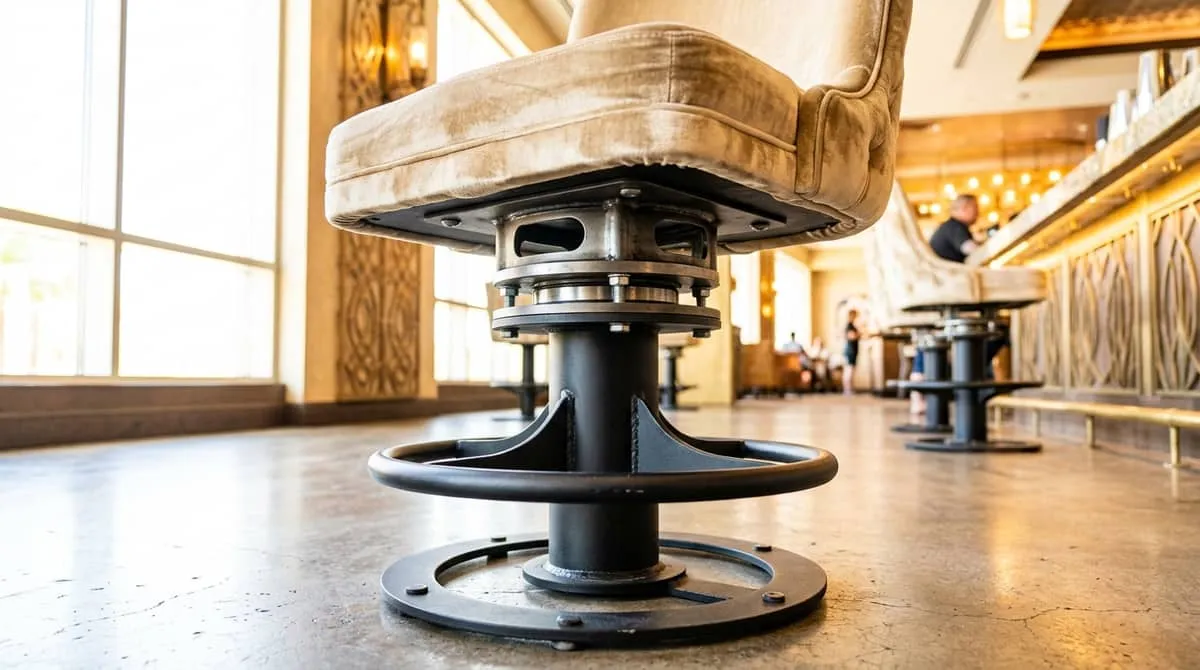
Commercial barstools are typically constructed with welded steel frames or hardwood frames using mortise-and-tenon or dowel joinery with glue-block reinforcement. Weight ratings for commercial seating should be 300 pounds or more, tested across a meaningful cycle count. Footrests on commercial barstools the point of maximum structural stress should be reinforced, not welded as an afterthought. Swivel mechanisms on swivel stools should carry commercial-grade bearings rated for sustained rotation, not residential-grade hardware that loosens within months under commercial load.
Lounge seating low sofas, club chairs, cocktail banquettes faces a different set of demands. Guests in Las Vegas lounge environments are often seated for extended periods, and the furniture absorbs the full range of what that implies. Upholstery fabrics need to be rated for 100,000 double rubs or more in high-traffic positions. Antimicrobial treatments are not optional in a nightlife environment they are basic hygiene infrastructure. Cushion foam should be high-density commercial grade, not the low-density residential foam that compresses and loses shape within a year of commercial use.
Surface materials on cocktail tables and lounge tables need to be cleanable with commercial products. Tempered glass, powder-coated steel, and resin surfaces all work well. Solid wood and veneer surfaces need durable, sealed finishes catalyzed lacquers or conversion varnishes that can handle liquid spills, glass condensation rings, and the cleaning chemicals your staff uses nightly.
Las Vegas Bar Design Context
Las Vegas bar and lounge design sets the aesthetic standard for the industry. The cocktail rooms, destination bars, and ultra-lounges on the Strip are among the most-photographed hospitality interiors in the world, and the furniture in those spaces is doing real design work not just providing somewhere to sit. That design pressure extends down-market. Even a mid-range casino bar or a Summerlin neighborhood cocktail lounge benefits from furniture that looks intentional rather than generic.
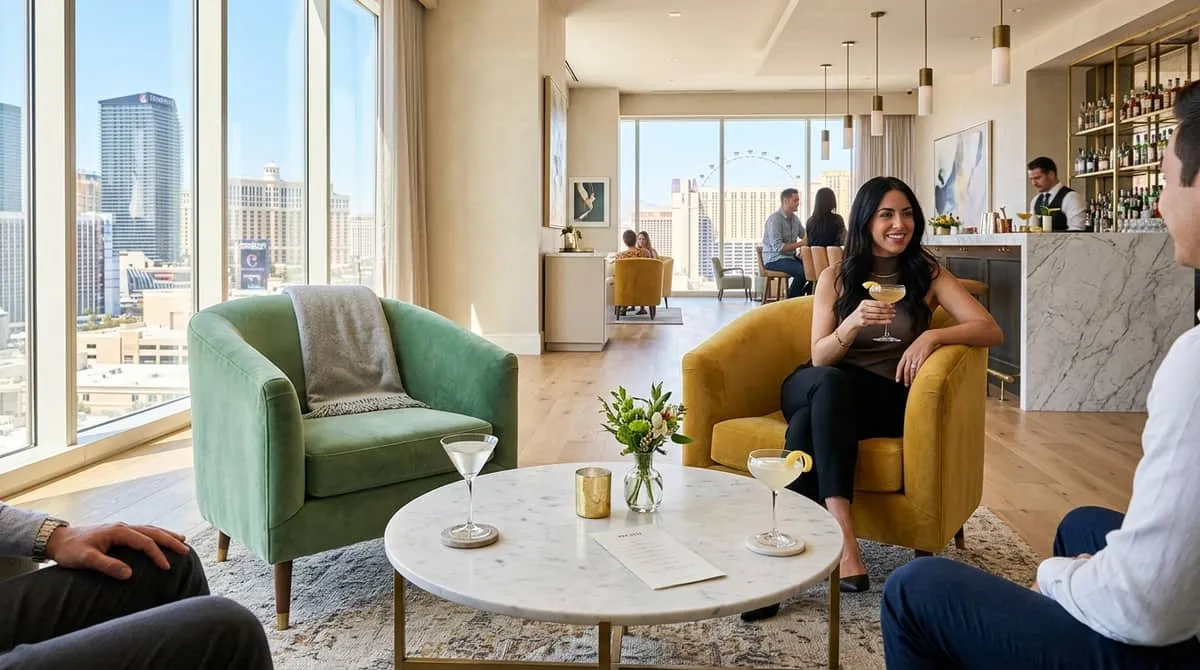
What this means for procurement is that bar and lounge furniture Las Vegas operators source needs to deliver on aesthetics as well as durability. Those two requirements are not in conflict commercial manufacturers who serve the hospitality market produce pieces with genuine design quality. But it does mean that working with a supplier who only sells commodity stacking chairs and basic barstools will not give you what you need.
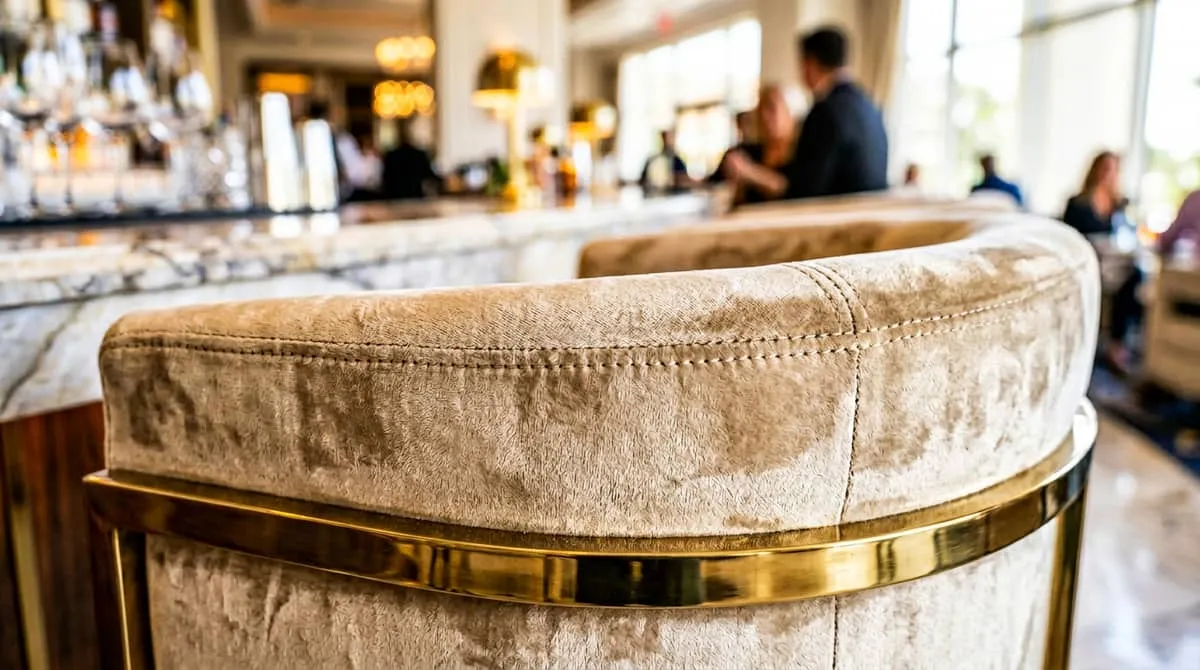
Custom upholstery programs are particularly important in this context. The velvet banquettes, leather-wrapped bar stools, and COM fabric club chairs that populate Las Vegas lounge interiors require suppliers with active COM capability the ability to take a fabric your designer has specified and apply it to a commercial-grade frame with proper construction. Not every commercial furniture supplier offers this, and the ones that do vary significantly in their ability to execute it with the quality and speed the Las Vegas market demands.
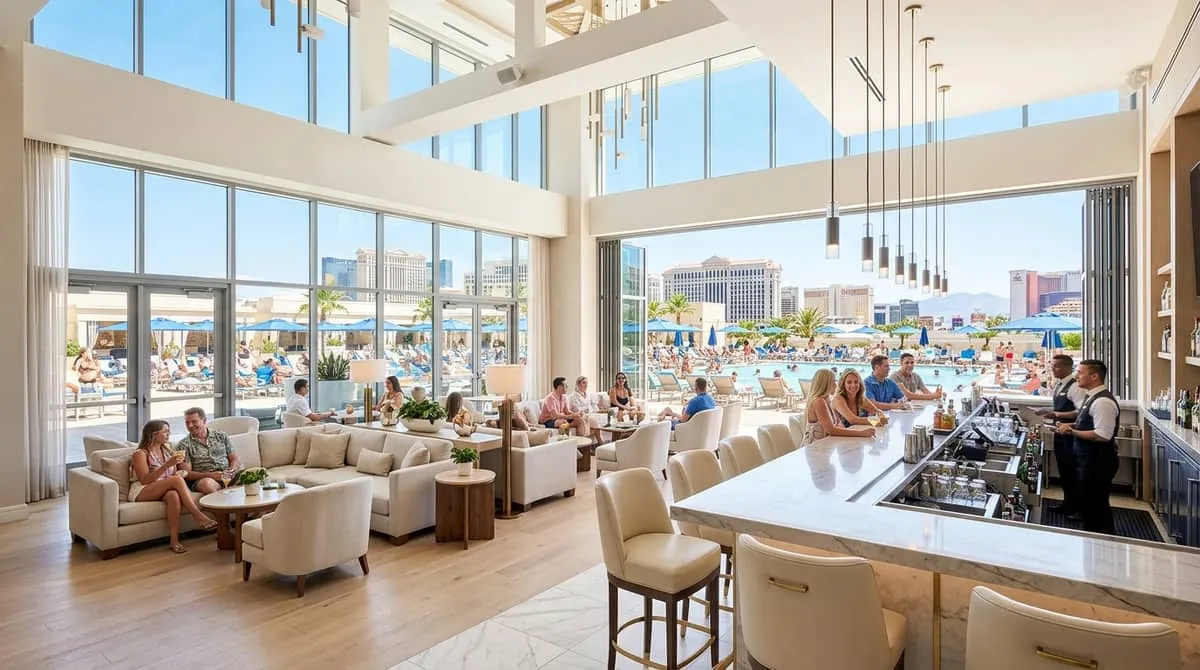
Outdoor bar and pool lounge furniture is a year-round category in Las Vegas. Dayclub pool bars, patio bar concepts on the Strip, and outdoor lounge seating at boutique Arts District properties all require furniture rated for sustained desert sun and outdoor use. Marine-grade aluminum frames with powder-coated finishes resist corrosion and UV degradation better than steel or resin in this climate. Solution-dyed acrylic fabrics Sunbrella and equivalent products maintain color and resist mold in conditions that destroy standard outdoor fabric quickly.
Barstool Height, Configuration, and Volume Considerations
Getting barstool height right before you order is critical, and it is worth measuring twice. Standard bar height is 40 to 42 inches from floor to bar top, pairing with 28 to 30-inch seat height stools. Counter height runs 34 to 36 inches, pairing with 24 to 26-inch stools. If you are ordering barstools for a custom millwork bar rather than a standard height, verify the exact measurement before finalizing your stool specification. Returning or exchanging a large barstool order because the height is wrong is an expensive problem that a single measurement prevents.
Quantity planning matters at Las Vegas scale. A casino bar or large lounge concept may need 50, 100, or 200 barstools across a single project. At that volume, minimum order quantities become a non-issue, and your leverage on custom options and pricing increases significantly. Work with a supplier who can give you a per-unit price that reflects your actual volume rather than a standard retail rate with a nominal discount.
Stacking capability is worth considering for lounge seating that needs to flex for events. Las Vegas casino properties frequently reconfigure lounge and bar areas for private events, convention meetups, and special programming around major fight nights and convention weeks. Furniture that stacks or breaks down easily reduces the labor cost of those reconfigurations and extends the operational flexibility of the space.
Lead times for custom bar and lounge furniture run 10 to 16 weeks for upholstered pieces, six to eight weeks for standard commercial seating and barstools in catalog finishes. If your opening or renovation is tied to a specific Las Vegas calendar date a major convention, a property rebrand, a seasonal opening back-plan from that date and add a buffer. Installation week in Las Vegas competes with every other project in a market that runs major events continuously.
Finding the Right Supplier for Your Las Vegas Venue
The bar and lounge segment in Las Vegas covers a wide range of property types and price points, and the right commercial furniture supplier for a 5,000-square-foot Strip ultra-lounge is not necessarily the right supplier for a 40-seat craft cocktail bar in the Arts District. Volume capability, custom program depth, and design expertise all differ, and your supplier evaluation should reflect the specific nature of your project.
Ask potential suppliers for hospitality references specifically from the Nevada market. A supplier who has executed bar and lounge projects in Las Vegas understands the convention calendar pressure, the installation logistics inside casino properties, and the design standards the market expects. A supplier who is new to the market may be technically capable but is likely to underestimate the complexity.
Ask specifically about warranties on barstool frames and lounge seating cushions. Commercial bar furniture from reputable manufacturers carries structural warranties of two to five years, with cushion density warranties that protect against premature compression. In a high-volume Las Vegas environment, that warranty coverage is not theoretical it will be tested.
Plan your bar and lounge furniture procurement as a complete project, not individual purchases. Sourcing your barstools from one supplier, your lounge seating from another, and your outdoor pieces from a third introduces coordination complexity and may cost you pricing leverage you would have had by consolidating. A supplier who can handle the full scope of your bar or lounge FF&E will give you better pricing, more coherent specification, and fewer installation headaches than a fragmented sourcing approach.
We quote bar and lounge furniture for Las Vegas operators against their own layouts and order sizes rather than a generic sheet. Request a quote and we will put together pricing for your property.
Related reading
- Commercial bar furniture buying guide
- What is contract furniture
- Commercial furniture vs retail
- Hospitality furniture supplier guide
- Commercial barstools
- Bar lounge chairs
- Bar and restaurant tables
- Commercial furniture in Nevada
Our take
The article recommends custom COM upholstery for the velvet banquettes and leather-wrapped pieces that define a Las Vegas lounge's design identity, and separately recommends stacking or knockdown capability for lounge seating in properties that reconfigure for events, fight nights, and convention weeks. Those two recommendations point at different product lines. Fully custom COM pieces built for a specific fabric and frame combination are generally not the same furniture family as catalog stacking or breakdown seating, so a property trying to get both from one program is asking a single specification to do two jobs it is not usually built to do.
The practical answer implied by the rest of the article, that a full-scope supplier reduces coordination headaches, still holds even when a property needs both product types. Splitting the program between fixed custom COM anchor pieces in the areas that do not need to reconfigure and a separate, coordinated-finish stacking inventory for the flexible zones keeps the design identity intact where it matters most while giving event-heavy areas the flexibility the article recommends.
The bottom line: Las Vegas venues that want both signature custom upholstery and frequent event reconfiguration should plan two coordinated but distinct furniture lines, fixed COM pieces for anchor areas and stacking or breakdown seating in a matched finish for flexible zones, rather than expecting one custom program to cover both needs.