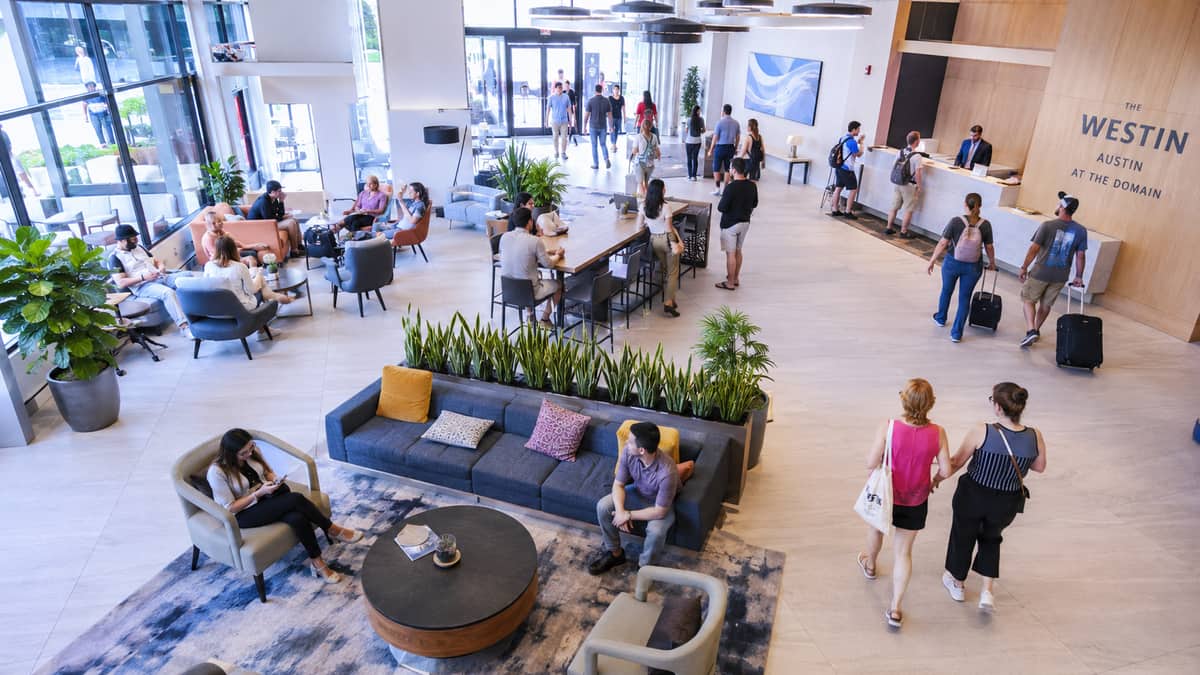
The hotel lobby in a Fort Wayne property has to work harder than in a lot of markets its size. During the week it is quiet, functional space for business travelers checking in after a drive up I-69 or a short flight into Fort Wayne International. On a convention weekend, or during a major Coliseum event, that same lobby becomes standing-room social space, guests gathering before heading out, groups waiting on shuttle transportation, staff processing a wave of check-ins in a compressed window. Furniture that looks right in the quiet version of that room and buckles under the surge version is a specification failure, not a bad-luck coincidence.
Seating That Handles Both Volume Extremes
Lounge seating in a Fort Wayne hotel lobby needs a frame rated for genuine commercial cycling, not the lighter-duty construction found in residential-adjacent hospitality lines. During a Coliseum concert weekend or a convention center trade show, a single lobby chair might be occupied by a dozen different guests in an afternoon, each sitting down, standing up, shifting position while checking a phone or waiting on a group. That is a fundamentally different use pattern than the steady, lower-volume traffic a quiet Tuesday produces.
High-resilience foam, rather than standard polyurethane, is worth the upgrade cost in lobby applications specifically because of this cycling pattern. HR foam recovers its shape faster and resists the permanent compression that standard foam develops after a few thousand cycles, which matters more in a lobby than almost anywhere else in the property.
Durability Details That Matter in a Four-Season Market
Fort Wayne's climate puts real demands on lobby furniture that a milder-climate market would not face. Winter foot traffic tracks in salt, grit, and moisture for months at a stretch, and lobby seating near entrances takes the brunt of it. Fabric and finish specifications need to account for that exposure even though the furniture itself sits indoors.
Performance upholstery rated for moisture and soil resistance holds up better near entrance zones than standard commercial fabric, and a solid hardwood or engineered frame resists the swelling and warping that humidity swings can cause over a multi-year service life. Ask your supplier specifically how their lobby collection is finished and rated for exposure near entrances, since not every commercial line accounts for that condition even when the rest of the piece meets standard contract specifications.
Coordinating the Full Lobby Program
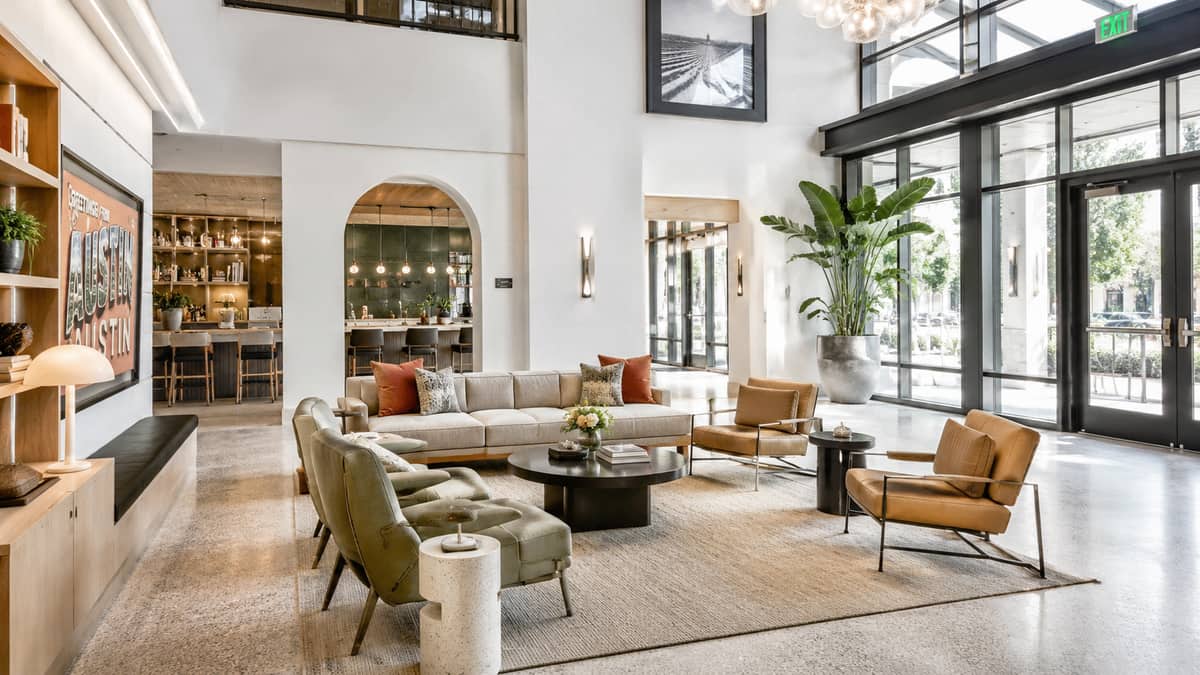
A hotel lobby reads as a single cohesive space, not a collection of separately purchased pieces, and that coherence comes from planning the seating, side tables, and casegoods together rather than sourcing category by category. Sofas, ottomans, and lounge chairs need to share a finish palette and a design language, even when they come from different product lines within a supplier's catalog.
For properties near the convention center or the Coliseum that see heavier group and event traffic, plan for more standing and gathering space relative to fixed seating than a purely leisure-focused property would need. Movable, lightweight side tables that can be reconfigured for a group waiting on a shuttle serve that traffic pattern better than a fixed, heavy coffee table arrangement.
Sourcing Lobby Furniture for a Fort Wayne Property
Lead times on lobby furniture programs typically run in line with standard contract furniture timelines, 10 to 16 weeks for domestic product, longer for custom fabric or finish programs. Because lobby furniture is highly visible and central to a guest's first impression of the property, build extra time into your review process for sample approval rather than rushing that decision to hit an install date.
Request a quote with your lobby square footage and seating count, and ask your supplier to walk through both the everyday use case and the peak event surge case before finalizing your specification.