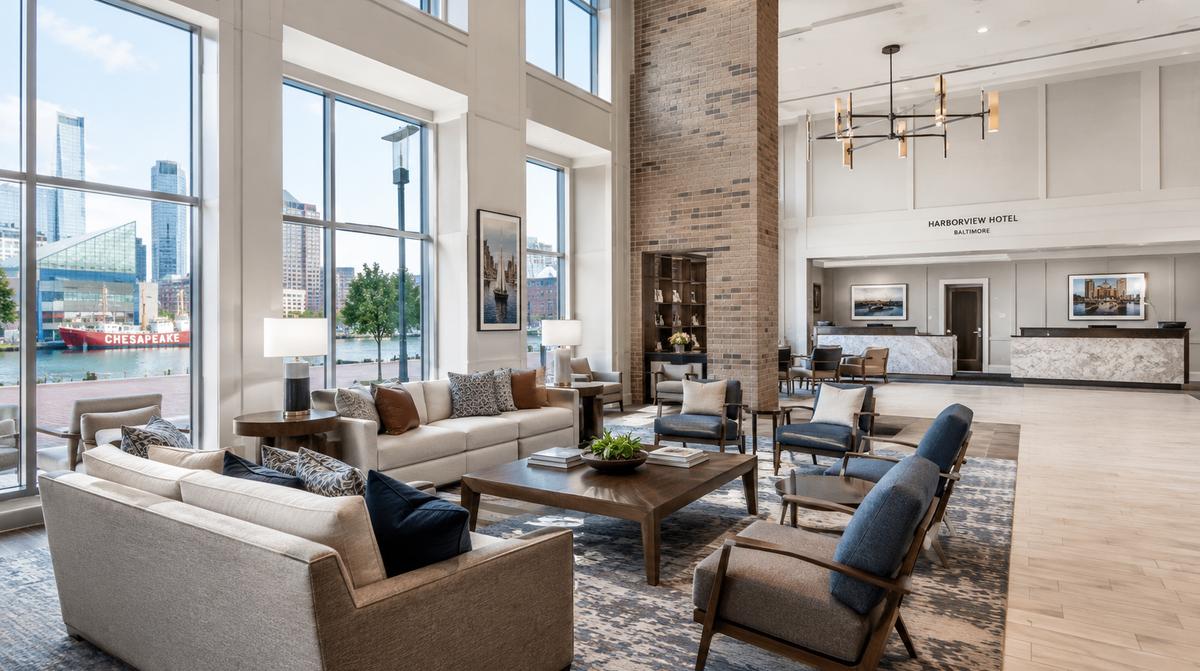
A Bison football fan checks out of a downtown Fargo hotel on Sunday morning, still wearing yellow and green, and by Sunday night the same lobby chair is holding a Sanford Health traveling physician who flew in for a Monday shift. Two days later it might be a farm equipment buyer working through a spec sheet before a meeting out toward West Fargo, or a Concordia parent visiting for a weekend event. Fargo's hotel lobbies turn over their audience constantly, and the furniture in that room has to read as right for all of them without looking like it was chosen for none of them in particular.
That turnover is not incidental to Fargo's hospitality market, it is the market. The metro sits at the intersection of a college town, a regional medical hub anchored by Sanford Health and Essentia Health, an agricultural and energy business corridor pulling in Bakken-adjacent traffic, and a Fargodome events calendar that can fill every hotel within five miles on a football or concert weekend. Your lobby furniture is doing real work across all of those guest types, and how it holds up physically and visually is a business variable, not a decorating choice.
Fargo's Market Segments Demand Different Things From the Same Room
Fargo's hospitality market is segmented in ways that matter directly for furniture specification. The branded properties clustered along 13th Avenue and near the Fargodome and NDSU are managing event-driven volume that can spike hard on a Saturday and go quiet by Tuesday. The boutique and independent hotels downtown along Broadway and NP Avenue are chasing a different guest entirely, one who has options in a revitalized downtown and is choosing based on how the property presents itself. Both segments need contract-grade construction, but the design brief is not the same.
The Fargodome-adjacent and interstate-corridor hotels are built for volume swings. A property near the dome can seat a lobby full of traveling teams, tailgate crowds, and concert-goers on a Friday and Saturday, then sit at half occupancy with business travelers by midweek. That inconsistency is hard on furniture in a specific way, pieces get pushed together for group check-in, dragged apart for luggage staging, and sat on by guests coming in from a parking lot in whatever the weather happens to be doing. Kiln-dried hardwood or steel frames, high-resilience foam rated for commercial use, and performance textiles rated well above standard retail-grade fabric are not upgrades in this context, they are what keeps a lobby looking presentable past year two.
Downtown Fargo's boutique and independent properties along Broadway and the NP Avenue corridor are competing on a different register. The guest booking one of these has usually already looked at photos and picked the property because of what it signals, a design story tied to the neighborhood's converted warehouses and historic storefronts. Furniture that reads as a standard branded-chain package undercuts that story fast. Here durability still matters, but the visual judgment behind the specification, scale, silhouette, and material choice, carries as much weight as the construction spec sheet.
What Fargo's Climate Actually Does to Lobby Furniture
North Dakota's climate is a genuine durability variable that gets underweighted more often than it should be. Fargo runs bitterly cold and dry for a large part of the year, with stretches well below zero from December through February, and guests are walking into the lobby carrying snow, road salt, and slush on their boots for months at a stretch. That moisture load hits upholstery and finish surfaces directly, particularly on chair arms, ottoman tops, and any fabric near floor level where boots and bags make contact.
The dry side of the climate matters just as much as the cold. Forced-air heating systems running for months at a stretch pull humidity out of the indoor air, and that dryness is hard on wood finishes, leather and leather-alternative upholstery, and glue joints in lower-grade frame construction. Finishes that were not built for a low-humidity environment crack and check faster than they would in a milder climate, and leather that is not properly treated stiffens and splits. Frame construction with mechanical fasteners that can be re-tightened, rather than staples or particleboard joinery that only tolerates one season of expansion and contraction, handles Fargo's seasonal swing far better over a five-year furniture life.
Salt and moisture resistance in upholstery fabric is a baseline call for Fargo lobbies, not an upgrade tier. Stain-resistant, cleanable performance textile lets housekeeping actually get salt residue and slush stains out of a cushion without degrading the fabric surface, which is the difference between furniture that looks presentable through a full winter and furniture that needs replacing by the following fall.
Designing for the Arrival Experience in Fargo's Signature Spaces
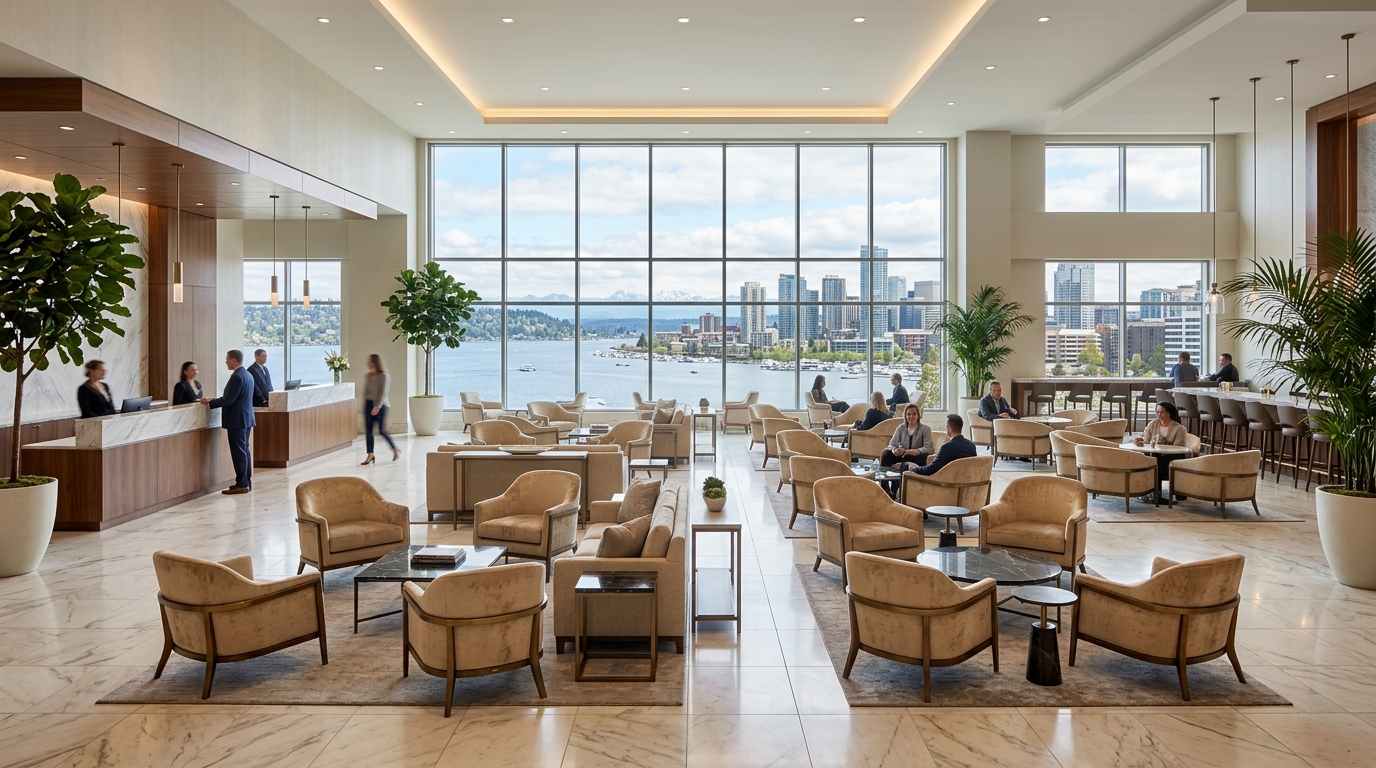
The lobby arrival sequence is choreographed whether a property plans it or not. Guests process the room in order, primary seating first, then the desk, then the path to elevators or the connecting corridor, and every piece in that path is communicating something before staff says a word.
In the hotels serving the Fargodome, NDSU, and the 13th Avenue corridor, the guest mix trends toward event travelers, recruiting families, and business travelers who have seen a lot of lobbies on the road. Furniture that reads as right here has a solid, uncomplicated silhouette, quality upholstery that holds its shape after a full weekend of heavy use, and a scale that fits rooms built for volume rather than intimacy. Nothing about it should suggest it was bought to fill floor space.
Downtown properties along Broadway and near the river toward Moorhead are competing on a different set of expectations, closer to what a design-forward traveler expects from a converted-building boutique hotel in a bigger market. Lower-profile lounge seating, tighter upholstery detailing, and side tables in material that reads as intentional rather than standard-issue laminate all matter here. A property that has invested in the building's historic character and then furnishes the lobby with a generic contract package undercuts the very story it is trying to tell.
Procurement Timing for Fargo's Renovation and Event Calendar
Fargo's hotel development has kept a steady pace, with downtown conversion projects and corridor renovations both active, and the Fargodome's event calendar sets a hard deadline that furniture procurement has to respect. Contract-grade furniture is built to order, and standard commercial lead times run eight to twelve weeks from a confirmed specification. Custom fabric programs, non-catalog finishes, and any frame modification add coordination time on top of that baseline.
A property renovating ahead of a major Bison football season, a Sanford Health facility expansion driving traveling staff volume, or a downtown grand opening needs those lead times built into the schedule from day one. Placeholder furniture that gets replaced inside a year costs more in review scores, staff time, and a second purchase cycle than getting the specification right the first time. Working with a supplier who commits to real lead times, has hospitality experience at your property's scale, and can run a COM program when the design calls for it is worth more than a lower unit price from a vendor treating a hotel lobby order like a retail transaction.