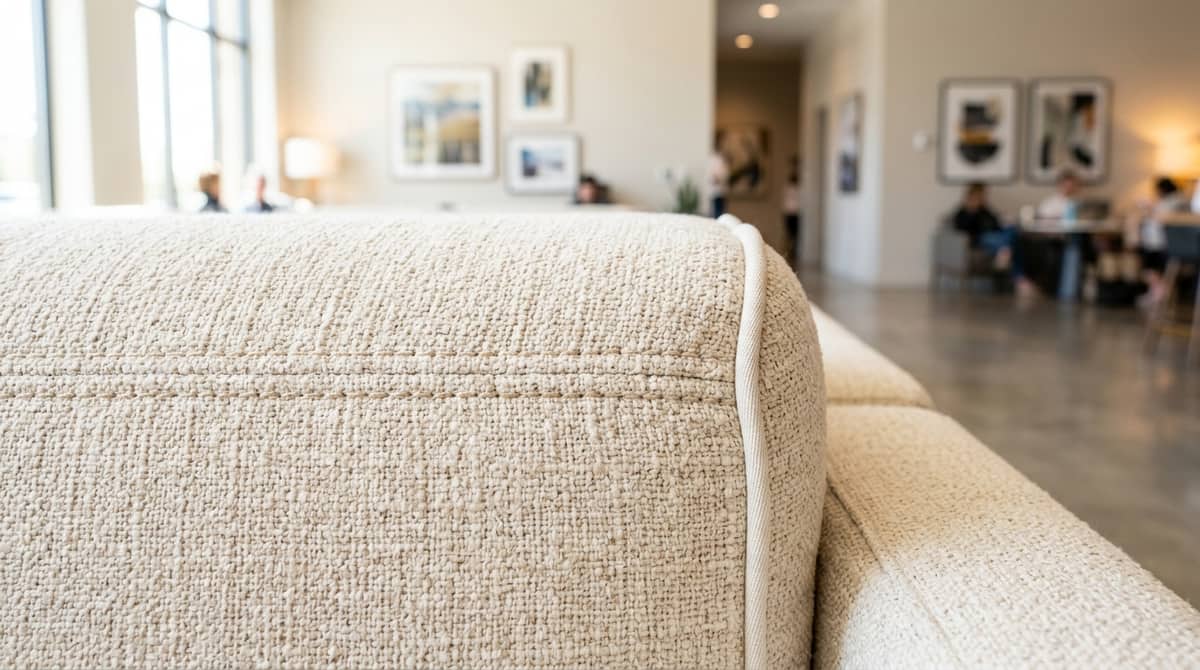
A families' basketball tournament wraps up at the Birmingham-Jefferson Convention Complex on a Sunday afternoon, and within an hour the lobbies of the downtown hotels lining that corridor are absorbing hundreds of check-outs at once. A few miles south, a couple checks into a boutique property near Five Points South for a weekend built around dinner reservations and a walk through the UAB campus district. Neither guest says a word to the front desk before they have already read the room. Your lobby furniture is the first thing doing the talking, and in Birmingham's hotel market that first read matters more than most operators budget for.
Birmingham's hospitality footprint runs on two distinct engines: a steady convention and sports-tourism calendar anchored by the BJCC and Protective Stadium, and a growing boutique and lifestyle segment concentrated downtown, in Lakeview, and around Five Points South. Both segments need furniture that survives daily commercial use, but the specification brief looks different depending on which guest is walking through your door, and getting that brief right is a direct driver of guest satisfaction and asset life.
Birmingham's Market Segments Demand Different Things From the Same Room
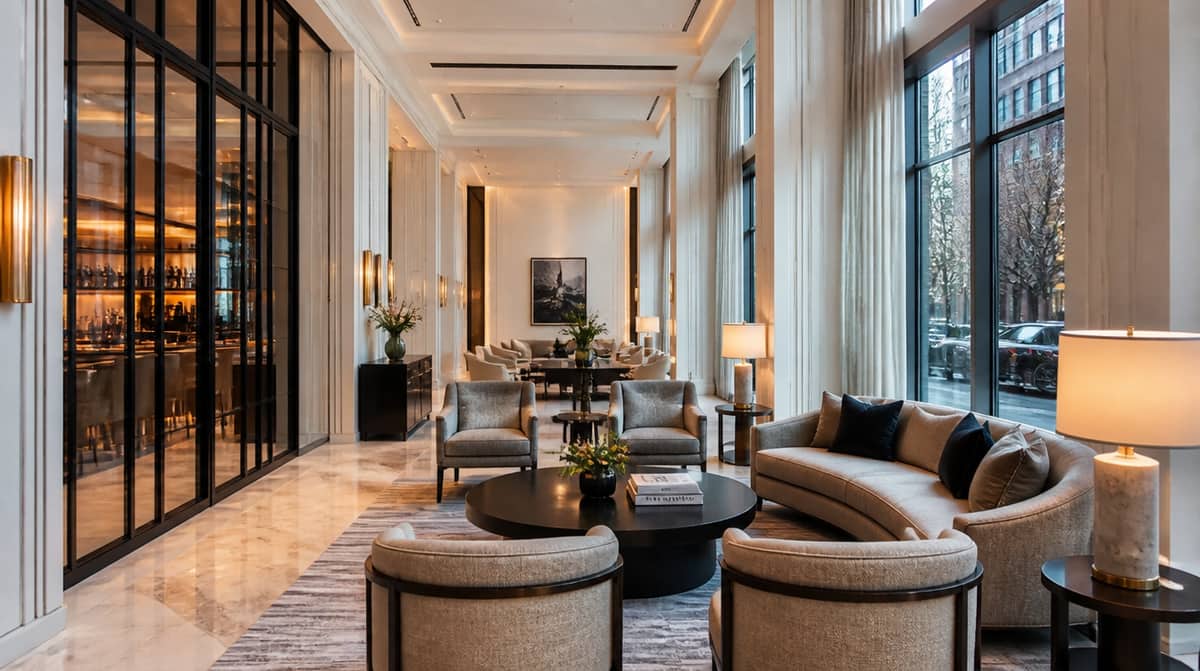
The hotels clustered around the BJCC, Protective Stadium, and the Uptown entertainment district are managing lobby traffic on a scale that punishes anything under-specified. A convention weekend, a Southeastern Conference sports event, or a graduation cycle tied to UAB and Samford University can push more guests through a lobby in a single day than a boutique property sees in a month. At that volume, upholstery fabric, frame joinery, and glide hardware are all racing against time. Furniture that looked sharp at opening will show fabric pilling, loose joints, and delaminating veneer within a year or two if it was not built for this category of use. Kiln-dried hardwood frames, high-resilience commercial foam, and performance textiles rated well above 100,000 double rubs are not upgrades in this context, they are the baseline.
The boutique and lifestyle properties reshaping downtown Birmingham, Lakeview, and the Five Points South corridor are managing a different expectation entirely. The guest booking a design-forward property near Railroad Park or the Lakeview entertainment district has already scrolled through the photos and chosen the hotel because of what it signals. Furniture in that lobby is part of a curated story tied to the city's industrial heritage, brick and steel motifs that nod to Sloss Furnaces and Birmingham's iron and steel history without leaning on cliché. Pieces that read as catalog-standard undercut that story fast. Durability is still non-negotiable, but design judgment carries equal weight with rub counts in this segment.
What Birmingham's Climate Actually Does to Lobby Furniture
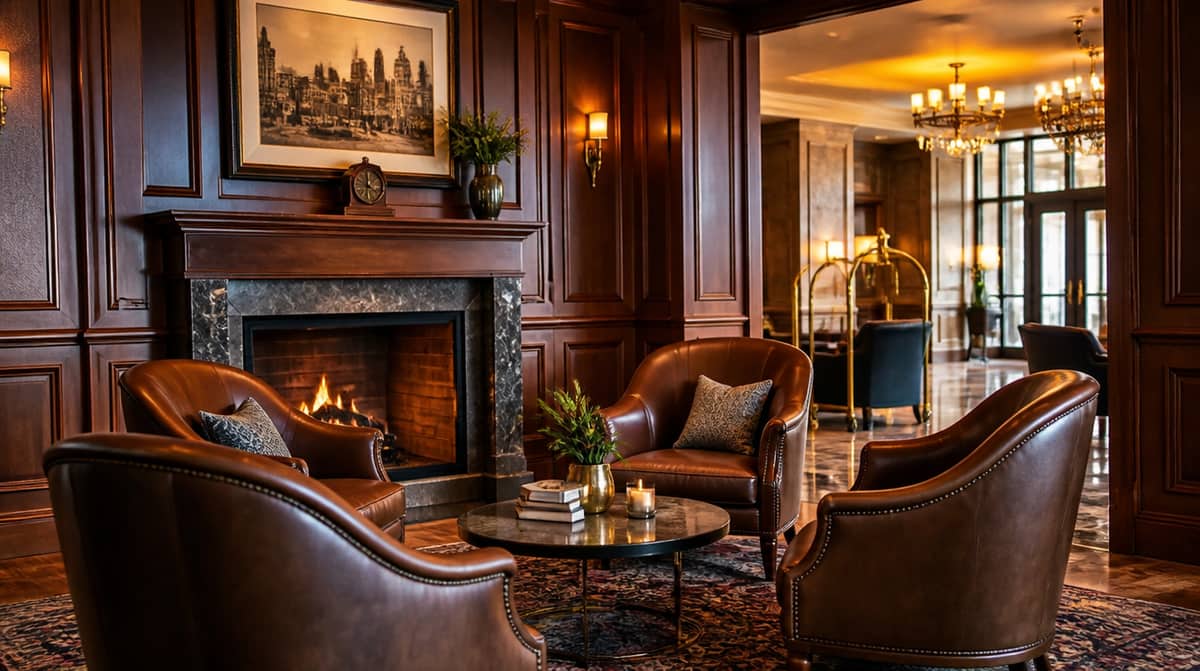
Alabama's climate is a real durability factor that gets underweighted in a lot of lobby furniture decisions. Birmingham runs hot and humid from May through September, with heat index readings that regularly push past 95 degrees, and guests are walking straight from that heat into air-conditioned lobbies carrying moisture, condensation-slicked drink cups, and damp bags that land directly on upholstered surfaces.
That moisture load is exactly why performance textile specification matters here, for the same underlying reason it matters in coastal or high-humidity markets across the Southeast. Upholstery that is not rated for moisture resistance shows degradation in the fabric face and in the foam beneath it, particularly at seat cushions and chair arms where hands and bags make constant contact. Stain- and moisture-resistant treatments are not a nice-to-have for a Birmingham hotel lobby, they are a baseline call, and skipping that call is how operators end up replacing furniture at the thirty-month mark instead of the sixty-month mark.
Frame construction matters just as much. Solid hardwood or steel frames with reinforced corner blocking and mechanical fasteners that can be re-tightened handle the seasonal expansion and contraction that comes with Alabama's humidity swings. Particleboard components absorb ambient moisture and swell, which loosens joints and accelerates structural failure. In a lobby where seating gets rearranged for a wedding block, a corporate meeting, or holiday decor, frame integrity under repeated movement is a practical requirement, not a spec sheet formality.
Designing for the Arrival Experience in Birmingham's Signature Districts
Guests process a lobby in a predictable sequence: the primary seating cluster first, then the front desk, then the path toward elevators. Every piece in that sequence is communicating something before a single staff interaction happens.
In the downtown corridor near the BJCC, Protective Stadium, and the Uptown entertainment district, the guest demographic skews toward conference attendees, sports fans, and corporate travelers who have seen a lot of hotel lobbies and can spot a generic package immediately. Furniture that reads as right here has clean lines, upholstery that holds its shape through heavy turnover, and a scale that fits the room rather than crowding it. A lounge chair with a confident silhouette in a durable, textured neutral communicates the same message as efficient check-in and clean signage: this property is run with intention.
Boutique properties in Lakeview, Five Points South, and the loft and warehouse conversions scattered through downtown are competing on a different register. Guests here are choosing a specific aesthetic tied to Birmingham's brick-and-steel character and its emerging food and arts scene. Low-profile lounge seating with tight backs, leather or leather-alternative accents, and side tables in materials that reference wood or metal rather than laminate read as appropriate to that story. Furniture that looks like a standard national-brand package reads as a mismatch against the neighborhood and the rate.
For properties adjacent to the BJCC and Protective Stadium, the priority shifts toward efficient movement. Guests arriving after a long travel day or an event load-out want to orient quickly and get to their room. Lobby furniture needs seating clusters that do not create bottlenecks between door, desk, and elevator, chairs that are easy to exit with carry-on luggage in hand, and groupings that can be reconfigured quickly when the property hosts a private event during a busy convention week.
Procurement Timing and Birmingham's Renovation Cycle
Birmingham's hotel development has kept a steady pace, with new builds and adaptive-reuse conversions opening downtown and near the medical district around UAB, alongside renovation work on legacy properties updating their common areas. That pace creates real scheduling pressure around furniture procurement.
Contract-grade furniture is built to order, and standard commercial pieces typically run eight to twelve weeks from confirmed specification. Custom or semi-custom work, COM fabric programs, frame modifications, non-catalog finishes, adds coordination time on top of that baseline. Projects that push furniture decisions to the back half of a construction schedule tend to run into the same problem twice: the pieces that arrive on time are not the right pieces, and the right pieces do not arrive on time.
If your property has an opening date tied to a convention booking, an SEC sports weekend, or a graduation season that drives advance reservations, those lead times need to be built into the project timeline from day one. The cost of opening with placeholder furniture and replacing it inside the first year, measured in review scores, staff time, and a second capital outlay, is higher than the cost of getting the specification right the first time.
Working with a supplier who commits to clear lead times, who understands hospitality projects at your property's volume and rate category, and who can run a COM program when your design team has a specific material story to tell, is worth more than a marginally lower unit price from a vendor treating a hotel lobby order like a retail transaction. In a market as active as Birmingham's right now, the difference between furniture that confirms a guest's booking decision and furniture that introduces doubt is a revenue variable, not just an aesthetic one.