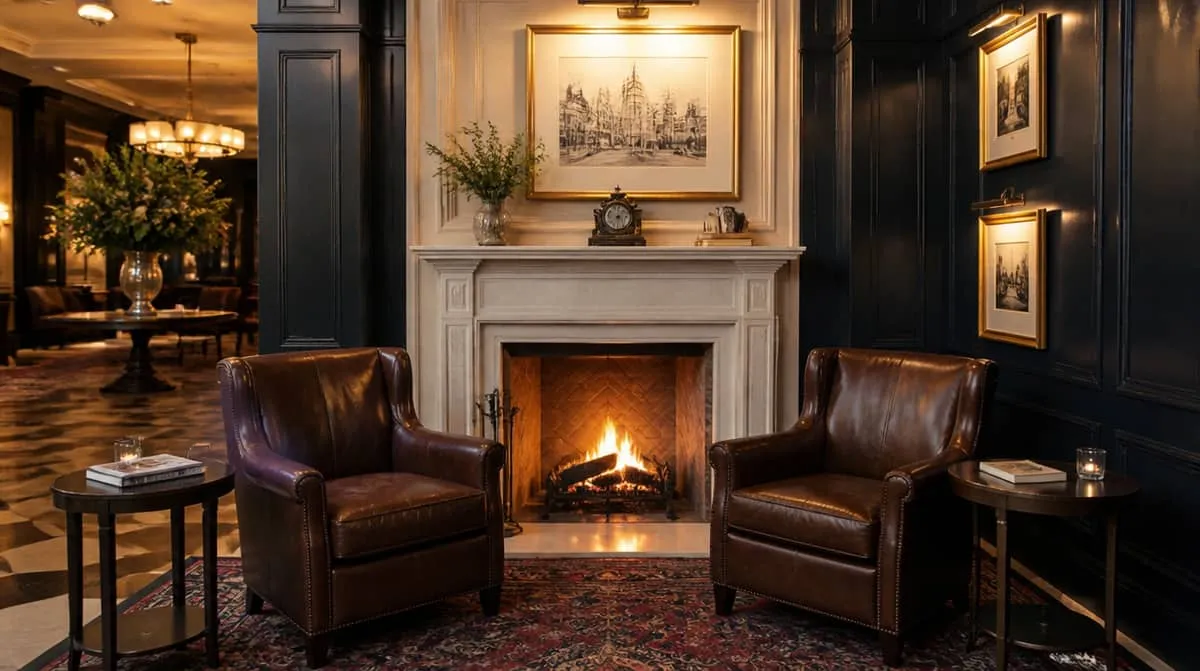
A rideshare pulls up outside a downtown property a few blocks from the Albuquerque Convention Center, and a delegate steps out still carrying a lanyard from a full day of sessions. Ten minutes later, across town near Old Town Plaza, a family checks in after a full day of green chile, turquoise shops, and a sunset view of the Sandia Mountains. Both guests walk into a lobby and read it instantly, before anyone greets them at the desk. The furniture in that room, its scale, its finish, its condition, tells them whether the property matches the rate they just paid.
That first read matters more in Albuquerque than a lot of operators account for. The city runs a steady convention and meetings calendar downtown, hosts the largest gathering of hot air balloons on earth every October when the Balloon Fiesta pulls hundreds of thousands of visitors into local hotels, and sees a growing stream of film production crews staying for weeks at a time as New Mexico's film industry keeps expanding. Your lobby furniture is carrying real business weight across all three of those guest types, and how it performs physically and visually is not a cosmetic detail. It is a specification decision with revenue attached.
Albuquerque's Market Segments Demand Different Things From the Same Room
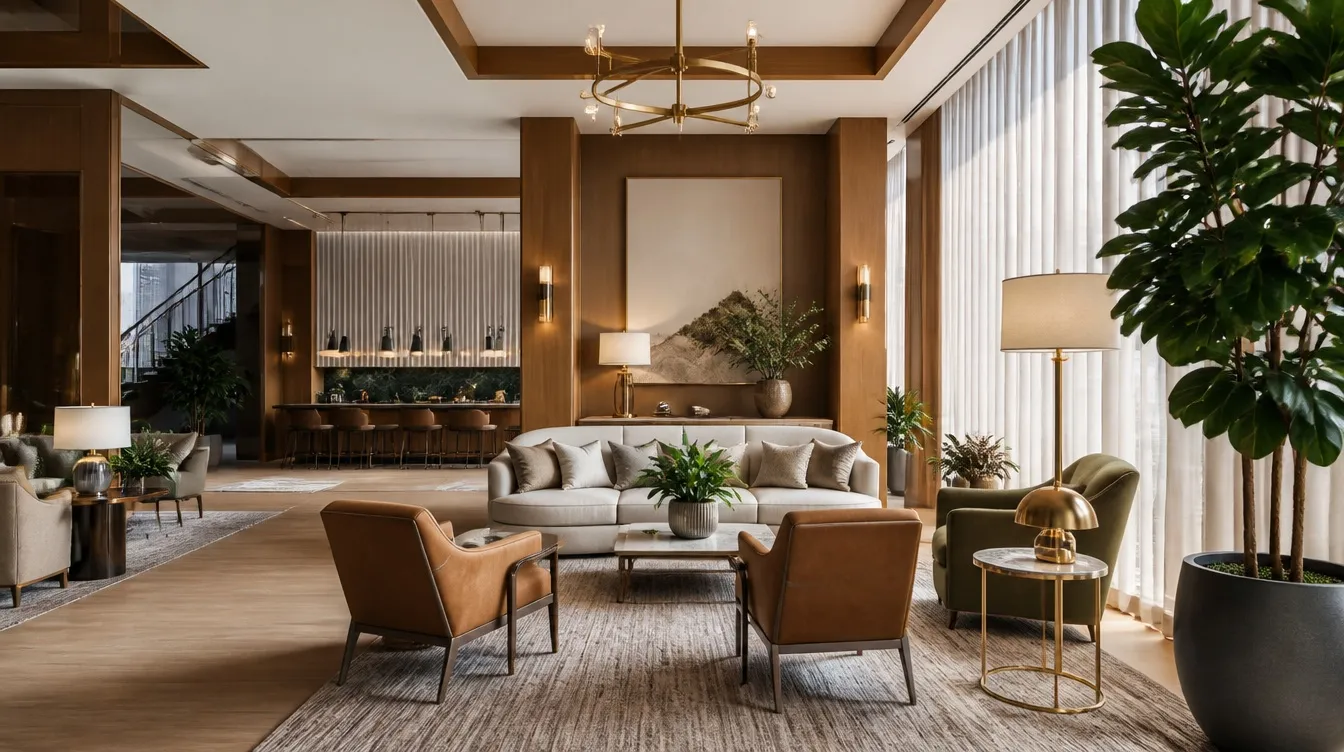
Albuquerque's hospitality market splits along fairly clear lines, and each segment has a different furniture brief even when the underlying construction standard has to be the same. The downtown and convention-corridor hotels serving meetings at the Albuquerque Convention Center face a volume and durability problem. The boutique and historic properties around Old Town and Nob Hill are managing something closer to a design argument. Both need contract-grade construction underneath, but the specification that succeeds in one segment can look wrong in the other.
Convention-adjacent properties downtown and along Central Avenue are cycling large blocks of guests through the lobby on a tight schedule, especially during Balloon Fiesta week or a major trade show, when checkout traffic compresses into a narrow morning window. At that volume, joinery, glide hardware, and upholstery all take a beating fast. Furniture that was not built for commercial use shows loose frames, worn arm caps, and flattened cushions well inside two years. Kiln-dried hardwood or steel frames, high-resilience foam rated for commercial seating, and performance fabrics rated well above 100,000 double rubs are not an upgrade tier in this segment. They are the minimum spec that keeps a lobby looking finished between renovation cycles.
Old Town and Nob Hill boutiques are competing on a different axis. A guest booking a small, design-forward hotel near the plaza or along Route 66's Nob Hill stretch has already chosen the property for its character, often built around adobe-style architecture, exposed vigas, and a Southwestern material palette that reads as authentic rather than themed. Furniture that looks like a generic national-brand package undercuts that story immediately. Here the durability floor is identical to the downtown segment, but the design judgment, finish tone, and silhouette have to earn their place in a room that is selling atmosphere as much as a bed.
What Albuquerque's Climate Actually Does to Lobby Furniture
New Mexico's high desert climate is a durability variable that gets underweighted more often than moisture does in humid markets, but it is just as real. Albuquerque sits above a mile in elevation, runs extremely dry for most of the year, and swings through wide daily temperature ranges, hot sun through the afternoon, a sharp drop after sundown. Lobbies with large west- or south-facing glazing, common in properties built to showcase Sandia Mountain views, take direct sun exposure for hours at a stretch.
That combination of intense UV and low humidity is hard on upholstery fabric and foam in a way that is easy to miss until it has already happened. Untreated or lower-grade fabrics fade and become brittle faster under sustained UV exposure than they would in a market with more cloud cover, and foam that is not rated for commercial use can lose resilience prematurely when it dries out repeatedly rather than cycling through humidity. Fade-resistant, UV-stable performance textiles are a baseline call for any Albuquerque lobby with meaningful daylight exposure, not a specialty add.
Frame construction matters here too, though for a different reason than in wetter cities. Dry air pulls moisture out of wood over time, and lower-grade particleboard or veneer components can separate or crack at the joints as they lose moisture content across repeated seasonal cycles. Solid hardwood frames with mechanical fasteners that can be re-tightened, rather than glue-only construction, hold up through Albuquerque's dry-to-dry seasonal swing and through the repositioning that happens whenever a lobby gets rearranged for a Balloon Fiesta viewing party or a downtown conference reception.
Designing for the Arrival Experience in Albuquerque's Signature Spaces
Guests read a lobby in a predictable sequence, seating cluster first, then the desk, then the path toward elevators, whether a property has designed for that sequence or not. Near the Convention Center and the government and business district along Civic Plaza, the guest mix leans toward meeting attendees, state and municipal visitors, and business travelers who have seen a lot of hotel lobbies and register quickly whether a room was specified with intention. A well-scaled lounge chair in a durable neutral fabric, sized correctly for the ceiling height common in Albuquerque's mid-rise downtown properties, communicates the same competence as a smooth check-in process.
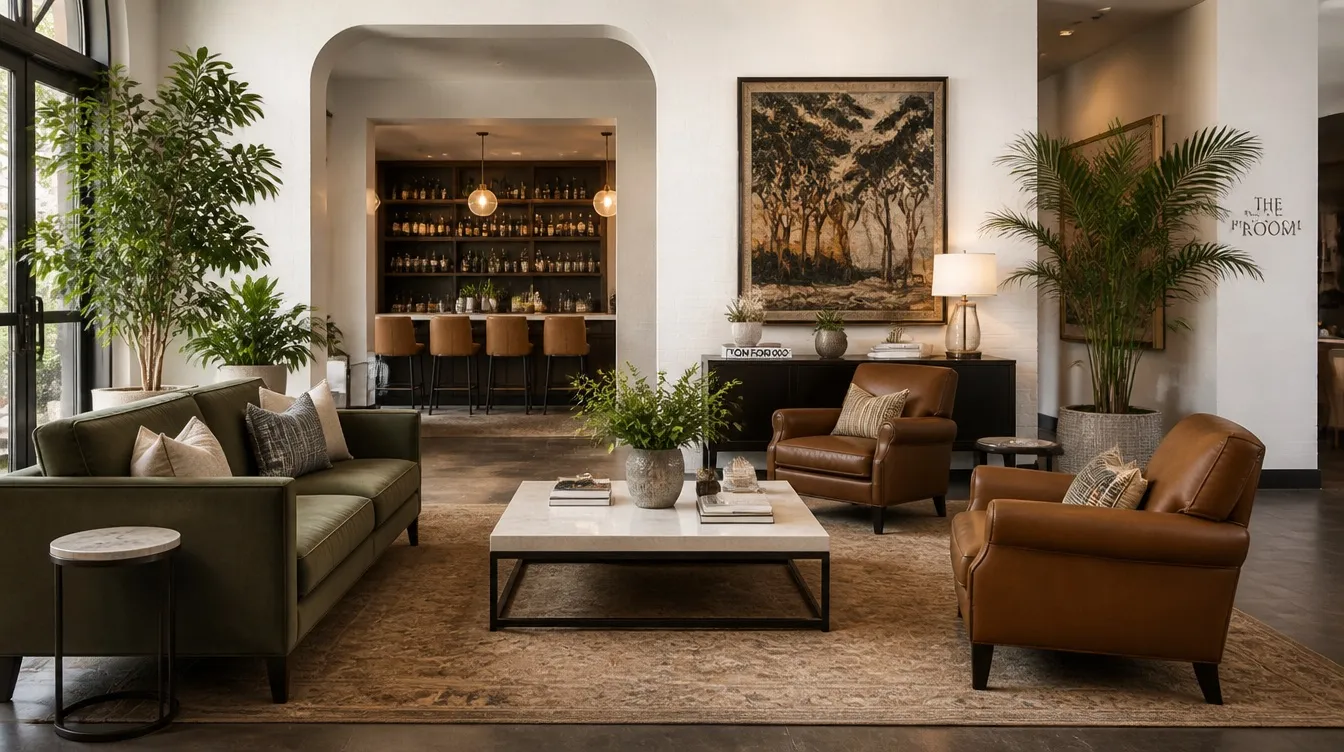
Old Town and Nob Hill properties are working a different register entirely, one where Southwestern material cues, leather or leather-alternative accents, wood tones that read warm rather than corporate, and low-profile silhouettes support the historic or artisan story the property is telling. Furniture that looks pulled from a standard national chain package reads as a mismatch against a neighborhood built on adobe storefronts and independent galleries.
Airport-adjacent properties near the Sunport and the Journal Center business corridor to the north carry a third priority: guests arriving after a long travel day or a film production call time want to orient fast and move through. Lobby furniture in that segment needs to support efficient traffic flow, seating that does not create a bottleneck between the entrance and the desk, and configurations that can be cleared quickly when a property is hosting a crew meeting or an early check-in wave tied to production schedules.
Procurement Timing and Albuquerque's Renovation Cycle
Albuquerque's hotel market has kept a steady pace of renovation and new development, driven by convention demand downtown, boutique conversions around Old Town and Nob Hill, and a film industry that keeps pushing extended-stay demand near the studio corridor. That pace puts real pressure on furniture procurement timelines.
Contract-grade furniture is built to order, and standard commercial lead times run eight to twelve weeks from confirmed specification. Custom or semi-custom work, COM fabric programs, frame modifications, non-catalog finishes, adds coordination time on top of that baseline. Properties that push furniture decisions to the back half of a renovation schedule tend to hit the same wall: whatever arrives on schedule is not the right specification, and the right specification does not arrive on schedule.
If your property's opening or renovation is tied to Balloon Fiesta season, a major convention block, or a production schedule with a hard start date, those lead times need to be built into the project plan from day one. The cost of opening with placeholder furniture and replacing it within the first year, in guest review scores, in staff time, in a second capital outlay, is consistently higher than the cost of getting the specification right the first time. Working with a supplier who can commit to real lead times, who understands hospitality volume at your property's rate category, and who can run a COM program when your design team has developed a specific material story, is worth more than a marginally lower unit price from a vendor treating a hotel lobby order like a retail purchase.
Ready to spec hotel lobby furniture for your Albuquerque project? Send us the details and we will price it around your requirements. Request a quote to start.