Salt Lake City hotels face an unusually compressed demand calendar: ski season peaks from November through April, Sundance Film Festival floods January with high-spending guests, and the Salt Palace Convention Center keeps occupancy elevated the rest of the year. Furniture in this market doesn't get the off-season recovery time that properties in slower cities enjoy. That means durability, lead-time planning, and spec quality aren't nice-to-haves they're operational necessities.
A Market Built on Back-to-Back Demand Cycles
Salt Lake City's hospitality market is structured around a series of overlapping demand drivers that keep hotels running near capacity across all twelve months. The Silicon Slopes corridor anchoring Adobe, Qualtrics, Ancestry, and Nu Skin headquarters along the Wasatch Front generates consistent corporate transient travel throughout the year. Delta's hub at SLC creates a steady pipeline of business travelers connecting between coasts, and many of those guests are staying multiple nights, meaning guestroom furniture sees heavy use with expectations closer to a luxury product than a budget motel.
Downtown Salt Lake City, particularly the blocks surrounding Temple Square and the Salt Palace Convention Center, draws large group business. The convention center routinely hosts events exceeding 10,000 attendees, and the hotels that cluster nearby from Marriott-flagged full-service properties to independent boutique hotels in the Granary District compete on the strength of their public spaces and guestroom experience to capture that group business.
Then there's the ski gateway effect. Properties near the I-15/I-80 interchange position themselves as the launch point for Alta, Snowbird, and Park City all within 30 to 45 minutes of the airport. These hotels fill from Friday through Sunday with weekend ski traffic and often mid-week with destination ski packages. Guest expectations have been shaped by the resort properties in those canyons: mountain contemporary aesthetic, warm materiality, and furniture that reads as intentionally designed rather than off-the-shelf.
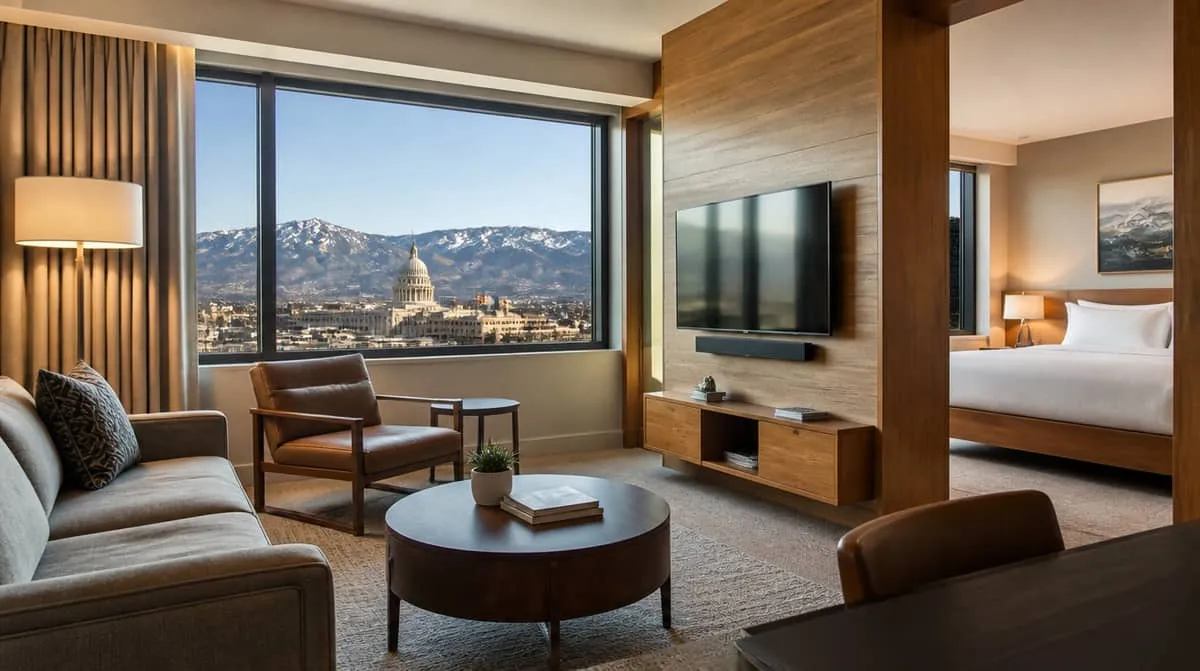
Lounge chairs in lobby environments here need to handle the reality of guests returning from a day on the slopes: damp outerwear, ski boots, heavy bags. Upholstery specs should prioritize performance fabrics with high Martindale rub counts and moisture resistance, without sacrificing the warm, residential feel that mountain contemporary design demands.
Designing for Mountain Contemporary SLC's Signature Aesthetic
The dominant design language across Salt Lake City's better hotels pulls heavily from the resort properties that define the Wasatch region's character. Think Park City's high-end ski lodges: clean structural lines, natural wood in warm tones like Douglas fir and white oak, stone and concrete as grounding elements, and textiles that reference natural wool and organic textures. This is not the spare minimalism of a Pacific Northwest tech hotel or the jewel-tone maximalism of a boutique property in Nashville. Mountain contemporary is warmer, more tactile, and more architecturally honest about the natural materials involved.
For hotel furniture suppliers working in this market, that aesthetic translates into specific requirements. Wood species and finishes matter: lighter, wire-brushed white oak reads as contemporary mountain without feeling rustic. Upholstery should lean toward heather textures, natural linens, and performance wools in earthy neutrals stone, sage, slate, warm cream. Metal accents in brushed bronze or blackened steel anchor pieces without feeling industrial.
Sofas in lobby settings benefit from modular configurations that can accommodate both the solo business traveler working on a laptop and the ski group of six needing to spread out gear and plan the next day's runs. Headboards in guestrooms should incorporate natural wood detail a slatted panel, a live-edge accent, or a fabric upholstered panel in a textured natural fiber to reinforce the mountain design narrative without requiring a full-blown renovation every few years.
Outdoor furniture on rooftop terraces and pool decks needs to account for SLC's range: summer temperatures push into the mid-90s, while late spring and early fall bring temperature swings that challenge lesser-grade materials. Powder-coated aluminum frames with UV-stabilized sling or solution-dyed acrylic fabric are the practical standard, but the palette should remain consistent with the mountain contemporary interior.
Procurement and Lead Times for SLC Hotel Projects
Salt Lake City hotel projects whether new builds along the convention corridor or full renovations of ski-adjacent properties typically involve compressed timelines tied to the demand calendar. A property opening ahead of ski season needs to be guest-ready by late October; a convention hotel renovating off a summer lull needs to complete phasing before September group business resumes.
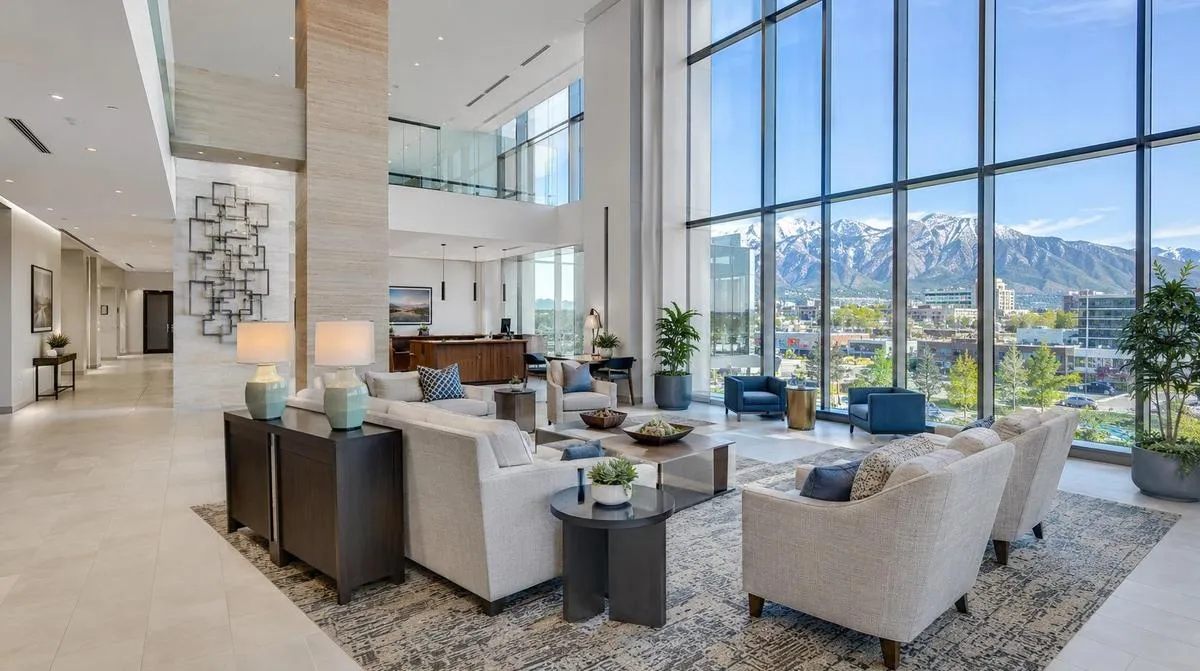
Working with a commercial furniture supplier who understands these cycles allows procurement teams to sequence deliveries around occupancy forecasts. Guestroom furniture can often be phased floor by floor, while lobby and public space furniture is typically installed in a single window. For large-scale FF&E projects at full-service properties, most custom upholstered items carry 10–14 week lead times from confirmed order, which means design finalization and purchase orders need to happen well ahead of target installation dates.
Our team works directly with hotel ownership groups, interior designers, and project managers across the Wasatch Front. We maintain standard stock on high-velocity items for properties needing faster turns, and offer full project coordination for larger builds from specification through delivery.
Related Reading
- Commercial hotel furniture: a sourcing guide for every space
- Boutique hotel furniture: specifying a distinctive, durable look
- What is contract furniture
- Hotel furniture supplier guide
- Hospitality furniture supplier guide
- Lounge chairs
- Sofas
- Headboards
Pricing for hotel furniture in Salt Lake City depends on quantities, finishes, and your delivery window, so a project-specific quote beats any list figure. Request a quote to get yours.