Boutique hotels in Salt Lake City operate under a different competitive pressure than their branded counterparts. They're not fighting on loyalty points or global distribution they're fighting on experience, authenticity, and the feeling that the property was designed specifically for this place. That standard places enormous weight on furniture: it's the most tactile expression of a boutique hotel's identity, and guests in this market tech workers from Silicon Slopes, Sundance Film Festival attendees, ski tourists with resort lodge expectations notice when it falls short.
Where SLC's Boutique Hotel Market Is Growing
Salt Lake City's boutique hotel development has concentrated in a handful of neighborhoods that offer the urban character independent properties need. The Granary District, bounded by 9th South and the rail yards, has become the city's most design-forward hospitality corridor: converted industrial buildings house restaurants, breweries, and now hotels that lean into the raw materiality of exposed concrete and brick. Independent hotels here need furniture that honors those architectural bones pieces with visible craft, honest materials, and enough visual weight to hold their own against 14-foot ceilings and polished concrete floors.
The 9th and 9th neighborhood offers a different character: walkable, residential, with a loyal local following. Boutique hotels here draw a guest who values neighborhood integration over convention-district convenience, and the furniture specification should reflect that less lobby-grand, more living room-warm. Sofas and lounge chairs in this context should read as residential-quality pieces that happen to be built to commercial standards: tight upholstery in performance textiles, solid frame construction with no wobble or squeak, a scale that works in rooms with standard 9-foot ceilings.
Downtown's emergence as a Sundance satellite venue during January's film festival creates a specific boutique hotel opportunity. Festival guests film industry professionals, press, talent, and affluent film lovers are among the most design-literate hotel guests anywhere. A boutique property positioned for Sundance overflow that presents underfurnished or poorly specified rooms loses repeat business and word-of-mouth in a community that talks.
The ski gateway positioning matters too. Properties marketing themselves as the sophisticated alternative to canyon-side ski lodges need furniture that earns that comparison. Headboards upholstered in natural linen or textured performance wool, case goods in wire-brushed white oak, and bedside tables with blackened steel accents are the minimum ante for a boutique property making this claim credibly.
Furniture Specification for Boutique Mountain Contemporary
The mountain contemporary aesthetic that defines Salt Lake City's better boutique hotels is more demanding to execute well than it might appear. The temptation is to layer in too many rustic signifiers reclaimed wood, antler-adjacent forms, overly literal mountain references and arrive at something that reads as theme park rather than authentic design. The properties getting it right are more restrained: one or two natural material moments per room, clean silhouettes, a textile palette that references nature without imitating it.
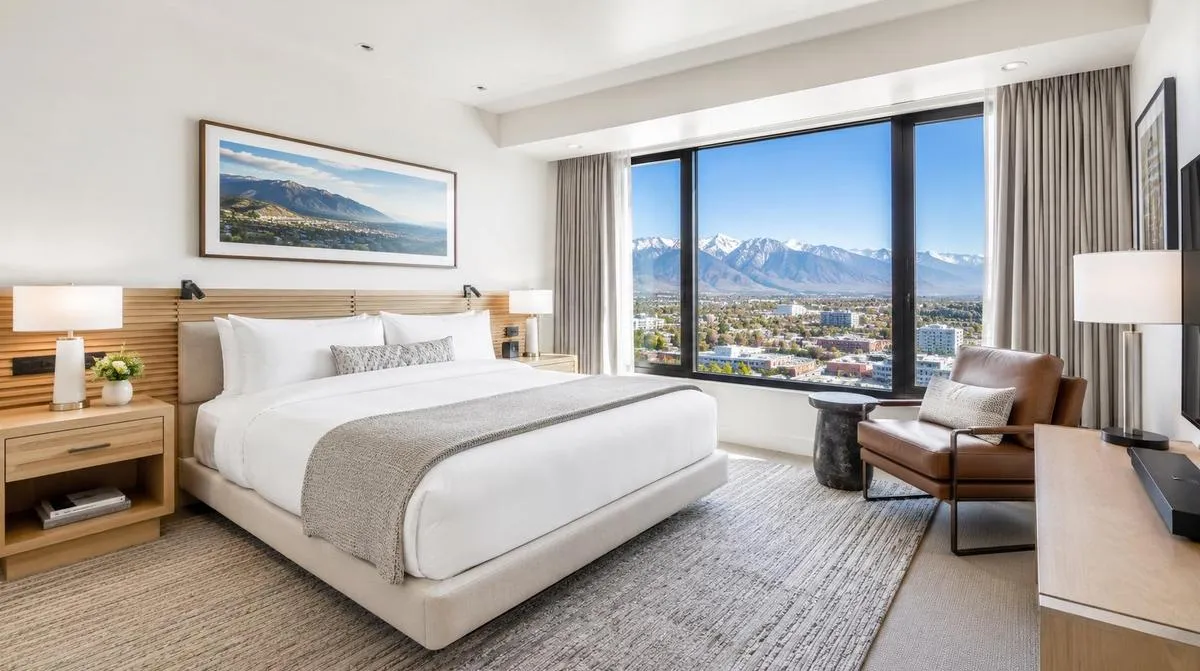
For guestroom furniture, that means case goods in white oak with a light wire-brush finish and minimal hardware integrated pulls, recessed handles, or simple brushed bronze pulls. Upholstered pieces should use fabrics in the natural spectrum: warm whites, stone grays, sage, deep forest green used as an accent rather than a field color. Headboards work well as a design statement piece a natural linen tufted panel or a wood-framed upholstered headboard with visible joinery detail reads as crafted and considered.
In public spaces, the challenge is scale. Boutique hotel lobbies tend to be smaller than their branded counterparts, and furniture has to work harder to define zones a check-in moment, a seating area for waiting guests, a work-capable corner for business travelers. Lounge chairs with slender profiles and solid wood legs in white oak or walnut create the mountain contemporary moment without overwhelming a modest lobby. Ottomans in performance wool or leather-look vinyl pull double duty as overflow seating and occasional tables.
Procurement Realities for Independent Properties
Boutique hotel operators typically work with smaller budgets and tighter decision-making timelines than branded properties with procurement departments. A successful boutique hotel FF&E project usually depends on a supplier relationship that can flex between catalog and custom specification offering stock items where budget is tight and custom options where the design concept requires it.
We work with independent boutique hotel owners and their interior designers throughout the procurement process, from initial specification through final delivery. Lead times on upholstered custom pieces run 10–14 weeks; catalog items in standard finishes can often ship in 2–4 weeks. For properties planning around ski season openings or Sundance positioning, early engagement on specification is essential.
Related Reading
- What is contract furniture
- Hotel furniture supplier guide
- Hospitality furniture supplier guide
- Lounge chairs
- Headboards
- Sofas
If you are sourcing boutique hotel furniture for your Salt Lake City property, the fastest way to real numbers is to tell us what you need. Request a quote with your quantities and timeline.