Rapid City runs on a tourism clock that most hospitality markets do not share. You have downtown properties near Main Street Square filling up with Black Hills and Mount Rushmore travelers from late spring through early fall. You have hotels along the interstate corridor catching the annual motorcycle rally crowd that spills over from the northern Black Hills every August. You have event driven demand tied to The Monument and Summit Arena downtown, and you have a steady base of Ellsworth Air Force Base related travel and regional medical visits that keeps corporate and government rate business moving even in the shoulder seasons. If you are sourcing furniture for a hotel project anywhere in the Rapid City area, here is what that market actually requires from your supply chain.
What Makes Rapid City Different for Hotel Furniture Sourcing
Rapid City is the commercial and tourism hub for western South Dakota and a large stretch of the northern Great Plains. Rapid City Regional Airport feeds the market with leisure travelers headed to the Black Hills and Mount Rushmore, government and military personnel connected to Ellsworth, and a steady stream of convention and event attendees drawn downtown by The Monument campus. A property near Main Street Square operates under different durability assumptions than a limited service build along the interstate corridor, or a resort style property closer to the Black Hills gateway. Your furniture supplier needs to understand those distinctions, not just quote you from a catalog.
The Monument, home to Summit Arena, is one of the biggest drivers of short cycle occupancy spikes in the market. Rodeo events, powwows, concerts, and trade shows fill downtown and nearby hotels to capacity for a few days at a time, and that concentrated traffic wears furniture hard. Lobby seating and guest room furniture take more impact damage during a single high occupancy event weekend than a comparable property might see in a quiet month. If you are sourcing for a hotel near that corridor, durability ratings are not optional. Ask your supplier for the actual specification data, foam ILD ratings, fabric Martindale rub counts, frame material and joinery documentation. If they cannot provide that, keep looking.
Summer tourism properties near the Black Hills gateway sit at a different point on the spec curve. Guests are often stopping for a night or two on a longer road trip, which means high turnover and constant housekeeping cycles across the busiest months of the year. A hotel furniture supplier in Rapid City who only understands one tier of this market, the rodeo weekend rush or the summer tourism turnover, is going to leave gaps on a downtown property spec and on a Black Hills gateway build alike.
Why Contract Grade Matters in This Market
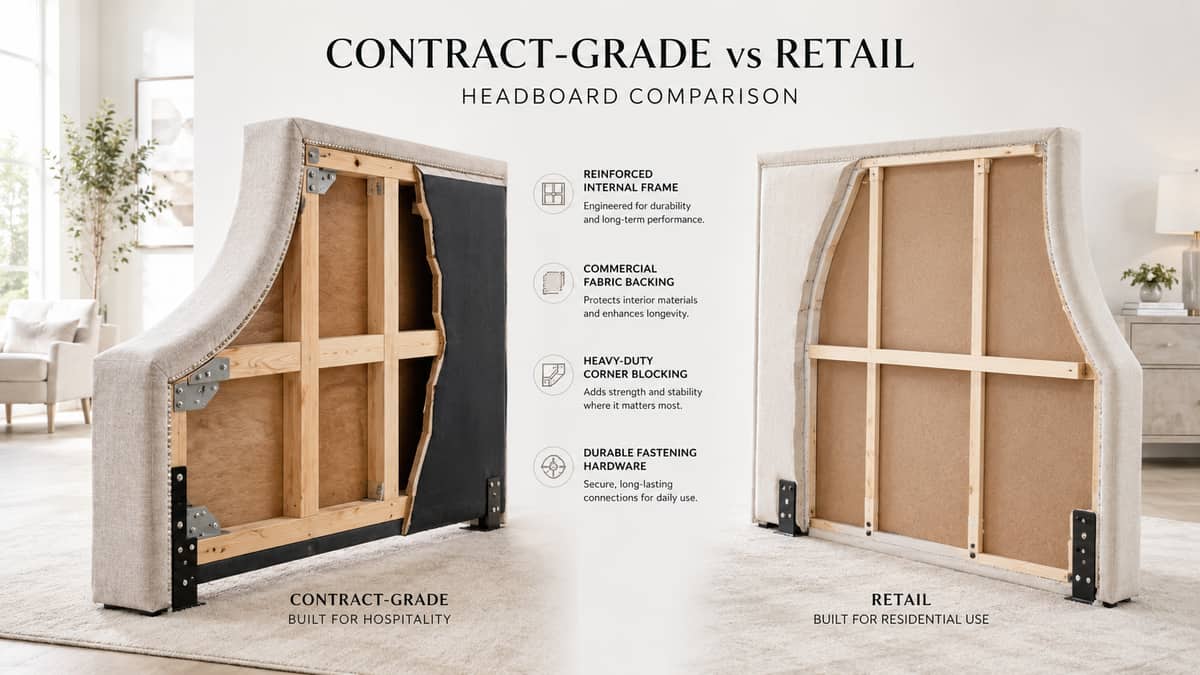
Retail furniture is engineered for residential use, light daily use, careful handling, the assumption of periodic replacement as a style decision. Hotel furniture in Rapid City lives in a fundamentally different environment. A lobby chair near The Monument might be occupied by several different guests in a single evening during a major event weekend. A guest room bed frame in a summer tourism property gets shifted by housekeeping staff multiple times daily during peak season, and drawer hardware sees far more use cycles in a busy July than residential hardware sees in a year. When retail furniture fails in those environments, the consequences are not just a replacement order. They are liability exposure, maintenance budget overruns, and guest experience problems that show up in reviews before the guest has checked out.
Contract-grade furniture meets BIFMA standards or equivalent hospitality certification benchmarks that retail products are never subjected to. The frame construction is reinforced for commercial load cycles, the finishes are tested for durability under institutional cleaning protocols, and the foam and fabric specifications are chosen for longevity under heavy use. Ask your supplier for documentation. If they hesitate, that tells you everything you need to know.
Lead Times and Logistics for a Seasonal Market
Rapid City hotel projects run on calendar pressure tied directly to the tourism season. A new build near the Black Hills gateway is often racing to open before the peak summer travel window. A downtown renovation near The Monument needs to wrap between major event bookings without disrupting guests. Standard lead times from contract furniture suppliers run 10 to 16 weeks for domestic production, and freight into western South Dakota adds real transit time on top of standard production schedules. That math is not flexible when you have a pre-summer opening date.
Lock your furniture specs at the same time you finalize interior design drawings. A supplier worth working with in Rapid City will turn around physical samples fast enough to keep your design review process moving, offer phased delivery sequencing, and raise lead time risks early enough that you can act on them.
How to Evaluate a Hotel Furniture Supplier in Rapid City
Start with their actual project history in the Black Hills and northern Plains hospitality market. Ask for references from projects comparable to yours in scale and budget, then call those references. Logistics capability matters as much as product quality. A supplier with in-house white glove delivery and installation experience handles building coordination and freight timing before the truck leaves the warehouse.
Request a project quote and describe your property type, room count, and target completion date so the supplier can plan around your tourism season timeline. The right hotel furniture supplier in Rapid City is a project partner across a market where downtown event demand, Black Hills tourism, and government and medical travel are all pulling on the same room inventory in different ways.