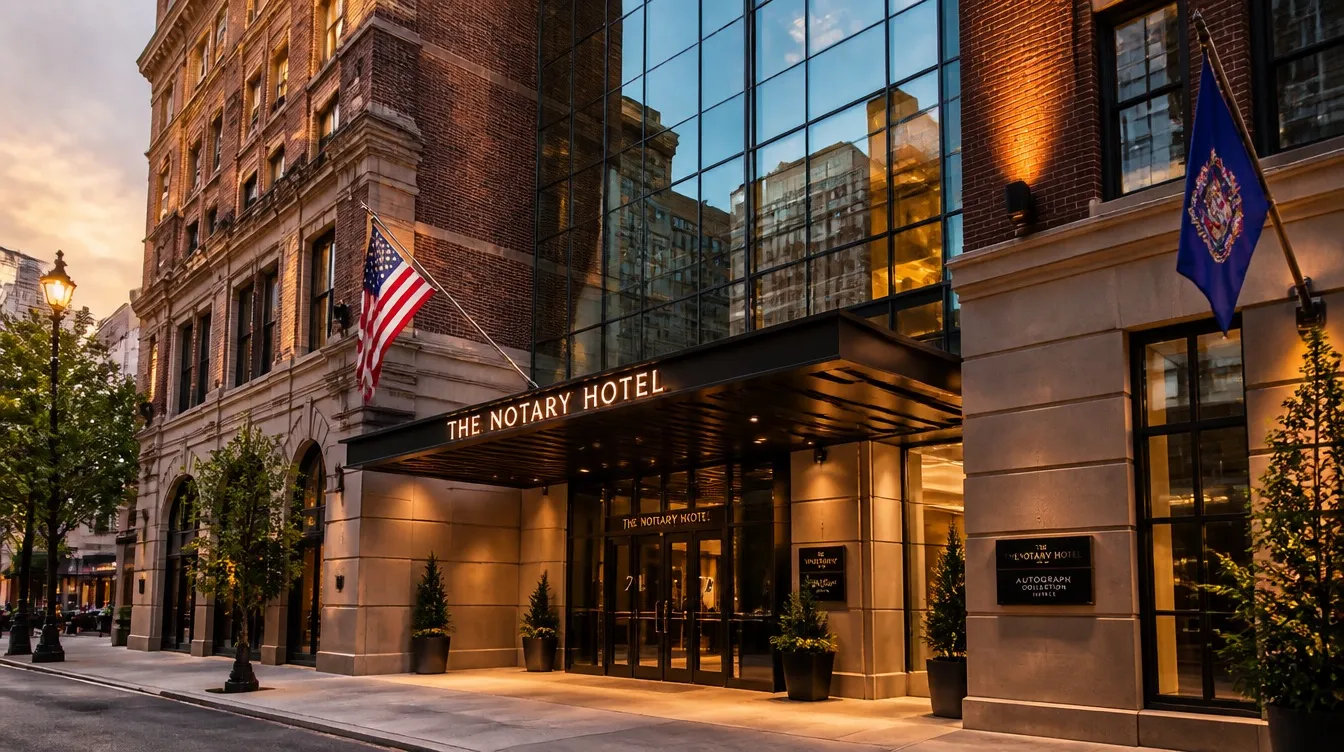
You have a renovation window, a hard open date before a major pharma conference fills the Pennsylvania Convention Center, and a furniture quote with a fourteen-week lead time. That is the Philadelphia problem in three sentences. The Pennsylvania Convention Center in Center City is one of the largest convention facilities on the East Coast over one million square feet and when a GSK or Merck healthcare conference lands, Center City, Rittenhouse Square, and Old City hotels go to capacity simultaneously. A supplier who misses your lead-time conversation does not just cost you money. It costs you the entire window, and the next available renovation slot may be months out.
Philadelphia's Hospitality Market and What It Demands From Suppliers
Philadelphia's hotel market is one of the most underrated on the East Coast, and it is growing fast. The Pennsylvania Convention Center drives enormous year-round volume from pharmaceutical, biotech, and healthcare industry events Penn Medicine, Jefferson Health, and Children's Hospital of Philadelphia anchor one of the country's most concentrated healthcare corridors, and those institutions generate a steady stream of high-spend business travelers who expect their hotel experience to match their professional environment. Comcast NBCUniversal's headquarters in Center City adds another corporate travel tier that keeps occupancy strong outside the convention calendar.
Fishtown's emergence as a nationally recognized food and culture destination is accelerating boutique hotel development in North Philadelphia neighborhoods that were not on the hotel map five years ago. Old City continues to attract historic renovation projects where boutique operators are converting Federal and Colonial-era buildings into design-forward hotels. Rittenhouse Square anchors the upscale end of the market with white-tablecloth dining adjacency and high-end corporate clientele. Each of these submarkets has different furniture demands, and a hotel furniture supplier who understands those distinctions can save a Philadelphia property significant money on the wrong spec.
That volume has real consequences for furniture durability. A hotel lounge chair in a 200-key Center City Convention Center hotel absorbs use from hundreds of different guests across its service life pharmaceutical conference attendees hauling laptop bags, healthcare executives on back-to-back site visits, leisure guests in for an Eagles home game. Retail furniture does not survive that cycling. Contract-grade pieces built to ANSI/BIFMA standards are the baseline, not the premium tier, for any property that wants to hold up through Philadelphia's compressed, high-occupancy calendar.
Philadelphia's Design Identity: Historic Contemporary With Craft Heritage
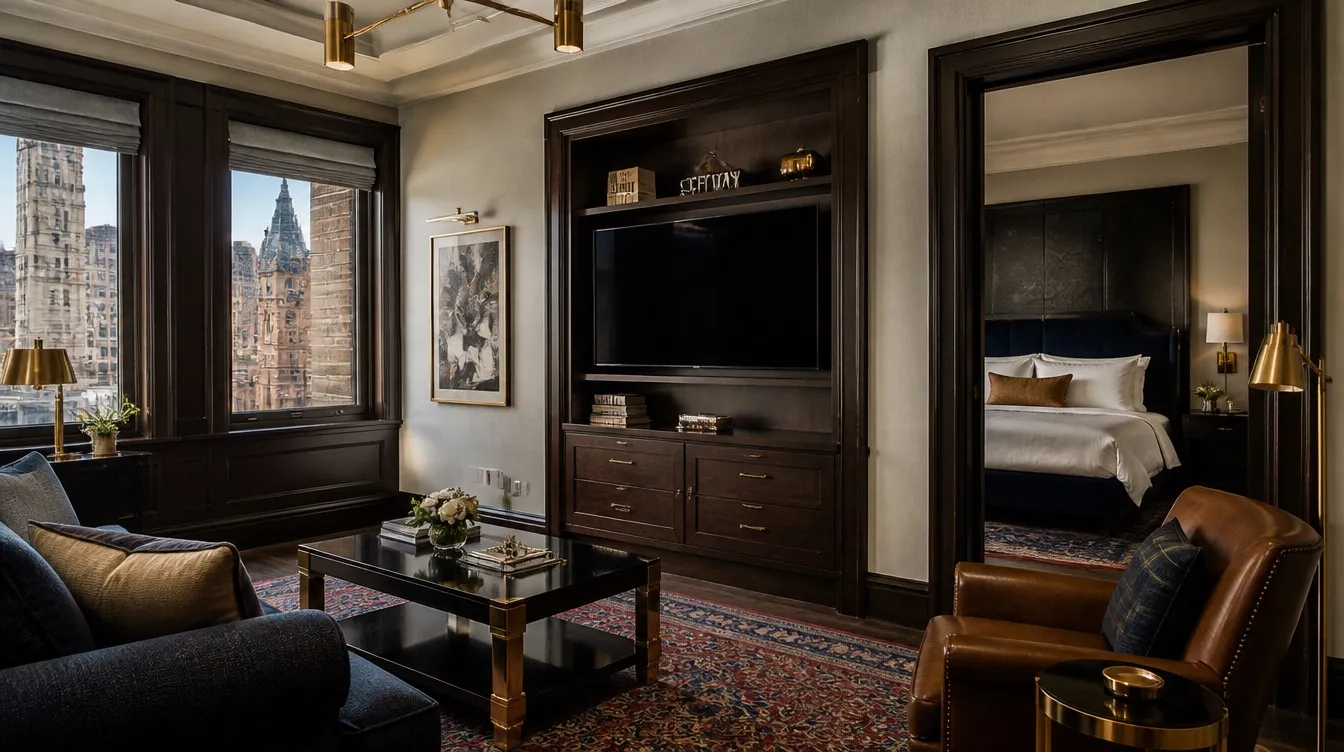
Philadelphia's most successful hotel interiors over the past several years have landed in a specific register: warm, materially grounded, historically aware without being retrospective. Dark walnut and rich mahogany case goods anchor guestrooms that might otherwise fight with the Federal-era or Victorian bones of a renovated historic property. Seating in tobacco leather and dark navy performance fabric references Pennsylvania's craft heritage leather goods, ironwork, textile manufacturing updated for a contemporary commercial context.
For guestroom casegoods, that translates into darker finishes that work with Philadelphia's architectural vocabulary rather than against it. For seating, it means hotel headboards with strong profiles softened by clean-lined upholstery, and palettes that pull from tobacco leather, dark navy, aged brass hardware, and warm brick tones. Old City properties leaning colonial-historic should avoid the Scandinavian-light aesthetic that reads as generic in a building with original wide-plank floors and exposed brick. Fishtown operations can handle more industrial-craft treatments reclaimed wood accents, raw metal hardware, darker linen fabrics that align with the neighborhood's evolved aesthetic. Rittenhouse Square properties demand upscale contemporary finishes: leather in richer tones, quality wood in deep walnut, hardware in polished or brushed brass.
The palette discipline that separates a well-designed Philadelphia hotel guestroom from a forgettable one is tighter than most buyers expect until they see the comparison side by side.
Lead Times and Delivery in Philadelphia's Historic Building Stock
Philadelphia's building stock creates logistical realities that out-of-market suppliers consistently underestimate. Historic properties throughout Old City, Center City, and Rittenhouse Square often have narrow corridors, tight stairwells, and service elevator dimensions that do not accommodate standard freight palletization. A Federal-era building in Old City converted to a boutique hotel may have a service entrance accessible only through a shared alley, with hand-carry required from the street to the upper floors.
For hotel renovation furniture Philadelphia projects, engage your supplier twelve to sixteen weeks ahead of installation for any custom upholstery or casegoods, and factor phased delivery into the plan if the property is staying partially operational during renovation. A Center City property cannot vacant all 150 rooms simultaneously floors have to rotate, which means your supplier needs to sequence deliveries against your operational calendar, not just ship everything at once and let you sort it out.
Suppliers with experience in Philadelphia's historic building environment ask about freight access during the sales conversation. Those without that experience discover it on delivery day, and the consequences land on your project timeline, not theirs.
For Philadelphia properties comparing hotel furniture options, project-specific pricing tells you more than any published range. Request a quote and we will scope it to your space and volume.
Related reading
- Commercial hotel furniture: a sourcing guide for every space
- Boutique hotel furniture: specifying a distinctive, durable look
- What is contract furniture
- Hotel furniture supplier guide
- Hospitality furniture supplier guide
- Hotel lounge chairs
- Hotel headboards
- Browse full catalog
- Commercial furniture in Pennsylvania
Our take
The guide's point about narrow corridors, tight stairwells, and hand-carry service access in Old City and Center City historic buildings has a specification consequence beyond delivery scheduling. Large casegoods, dressers, headboards, and wardrobe units sized for standard freight elevators may simply not fit through a Federal-era building's original stair and hallway dimensions, regardless of how well the delivery itself is phased.
The bottom line: Philadelphia buyers renovating historic properties should confirm knock-down or modular casegoods construction with their supplier before finalizing a spec, not just a delivery sequence, since some standard case good dimensions will not physically clear a historic building's access points.