Memphis draws visitors from every angle blues pilgrims walking Beale Street at midnight, families staying near St. Jude Children's Research Hospital for weeks at a time, FedEx executives cycling through corporate housing, and convention delegates filling the Memphis Convention Center. Each segment arrives with different expectations, and your furniture program has to hold up across all of them without looking like it was built for the lowest common denominator.
Memphis Hotel Demand: Where Volume Meets Variety
No other Tennessee city concentrates such distinct traveler segments in such close proximity. The Beale Street corridor runs hospitality properties that see genuine late-night traffic bars close at 3 a.m. and guests are back in lobbies ordering coffee by 7. That cycle puts casegoods, upholstery, and soft seating under stress that a typical suburban select-service property never encounters.
St. Jude's campus generates a quieter but deeply demanding segment. Medical families often stay two, three, even four weeks in nearby hotels. They need furniture that functions as a home desks that accommodate a laptop and paperwork simultaneously, lounge chairs that don't break down after daily all-day use, beds with headboards that hold up to extended lean-back positioning. Properties near the medical campus that understand this spec consistently outperform on extended-stay satisfaction scores.
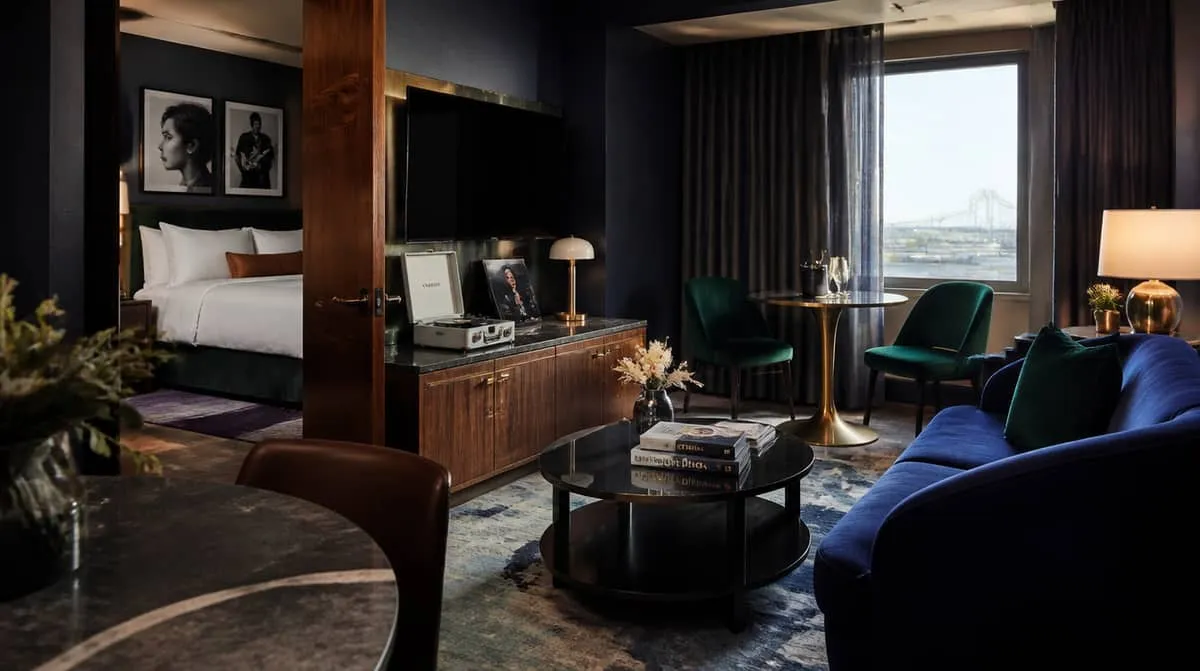
The South Main Arts District has become Memphis's boutique hotel corridor, with independent properties that trade directly on local identity. Operators here need sourcing partners who can deliver furniture with real design character not catalog filler. Lounge chairs in deep indigo velvet and richly grained walnut frames read authentically in this context; the same pieces in beige microfiber do not.
FedEx's global headquarters in East Memphis keeps a steady corporate traveler segment in the market year-round, including international visitors for whom room quality signals the city's professionalism. This segment is less tolerant of worn upholstery or dated casegoods than leisure travelers who are out sightseeing most of the day.
For properties near the Memphis Convention Center, the lobby and public-space furniture carries an outsized burden during conventions and trade shows. High-volume seating needs to be stackable or easily reconfigured, durable enough for badge-wearing crowds, and attractive enough that event planners reference your property in their marketing photos.
Memphis Design: Blues Grandeur Meets South Main Contemporary
Memphis's hospitality design vocabulary is more layered than most mid-size cities. Beale Street's historic grandeur the marquee signs, the neon, the brick facades pulls toward deep jewel tones, brass hardware, and plush upholstery that evokes the golden age of American music venues. The South Main Arts District pushes back with a grittier creative contemporary sensibility: exposed steel, reclaimed wood, gallery-white walls offset by a single saturated accent wall.
The most successful Memphis hotel interiors find a synthesis. Deep navy and midnight blue anchor the palette. Burgundy and antique gold appear in accent upholstery and hardware. Wood tones run toward dark walnut and mahogany rather than the blonde oak that dominates contemporary hotels in less historically rooted markets. Leather and velvet share space leather on high-contact pieces like dining chairs, velvet on accent seating where texture and color payoff matter more than abrasion resistance.
For guestroom programs, headboards in channel-tufted deep blue velvet with antique brass nail-head trim hit the Memphis aesthetic precisely. Pair with dark walnut casegoods and warm-toned lighting to complete the room story. In lobbies and lounges, sofas in rich burgundy or cognac leather anchor seating clusters without requiring a full renovation to feel intentional.
Contract-grade specifications matter here beyond aesthetics. Velvet upholstery in hospitality applications needs to be rated for 100,000+ double rubs to survive turnover cleaning cycles. Leather should be full or top-grain, not bonded, given the extended-stay and high-rotation patterns common in Memphis properties. Dark wood finishes require UV-stable topcoats to prevent fading in south-facing rooms with Memphis's significant sun exposure.
Procurement and Delivery in Memphis
Memphis's position as a global logistics hub FedEx's home market makes inbound freight coordination unusually straightforward compared to other mid-size Southern cities. Most contract furniture suppliers with standard freight programs can hit Memphis distribution points efficiently, and local receiving warehouses are well-accustomed to large-format commercial deliveries.
Lead times for custom upholstery in contract-grade fabrics run 8 to 14 weeks from most domestic manufacturers. Phased delivery is standard practice for renovation projects: casegoods typically ship and install first, with soft seating following once the hard finish work is complete. For properties undergoing full-floor renovations, coordinating delivery in floor-by-floor phases minimizes room-night displacement and keeps the project moving without staging bottlenecks.
Specify clearly on purchase orders whether pieces require setup and debris removal Memphis receiving operations vary, and assumptions about white-glove service create friction on delivery day.
For Memphis properties comparing hotel furniture options, project-specific pricing tells you more than any published range. Request a quote and we will scope it to your space and volume.
Related reading
- Commercial hotel furniture: a sourcing guide for every space
- Boutique hotel furniture: specifying a distinctive, durable look
- What is contract furniture
- Hotel furniture supplier guide
- Hospitality furniture supplier guide
- Lounge chairs for hotel common areas
- Headboards for extended-stay guestrooms
- Sofas for hotel lobby seating clusters
- Commercial furniture in Tennessee