Baton Rouge is a hospitality market that runs on a few very different engines at once. As the capital of Louisiana, the city carries a steady base of government and legislative travel, with hotels downtown and near the Capitol complex filling with agency staff, lobbyists, and out-of-town visitors during session. Layer on LSU, where a single home football Saturday can fill every hotel room within a wide radius of campus months in advance, plus the business travel generated by the petrochemical and industrial employers along the Mississippi River, and you get a market that demands more range from a supplier than a city its size would typically require. If you are sourcing furniture for a hotel project anywhere in the Baton Rouge area, here is what that market actually requires from your supply chain.
What Makes Baton Rouge Different for Hotel Furniture Sourcing
Baton Rouge is a government, university, and industrial hub all at once, and that mix shapes the furniture conversation from the start. A downtown property serving the Capitol complex operates on a different occupancy rhythm than a select-service hotel near the interstate corridors that serve the river industry workforce. LSU gameday weekends create short, extraordinarily dense bursts of demand across the whole metro, while legislative session and industrial business travel produce steadier, longer-cycle occupancy the rest of the year. Your furniture supplier needs to understand those distinctions, not just quote you from a catalog.
The downtown convention center and the properties clustered near it see a heavy renovation and refresh cycle tied to the event calendar and the legislative session. Lobby seating and meeting-adjacent furniture in that zone gets used far harder during a busy conference week or a session stretch than most furniture sees in a typical month. Casegoods take more impact damage in a single high-occupancy week than most residential furniture sees in a year, and soft goods wear out faster than owners expect. If you are sourcing for a property in that zone, durability ratings are not optional. Ask your supplier for the actual specification data, foam ILD ratings, fabric Martindale rub counts, frame material and joinery documentation. If they cannot provide that, keep looking.
Properties near LSU face a different kind of stress test entirely. A gameday weekend can push a hotel from a normal midweek occupancy to a full sellout with almost no ramp-up time, and the furniture in those lobbies and guest rooms absorbs a level of traffic in a single weekend that other properties spread across a month. A hotel furniture supplier in Baton Rouge who only understands one segment of this market is going to leave gaps on a downtown government-adjacent property just as easily as on a hotel built around the university's football calendar.
Why Contract Grade Matters in This Market
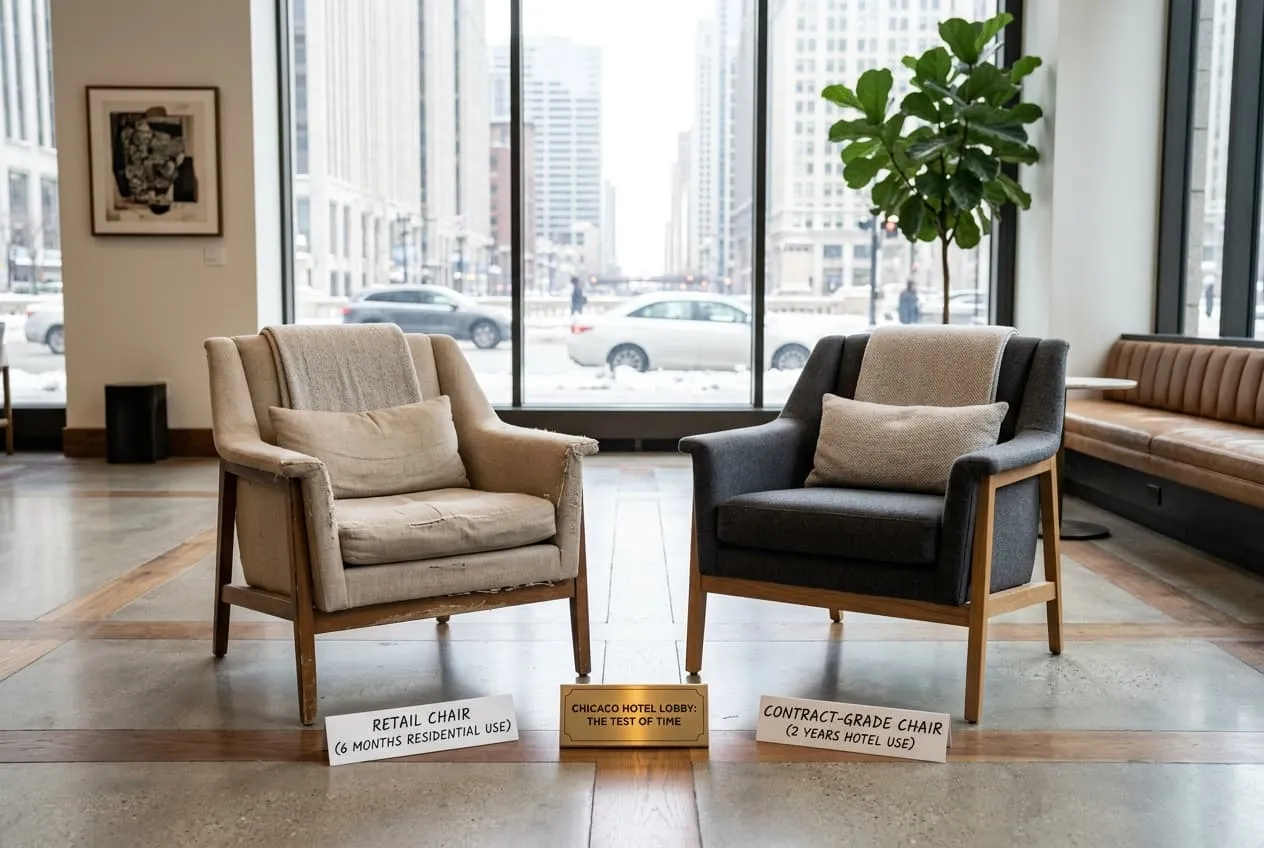
This is the conversation that saves you money over time even when it costs more upfront. Retail furniture is engineered for residential use, light daily use, careful handling, the assumption of periodic replacement as a style decision. Hotel furniture in Baton Rouge lives in a fundamentally different environment.
A lobby chair near the Capitol complex might be occupied hundreds of times during a single legislative session week. A guest room bed frame at a property near LSU gets shifted by housekeeping multiple times a day during football season, then sits at lower occupancy the rest of the year, a use pattern that punishes cheap hardware in its own way. Drawer hardware in a downtown convention-adjacent property gets opened and closed under far more cycles in a busy week than residential hardware sees in a year. When retail furniture fails in those environments, and it does fail faster than owners expect, the consequences are not just a replacement order. They are liability exposure, maintenance budget overruns, and the kind of guest experience failure that ends up in a review before the guest has left the building.
Contract-grade furniture from a qualified hotel furniture supplier meets BIFMA standards or equivalent hospitality certification benchmarks that retail products are never subjected to. The frame construction is reinforced for commercial load cycles. The finishes are tested for durability under institutional cleaning protocols. The foam and fabric specifications are chosen specifically for longevity under heavy use. The price difference between contract and retail product pays for itself before the end of the first replacement cycle in almost every hospitality application. Ask your supplier for documentation. If they hesitate, that tells you everything you need to know.
Lead Times, Logistics, and Getting the Timeline Right
Baton Rouge hotel projects run on calendar pressure that varies by property type. A downtown renovation needs to wrap between legislative sessions and major conference bookings without spilling into the busiest weeks of the year. A property near LSU is racing to be ready well ahead of the football schedule, since a missed opening date during that stretch means losing the highest-demand weekends of the year. An industrial-corridor select-service hotel is coordinating a phased refresh around business travelers who book on tight, recurring schedules.

In every one of those scenarios, lead time is the variable that determines whether you hit your target date. Standard lead times from contract furniture suppliers run 10 to 16 weeks for domestic production. Import orders stretch to 20 weeks or longer once you factor in shipping, customs, and any port delays. That math is not flexible when you have a gameday-driven opening or a financing draw tied to substantial completion.
Lock your furniture specs at the same time you finalize interior design drawings. This is not a suggestion that sounds good in theory, it is the specific decision that separates hotel openings that go smoothly from ones that do not. A supplier worth working with in Baton Rouge will turn around physical samples fast enough to keep your design and ownership review process moving, offer phased delivery sequencing for larger projects, and raise lead time risks early enough that you can act on them.
Minimum order quantities matter on Baton Rouge projects, particularly for the independent and select-service properties that make up a large share of the market, often furnishing 40 to 100 rooms rather than 200. Most contract suppliers set MOQs at the piece level by category, 20 to 50 units per SKU is common for upholstered pieces, with more flexibility on casegoods. Custom fabrics and custom finishes almost always trigger higher minimums. Understand the MOQ structure before you get deep into the spec process.
How to Evaluate a Hotel Furniture Supplier in Baton Rouge
Start with their actual project history in the Gulf South hospitality market. A supplier with completed installations across property categories in Baton Rouge, downtown government-adjacent, university-driven, and industrial-corridor, understands the aesthetic range and the operational demands this market places on furniture. Ask for references from projects comparable to yours in scale and budget, then call those references.
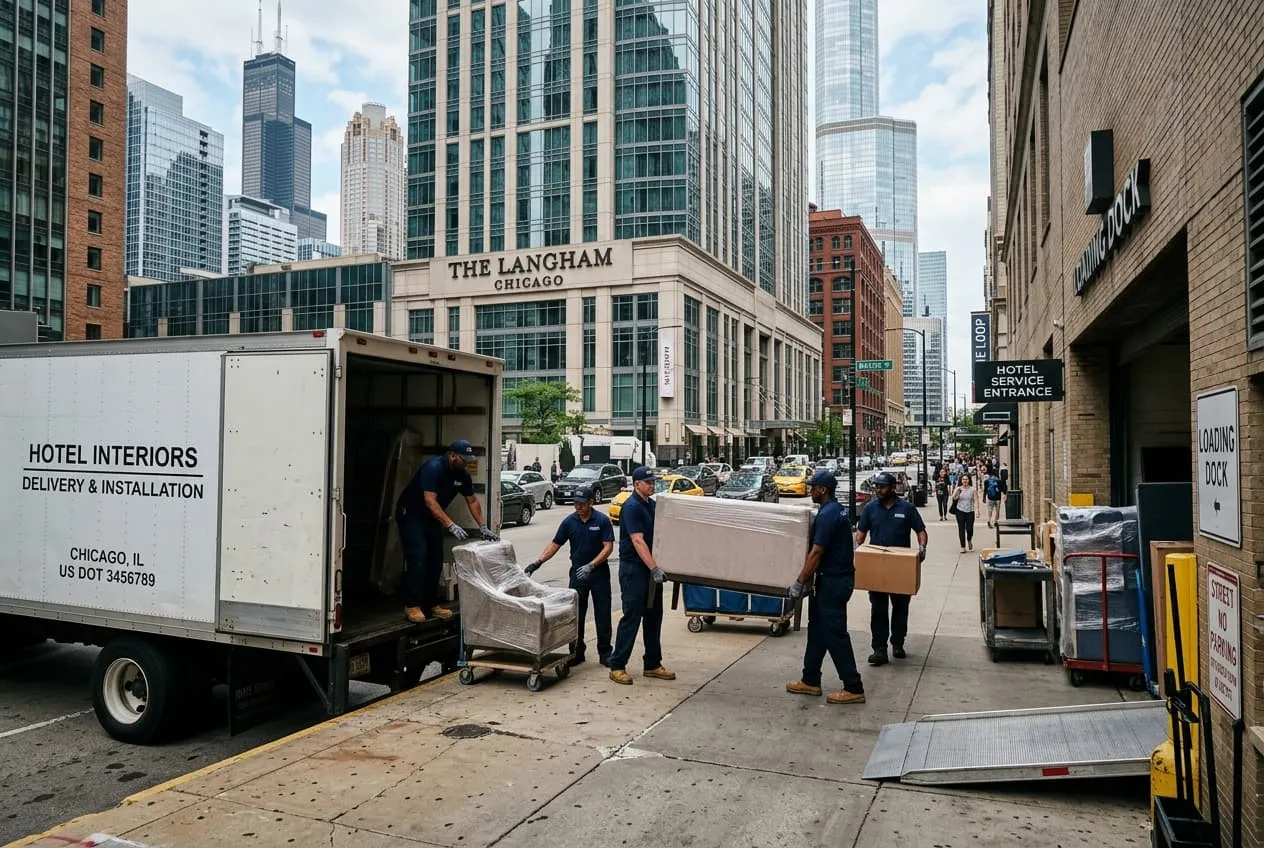
Logistics capability is as important as product quality. Deliveries downtown near the Capitol still involve building management coordination and general contractor timelines, while properties along the interstate corridors need reliable freight scheduling. A supplier with in-house white-glove delivery and installation experience in commercial environments handles those constraints before the truck leaves the warehouse. A supplier who ships freight and outsources the final mile to a third party may not, and you feel that gap on installation day when something goes wrong.
The right hotel furniture supplier in Baton Rouge is not a vendor you transact with once and move on from. In a market where legislative session travel, LSU gameday demand, and steady industrial business travel are all drawing on the same hotel inventory at different times of year, they are a project partner. Evaluate them that way before you sign a purchase order.
Ready to spec a hotel furniture program for a Baton Rouge project? Request a quote and our team will walk you through lead times, MOQs, and logistics for your property.
Related reading
- Commercial furniture in Louisiana
- Restaurant furniture in Baton Rouge
- Boutique hotel furniture in Baton Rouge
- Commercial hotel furniture: a sourcing guide for every space
- Boutique hotel furniture: specifying a distinctive, durable look
- What is contract furniture
- Commercial furniture vs retail
- Hospitality furniture supplier guide
- Hotel lounge chairs
- Hotel headboards
- Browse full catalog