
Anyone new to hospitality procurement runs into these two acronyms almost immediately and the line between them isn't always obvious from the names alone. FF&E and OS&E get budgeted, bid, and purchased differently on most projects, and mixing them up on a budget spreadsheet is a common early mistake. Here's where the line actually falls.
What FF&E covers
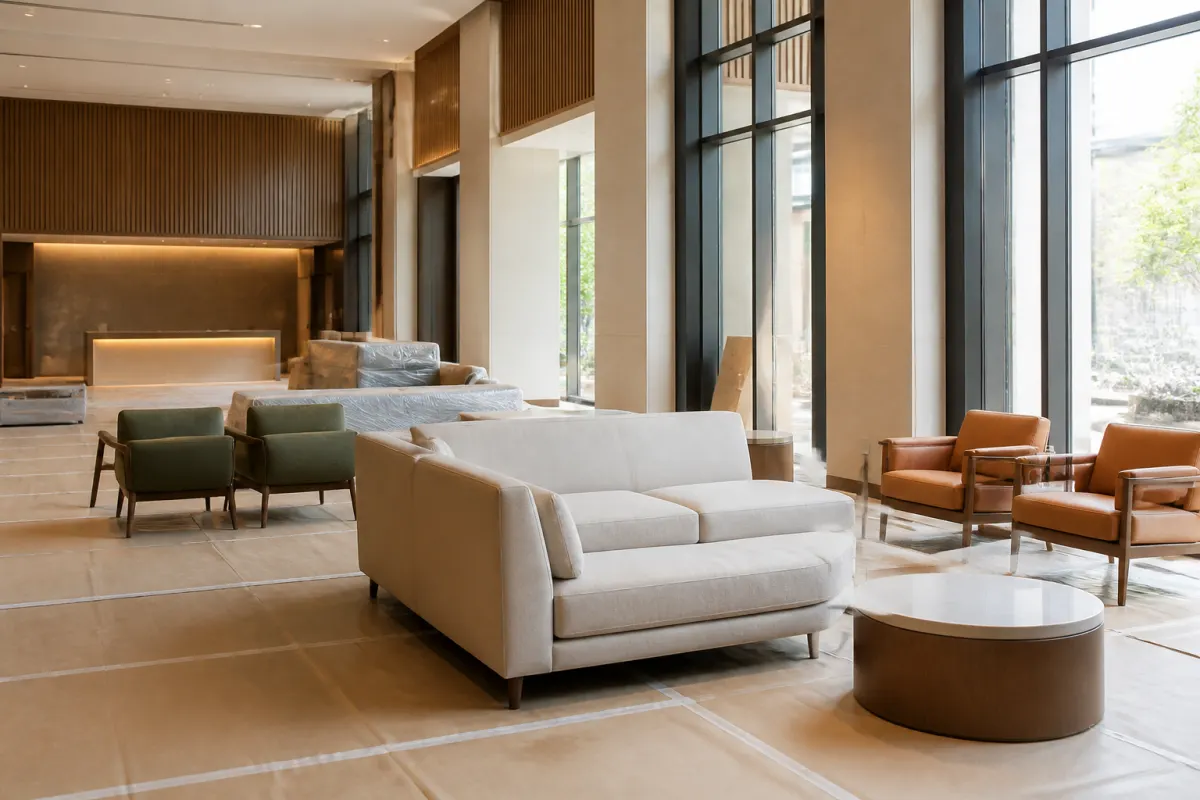
FF&E stands for furniture, fixtures, and equipment: the movable, durable pieces that furnish a space and generally stay in place for years without regular replacement. In a hotel, restaurant, or venue, this means guest room casegoods and seating, lobby and public space furniture, dining and bar furniture, and the fixed equipment that supports them. The finance team determines which items are capitalized, expensed, or subject to an applicable tax election; the procurement category does not decide the accounting treatment.
The defining trait of FF&E is durability and infrequent replacement. A commercial dining chair, a hotel headboard, or a lobby sofa is expected to stay in service for years under normal use, and the purchasing process reflects that: specification, bidding, purchase orders, and installation happen once at project launch or renovation, not on an ongoing basis.
What OS&E means and covers
OS&E stands for operating supplies and equipment: everything a property consumes or replaces regularly to actually run day to day. This includes bedding, towels, and bath goods, tableware and glassware, kitchen smallwares, cleaning supplies, guest room amenities, uniforms, and the many consumable or frequently replaced items that don't fit the durable, multi-year FF&E category.
Recurring consumables and durable operating equipment need separate line-item review. Have finance apply the relevant capitalization policy and accounting rules to each item; do not code the whole OS&E schedule as expense solely from its name.
Who buys each category
FF&E purchasing usually runs through the interior designer's specification, procurement or purchasing agent coordination, and the furniture supplier's production and delivery. It's a project-phase purchase tied to a construction or renovation timeline, executed by people focused on design intent, budget, and installation logistics.
OS&E purchasing is typically the operations team's responsibility once the property is open, often running through a separate purchasing agent or the property's own operations and purchasing staff. It's an ongoing function tied to the day-to-day running of the business rather than a single project milestone, and it continues long after opening in a way FF&E purchasing generally doesn't.
On a new build or major renovation, both categories get planned simultaneously since the opening date depends on both being ready, but they're budgeted, bid, and tracked as separate line items because they behave so differently over time.
Budget separation and why it matters
Treating FF&E and OS&E as one combined budget line is the most common mistake new operators make, and it causes real problems at both the planning and accounting stage. Use separate procurement schedules to track each package's scope, owner, and replenishment needs. Have finance assign book and tax treatment to the actual items rather than equating those purchasing schedules with balance-sheet and income-statement categories.
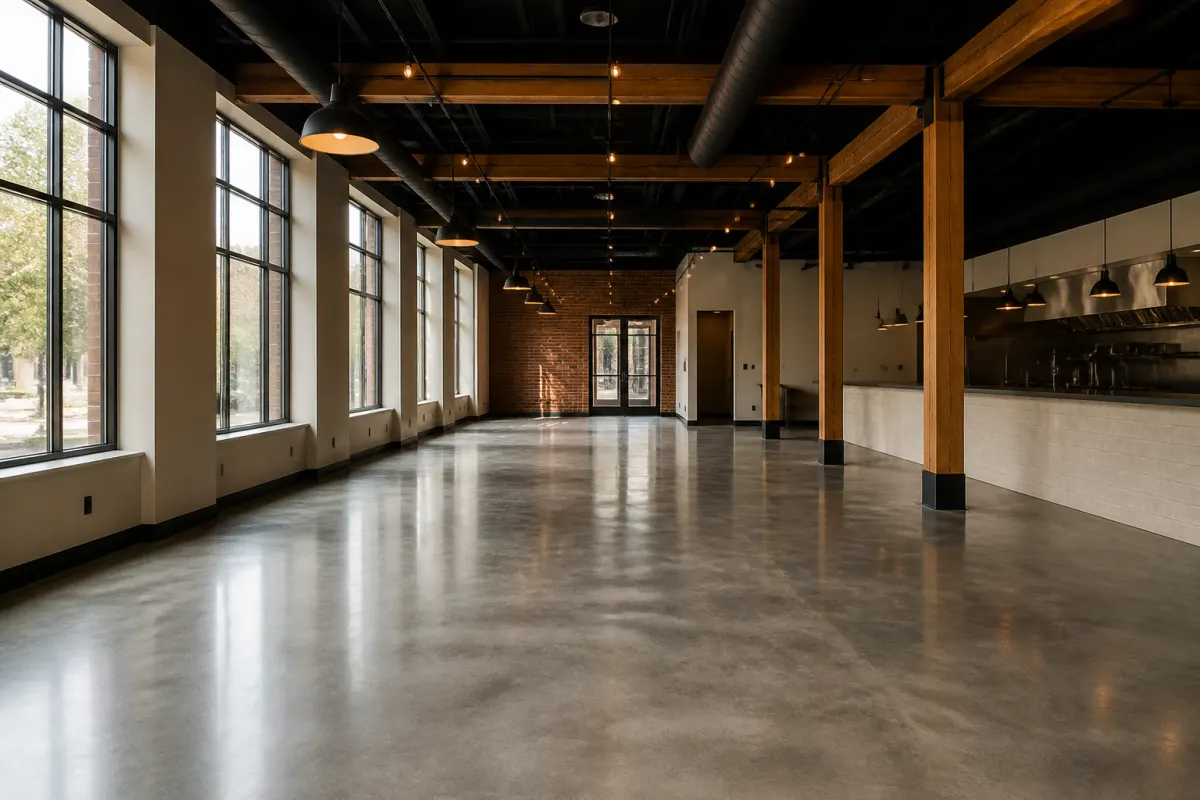
Mixing these in planning leads to underbudgeting one or the other, most often OS&E, since it's easy to focus procurement attention on the visible furniture package and treat consumables as an afterthought that gets figured out closer to opening. A property that opens with a fully furnished dining room but insufficient tableware, bedding and towels, or kitchen smallwares has an OS&E gap, not an FF&E problem, and the fix belongs in a different part of the budget.
Examples side by side
FF&E: guest room bed frame and headboard, lobby sofa and armchairs, restaurant dining chairs and tables, bar stools, casegoods and dressers, banquet chairs and tables.
OS&E: bedding, towels, and bath goods, dinnerware and glassware, kitchen pots and utensils, cleaning and janitorial supplies, guest room amenity kits, staff uniforms, paper goods.
A useful rule of thumb for a borderline item: if it's expected to last multiple years under normal use and gets specified once as part of the design, it's FF&E. If it wears out, gets consumed, or needs regular reordering as part of daily operations, it's OS&E.
The gray area items
Some categories genuinely sit on the line and different operators classify them differently depending on accounting policy and property type. Televisions, in-room safes, and small appliances sometimes get coded as FF&E because they're durable and infrequently replaced, and sometimes get coded closer to OS&E or their own equipment category depending on the property's accounting standard. Artwork and decorative accessories follow a similar pattern: a piece specified as part of the interior design package usually rides along with FF&E, while smaller seasonal decor that gets refreshed regularly behaves more like a consumable.
The practical fix isn't a universal rule, since accounting treatment varies by ownership group and sometimes by franchise brand standard. It's picking a classification early with your accounting or ownership team and applying it consistently across every property in a portfolio, so budget comparisons between properties or between years are actually comparing the same categories. Inconsistent classification from one project to the next is what makes multi-property budget analysis unreliable, more than any single gray-area item being coded one way or another.
How this plays out on a real opening
Use an illustrative 120-room hotel with an attached restaurant as a planning example, rather than a reported completed project. The FF&E package covers guest room casegoods and seating for all 120 rooms, lobby furniture, and the restaurant's dining and bar furniture, specified months ahead and modeled initially with a 10 to 14 week factory-direct duration. That is an example assumption to replace with confirmed release, production, and delivery milestones. That package gets bid, purchase-ordered, and installed as a single project phase tied to the construction schedule, and the finance team records its assets and expenses under the applicable policy and placed-in-service facts.
The OS&E package for the same property covers bedding and towels for every room, dinnerware and glassware for the restaurant, cleaning supplies for housekeeping, and uniforms for staff. This gets ordered closer to opening, on a shorter lead time than custom furniture, but it still needs a full initial stocking order in place before the first guest checks in. Unlike FF&E, this isn't a one-time purchase, the operations team reorders consumables continuously once the property is running, which is why the operations team needs its own replenishment forecast. Its budget classification still follows the approved line-item policy.
Planning both tracks with the same level of attention, rather than treating OS&E as a smaller afterthought once the visible furniture package is locked, is what keeps a 120-room opening from discovering a bedding or glassware shortfall in its first week of service.
How OS&E procurement actually runs
OS&E procurement follows a different rhythm than the FF&E track, and treating it as a smaller copy of the furniture process is where new operators get caught. The initial stocking order is the project-phase piece: every room's bedding, towels, and amenities, the restaurant's full tableware and glassware count, housekeeping and kitchen supplies, all landed and shelved before the first guest arrives. Most properties build that order from par levels, using two to three par for linens and bedding as an illustrative operating scenario (one set in the room, one in the wash, and, at three par, one on the shelf), and comparable multiples for tableware and glassware to cover breakage and service peaks.
After opening, OS&E procurement becomes a continuous reorder function owned by operations, running on usage data rather than a project schedule. Larger properties and groups often put a dedicated OS&E purchasing agent on the initial stocking order, since the line count runs into the hundreds and missed items surface during the worst possible week. A 10 to 15 percent OS&E-to-FF&E allowance can be tested as an illustrative budget scenario here; no project benchmark is supplied for that ratio. Build the actual stocking list from room count, outlets, service peaks, and approved par levels, then price it independently of the furniture line.
The procurement calendar is the practical difference: FF&E orders lock months out because of production lead times, while the OS&E stocking order typically compresses into the final weeks before opening. That compression is exactly why it needs its own owner and its own budget line from day one, not leftover attention once the furniture package is put to bed.
Frequently asked questions
What does OS&E stand for? Operating supplies and equipment: the consumable and frequently replaced items a hotel or restaurant needs to operate, such as bedding, towels, tableware, kitchen smallwares, cleaning supplies, and uniforms.
Is OS&E a capital expense or an operating expense? The procurement acronym does not decide accounting treatment. Consumables and durable equipment can need different treatment within OS&E, and FF&E can involve expensing elections or capitalization under the applicable policy. Have the accounting team classify the actual line items rather than applying one rule to either whole package.
Are TVs, safes, and small appliances FF&E or OS&E? They sit in the gray zone. Many properties code them as FF&E because they're durable and infrequently replaced; others put them in a separate equipment category or closer to OS&E. What matters is picking one treatment and applying it consistently across the portfolio.
Who handles OS&E procurement? The initial stocking order is usually managed by a purchasing agent or the pre-opening team alongside the FF&E schedule; after opening, it transfers to the property's operations and purchasing staff as a continuous reorder function.
Where this affects your procurement plan
If you're managing a hotel, restaurant, or venue opening, plan FF&E and OS&E on parallel but separate tracks. FF&E follows the design specification, bid, and production timeline covered in our FF&E procurement guide, typically locked well ahead of opening given production lead times. OS&E follows a shorter procurement cycle closer to opening, since consumables don't carry the same multi-month production lead time that custom furniture does, but the initial stocking order still needs to land before day one of operation.
Budgeting both separately, with separate owners tracking each, is what keeps a project from discovering an OS&E gap during opening week after all the attention went to the furniture package.
Request a quote with the FF&E item schedule, OS&E dependencies, opening date, and budget limits. Ask responding suppliers to state which furniture items and delivery stages they can cover, then coordinate those confirmed milestones with the separately procured operating supplies.