FF&E procurement is the process of specifying, purchasing, and delivering the furniture, fixtures, and equipment that turn a construction shell into a working hotel, restaurant, or venue. It sounds like a purchasing task, but done well it is a logistics discipline that protects both the budget and the opening date. This guide walks through how FF&E procurement actually works. If you would rather hand the whole package to one vendor, that is exactly what our full FF&E procurement service covers.
What FF&E procurement covers
FF&E stands for furniture, fixtures, and equipment: the movable pieces that are not part of the building itself. In hospitality that means guest room casegoods and seating, lobby and public-space furniture, restaurant and bar furniture, and the equipment that supports them. Procurement is the end-to-end job of getting all of it specified, bought, delivered, and installed correctly and on time.
The procurement workflow
A typical project moves through clear stages. It starts with the specification, where the designer or brand standard defines every piece. Next comes bidding and value engineering, where suppliers price the package and alternatives get proposed to hit budget. Purchase orders follow, then production, then logistics and warehousing, and finally delivery and installation. Each stage hands off to the next, so a slip early on ripples through the whole schedule.

Who is involved
Several roles share the work. The interior designer sets the specification and finishes. The owner or operator approves budget and brand standards. A purchasing agent or procurement firm manages bids, orders, and logistics on larger projects. The supplier handles production, freight, and often installation. On smaller projects, one supplier can cover most of these functions, which simplifies coordination.
Lead times and why they matter
The single biggest risk in FF&E procurement is lead time. Stocked items ship quickly, but custom finishes, custom upholstery, and large factory-direct quantities run 10 to 14 weeks. Because projects order in volume and often specify custom, most packages carry real production time. Ordering late is the most common reason an opening date slips, so the specification and purchase orders need to be locked well ahead of the target date.
Controlling the budget
FF&E budgets are built from the item list, not a lump sum. Price each category, apply the volume tier, and add freight and installation. Volume pricing rewards consolidation, with breaks stepping down at 50, 100, 250, and 500 or more units, so ordering the full package from fewer suppliers usually costs less than splitting it. Value engineering, where a comparable piece replaces an over-specified one, recovers budget without hurting the guest experience.
Avoiding the common delays
Most FF&E delays trace back to a handful of causes: specifications that change after orders are placed, custom approvals that sit waiting for sign-off, and freight that arrives before the site can receive it. The fixes are straightforward. Lock the specification before ordering, approve custom samples quickly, and coordinate delivery windows with the construction schedule so furniture arrives when the space is ready.
Restaurant and food service FF&E
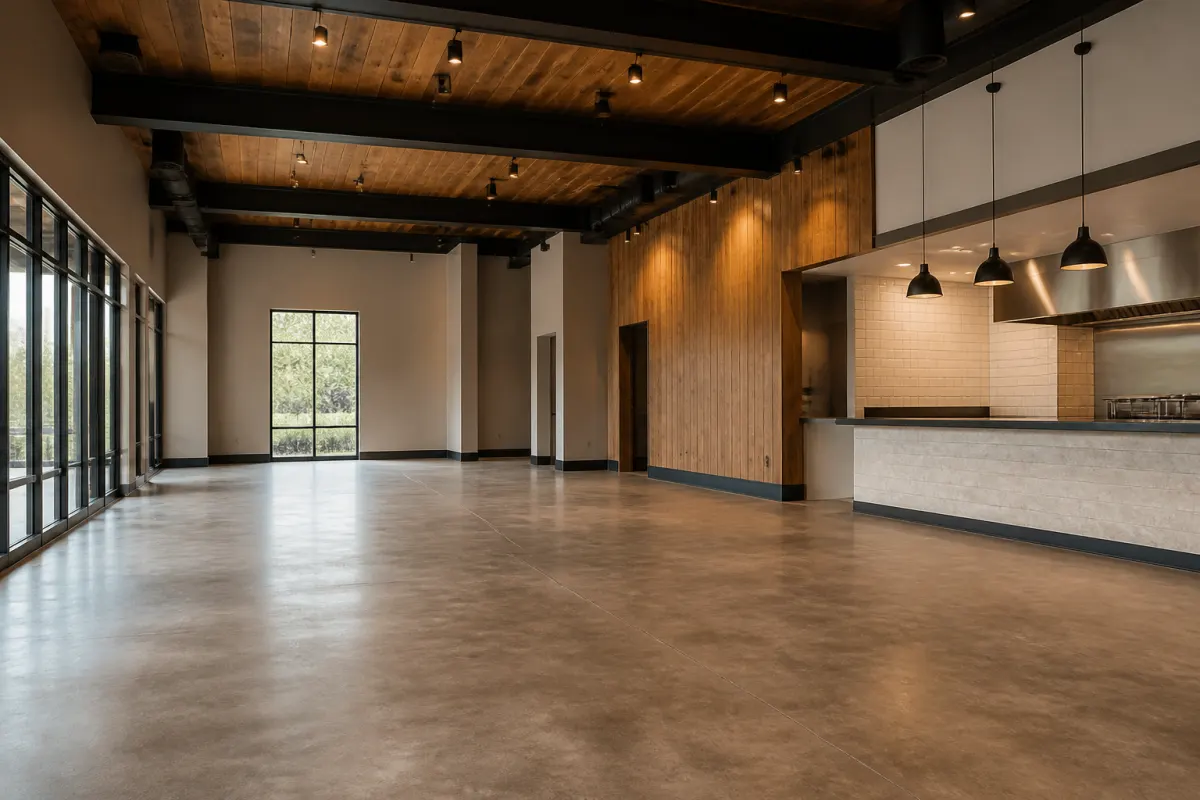
Restaurant and food service FF&E is its own category inside a hotel project, and it is easy to under-scope because it sits between the guest room program and the kitchen equipment package. The furniture side covers dining chairs, booths, bar stools, and tables for every food and beverage outlet on the property, the main restaurant, the lobby bar, the pool bar, and any banquet or private dining space. Because these spaces turn covers constantly and take daily contact with cleaning chemicals and spills, the specification standard is closer to restaurant contract grade than to guest room casegoods, higher-density foam, more durable frames, and fabrics rated for heavier cleaning cycles.
Budgeting for restaurant FF&E separately from the rest of the program avoids the common mistake of treating it as an afterthought once guest room and lobby budgets are set. A full-service hotel with two or three outlets can easily represent 10 to 15 percent of the total FF&E spend once tables, seating, and bar furniture are priced at volume. Run your seat count and cover targets through the FF&E budget calculator to get a realistic number before finishes are selected, and see our city guides for Denver and other markets for how local restaurant programs get specified in practice.
FF&E logistics and installation
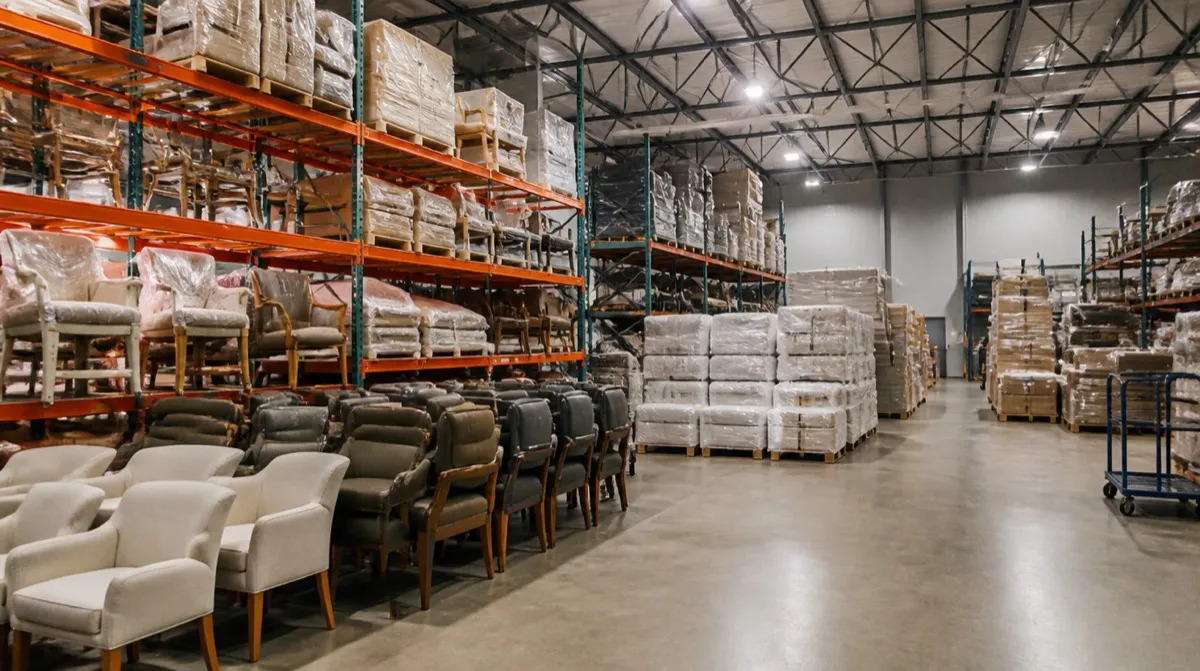
Logistics is the part of FF&E procurement that determines whether a project's furniture arrives ready to use or arrives as a problem to solve on-site. It covers freight consolidation from multiple manufacturers, receiving and inspection when pieces land, short-term warehousing when the site is not ready to accept delivery, and install sequencing that matches the construction schedule floor by floor or phase by phase.
The biggest logistics risk is a mismatch between furniture readiness and site readiness. Custom pieces ordered on a 10 to 14 week lead time do not always land exactly when a construction schedule says they will, so a supplier who can receive and hold inventory until the site is genuinely ready protects both the furniture and the opening date. Installation costs vary by project scope and access conditions loading dock realities, elevator dimensions, and how many floors need furniture in a compressed window all affect the labor side of the number, so ask for installation priced as part of your quote rather than estimated separately after delivery.
The FF&E purchasing process step by step
Buyers researching FF&E purchasing for the first time are usually trying to understand the sequence, not just the vocabulary. The process runs in a consistent order regardless of property size. First, the specification gets locked: every piece, finish, and fabric defined and approved. Second, suppliers bid the package and value engineering identifies any pieces that can be swapped for a comparable option without hurting the guest experience. Third, purchase orders are issued against the approved specification, which starts the production clock. Fourth, production and quality inspection happen at the factory or supplier level. Fifth, freight and warehousing move product toward the site on a schedule coordinated with construction completion. Sixth, delivery and installation put the furniture in place, room by room or phase by phase.
The step most projects underestimate is the gap between specification lock and purchase order. Every week spent revisiting finish decisions after bidding is a week added to the production clock, since most suppliers will not start production against an unconfirmed spec. Lock the specification, then request a quote with your item list and target dates so the purchasing timeline reflects your actual opening date rather than a generic estimate.
Choosing an FF&E supplier
"FF&E supplier" gets used as one label for four genuinely different kinds of company, and confusing them is how projects end up with a quote that cannot deliver what it promises. A manufacturer or direct importer sells at the source: pricing is most competitive at volume because there is no dealer markup, and lead-time commitments are more reliable because the company controls its own production queue. The trade-off is minimum order quantities and less flexibility on small one-off buys. A dealer represents manufacturers in a local market and is strong on service, showroom access, and smaller flexible orders, but the factory price gets a dealer margin added before it reaches you. A purchasing firm does not stock furniture at all: it manages bids, purchase orders, and logistics for a fee, which earns its keep on large multi-supplier programs. A liquidator sells close-out and overstock inventory: fine for a small fill-in order, wrong for any program that needs matched sets at volume, because there is no production pipeline behind what is on the floor.
When evaluating a quote, ask where the furniture is actually produced and who controls that production, since a quote from a dealer or firm is only as reliable as the factory behind it. Ask what the quoted lead time reflects: a stocked item, a standard custom run, or a best-case estimate. A lead time that undercuts the typical 10 to 14 week factory-direct range for custom work deserves a direct follow-up about what makes it realistic. Confirm freight, warehousing, and installation are itemized rather than left as "TBD", since that is where surprise costs hide. And ask what happens procedurally if a shipment arrives damaged or short: a supplier without a clear answer does not have a real process. Our FF&E RFP and bid guide covers how to structure the comparison so quotes from different supplier types can be compared apples to apples, and the spec sheets guide covers locking the specification so no one can quote a lighter substitute and call it equivalent.
Purchase orders, deposits, and change orders
Once a supplier is selected, the execution layer starts with a clean purchase order. Each PO line should reference the approved spec sheet, not a general description: "banquet chairs, per spec sheet BC-14, quantity 220" holds up under a change order or a warranty question, while "220 banquet chairs" leaves finish, frame grade, and fabric open to interpretation. Each line carries the item, the spec or SKU reference, quantity, the unit pricing tier, and the confirmed lead time quoted at order.
Most commercial FF&E orders run on a split payment structure: a deposit due at order to release production, with the balance due before shipment or on delivery. Write the deposit percentage and balance terms into the PO itself so there is no ambiguity about what triggers each payment. On large multi-phase orders, structuring payment by phase or by shipment keeps cash flow aligned with what is actually being produced at each stage.
Expediting is possible on most orders, but it is a trade, not a favor. Compressing a lead time usually requires a completely locked specification with zero pending changes, and some heavily custom categories cannot be compressed at all. Check the Lead-Time Index for what is realistic on a given category before promising a compressed date. Change orders reset some or all of the production clock depending on how far into the run they land: a finish swap before cutting starts is low-impact, the same swap after fabric is cut can mean scrapped work and a restart on that line. Document every change in writing with a revised confirmed date from the supplier, not a verbal adjustment.
Receiving and closing out the order
When freight arrives, the bill of lading is the document that protects you. Count and inspect for visible damage before signing, note any shortages or damaged cartons directly on the bill of lading at delivery, and photograph anything questionable before it leaves the truck. Damage noted after a clean signature is a much harder claim. For orders landing in stages, reconcile each shipment against the PO line items as it arrives rather than waiting for the full order.
Before releasing final payment, reconcile received quantities and spec numbers against the original order, log any punch list items from installation, and file the POs, bills of lading, and change orders together for warranty reference. Items warehoused for later phases are not closed until they reach the site and get counted; our warehousing and staging guide covers tracking partial shipments against a single PO across multiple delivery dates.
Simplify with one supplier
Consolidating the package with a single commercial supplier reduces the number of handoffs, keeps finishes consistent, and unlocks volume pricing. Splitting the package only makes sense when a program spans categories that genuinely require different manufacturing expertise; splitting out of habit, or because different stakeholders each had a preferred vendor, multiplies coordination overhead for no real pricing or quality benefit. Share your specification and target opening date, and request a quote so the plan reflects real production and freight for your project across the US and Canada.
Related reading
- FF&E vs OS&E: what each means and where the budget line falls
- FF&E budget calculator
- FF&E freight and logistics guide
- Our full FF&E procurement service
Local FF&E support across the US
FF&E projects run on local knowledge of market pricing, freight lanes, and installation logistics, and we support procurement teams in every major hospitality market. Find your city in our commercial furniture supplier directory by city, or jump to a market guide for New York, Los Angeles, Chicago, Houston, or Las Vegas.
Related reading
- Full FF&E procurement service
- FF&E procurement in Albuquerque
- Wilmington FF&E services
- Denver FF&E services: procurement and installation
- What is contract furniture
- Bulk commercial furniture ordering guide
- Commercial furniture lead times
- Commercial Furniture Lead-Time Index and back-planner
- Get a quote