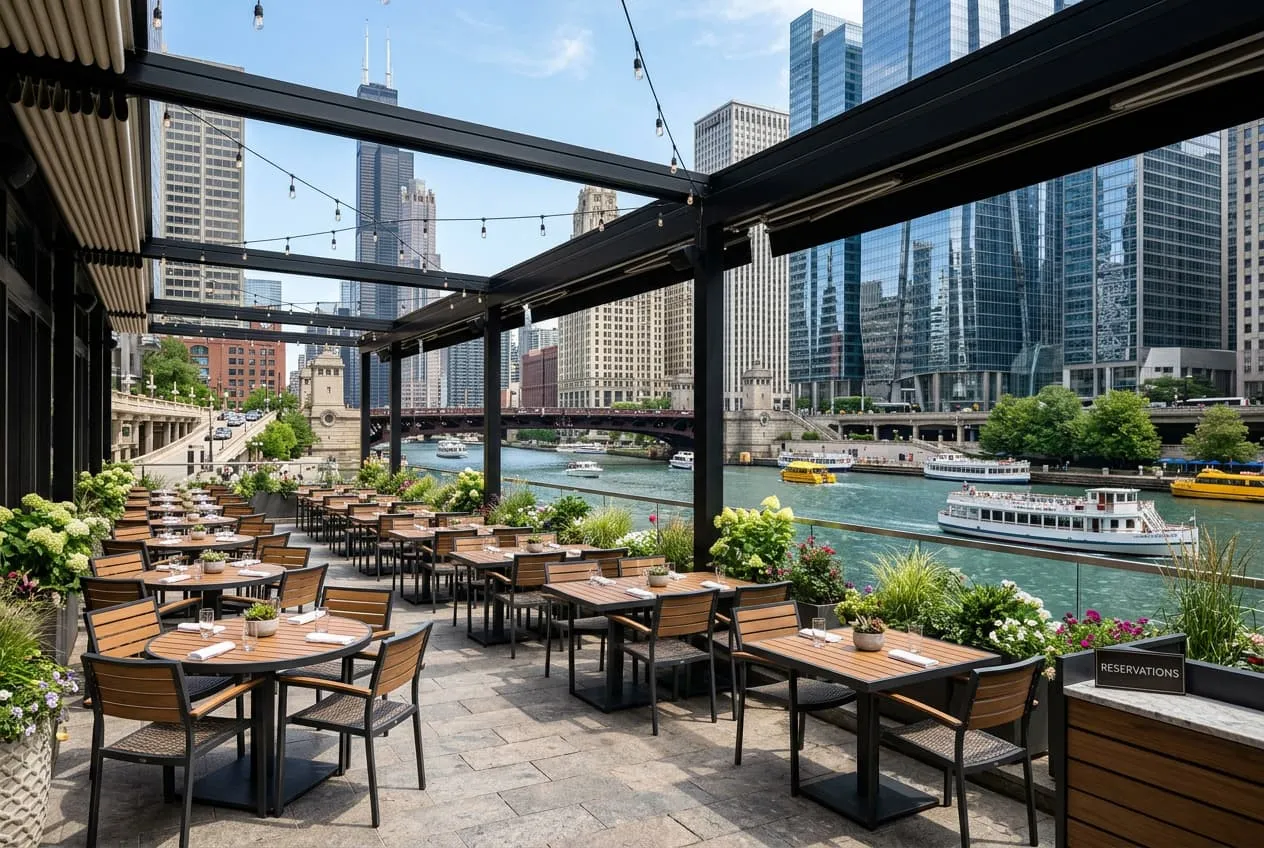
Wilmington's hospitality market does not move at the scale of a major convention city, and that is exactly what makes FF&E procurement here different. The Riverfront, anchored by the Chase Center on the Riverfront and the Shipyard Shops corridor along the Christina River, carries most of the city's hotel and event-space development. Corporate travel tied to Delaware's concentration of banking, credit card, and legal headquarters keeps select-service and extended-stay hotels near I-95 and the Wilmington airport corridor running at steady occupancy. Downtown, the blocks around Market Street and Rodney Square are in the middle of a slow but real restaurant rebuild. If you are developing or refreshing a property here, the challenge is not finding furniture, it is managing a market where lead times are the same as anywhere else but your local vendor bench is thinner, which means specification discipline matters even more.
What FF&E Covers on a Wilmington Project
FF&E stands for furniture, fixtures, and equipment. In a hotel context, that is your guestroom beds, nightstands, desks, and chairs. It is your lobby lounge seating, the banquettes in your restaurant or bar, stools at a hotel bar, and decorative lighting throughout public spaces. In a restaurant-only project, it covers dining tables, all seating, host stands, and any fixed booth or banquette construction procured through the furniture budget rather than the general contractor.

What FF&E does not cover is OS&E, operating supplies and equipment. That category handles linens, dishware, glassware, kitchen smallwares, and anything with a short replacement cycle. The line matters because FF&E is a capital expenditure managed by your development or ownership team, while OS&E is an operational cost managed by whoever is running the property. On a Wilmington Riverfront hotel project, or a multi-outlet restaurant buildout serving the downtown business district, the FF&E budget can still run into seven figures even though the market itself is modest in size. Treating it like a procurement afterthought is how projects go sideways, regardless of city size.
Get your FF&E scope defined in writing before you engage any vendors. A clear scope document keeps your interior designer, procurement agent, and general contractor working from the same definitions. Without it, you spend money resolving disputes that never needed to happen.
How the Wilmington Market Shapes Procurement Timelines
Wilmington operators are often surprised by how quickly the procurement clock runs, even in a market this size. Contract furniture manufacturers, particularly those producing custom upholstered seating or branded casegoods, carry lead times of 14 to 22 weeks from confirmed purchase order to delivery. Custom work, distinctive pieces built around a Riverfront or Rodney Square design concept rather than pulled from a generic catalog, pushes those timelines to 28 weeks or beyond.
For a Riverfront hotel near the Chase Center, a boutique property near Rodney Square in the shadow of the Hotel du Pont, or a restaurant buildout along Market Street, your procurement process needs to begin well before construction is complete. The practical sequence looks like this: specifications locked during the design development phase, bids issued two to three weeks later, purchase orders placed no later than 20 to 22 weeks before your target delivery date, and delivery phased into the property zone by zone as construction turns over.
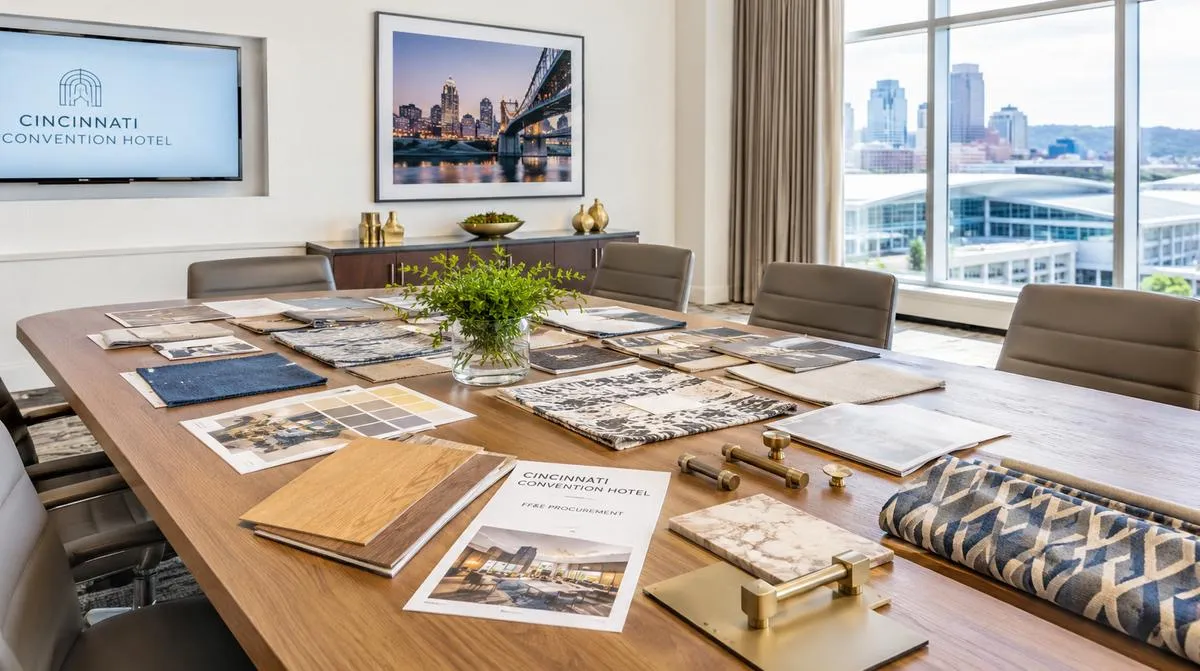
Wilmington's event calendar creates a different kind of pressure than a major convention market. Instead of large trade shows, demand spikes come from corporate meetings tied to the city's banking and credit card headquarters, legal conferences connected to the Delaware Court of Chancery, and periodic Riverfront events at the Chase Center. Those spikes are smaller than an Atlanta or Chicago convention surge, but they are predictable, and a procurement delay that pushes your opening past one of those windows still costs you real rate premium, not a rounding error.
Proximity to Philadelphia adds another variable most cities this size do not have. Wilmington competes for both leisure and corporate travelers against a much larger neighboring market thirty minutes up I-95, so furniture quality and finish level need to hold up against that comparison even when your project budget is scaled for a smaller city.
Working With Designers and Procurement Agents
Most Wilmington hospitality projects involve three parties: an interior designer setting the aesthetic vision, a procurement agent managing vendors and purchase orders, and you as the owner holding the budget and the deadline. The dynamic between those three parties determines whether your project opens on time or spends its final weeks in crisis mode.
Wilmington has a smaller base of interior design firms with dedicated hospitality experience compared to a market like Atlanta, but the ones working the Riverfront and downtown corridor tend to have real relationships with contract furniture reps covering the Mid-Atlantic region. That network matters more here, not less, because a thinner local bench means fewer backup options if a first-choice vendor slips a lead time. A rep who already knows your designer's spec language can pull lead time estimates and flag substitution options before you formally go to bid.
The most consistent mistake in Wilmington projects is engaging the procurement agent too late. If you wait until design is fully resolved before asking about pricing and lead times, you will be redesigning pieces under time pressure. You will be substituting product at the last minute, compromising design intent, and sometimes pushing your certificate of occupancy. Bring your procurement agent in during schematic design, when specifications are still flexible enough to value-engineer without damaging the concept.
For larger projects, a full-service Riverfront hotel or a multi-unit restaurant group opening across downtown Wilmington, many operators use a dedicated FF&E procurement consultant who sits between design and purchasing. That role owns vendor communication, purchase order management, freight coordination, and punch list resolution. For smaller projects, the interior designer often manages procurement directly with a purchasing fee built into their contract. Either model works. What does not work is leaving the question of who owns procurement decisions unanswered until the project is already in motion.
What Your Budget Should Account For
FF&E budgets for Wilmington hospitality projects vary by property tier and design complexity, and they tend to run somewhat lower than in a major metro simply on account of market scale. A select-service hotel near the I-95 corridor or the airport typically runs $9,000 to $15,000 per key. A full-service Riverfront property or a boutique hotel near Rodney Square can reach $20,000 to $32,000 per key, with public spaces pushing well past that ceiling when the design program is ambitious.
Several line items reliably catch Wilmington developers off guard. Freight from domestic contract furniture manufacturers, primarily in North Carolina, Wisconsin, and Mississippi, adds 8 to 12 percent on top of product cost, and Wilmington's smaller local delivery infrastructure can add coordination time compared to a larger metro. White-glove delivery and installation, often contracted separately from the furniture purchase itself, runs another 5 to 8 percent. Storage costs come into play when your furniture is ready before your construction site is, which happens more often than project schedules acknowledge.
Custom and semi-custom work carries premium pricing and longer lead times, but it has become increasingly common on Wilmington's higher-profile Riverfront and downtown projects as the market has worked to differentiate itself from nearby Philadelphia. Operators who try to match that design bar with catalog furniture at catalog prices generally end up with neither the design quality nor the cost savings they expected.
Build a contingency of at least 10 percent into your FF&E budget from the start. Wilmington's construction market is smaller and more relationship-driven than a major metro, and field changes late in the process are not unusual. Having that buffer lets you absorb surprises without making procurement decisions under financial duress.
The properties that open on time and on budget in Wilmington are the ones that started procurement early, respected lead times, and kept the designer and procurement agent in constant communication throughout the process. Whether you are outfitting a hotel on the Riverfront near the Chase Center, a boutique property near Rodney Square, or a new restaurant concept on Market Street, the fundamentals are the same: start earlier than you think you need to, specify clearly before you bid, and build freight and installation into your numbers from day one.
Freight, Delivery, and Installation in Wilmington
Wilmington's FF&E timelines live or die on the logistics leg, not the purchase order. Contract furniture bound for the Riverfront or Market Street ships from domestic manufacturers on multi-day freight that has to be booked against a confirmed receiving window. An order that ships on schedule can still miss an opening when the delivery appointment, dock access, or on-site contact was never nailed down, so treat the delivery plan as part of the specification rather than an afterthought once the furniture is built.
For hotel and restaurant projects, white-glove delivery and installation is worth specifying separately from the furniture itself. A white-glove crew brings each piece to the room, unpacks, assembles, sets it to the floor plan, and hauls away the packaging, which is where the value shows up on casegoods and larger lounge seating that arrive partially assembled. Standard curbside freight looks cheaper on the quote and then gives the savings back in staff labor and the damage risk of moving heavy cartons through a historic building or a tight downtown site without a proper crew and equipment.
Storage is the line item Wilmington developers underestimate most. Furniture routinely arrives before the space is ready to receive it, and without a staging plan you are either renting warehouse space or stacking cartons in a room the trades still need. Ask up front whether your supplier can hold a completed order and release it on your schedule, then sequence the receiving order, casegoods first and public-space seating last, so the install crew works cleanly instead of digging through deliveries that landed out of order. On a Wilmington project where a single missed window can push an opening past a seasonal booking, that sequencing is what protects the date.
We quote FF&E for Wilmington operators against their own layouts and order sizes rather than a generic sheet. Request a quote and we will put together pricing for your property.