Hotel FF&E procurement in Washington DC is shaped by a set of market dynamics that most other American cities do not encounter at the same intensity. The Congressional calendar creates seasonal demand peaks that compress the viable windows for renovation and FF&E installation. The diplomatic and association conference market adds layers of block business that fill the calendar in ways that are difficult to predict precisely but impossible to ignore. And DC's distinctive design aesthetic formal, institutional, but evolving means that FF&E specifications are doing more brand and positioning work than in markets where properties compete primarily on price and amenity. A hotel FF&E procurement Washington DC program that doesn't account for all of these factors will either miss its installation window or end up with product that underperforms in one of the country's most demanding hospitality environments.
Understanding DC's FF&E Demand Landscape
Washington DC's hotel market is divided into segments that each carry distinct FF&E requirements. The large convention and government hotel corridor downtown Penn Quarter, K Street, and the Walter E. Washington Convention Center area in Shaw operates properties ranging from 300 to 1,000-plus rooms. FF&E procurement at this scale requires suppliers with real manufacturing volume capability: the ability to execute orders of 500 guestroom packages, 200 dining chairs, or 100 lobby seating pieces without pushing your project to the back of the line behind other clients.
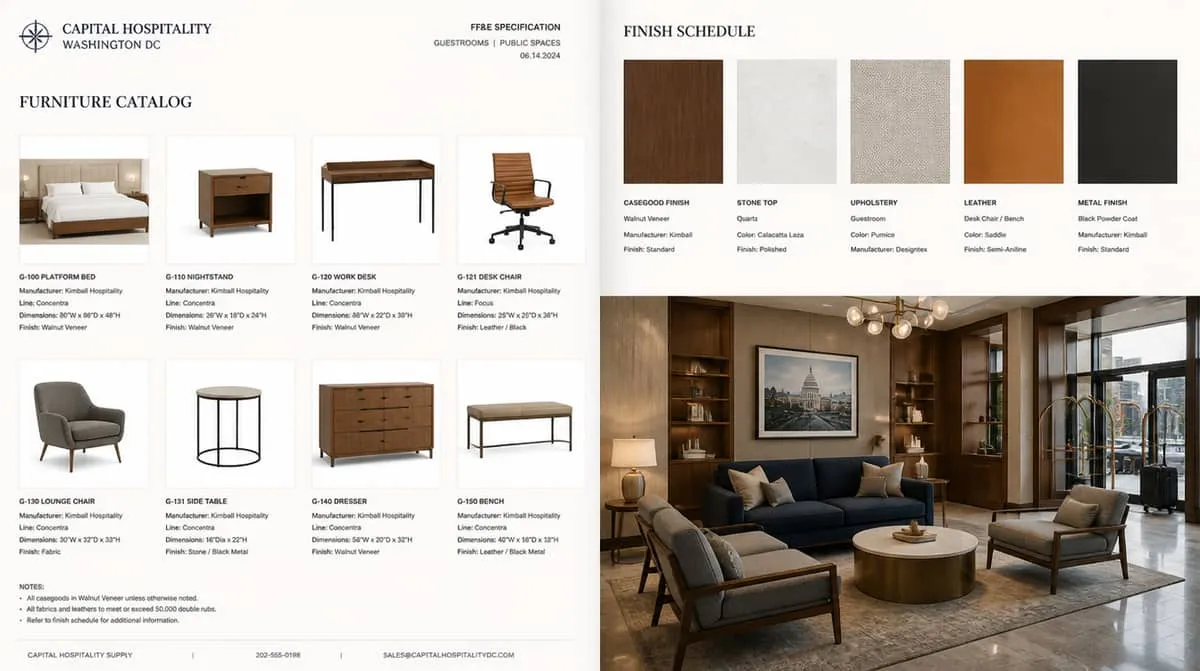
Hotel lounge chairs and lobby seating at these large properties see extraordinary daily traffic diplomatic delegations, congressional staff groups, association convention attendees, and foreign government visitors who use hotel lobbies as a neutral meeting ground. The durability specification for lobby seating at a downtown DC convention hotel is not the same as for a boutique hotel with a quieter guest flow. Load ratings, fabric double-rub counts, and frame construction all need to reflect the actual daily volume the pieces will experience.
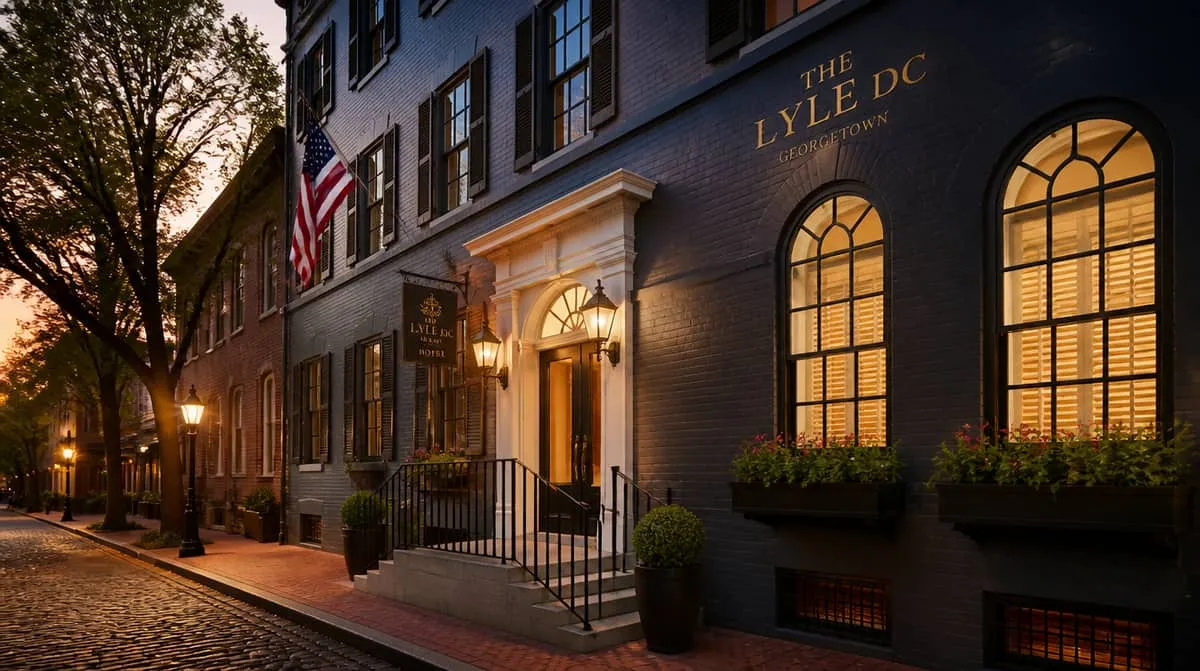
Georgetown, Dupont Circle, and the growing boutique corridors in Shaw and Capitol Hill represent the other major segment: properties that compete on design identity and guest experience rather than scale. Headboards and guestroom case goods at a boutique Georgetown property are carrying significant brand positioning weight. The FF&E specification here is as much a marketing decision as a procurement one what the furniture says about the property matters as much as what it costs.
The diplomatic and embassy event market adds a dimension that most US hospitality markets lack. DC hotels adjacent to Embassy Row and the Dupont Circle diplomatic district regularly host foreign government events, state department functions, and international association gatherings. The FF&E in these properties is evaluated by guests whose reference points include Europe's finest hotel traditions, and specifications that pass muster in a convention hotel on K Street may not be adequate for a property serving this market.
DC's FF&E Aesthetic Framework
The Washington DC FF&E design brief is among the most specific of any major US market. The city's visual culture shaped by federal architecture, Georgetown's Georgian and Federal townhouses, and a century of institutional interior design creates a strong gravitational pull toward particular materials and finishes.
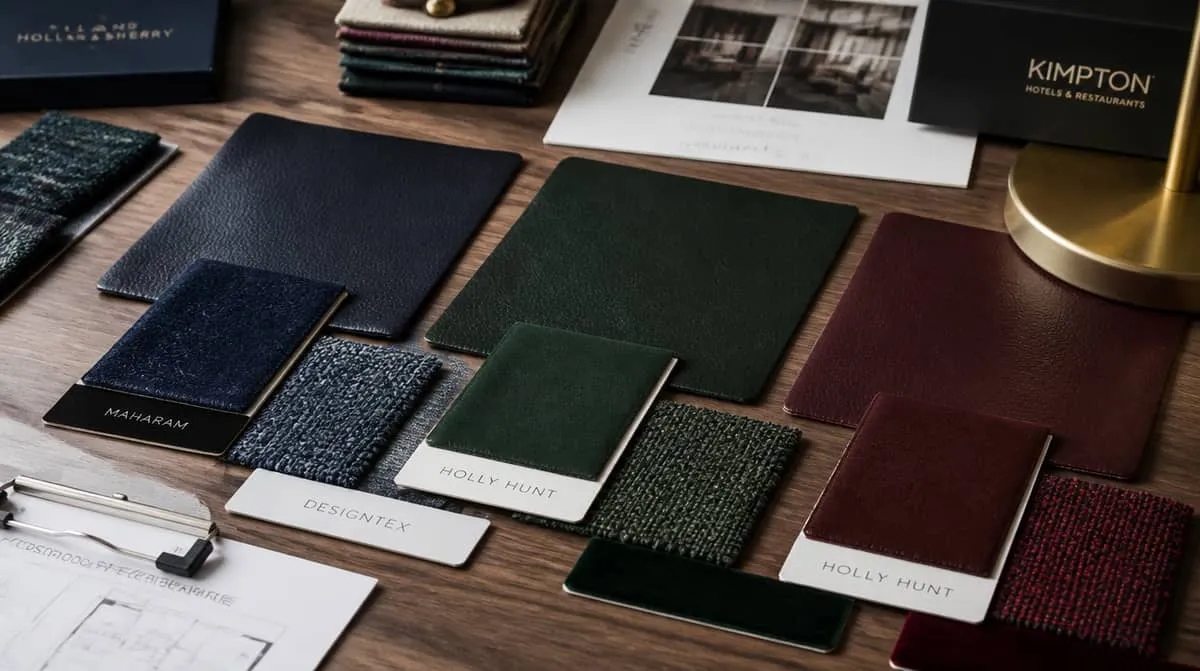
Dark wood tones dominate: walnut, mahogany, and dark-stained oak for case goods and wood-framed seating. Leather upholstery in navy, forest green, burgundy, and deep charcoal for lounge seating and guestroom chairs. Brass and bronze hardware throughout on case goods, on chair arms, on table bases. These are not arbitrary preferences; they reflect a design language that communicates authority, permanence, and quality to guests who have been calibrated by the city's built environment.
Commercial dining chairs for hotel restaurant programs in DC need to fit within this framework while meeting the practical demands of food and beverage service. A dining chair that reads as too casual, too contemporary, or too residential undermines the positioning of a hotel restaurant that is competing for the expense-account lunch and diplomatic dinner business that makes hotel F&B profitable in this market.
The boutique properties in Shaw and Capitol Hill are pushing a more contemporary direction within this framework cleaner lines, lighter proportions, less ornamentation but the underlying material palette remains consistent. Matte brass rather than polished. Walnut rather than mahogany. Tight leather tufting rather than button-back. A skilled FF&E procurement consultant or supplier who knows the DC market will help you identify where the current aesthetic direction is heading and spec accordingly, rather than delivering product that looked current three years ago.
Guestroom case goods need to be specified with finish durability appropriate for the level of guest traffic DC properties experience. During Congressional session peaks, high-occupancy downtown properties may cycle multiple guests through the same room in a single week. Dresser tops, desk surfaces, and nightstand edges all take the kind of impact that will reveal under-built case goods within months.
DC FF&E Procurement Timeline and Calendar Planning
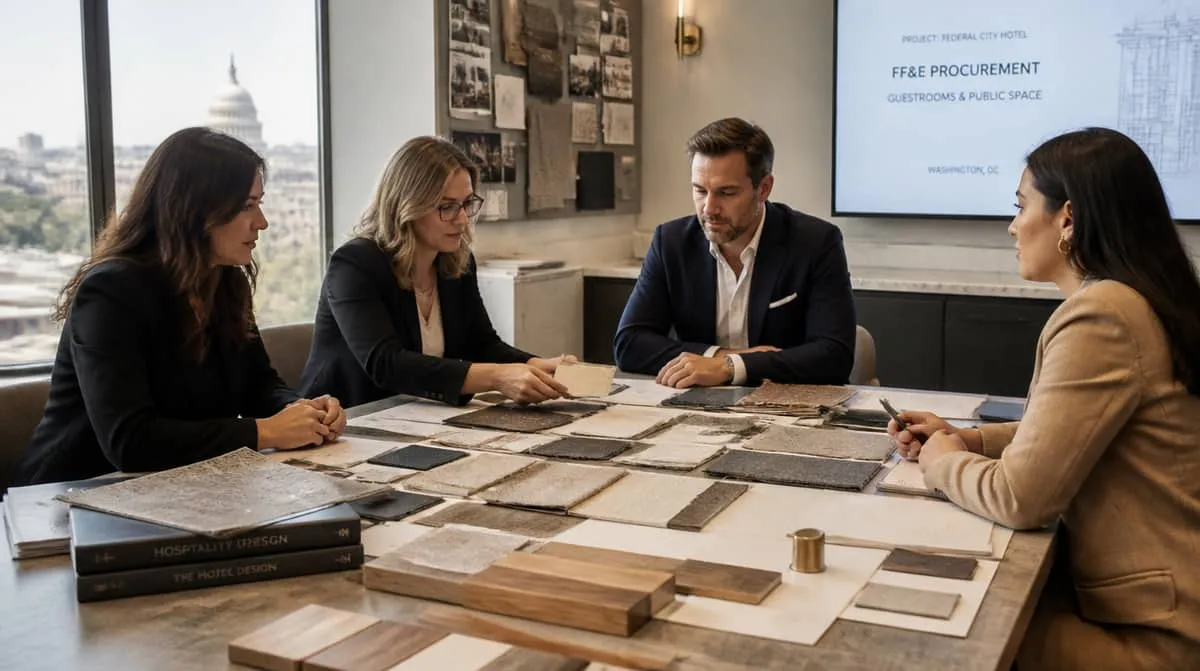
The most critical factor in hotel FF&E procurement Washington DC is understanding the installation window and working backward from it with realistic lead times. DC's renovation calendar is tightly constrained: the August congressional recess and the December-January holiday period represent the two most viable windows for large-scale FF&E installations in downtown properties. Missing either of those windows means pushing work into a high-occupancy period, with all of the revenue cost and operational disruption that entails.
A complete FF&E procurement timeline for a DC hotel renovation project runs roughly as follows. Design specification and finish sampling: four to six weeks. Order release and manufacturing lead time for upholstered seating: 10 to 16 weeks. Case goods and casepiece manufacturing: 8 to 12 weeks. Freight to DC, receiving, and installation: two to four weeks. Total timeline from first supplier engagement to installed furniture: five to seven months for a comprehensive project.
For properties targeting the August recess installation window, that means initiating the FF&E procurement process no later than February. For December-January installations, procurement needs to begin in June or July. A hotel FF&E procurement Washington DC supplier with experience in the DC market will help you manage this calendar and flag risks factory queue delays, freight bottlenecks, installation crew availability before they become project-threatening problems.
We quote FF&E for Washington DC operators against their own layouts and order sizes rather than a generic sheet. Request a quote and we will put together pricing for your property.